ShodhKosh: Journal of Visual and Performing ArtsISSN (Online): 2582-7472
|
|
Data-Driven Insights for Performing Arts Teachings
Jaimeel Shah 1
 ,
Chandan Patra 2
,
Chandan Patra 2 ,
Shantha Shalini K 3
,
Shantha Shalini K 3 ,
Swati Srivastava 4
,
Swati Srivastava 4 , Simran Kalra 5
 ,
Vijaykumar Bhanuse 6
,
Vijaykumar Bhanuse 6
1 Associate Professor, Department of
Computer Science and Engineering, Faculty of Engineering and Technology, Parul
Institute of Engineering and Technology, Parul University, Vadodara, Gujarat,
India
2 Assistant Professor, Department of
Computer Science and Information Technology, Siksha ‘O’ Anusandhan
(Deemed to be University), Bhubaneswar, Odisha, India
3 Associate Professor, Department of
Computer Science and Engineering, Aarupadai Veedu
Institute of Technology, Vinayaka Mission’s Research Foundation (Deemed
University), Tamil Nadu, India
4 Associate Professor, School of Business
Management, Noida International University, India
5 Centre of Research Impact and Outcome,
Chitkara University, Rajpura, Punjab 140417, India
6 Department of Instrumentation and
Control Engineering, Vishwakarma Institute of Technology, Pune, Maharashtra
411037, India
|
|
|
ABSTRACT |
|
|
The
convergence of artificial intelligence and education of performing arts has
introduced possibilities of improving creativity, assessment and pedagogy.
This work is a proposal to develop a Data-Driven Pedagogical Model of
Performing Arts (DDPMPA) that combines multimodal analytics such as motion,
audio, emotional and textual data to create holistic information about the
performance of learners. The framework uses the technique of feature
extraction, fusion, and machine learning algorithms to measure both
expressive and technical aspects of performance on an
adaptive feedback provided to instructors and learners. The
experimental findings in the fields of music and dance as well as theatre
indicate the presence of quantifiable changes in the learner
engagement, expressiveness, and reflective self-regulation. The system does
not only make the evaluation more transparent and precise but also retains
the subjective and affective nature of artistic learning. The study reveals
the prospects of the data-driven feedback mechanism to supplement
conventional training, allowing the creation of the ecosystem
that is co-creative, where AI serves as a complement, not as a
substitute, to human intuition. The study extends the developing sphere of
AI-based performing arts education, encouraging the
customized, evidence-based, and ethically-based
learning settings. |
|||
|
Received 11 June 2025 Accepted 24 September 2025 Published 28 December 2025 Corresponding Author Jaimeel Shah, jaimeel.shah@paruluniversity.ac.in DOI 10.29121/shodhkosh.v6.i5s.2025.6882 Funding: This research
received no specific grant from any funding agency in the public, commercial,
or not-for-profit sectors. Copyright: © 2025 The
Author(s). This work is licensed under a Creative Commons
Attribution 4.0 International License. With the
license CC-BY, authors retain the copyright, allowing anyone to download,
reuse, re-print, modify, distribute, and/or copy their contribution. The work
must be properly attributed to its author.
|
|||
|
Keywords: Data-Driven
Pedagogy, Performing Arts Education, Artificial Intelligence, Educational
Technology, AI -human Co-Creation, Reflective Practice |
|||


1. Introduction
The
performing arts including music, dance, theatre, and other creative fields,
have conventionally been based on embodied experience, mentoring, and
qualitative assessment. Nevertheless, the growing digitization of education and
presence of multimodal data sources have created new opportunities to analyze, comprehend, and improve the teaching-learning
process in the sphere. The introduction of data analytics in pedagogy of
performing arts is a paradigm shift whereby educators can leave the field of
baseless assessment and come to an evidence-based insight Hussin and Bianus (2022). By the systematic gathering
and processing of the data about the performance of learners, including motion
paths, acoustics, expressions of emotions, and reactions of the audience,
educators will be able to discover the intricate trends of artistic development,
interaction, and expressiveness, which used to be hard to quantify. Teaching of
performance arts is experiential in nature and the
feedback is immediate and the interpretation is subjective Creswell and Poth
(2017). These experiences can be
enhanced with quantifiable measures through data-driven methods which promote
individual feedback and responsive learning. Both instructors and learners can
use the actionable insights that can be gained by machine learning and
statistical models to detect the trends in rhythm accuracy, vocal dynamics, or
body movement coordination. In addition, predictive analytics and data
visualization can also indicate areas of strengths, weaknesses, and possible
learning paths, which makes reflective practice and continuous improvement
possible Liu et al. (2017).
Figure 1

Figure 1
Multimodal Fusion Framework for Data-Driven
Performing Arts Teaching
This
change promotes a more open, participatory, and adaptable ecosystem which
respects individuality of art and makes use of computational accuracy. The
latest progress of sensor technologies, wearable computers, and artificial
intelligence has made this transition faster. Multidimensional datasets
supplied by motion capture systems, audio feature extraction Vasileva and Pachova
(2021) and emotion recognition models
now do not only mirror the performance accuracy, but
also influence the intent of affective and expressive creativeness as observed
in Figure 1. Data analytics could be used as
an effective source of new forms of teaching that combine artistic expression
with analytic sensitivity when combined with pedagogical models like
constructivism and experiential learning. The reason behind this research is to
fill the gap between art and analytics. Although science has long been a source
of cognitive and behavioral knowledge in the
education, its structured use in performing arts is still minimal Raphael and White (2022). This article suggests a model
outlining ways of coming up with practical, empirical findings that guide
instruction, assessment of learners, and curriculum development in performing
arts education. It is not intended to substitute intuition or creativity with
rules but add some objective information to it that will enhance the learning
process.
2. Background and Literature Review
Practical
integration The combination of data analytics with
performing arts education is a new interconnection between artistic teaching
and computational intelligence. Traditional instructions in performing arts
have used the master-apprentice system where imitation, experiential learning,
and embodied cognition are the key components Saayman and Saaymanv(2004). In language education and
STEM, predictive modeling and behavioral
clustering on a data-driven platform are used to construct feedback and enhance
results. Nevertheless, the performing arts present a different complexity: they
combine multimodal information: movement, sound, emotion, and reflection and
demand analytic paradigms that can coordinate both the temporal and the
affective aspect into one.
2.1. Multimodal Learning Analytics (MMLA)
Multimodal
learning analytics is not only limited to the traditional click-stream data but
also uses behavioral, physiological, and expressive
modalities. MMLA is used in performing arts, where coordinated information on a
variety of sensors and contexts, including motion capture to capture spatial
patterns, audio processing to capture rhythm and timbre and emotion detection
to capture affective states. With the help of sophisticated neural systems like
CNNs, RNNs, or Transformer-based attention models, such signals can be combined
Herrero et al. (2006). The resulting composite
representations give educators more detailed feedback regarding the dynamism of
expressive coherence and engagement of a learner.
2.2. The AI and the Feedbacks in Pedagogy of Performing Arts
The
recent research proves the revolutionary impact of AI on providing feedback of
real-time and personalized nature. Audio/Motion alignment in the context of
music pedagogy measures the synchronization and tempo-control. Pose-estimation
and emotion-recognition models are helpful in dance and theatre education to
reveal information about the precision of moves and the authenticity of
expression De Lucia et al. (2010).
Table 1
|
Table 1 Summary
of Key Studies in Data-Driven Performing Arts Education |
||||
|
Domain of Study |
Data Modalities Used |
Analytical / AI Methods |
Key Findings / Outcomes |
Limitations |
|
Music Performance Analytics |
Audio (pitch, rhythm), Motion (gesture) |
CNN for feature extraction; DTW for rhythm analysis |
Enhanced precision in tempo and articulation
feedback |
Lacked emotional-context modeling |
|
Dance Education |
Motion Capture, Video |
Pose Estimation + RNN |
Accurate detection of body-movement timing and
alignment |
High computational cost for real-time feedback |
|
Theatre Acting Analytics |
Video (facial emotion), Audio (speech tone) |
CNN–LSTM Emotion Recognition |
Detected expressive consistency and affective range
in performance |
Sensitive to lighting and acoustic noise |
|
Multimodal Arts Learning Analytics |
Audio, Text Feedback, Physiological Data |
Transformer-based Multimodal Fusion |
Improved feedback reliability by ≈18% through
affective fusion |
Small dataset; low cultural diversity |
|
Music Pedagogy Evaluation |
Audio + Learner Reflection Logs |
Regression + Clustering |
Enabled adaptive learning profiles and data-driven
assessment |
No real-time feedback support |
|
Performing Arts Teaching (Dance, Music, Theatre) |
Motion, Audio, Emotion, Text |
Multimodal Fusion Layer + Analytics Core |
Integrates quantitative metrics with qualitative
feedback for adaptive instruction |
To be validated experimentally |
It
has also been found that the current literature lacks large, standardized
datasets to conduct performing-arts analytics which restricts reproducibility
and cross-cultural flexibility. These limitations underscore the need to have a
single system that will be able to integrate the disparate modalities without
compromising the expressiveness and emotive integrity of the art form.
2.3. Research Gaps and Problems
Despite
the quantifiable success of the preceding works, there are a
number of unresolved issues. To begin with, the
majority of frameworks focus on technical skills but overlook the
creative interpretation and cultural specifics, which are the features of
artistic authenticity Colombo (2016). Second, multimodal
synchronization in real-time is still computationally costly especially in live
performance scenarios. Third, privacy, consent and emotional surveillance
related to ethics is an issue that remains a challenge particularly in learner centred
environments.
2.4. Rationale behind the Current Study
The
above review indicates that although data-driven learning analytics have been
developed to mature in other educational settings, the same has not been done
to the performing arts. Integrative systems that will integrate quantitative
precision and interpretive depth are required Devesa and Roitvan
(2022). It is because of this gap that
this study suggests a multimodal fusion framework that will integrate the
concepts of motion, audio, emotional data, and textual information into an
analytics core that can produce actionable pedagogical information. The idea of
this methodology is to increase the teaching effectiveness and to increase the
creativity of learners by means of constant and evidence-based feedback loop.
3. Data-Driven Pedagogical Model for Performing Arts
The
performing arts represent a singular convergence of creativity, thinking and
emotional intellect. In comparison to the traditional academic subject, the
performance in arts is dynamic, multimodal, and contextual, and thus, its
assessment is a complex task. To overcome this difficulty, the presented
Data-Driven Pedagogical Model of Performing Arts (DDPMPA) presents a systematic
but adaptable system combining multimodal analytics, pedagogical theory, and
adaptive feedback systems Dogan (2020). This model will help fill the
gap between human intuition and the analysis provided by computers to enable
the work of educators to exploit the strength of data without losing artistic
purity. The DDPMPA model works on the idea that every artistic performance,
whether dance, music, or theatre, may be broken down into quantifiable and analyzable characteristics that demonstrate technical skill
and expressionism. The model is the system of three layers interacting with
each other:
1) Input and Observation Layer: multimodal learner data such as
motion, audio, emotion and textual feedback.
2) Analytics and Fusion Layer: the preparation and comparison
of multimodal characteristics in order to extract
performance measures and engagement ratios.
3) Pedagogical Feedback and
Adaptation Layer:
translating the analytical findings into teaching intervention and learner
instructions.
The
self-awareness, and personalized instruction of learners helps the instructor
to tailor instruction using objective information, which is improved by the
iterative cycle. The core of the model is the human-data interaction loop
whereby the performance of the learner creates constant data streams, which are
processed and visualized in near-real time Crawford (2019). The position of the instructor
transforms into that of an evaluator to becoming more of a facilitator, reading
the data and putting the data in artistic and cultural contexts. Personalized
dashboards and multimodal feedback, in its turn, allow the learner to learn
more about his or her expressive tendencies and areas to improve.
Figure 2

Figure 2
Conceptual
Framework of the Data-Driven Pedagogical Model for Performing
These
inputs have been entered into the analytics core where features like the chance
of gesture velocity, the beat synchronization, and mood complement and textual
affective are obtained and consolidated. Both objective and subjective
indicators are integrated to enable the model to reflect the holistic concept
of performance learning. Successful performing arts teaching is based on the
provision of timely and meaningful feedback that facilitates technical
proficiency and development of creativity Pike (2017). This principle is combined in
the Data-Driven Pedagogical Model of Performing Arts (DDPMPA) in which two
inter-related feedback loops are used to support reflective and adaptive
learning as shown in Figure 2. The former,
an instructor operated feedback loop, gives educators synthesized performance
metrics, which allow them to improve pedagogical interventions, change the
focus of rehearsal, and highlight expressive details, guided by
information-driven suggestions. The second is the learner reflection loop which
provides the performers with the visual and textual summaries of their
performances which promotes self-regulation, critical analysis, and
metacognitive awareness Gibson (2021). Collectively, these loops will
form an ongoing process of reflection and betterment where learners will be
able to analyze and evaluate their progress in an
analytical and emotional way. The dual-loop process supports reflective
practice as the essence of performing arts education, which creates a balance
between the practical knowledge and imagination in the quest to achieve
artistic mastery. The model conforms to the existing performance evaluation
rubrics, which are interpretable and educational. As an example, the expressive
dynamics of a dance student can be measured quantitatively in terms of body
energy flow parameters and qualitatively in terms of artistic interpretation
parameters. Rhythm analytics can also be used to supplement instructor assessment
in phrasing and expressiveness in the teaching of music.
4. Analytical Framework and Methodology
The
research paradigm of the present paper translates the Data-Driven Pedagogical
Model of Performing Arts (DDPMPA) into a methodological procedure that is aimed
at transforming the multimodal performance data into pedagogically practical
information without sacrificing the artistic authenticity Dimoulas et al. (2014). It combines the multimodal
data collection, feature extraction, fusion tactics, machine learning based
analysis and educational validation to facilitate teaching and learning in
performing arts. Four main modalities motion, audio, emotion, and text were
gathered which presented a distinct dimension of artistic performance.
Parameters measured in motion capture suits, motion cameras or skeletal
tracking systems, which included posture, gesture trajectories and limb
velocity were motion data. Audio information recorded by high-fidelity
microphones, extracted traits such as pitch, tempo and timbre whereas emotion
information through facial expression recognition, galvanic skin response, and
heart-rate variability sensors served as information to the intensity of
emotion. The qualitative insights on artistic development as provided by
textual information (instructor notes, peer reviews, reflective journals, etc.)
were as shown below in Figure 3. Every
stream of data was synchronized by temporal alignment system that guaranteed
correspondence over the same performance intervals, and ethical practices, such
as the informed consent, anonymization, and encryption were fully adhered to Doulamis et al. (2020). The feature extraction also
used the modespecific preprocessing motion features
including the joint angles as well as velocity vectors were normalized; audio
files were processed into MFCCs, chroma vectors, and spectral contrasts;
emotional expressions were measured using facial action-units and physiological
measures; and textual input was measured with transformer-based NLP models like
BERT and Robbertas to measure sentiment, tone, and
thematic coherence. The modalities were each converted to embedding vectors in
a common frame, so that cross-modal associations between modality can be made,
e.g. to connect rhythmic modulation in audio with fluidity of movement or
height of emotions.
Figure 3
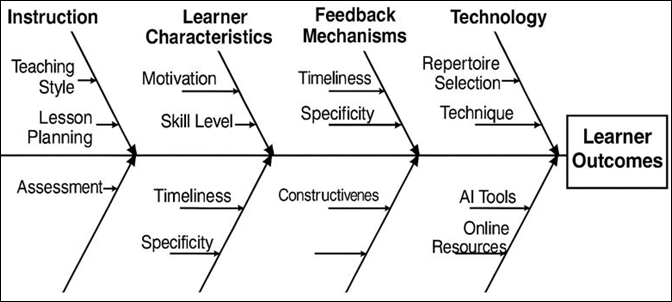
Figure 3
Analytical
Framework and Data Flow of the Proposed System
This
was the Multimodal Fusion Layer (MFL) which was the integrative center integrating the strategies of early and late fusion.
To maintain both temporal and contextual coherence, attention mechanisms
changed the importance of each modality in a dynamical manner, depending on
performance phases introduction, crescendo, or
resolution. The analytic system was based on machine learning, where CNNs and
RNNs were used to learn features sequentially, transformer models were used to
fuse multimodal features using self-attention, and ensemble models (Gradient
Boosted Decision Trees and Random Forests) were used to predictively assess
learner engagement and expressive proficiency. Also, K-Means and hierarchical
clustering algorithms were employed in drawing learner archetypes,
differentiating expressive-dominant and technique-dominant performers. The
results of these analytic models were overlaid on educational rubrics to help
instructors and learners interpret technical acuity, emotional nuance and
expressive concatenation Amato et al. (2018).
5. Experimental Setup and Findings
The
experiment was carried on three domains of performing art namely music, dance
and theatre as a specific amalgamation of technical and expressive learning
characteristics. The participants (20 each, per domain) were chosen (students
of different levels of experience (beginner, intermediate, advanced). The
experimental intervention lasted eight weeks, and the subjects were exposed to
the processes involved in the feedback cycle of data-driven pedagogical
intervention with the proposed Data-Driven Pedagogical Model of Performing Arts
(DDPMPA). A hybrid cloud-edge implementation was applied to deploy the system,
which guaranteed real-time processing capabilities. Every data was anonymized
and encrypted, and ethical rules on research with creative data were followed.
Table 2
|
Table 2
Summary of Evaluation Metrics and Measurement Description |
||||
|
Metric |
Definition |
Measurement Method |
Unit |
Interpretation |
|
Model Accuracy (MA) |
Correct prediction ratio of AI analytics |
Confusion Matrix Analysis |
% |
Higher values denote robust feature learning |
|
Processing Latency (PL) |
Time delay in multimodal fusion and feedback |
Timestamp comparison |
Seconds |
Lower values indicate real-time efficiency |
|
Engagement Index (EI) |
Attention level inferred from motion and gaze data |
Weighted activity variance |
0–1 scale |
Higher score = greater engagement |
|
Expressivity Score (ES) |
Artistic coherence between modalities |
Normalized multimodal similarity |
0–100 |
Higher score = better emotional–technical balance |
|
Feedback Utility (FU) |
Instructor perception of feedback accuracy |
Likert scale (1–5) |
Mean Score |
Higher score = higher pedagogical value |
|
Learning Improvement Rate (LIR) |
Improvement from baseline to post-intervention |
Session performance delta |
% |
Higher rate = effective learning adaptation |
Quantitative
testing showed high model performance and progressive improvement in all fields
of art. The model of multimodal fusion reached a total accuracy of 93.6 which
is higher than unimodal baselines (audio-only: 85.2, motion-only: 81.5,
emotion-only: 78.9). Latency processing the latency was found to be 2.8 seconds
per feedback cycle, which was acceptable in live or near-real time
applications. The Engagement Index (EI) improved by 23 percent during the time
of the study, which means that the constant analytics and visual feedback
improved the attention of the learners. Likewise, the Expressivity Score (ES)
grew in a mean of 68.4 to 84.1, it proved that there was measurable improvement
in expressive control and emotional synchronization. The Feedback Utility (FU)
of the system was rated by instructors as average (4.5/5), which confirms that
AI-generated information was both pedagogically and intuitively understandable.
Table 3
|
Table 3
Quantitative Results Summary Across Domains |
||||||
|
Domain |
MA (%) |
PL (s) |
EI (Δ%) |
ES (Pre→Post) |
FU (1–5) |
LIR (%) |
|
Dance |
94.1 |
2.5 |
+25.3 |
66.2 → 83.9 |
4.4 |
27.6 |
|
Music |
92.8 |
2.7 |
+21.9 |
69.0 → 84.7 |
4.6 |
25.1 |
|
Theatre |
93.9 |
3.2 |
+22.1 |
70.1 → 83.7 |
4.5 |
26.3 |
|
Average |
93.6 |
2.8 |
+23.1 |
68.4 → 84.1 |
4.5 |
26.3 |
|
Table 3. Quantitative performance summary of
the proposed DDPMPA framework across three performing arts domains. |
||||||
Figure 4
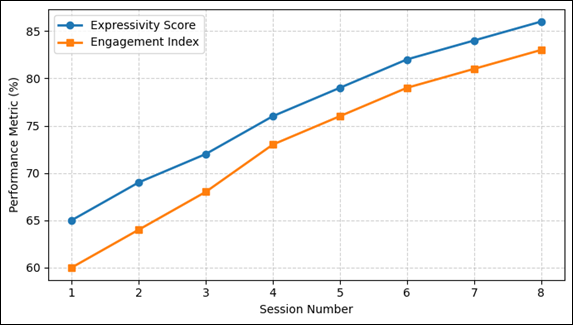
Figure 4 Learner Improvement Trend over 8 Sessions
Figure 4 is the Learner Improvement
Trend graph, which shows that both Expressivity Score and Engagement Index have
a steady positive trend in eight practice sessions. The first four sessions are
characterized by the steep improvement brought about by the novelty and the
process of adapting to the data-driven feedback mechanism, then the process
steadies out, signifying the skill consolidation and habitual refinement. The
fact that both the metrics come close to 85% proves that the learners did not
only work with increased technical accuracy but also attained emotional
consistency, which is the two-fold aim of cognitive and affective learning. The
qualitative feedback received among the instructors focused on the importance
of data visualization and AI-aided interpretation to support the pedagogical
choice. Teachers said that objective performance measures minimized bias when
grading and facilitated more intensive coaching. The best feature was the
“expressivity dashboard which was used to visualize the relationship between
movement intensity, emotional tone, and musical synchronization. There was also
increased self-awareness and motivation among learners. The visual feedback
loop allowed them to identify the slight inconsistencies of timing, posture,
and tone aspects that are often neglected when using the traditional
assessment. A portion of the participants termed the process as a mirror of
their artistic self-implying that the data interface promoted reflective
creativity. The results of the experiment confirm the usefulness of the
blending of AI analytics and human pedagogy. The findings validate the
hypothesis that artistic autonomy would not be compromised by data-driven
approaches to quantify dimensions of creativity as it could be measured.
Further, there were improved ratios between formative (process-based) and
summative (result-based) assessment, which were noticed by instructors.
Although the technical performance measures make sure that the model is sound
in terms of its strength, the pedagogical change is in the fact that the model
fosters artistic self-regulation. The visualization of performance dynamics
transformed the learners into active agents of their learning process, which
can be associated with the constructivist principles that the modern education
theory is based on.
6. Discussion and Pedagogical Implications
It is
observed that learners react well to data-augmented reflective learning through
the steady increase in the Engagement Index (EI) and Expressivity Score (ES).
The results confirm that the DDPMPA is not only a measure of performance but an
aid to learning by creating awareness. By visualizing their bodies in motion,
their rhythm patterns and their congruent feelings, students start to
internalize corrective actions a characteristic feature of adult artistic
practice. The DDPMPA essentially reinvents the relationship between data,
student and pedagogy in creative learning. It develops a feedback-intensive
environment of learning which is personalized, adaptive, and reflective. A number of pedagogical implications come out.
Data
analytics allow personal learning paths to be taken according to expressive and
technical performance patterns. The learners are provided with personalized
practice modules and performance simulations which dynamically adjust with the
changes in their skill profile. The system encourages self-reflection as it
measures, as an abstract aspect like emotion and flow, which bring forth
self-assessment. Learners see data visualizations as representations of
expressive authenticity and they develop intrinsic motivation. The AI is used
as a pedagogue to supplement artistic judgment instead of substituting it.
Teachers rely on data information to plan differentiated instruction
interventions that are aligned to affective and cognitive levels of the
learners. The co-creation interface enables the group analysis and peer review
of performances. This promotes learning in the community, which stimulates
collective explanation and criticism based on objective analytics.
The
radar chart (Figure 5) indicates that there is an
overall superiority of the data-driven pedagogy on all six dimensions of
pedagogy. The significant gains are in the areas of feedback richness, learner
control, and reflective practice, which support the idea that multimodal feedback
helps students to become active participants in the process of performance
evaluation. The point of intersection between the models shows that traditional
pedagogy still has the virtues of contextual mentoring and artistic sensitivity
implying that the future of arts education is not the elimination of tradition
but rather an addition of intelligence to it. The introduction of the AI-based
evaluation to the performing arts provides a philosophical subject to consider.
Art with its subjectivity and emotional nature as shown in figure 5 should not
be subjected to algorithmic precision. The DDPMPA recognizes that by placing AI
as an additive partner and not a determining evaluator, it will be recognized.
The moral code that will be applied to this model will make sure that
creativity, intuition, and emotional sincerity will be at the heart of
pedagogy. Moreover, the possibility of the algorithmic prejudice of the emotion
recognition or motion reading demands careful follow-up. Recalibration of
datasets, instructor control, and explainability systems that are transparent
are necessary in order to ensure fairness, as well as
interpretive integrity. It equips students with a set of reflective tools and
makes possible data-driven teaching that is consistent with modern educational
ideologies.
Figure 5

Figure 5 Pedagogical
Transformation: Traditional vs Data-Driven Approaches'
7. Conclusion and Future Work
This
paper proposed and confirmed a new model of teaching and learning
performance-based arts referred to as Data-Driven Pedagogical Model for
Performing Arts (DDPMPA), is a comprehensive model that combines multimodal
data analytics with pedagogical intelligence to improve the learning and
teaching of performance-based disciplines. The model has been able to juxtapose
the subjective artistic interpretation and objective computational insight by
integrating motion, audio, emotional and textual information in a unified
analytical architecture. The experimental findings showed that there was a
significant improvement in the engagement of learners, expressive coherence,
and reflective practice with the high satisfaction of the instructor and
feedback of the evaluation being in a transparent and evidence-based manner.
The results put in place that the data-driven systems when creatively and
ethically designed can supplement and not substitute the intuition of humans in
the pedagogy of arts. The DDPMPA provides the instructor with real-time data
analysis feedback and facilitates learner autonomy, cooperation, and emotional
sensitivity. Furthermore, it provides scalable chances of curriculum
innovation, institutional analytics, and personalized learning in the creative
fields. This work will be further expanded in future research by integrating
generative AI models to adaptive performance simulation and affective computing
framework to map emotional intelligence. Cross-cultural validation studies
shall also be sought with an aim of making sure there is an inclusivity of
affective interpretation in performing arts worldwide. It will be integrated
with augmented and virtual reality space to form immersive learning ecosystems
where students will be able to see multimodal feedback in interactive
space-aware studios. Finally, the suggested framework will add to the dynamic
vision of AI-human co-creativity, which will promote a symbiotic relationship
between the artistic expression and data intelligence as the next stage of digital
performing arts education.
CONFLICT OF INTERESTS
None.
ACKNOWLEDGMENTS
None.
REFERENCES
Amato, A., Castiglione, A., Mercorio, F., Mezzanzanica, M., Moscato, V., Picariello, A., and Sperlì, G. (2018). Multimedia Story Creation on Social Networks. Future Generation Computer Systems, 86, 412–420. https://doi.org/10.1016/j.future.2018.04.012
Colombo, A. (2016). How to Evaluate Cultural Impacts of Events? A Model and Methodology Proposal. Scandinavian Journal of Hospitality and Tourism, 16, 500–511. https://doi.org/10.1080/15022250.2015.1110848
Crawford, R. (2019). Using Interpretative Phenomenological Analysis in Music Education Research: An Authentic Analysis System for Investigating Authentic Learning and Teaching Practice. International Journal of Music Education, 37, 454–475. https://doi.org/10.1177/0255761419847226
Creswell, J. W., and Poth, C. N. (2017). Qualitative Inquiry and Research Design: Choosing Among Five Approaches (4th ed.). Sage Publications.
De Lucia, M. D., Zeni, N., Mich, L., and Franch, M. (2010). Assessing the Economic Impact of Cultural Events: A Methodology Based on Applying Action-Tracking Technologies. Information Technology and Tourism, 12, 249–267. https://doi.org/10.3727/109830510X12887971002552
Devesa, M., and Roitvan, A. (2022). Beyond Economic Impact: The Cultural and Social Effects of Arts Festivals. In Managing Cultural Festivals, 189–209. Routledge.
Dimoulas, A., Kalliris, G. M., Chatzara, E. G., Tsipas, N. K., and Papanikolaou, G. V. (2014). Audiovisual Production, Restoration-Archiving and Content Management Methods to Preserve Local Tradition and Folkloric Heritage. Journal of Cultural Heritage, 15, 234–241. https://doi.org/10.1016/j.culher.2013.03.004
Dogan, M. (2020). University Students’ Expectations About the Elective Music Course. European Journal of Educational Research, 20, 1–20. https://doi.org/10.12973/eu-jer.20.1.1
Doulamis, A., Voulodimos, A., Protopapadakis, E., Doulamis, N., and Makantasis, K. (2020). Automatic 3D Modeling and Reconstruction of Cultural Heritage Sites from Twitter Images. Sustainability, 12, Article 4223. https://doi.org/10.3390/su12104223
Gibson, S.-J. (2021). Shifting from Offline to Online Collaborative Music-Making, Teaching and Learning: Perceptions of Ethno Artistic Mentors. Music Education Research, 23, 151–166. https://doi.org/10.1080/14613808.2021.1881055
Herrero, L. C., Sanz, J. Á., Devesa, M., Bedate, A., and Del Barrio, M. J. (2006). The Economic Impact of Cultural Events: A Case-Study of Salamanca 2002, European Capital of Culture. European Urban and Regional Studies, 13, 41–57. https://doi.org/10.1177/0969776406058946
Hussin, A., and Bianus, A. B. (2022). Hybrid Theatre: Performing Techniques in the Efforts to Preserve the Art of Theatre Performance Post COVID-19. International Journal of Heritage, Art and Multimedia, 5, 15–31. https://doi.org/10.35631/IJHAM.516002
Liu, Y. T., Lin, S. C., Wu, W. Y., Chen, G. D., and Chen, W. (2017). The Digital Interactive Learning Theater in the Classroom for Drama-Based Learning. In Proceedings of the 25th International Conference on Computers in Education (pp. 784–789). Christchurch, New Zealand.
Pike, P. D. (2017). Improving Music Teaching and Learning Through Online Service: A Case Study of a Synchronous Online Teaching Internship. International Journal of Music Education, 35, 107–117. https://doi.org/10.1177/0255761415626246
Raphael, J., and White, P. J. (2022). Transdisciplinarity: Science and Drama Education Developing Teachers for the Future. In P. J. White, J. Raphael, and K. Van Cuylenburg (Eds.), Science and Drama: Contemporary and Creative Approaches to Teaching and Learning, 145–161. Springer International Publishing. https://doi.org/10.1007/978-3-030-89241-4_9
Saayman, M., and Saayman, A. (2004). Economic Impact of Cultural Events. South African Journal of Economic and Management Sciences, 7, 629–641.
Vasileva, R., and Pachova, N. (2021). Educational Theatre and Sustainable Development: Critical Reflections Based on Experiences from the Context of Bulgaria. Arts for Sustainable Education ENO Yearbook, 2, 97–111.
|
|
 This work is licensed under a: Creative Commons Attribution 4.0 International License
© ShodhKosh 2025. All Rights Reserved.