ShodhKosh: Journal of Visual and Performing ArtsISSN (Online): 2582-7472
|
|
Management Models for Digital Art Academies
Bhaskar Mitra 1
 ,
Amanveer Singh 2,
Palak Sharma 3
,
Amanveer Singh 2,
Palak Sharma 3 , Fehmina Khalique 4
 , Nuzhat Ahmad Yatoo 5
 ,
Dr. Satya Ranjan Das 6
,
Dr. Satya Ranjan Das 6 ,
Gajanan Chavan 7
,
Gajanan Chavan 7
1 Assistant
Professor, Department of Fashion Design, Parul Institute of Design Parul
University, Vadodara, Gujarat, India
2 Centre
of Research Impact and Outcome, Chitkara University, Rajpura- 140417, Punjab,
India
3 Assistant
Professor, School of Sciences, Noida International University, India
4 Greater
Noida, Uttar Pradesh 201306, India
5 Assistant
Professor, Department of Computer Science and Engineering, Aarupadai
Veedu Institute of Technology, Vinayaka Mission’s Research Foundation (DU),
Tamil Nadu, India
6 Associate
Professor, Department of Computer Science and Engineering, Siksha 'O' Anusandhan (Deemed to be University), Bhubaneswar, Odisha,
India
7 Department
of E and TC Engineering, Vishwakarma Institute of Technology, Pune,
Maharashtra, 411037 India
|
|
|
ABSTRACT |
|
|
The emergence
of digital art academies is a paradigm shift in the organization, management,
and delivery of creative education. The present paper explores in-depth
management models that would apply to digital and hybrid creative
institutions that are a combination of traditional studio pedagogy and
AI-powered and data-driven models. The paper starts with an examination of
traditional art academy governance and how they are constrained to deal with
digitally mediated creative practices. After that, it examines the
digitalization of academic organizations, including virtual forms of
governance, interdisciplinary cooperation and the use of AI in administrative
procedures. Particular focus is given to the
pedagogical models in which new technologies are combined: AI, VR/AR, and
multimodal learning tools to improve curricula based on creative
competencies. The paper also expounds on technological infrastructures that
support distributed creative ecosystems including cloud-based learning
management systems, digital asset repositories as well as virtual studios.
Besides, the human resource aspect is also handled, with innovative hiring,
upskilling processes and faculty-industry cooperations. Outside operational
management, such issues as sustainability and ethics are crucial, and it is
highlighted to offer inclusive, accessible, and eco-friendly creative
education. A conclusion has been offered at the end of the paper by
suggesting the framework of resilient, adaptive, and ethically justified
management systems, which can bring digital art academies on the road to
future preparedness. The suggested models do not only redefine the administrative effectiveness, but
also enhance the cultural and educational purpose of the digital age art
institutions. |
|||
|
Received 03 May 2025 Accepted 07 September 2025 Published 25 December 2025 Corresponding Author Bhaskar
Mitra, director.pid@paruluniversity.ac.in
DOI 10.29121/shodhkosh.v6.i4s.2025.6872 Funding: This research
received no specific grant from any funding agency in the public, commercial,
or not-for-profit sectors. Copyright: © 2025 The
Author(s). This work is licensed under a Creative Commons
Attribution 4.0 International License. With the
license CC-BY, authors retain the copyright, allowing anyone to download,
reuse, re-print, modify, distribute, and/or copy their contribution. The work
must be properly attributed to its author.
|
|||
|
Keywords: Digital Art Academies, Educational Management,
AI-Driven Pedagogy, Creative Governance, Virtual Learning Ecosystems |
|||



1. INTRODUCTION
The twenty first century has seen the radical change in the art and design education horizon. The physical studio, atelier, and mentor-apprentice pedagogical model of traditional art academies, are now finding their way through the m azes of digital transformation. The introduction of digital art schools is not just a technological improvement, it is a reorganization of organizational culture, management practices and paradigms of learning within creative institutions. With the intersection of artificial intelligence (AI), virtual reality (VR), augmented reality (AR), blockchain, and cloud technologies with creative processes, the creative education management requires a new leadership approach, resource distribution, and pedagogical practice. Such a combination of technology and creativity demands an overhaul of how administrators operate institutions, how academic institutions develop and organize academies, and models of operations and organization to back up hybrid, remote, and digitally networked art education ecosystems Guillén-Gámez et al. (2024). The established management patterns of art institutions that are based on the linear hierarchies and discipline-based departments, fail to embrace the flexible, inter disciplinary and collaborative aspects of current practices in the creative industry. By contrast, digital art schools focus on agility, inclusivity, and innovation and support the learning process through projects, and active collaboration between artists, technologists, and educationists. This transition requires not only the new technologies but also the change of governance framework and finding a balance between creative autonomy and the data-driven decision-making process. An example is that AI-enabled learning management systems (LMS) will be able to observe the behavior of the learners, monitor creative development, and tailor the learning routes, which will allow the creation of a more flexible and student-centered environment Nieminen et al. (2023). In the same sense, democratization of the creative pipelines and digital repositories through clouds, allows equitable participation among the global creative networks by providing equal access to tools, assets and learning materials. In terms of management, the digital art academies are complex ecosystems that encompass pedagogy and technology and the organizational strategy. The management models should mention the interdependence of operational efficiency and academic innovation. They need to be in conformity to the fast-changing digital media tools and maintain the principles of experimental art and preservation of culture. The governance of the digital academies, thus, should be decentralized and adaptable in order to allow collaboration between departments and be constantly innovative.
Figure 1
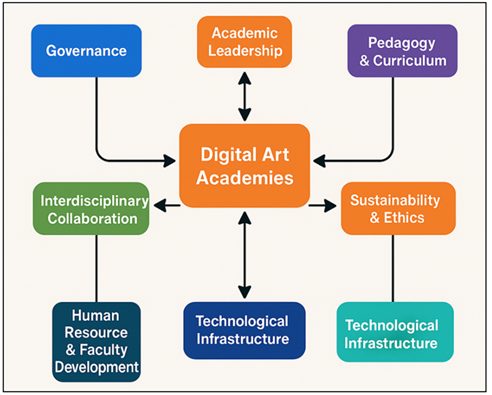
Figure 1 Multilayer Architecture Model for the Management of Digital Art Academies
The issue is whether it is possible to strike a balance between academic rigor and technological flexibility so that the digital transformation improve, instead of weakening, the integrity of artistic education. Figure 1 demonstrates a dynamic system of governance, pedagogy, technology and creative processes. Moreover, the human aspect of the digital transformation should not be ignored Galiç and Yıldız (2023). The leadership of the faculty and administration should transform into digital facilitators, who are able to incorporate AI-related intelligence into educational practices and institutional strategies.
2. Literature Review
2.1. Traditional art academy management systems
Historically, traditional art academies have been hierarchically arranged and studio-based in their management models that focus on master-apprentice relations and organization based on discipline. Their administration systems were also frequently based on a centralized decision-making process where different departments like fine arts, design, architecture, and performance studies existed. The administration was dependent on elderly faculty committees and the curriculum focused on practical mastery of skills, artistic criticism and portfolio assessment Henriksen et al. (2021). Although these systems fostered artistic quality and learning based on mentorship, they were not able to be scaled, collaborated interdisciplinarily, and adapt to the digital pedagogy. The administration of these academies centered around physical facilities such as studios, galleries, workshops, and exhibition area, which demanded much investment in materials, maintenance and faculty-based teaching. The focus of the academic administration was on qualitative evaluation and aesthetic discussion rather than on data analysis and performance indicators. Consequently, the conventional model could not necessarily have elements of flexible schedules, distance education, and immediate feedback. In addition, the distance between the administration, faculty and students led to silos in communication, hindering innovation and responsiveness to new creative technologies Onyekwere and Enamul Hoque (2023). These limitations notwithstanding, the traditional models laid firm groundwork on creativity, critical thinking and cultural expression.
2.2. Digital Transformation in Creative Institutions
Digital change in creative institutions is a reorganization of academic, operational and artistic processes. It is a combination of digital technologies in every aspect of institutional functioning, curriculum development, teaching, assessment, and administration. Some of the technological innovations that have contributed to this change include including cloud computing, immersive media, generative AI, and real-time collaborative platforms Mee Mee et al. (2020). This is the redefinition of traditional studio practices in digital art academies by virtual studio, digital repository of assets, and cloud based creative pipeline that allows distributed collaboration and distance instruction. The institutional management is now no longer the administrative control but is agile digital governance. Learning management systems (LMS) and data analytics dashboards enable administrators to oversee the level of engagement of learners, track their performance and customize instruction Alt and Raichel (2020). Hybrid and asynchronous learning also happen through digital platforms and provide students and faculty with the opportunity to engage in creative production across physical boundaries. Besides, inter-departmental ventures in art, design, and technology have now taken the center stage in innovation ecosystems.
2.3. AI-Enabled Educational Management Frameworks
Artificial intelligence (AI) is rapidly transforming the concept of educational management through automating administrative tasks and personalizing learning experiences as well as aiding the decision-making process. AI-based systems in digital art academies promote intelligent timetable, prompt evaluation, resource optimization and prospective analytics to achieve student achievement. Machine learning algorithms study the learning behaviors, determine the performance trends and prescribe personalized learning paths. These systems help to increase efficacy and quickness of handling creative education where subjectivity and innovation coexist Cheng et al. (2023). Management models using AI are applied in curriculum design and assessment. With the help of learning analytics and natural language processing, the institutions will be able to evaluate creativity metrics, review the results of the artistic activities, and interpret the qualitative feedback more methodically. Distributed recommenders Recommendation systems based on AI filter digital content, propose course units, or create the best collaborative groups through complementary creative profiles. Equally, generative AI platforms can be used to create digital pedagogical content, automate standard grading, and enhance the productivity of faculty Shao et al. (2022). In the institutional view, the governance systems of AI highlight transparency, accountability, and ethics in algorithm decisions. A comparative overview of the structures, strategies, technologies, and institutional management improvement is illustrated in Table 1. The anxieties of prejudice, clarifiable AI, and human control guidelines are necessary to establish fair play and confidence in the educational procedures
Table 1
|
Table 1 Related Work Summary on Management Models for Digital Art Academies |
||||
|
Focus Area |
Methodology |
Key Technologies Used |
Pedagogical Model |
Limitation/Gap |
|
Digital transformation in
art schools |
Case study (3 institutions) |
LMS, cloud repositories |
Blended learning |
Limited cross-departmental
collaboration |
|
Curriculum redesign for
digital media arts |
Survey-based study |
AR/VR tools |
Competency-based learning |
Lacked long-term
sustainability metrics |
|
Faculty digital readiness Mulyono et al. (2023) |
Mixed methods |
AI analytics |
Adaptive learning |
High infrastructure cost |
|
Governance in hybrid
creative academies |
Policy review |
Cloud-based dashboards |
Hybrid teaching |
Lacked ethical AI framework |
|
Interdisciplinary
collaboration mechanisms Pittenger et al. (2022) |
Experimental pilot |
Collaboration platforms |
Project-based learning |
Scalability challenges |
|
Industry–academia
partnerships |
Comparative analysis |
Virtual labs |
Experiential learning |
Dependence on external
partners |
|
Sustainable digital studio
operations |
Lifecycle assessment |
Green computing |
Sustainability-based
pedagogy |
Initial setup cost high |
|
AI in creative curriculum
design |
Simulation study |
Generative AI tools |
Personalized learning |
Lack of ethical guidelines |
|
Digital inclusivity in
creative education Tang et al. (2022) |
Field study |
Accessibility platforms |
Universal design |
Limited language
localization |
|
Creative coding education
models |
Experimental course |
Processing, p5.js |
Constructivist pedagogy |
Requires strong faculty
technical skill |
|
Cloud-based creative
collaboration Hadjielias et al. (2021) |
Quantitative analysis |
AWS, Azure pipelines |
Collaborative learning |
Data privacy concerns |
|
Ethical AI in creative
practice |
Analytical study |
Explainable AI (XAI) |
Reflective pedagogy |
Limited implementation
frameworks |
|
Integrated management [models for digital art academies |
Framework development |
AI + AR/VR + Cloud |
Competency-based &
multimodal |
Needs empirical validation
through pilot studies |
3. Organizational Structures for Digital Art Academies
3.1. Governance frameworks for hybrid/virtual creative institutions
The creative institutions of the future (hybrid and virtual institutions) will demand a shift in governance between traditional management in a hierarchical structure to distributed, participatory, and data-driven structures. In contrast to the traditional academy that operates within the physical studio and departmental silos, the academic of digital art functions within the digital ecosystems- physical, virtual and hybrid environments are combined. Their rule should thus be transparent, agile and inclusive without involving academic rigor and artistic freedom Zhen et al. (2021). In addition to decentralized decision-making, it is important to note that modern frameworks do not exclude collaboration between academic boards, digital coordinators, and creative technologists, which occurs through cloud-based platforms and collaborative dashboards. In Figure 2, a structured model is presented, which brings policies, stakeholders, workflows, and digital governance mechanisms to the point of convergence.
Figure 2
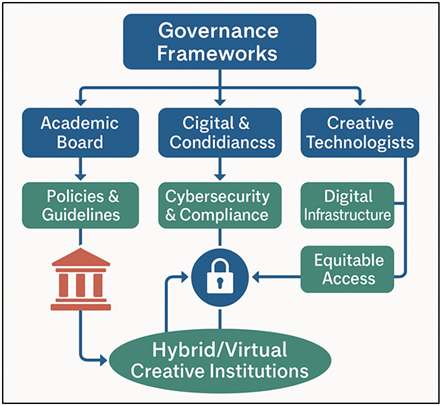
Figure 2 Governance Framework for Hybrid and Virtual Creative Institutions
The hybrid campuses can be easily operated by a structure of governance that is layered, i.e. having strategic, academic, and operational committees, which can help harmonize the institutional goals and digital norms that are emerging. Furthermore, policy frameworks should deal with the intellectual property rights, AI ethics, and digital data governance. The process of accreditation has expanded to rely not only on the review of curriculum but also virtual studio standards, compatibility of creative platforms, and digital standards of accessibility Abbate et al. (2022).
3.2. Academic Leadership and Departmental Restructuring
There is a need to redefine academic leadership across the traditional boundaries of administration in digital art academies. The leadership within such settings will need to incorporate the skills of art with digital literacy, system thinking, and team management. The role of the academic leaders has approached to be that of creative strategists who mediate between technology, pedagogy and institutional vision. The deans, department heads, and program directors should be the champions of innovation without compromising the academic quality and cultural sensitivity. Restructuring digital art academies into departmental forms can be the shift of the discipline-based clusters to the project- or theme-based ones. Rather than having separate departments like Painting, or Animation, or Photography, the institutions are structured around areas such as Immersive Media, Creative Coding or AI-Driven Design. This is a fluid organizational structure that promotes transfer of ideas and facilitates changing artistic practices Paramitasari (2020). As an academic leader, one needs to organize the interdisciplinary research, to oversee the resources across various departments as well as incorporate the new digital technologies in the curriculum. Another aspect of leadership is the ability to build partnerships with the creative industries and make sure that the academic program is consistent with the trends in the real-world innovation.
3.3. Interdisciplinary Collaboration Mechanisms
Digital art academies rely on interdisciplinary cooperation as the intellectual foundation to allow creative intersections of art, design, engineering, media studies and computer science. The means of effective collaboration turn solitary creative disciplines into lively ecosystems to support innovations, critical questioning, and co-creation. Structurally, co-operation may be formatted in terms of interdisciplinary studios, innovation laboratories, or digital research clusters around common themes like generative AI, immersive history, or computational aesthetics. Such collaboration has management models that focus on horizontal communication, shared governance, and co-teaching models. The faculty members to different disciplines co-create curricula, co-oversee projects and participate in trans-disciplinary exhibits or digital showcases. This is achieved through project-based learning environment where digital collaboration tools (that include virtual whiteboards, cloud-based asset repositories, and project trackers assisted by AI) are used to make cross-departmental and geographical integration smooth. The institutional policies should encourage cooperation by providing joint financing basis, interdisciplinary grants, and other recognition systems that encourage team-based innovation.
4. Pedagogical and Curriculum Management Models
4.1. Competency-based digital art curriculum frameworks
Curriculum systems based on competencies in digital art academies focus on quantifiable creative, technical and cognitive skills instead of time-based learning or predetermined course sequences. This practice supports learning outcomes with professional skills needed in the modern creative economy- such as design thinking, becoming digital, telling stories visually and using AI in ways that satisfy ethics. The modules are organized around mastery which is demonstrable to enable the learners to learn at their own paces utilizing project-based assessment, digital portfolios, and peer reviews. Competency-based digital models, unlike conventional content-based syllabi, have flexible forms of modular structure, which combine creativity and technical competencies. The curricula undergo constant revision based on the data-driven insights of learning management systems (LMS) and feedback loops of professionals in the industry. Students are not only tested in terms of artistic output but also problem-solving, teamwork and adapting the emerging technology to creative practice. The role of educators is that of guide and facilitator whereby they take learners through creative cycles of ideation, prototyping, critique, and refinement. Creativity measures in the form of digital rubrics, that is, innovation index, aesthetic coherence, and multimodal integration, are used to prevent unfair and vague assessment.
4.2. Learning Pathways for Design, Animation, Media Arts, and Creative Coding
The learning trajectories at digital art schools should respond to the specific needs of the various creative disciplines besides facilitating cross-disciplinary convergence. These pathways are structured but flexible and allow learners to major in one of the areas including design, animation, media arts, and creative coding and still have the potential to explore other fields interdisciplinarily. The curriculum combines general study such as digital aesthetics, storytelling and visualization with specific opportunities of studying domain specific skills such as 3D modeling, motion graphics or algorithmic design. Both streams assume an evolutionary development process of technical literacy to high-order creative usage and innovation.
Figure 3
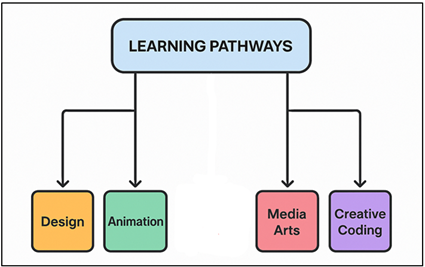
Figure 3 Learning Pathways in Digital Art Academies
Design pathways are concerned with problem-solving oriented on human beings, the principles of UI/UX, and visual communication. Animation lines are more focused on the storytelling, character design, and the methods of procedural generation. Figure 3 depicts increasing skills as a result of design, integration of media and technology. Media arts integrate interactive installations, sound design and digital performativity, whereas creative coding develops the use of algorithms in generating creative work using programming languages such as Processing, p5.js and Unity. The joint capstone projects have the effect of integrating students in various tracks so as to create a simulation of production pipelines in the real world. The inclusion in the industry tools, software certification, and professional mentorship also make sure that it is relevant to the changing needs of the market. With the adoption of versatile courses that are enabled by online platforms, academies enable learners to build their own unique experiences, which can be both specialized and creatively diverse. The model will equip graduates with hybrid work in the areas of design, technology, and media innovation, which validates the transdisciplinary spirit of contemporary digital art education.
4.3. Integration of AI, VR/AR, and Multimodal Tools in Pedagogy
The combination of AI, VR/AR, and multimodal tools with pedagogy transforms the learning experience in the digital art academies, through integration of immersive technology with creative thinking. AI-based applications promote adaptive learning infrastructures to customize content delivery, automatize routine evaluations, and also to render smart feedbacks on creative projects. As an illustration, generative AI may be used to help with ideation, proposing composition variations or color combinations, whereas machine learning algorithms could be used to critique and be inspired by the artistic styles. The virtual and augmented reality changes classrooms into experiential learning environments. Learners are able to build installations, create digital exhibitions, or learn about historical forms of art in physical and virtual models, blurring physical and virtual art forms. Remote collaboration is also possible in VR studios, through which learners around the world can collaborate in common 3D environments. Multimodal learning systems are integrated systems of text, image, sound, gesture, and code, which facilitates students to think and make across the senses. These platforms are used by the educators to build interactive lessons, with the use of gesture recognition, spatial audio, and real-time rendering.
5. Technological Infrastructure and Resource Management
5.1. Digital learning platforms and LMS architectures
Digital art academies rely on digital learning systems based on learning management system (LMS) architecture and digital learning platforms. These systems facilitate the smooth provision of creative content, evaluation, and collaboration in the hybrid or completely online contexts. A powerful LMS incorporates the multimedia content management systems, peer reviews and adaptive learning analytics to monitor creative success and participation. Other platforms like Moodle, Canvas, and Blackboard are also being more personalized with an AI-backed module that makes learning more personalized and office management like grading, attendance, and feedback more automated. In the case of art and design education, LMS architectures should provide an opportunity to upload high-resolution media, interactive portfolios, and real-time feedback. Connections with digital asset management systems (DAMS) guarantee the safety of storing creative projects and controlling its version evolution. Besides, it can be integrated directly into a workflow by connecting with design products (Adobe Creative Cloud, Blender, Unity, or Unreal Engine). The scalability and accessibility of the open-source and cloud-based LMS solutions contribute to the global collaboration between students and educators. Developed analytics devices display performance trends, allowing the instructors to personalize interventions and enhance the learning results. Therefore, a properly designed digital learning ecosystem alters the management of academics by turning it into a dynamic, data-driven, and student-oriented creative environment, as well as allowing learners and educators to engage in creative activities, innovate, and effectively manage creative knowledge.
5.2. Cloud-Based Creative Pipelines and Asset Repositories
Creative pipelines built in the cloud transform the functioning and community aspects of the digital art academies by making it possible to access creative resources, tools, and computing capacities in real-time. These pipelines simplify the geographically distributed creative process of concept ideation and modeling, rendering, and distributing between the end-to-end creative process in geographically separated teams. With the help of such tools as Google Cloud, AWS Educate or Microsoft Azure for Education, the institutions can roll out scaled infrastructure to support high workloads in animation, visual effects, and digital fabrication. A vital section of such pipelines are asset repositories. They offer a hierarchical storage and version management of multimedia content, 3D content, project documents and interactive prototypes. The ability to co-create using metadata tagging, version tracking and collaborative editing tools, along with creative integrity and data security make students and faculty efficient in creating works together. Interconnection to content delivery networks (CDNs) also makes use of optimum access speed, and API supports interoperability between creative software ecosystems. Cost-efficient rendering and simulation is also enabled by cloud computing and is no longer constrained by the local hardware. Digital art schools can obtain the pedagogical flexibility and efficiency by implementing cloud-based creative pipelines.
5.3. Studio Management for VR/AR Labs, Motion Capture, and Rendering Servers
The concept of studio management is not limited to digital art academies where the physical location has been replaced by high-performance VR/AR labs, motion capture studios, and rendering clusters. These are specialized environments that are needed in training the students in immersive media productions, real time animation and computational creativity. Proper management of such facilities entails the combination of hardware, software and network infrastructures with centralized monitoring systems to ensure proper utilization of resources. VR/AR laboratories should be furnished with premium VR/AR equipment, spatial sensors, and tracking devices. They act as testing areas in which learners are encouraged to pretend storytelling of space, 3D interface, and virtual display layout. Multi-camera setups, body tracking costumes and synchronized lighting rigs are all needed in motion capture studios- which makes the capture of high precision performance capture easy to use in animation and game development. The rendering servers usually in the form of GPU clusters or cloud-rendering facilities are used to do such complicated tasks like photorealistic rendering, simulation, and visual generation aided by AI. The allocation of computing power on resource scheduling systems is done according to the importance of the project undertaken and the project deadline which is fair and energy efficient. The studio governance includes safety, maintenance and cybersecurity measures. Besides, the synchronization of digital assets with LMS and cloud repositories allows the implementation of smooth creative processes.
6. Human Resource and Faculty Development Models
6.1. Recruitment strategies for digital-native creative educators
The hiring of faculty in the digital art academies involves rethinking the conventional hiring methods in order to find faculty members who are not only creative but also technologically proficient. The perfect digital-native creative educator is one who not only is skilled in art and design but also well versed in AI suits, immersive technology and data-driven pedagogy. The strategies of recruitment will have to prioritize hybrid abilities, i.e., generative design, computational creativity, and interactive media production, and pedagogical innovation, though. There is a trend of institutions implementing competency-based recruitment models that evaluate the candidates based on creative portfolios, digital teaching demos, and work on group projects. Recruitment agencies and online residencies allow institutions to hire professionals of different cultural and creative heritages. Besides, collaborations with technology firms, design studios, and creative startups increase the pool of talent, and encourage cross-pollination of academia and industry.
Figure 4
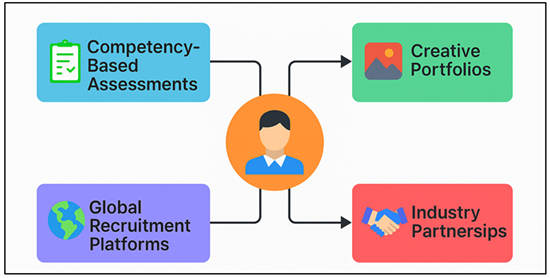
Figure 4 Recruitment Strategies Framework for Digital-Native Creative Educators
Some of the key principles related to recruitment are equity, inclusivity, and cultural diversity. Adaptive hiring, training and collaboration models of creative educator are presented in Figure 4. The advantage of digital academies is that the faculty members are equipped with interdisciplinary views and cross-cultural information to apply in the classroom. The model of flexible appointments, such as adjunct, visiting, and remote faculty appointments, also adds more variety to the institutional ecosystem. Finally, good recruitment methods lay stress on educators who are innovators, technologists and mentors- those who can coach the learners in the cross-roads of art, technology as well as critical thinking in an ever-changing digital creative environment.
6.2. Continuous Upskilling Through AI-Driven Training Modules
The faculty designing in the digital art schools should be a continuous, dynamic process in line with the advancement of technology. The training modules developed by AI are an intelligent solution to constant upskilling through a skill analysis of educators with a personalized learning trajectory based on the recommendations and an automated performance monitoring system. The modules use data analytics and adaptive learning algorithms to personalize micro courses around new tools, including generative AI, immersive storytelling, machine learning in creative design, and digital asset management. The faculty members can use AI-based learning platforms with interactive tutorials, simulations, and peer cooperation. The systems have the ability to dynamically change the complexity of their contents depending on the progress and performance of the users, making them efficient and engaging. As well, virtual sandboxes enable instructors to test out new technologies, such as neural rendering or multimodal AI, without interfering with the process of teaching. The role of institutional management is important as it can incorporate AI-powered upskilling initiatives into the faculty appraisal framework and connect the professional development to quantifiable results. Reward systems, online certificates, and online learning come together to enhance reward and encouragement. These AI modules are based on the ethical AI use, creative adaptability, and digital pedagogy, in addition to the technical capability. The ongoing and evidence-based upskilling is converting faculty into a life long learners and instructor, making sure the digital art academies are pedagogically relevant, technologically oriented and competitive in the realm of creative education across the world.
7. Conclusion
The development of digital art schools is a radically new re-definition of creative education: it is the one that incorporates aesthetic creativity with technological smartness, ethical management and sustainability. The management practices involved in the management of these institutions should however go beyond the conventional administrative models that balance creativity and digital transformation with resilience of institutions. It is apparent that all this study that there is a need to strike a balance between innovation and structure in managing a digital art academy to create systems that are flexible, inclusive, and accountable at the same time. The key aspects that governance in a hybrid and virtual environment has to focus on are decentralization, transparency, and agility, and leadership in academics should show interdisciplinary vision and be digitally savvy. Competency-based learning and multimodal engagement pedagogical frameworks can be used to make sure that students learn not only the technical skills but also develop critical and cultural insight. The technological infrastructure, comprising of LMS architecture, VR/AR laboratories and cloud pipelines, lies at the backbone of the operative frameworks, which allow enabling real-time collaboration, scaled operation and sustainability. No less important is the human aspect which includes hiring digital-native teachers, encouraging unceasing professional growth based on AI and collaboration with industry professionals all of which enable institutional change.
CONFLICT OF INTERESTS
None.
ACKNOWLEDGMENTS
None.
REFERENCES
Abbate, F., Ridolfi, A., Barr, E. D., Buchner, S., Burgay, M., Champion, D. J., Chen, W., Freire, P. C. C., Gautam, T., Grießmeier, J. M., et al. (2022). Four Pulsar Discoveries in NGC 6624 by TRAPUM Using MeerKAT. Monthly Notices of the Royal Astronomical Society, 513(2), 2292–2301. https://doi.org/10.1093/mnras/stac1041
Alt, D., and Raichel, N. (2020). Enhancing Perceived Digital Literacy Skills and Creative Self-Concept Through Gamified Learning Environments: Insights From a Longitudinal Study. International Journal of Educational Research, 101, 101561. https://doi.org/10.1016/j.ijer.2020.101561
Cheng, Y.-P., Lai, C.-F., Chen, Y.-T., Wang, W.-S., Huang, Y.-M., and Wu, T.-T. (2023). Enhancing Student’s Computational Thinking Skills With Student-Generated Questions Strategy in a Game-Based Learning Platform. Computers and Education, 200, 104794. https://doi.org/10.1016/j.compedu.2023.104794
Galiç, S., and Yıldız, B. (2023). The Effects of Activities Enriched With Game Elements in Mathematics Lessons. Innoeduca. International Journal of Technology and Educational Innovation, 9(1), 67–80. https://doi.org/10.24310/innoeduca.2023.v9i1.15396
Guillén-Gámez, F. D., Ruiz-Palmero, J., and Gómez-García, M. (2024). Digital Competences in Research: Creativity and Entrepreneurship as Essential Predictors for Teacher Training. Journal of Computers in Education, 11, 1263–1282. https://doi.org/10.1007/s40692-023-00299-3
Hadjielias, E., Dada, O., Discua Cruz, A., Zekas, S., Christofi, M., and Sakka, G. (2021). How Do Digital Innovation Teams Function? Understanding the Team Cognition Process Nexus Within the Context of Digital Transformation. Journal of Business Research, 122, 373–386. https://doi.org/10.1016/j.jbusres.2020.08.045
Henriksen, D., Creely, E., Henderson, M., and Mishra, P. (2021). Creativity and Technology in Teaching and Learning: A Literature Review of the Uneasy Space of Implementation. Educational Technology Research and Development, 69(4), 2091–2108. https://doi.org/10.1007/s11423-020-09912-z
Mee Mee, R. W., Shahdan, T. S. T., Ismail, M. R., Ghani, K. A., Pek, L. S., Von, W. Y., Woo, A., and Rao, Y. S. (2020). Role of Gamification in Classroom Teaching: Pre-Service Teachers’ View. International Journal of Evaluation and Research in Education, 9(3), 684–690. https://doi.org/10.11591/ijere.v9i3.20622
Mulyono, H., Bátyi, S., and Mukminin, A. (2023). An Analysis of EFL Teachers’ Digital Creativity and Its Relation to Their Instructional Creativity: A Case of Indonesian Primary and Secondary Schools. The Journal of Asia TEFL, 20(3), 582–597. https://doi.org/10.18823/asiatefl.2023.20.3.5.582
Nieminen, J. H., Bearman, M., and Ajjawi, R. (2023). Designing the Digital in Authentic Assessment: Is It Fit for Purpose? Assessment and Evaluation in Higher Education, 48(4), 529–543. https://doi.org/10.1080/02602938.2022.2089627
Onyekwere, J., and Enamul Hoque, K. (2023). Relationship Between Technological Change, Digitization, and Students’ Attitudes Toward Distance Learning in Lagos Higher Education Institutes. Innoeduca. International Journal of Technology and Educational Innovation, 9(1), 126–142. https://doi.org/10.24310/innoeduca.2023.v9i1.15286
Paramitasari, A. (2020). The Advantages and Disadvantages of Using ICT in English Language Teaching. Enrich: Jurnal Pendidikan, Bahasa, Sastra Dan Linguistik, 1, 1–8. https://doi.org/10.36546/pbi.v3i2.604
Pittenger, L. M., Berente, N., and Gaskin, J. (2022). Transformational IT Leaders and Digital Innovation: The Moderating Effect of Formal IT Governance. The DATA BASE for Advances in Information Systems, 53(1), 106–133. https://doi.org/10.1145/3514097.3514104
Shao, Z., Li, X., and Wang, Q. (2022). From Ambidextrous Learning to Digital Creativity: An Integrative Theoretical Framework. Information Systems Journal, 32(3), 544–572. https://doi.org/10.1111/isj.12361
Tang, H., Yao, Q., Boadu, F., and Xie, Y. (2022). Distributed Innovation, Digital Entrepreneurial Opportunity, IT-Enabled Capabilities, and Enterprises’ Digital Innovation Performance: A Moderated Mediating Model. European Journal of Innovation Management, 26(4), 1106–1128. https://doi.org/10.1108/EJIM-08-2021-0431
Zhen, Z., Yousaf, Z., Radulescu, M., and Yasir, M. (2021). Nexus of Digital Organizational Culture, Capabilities, Organizational Readiness, and Innovation: Investigation of SMEs Operating in the Digital Economy. Sustainability, 13(2), 720. https://doi.org/10.3390/su13020720
|
|
 This work is licensed under a: Creative Commons Attribution 4.0 International License
© ShodhKosh 2025. All Rights Reserved.