ShodhKosh: Journal of Visual and Performing ArtsISSN (Online): 2582-7472
|
|
AI-Assisted Student Evaluation in Visual Art Programs
Mary Praveena J 1
 ,
Sonia Pandey 2, Aneesh Wunnava 3
,
Sonia Pandey 2, Aneesh Wunnava 3 ,
Kairavi Mankad 4
,
Kairavi Mankad 4
 ,
Tannmay Gupta 5
,
Tannmay Gupta 5 , Shilpy Singh 6
 , Amol Bhilare 7
1 Assistant
Professor, Department of Computer Science and Engineering, Aarupadai
Veedu Institute of Technology, Vinayaka Mission’s Research Foundation (DU),
Tamil Nadu, India
2 Greater
Noida, Uttar Pradesh 201306, India
3 Associate
Professor, Department of Electronics and Communication Engineering, Siksha 'O' Anusandhan (Deemed to be University), Bhubaneswar, Odisha,
India
4 Assistant
Professor, Department of Fashion Design, Parul Institute of Design, Parul
University, Vadodara, Gujarat, India
5 Centre
of Research Impact and Outcome, Chitkara University, Rajpura- 140417, Punjab,
India
6 Professor,
School of Science, Noida International University, 203201, India
7 Department
of Computer Engineering, Vishwakarma Institute of Technology, Pune,
Maharashtra, 411037, India
|
|
|
ABSTRACT |
|
|
The paper
introduces an AI-based system that helps students in visual art education to
be evaluated with the help of computational intelligence and pedagogical
evaluation to achieve a better degree of objectivity, inclusivity, and
creative insight. Conventional methods of art evaluation can tend to be
subjective in nature resulting in inconsistency in grading and variation in
feedback. The offered system presents a multimodal evaluation pipeline, that
is, visual, structural, and stylistic parts of student art are analyzed with
the help of convolutional neural networks (CNNs), transformer-based models,
and aesthetic perception algorithms. Model training and validation are
performed using a training dataset that includes student artworks, expert
rubrics, and process logs. The AI model develops multi-criteria scores in
terms of creativity, technique, aesthetic quality, and originality dimensions
and guarantees the correspondence to the standards of education and
outcome-based learning goals. A feedback generation component translates the
outputs of the model to have pedagogically significant results, which is
beneficial to learners and instructors. The focus is made on the
transparency, explainability, and bias mitigation to make sure that the
evaluative process of the AI can support but not restrict the artistic
freedom. |
|||
|
Received 01 April 2025 Accepted 06 August 2025 Published 25 December 2025 Corresponding Author Mary
Praveena J, marypraveena.avcs092@avit.ac.in DOI 10.29121/shodhkosh.v6.i4s.2025.6869 Funding: This research
received no specific grant from any funding agency in the public, commercial,
or not-for-profit sectors. Copyright: © 2025 The
Author(s). This work is licensed under a Creative Commons
Attribution 4.0 International License. With the
license CC-BY, authors retain the copyright, allowing anyone to download,
reuse, re-print, modify, distribute, and/or copy their contribution. The work
must be properly attributed to its author.
|
|||
|
Keywords: AI-Assisted
Art Evaluation, Creative Pedagogy, Multimodal Learning Analytics, Aesthetic
Modeling, Educational AI Systems, Visual Art Assessment |
|||



1. INTRODUCTION
Creativity
in visual art programs in schools has been a thorn in the flesh of both
teachers and curriculum directors and colleges. Artistic evaluation, contrary
to quantitative fields, is the subjective evaluation of imagination, aesthetic
harmony, technique, and expression of emotion. Conventional assessment systems
using rubrics, jury judgment and studio critiques are usually characterized by
inconsistencies, implicit bias, and lack of scalability. As the digital
learning environment grows alongside the classes and the requirements to train
more teachers, educators of art are pressured to balance personalized criticism
with effective, transparent, and equitable evaluation procedures. Artificial
Intelligence (AI) can be the game-changer in this changing environment, being
able to complement human judgments by providing computational meaning to the
visual, stylistic, and contextual interpretation of artwork Deng and Wang (2023). The idea of
AI-assisted assessment in visual art education is a paradigm shift, as
algorithms do not substitute the educators, but work together with them.
Through the use of computer vision, deep learning, and aesthetic modeling AI systems are able to interpret images, patterns
of brush strokes, color selections, composition
structure and logs of the creative process to come up with quantifiable
measures of artistic quality. These systems, when used intelligently, offer
objective reinforcement to human evaluation besides assisting students to
realize the reasoning behind their feedback-making evaluation a learning
experience instead of a grading activity Zhao (2022).
The
trick is to match AI abilities with the purposes of pedagogy in such a way that
artistic freedom, originality, and cultural diversity would be the focus of the
education process. The multimodal learning analytics, which incorporates the
information about sketches, digital portfolios, process videos, and reflection
journals, further increase the interpretative capacity of AI-based frameworks.
The given method permits the assessment procedure to be based not only on the
final piece of artwork but also on the creative process: idea exploration,
experimenting with the materials, and refining it over the time. This holistic
approach conforms to outcome-based education (OBE) and Bloom taxonomy through
visual and cognitive mapping of learning outcomes to quantifiable and
measurable parameters. The ability of AI to identify patterns and recognize
anomalies is thereby an educational friend, indicating both the ideal
performance with regards to creativity and where assistance is advised He and Sun (2021). Technically
speaking, Convolutional Neural Networks (CNNs), Vision Transformers (ViTs), and other models have the ability to be optimized on
datasets labeled by professional artists and
educators. These models discover hierarchical features, between the low level texture patterns to the high-level stylistic
coherence, as the basis of a multi-criteria scoring engine. Explainable AI
(XAI) methods are also incorporated, which guarantees the transparency of the
decision-making process, and educators can see how particular pieces of art are
awarded the scores. This interpretability is necessary in order to ensure
trust, accountability and acceptability of AI in art academia. AI-assisted
systems have a number of benefits pedagogically. They facilitate formative
feedback in real-time, which lets students make amendments to their work in an
iterative process instead of having to wait until the end of term to receive appraisals
Rong et al. (2022). They
encourage individualized learning experience, which modifies the criticism
depending on the creative inclinations and advancement of a student. Moreover,
the use of massive analytics based on aggregate student data can assist
institutions to refine to curricula, identify their developing trends, and
provide equity in different learning groupings.
2. Related Work
The
desire to make machines judge the visual art is also not a novel idea - the
computational aesthetics, computer vision and AI-art research fields have long
been interested in understanding how to approximate human aesthetic judgment
and style classification. The main point of reference is the survey of
researchers in the domain of computational image aesthetic evaluation which
contains an extensive collection of methods that seek to measure human
decisions of beauty and visual interest based on image descriptors, machine
learning and learned aesthetic models. In a single line of study, initial
studies tried to formalize aesthetical examination using quantifiable
characteristics, like composition, color harmony,
balance and symmetry Lee et al. (2022). To
illustrate, a research carried out on
the subject of the aesthetic evaluation of paintings due to visual
balance suggested the automatic assessment methods to determine the layout and
symmetries of any painting to estimate the aesthetic value. In a more general
sense, neuro-aesthetic inspired models have attempted to mimic properties of
human visual perception - isolating and de-isolating properties such as color, shape, orientation etc - and using them in
combination to generate a machine based aesthetic judgment. These methods have
been extended to larger, non-static images As the
field of deep learning advances, increasingly more research is done without
using handcrafted features, instead using data-driven features of style,
composition, and visual semantics Fan and Zhong (2022). An example of
this is a bibliometric analysis of machine-learning based style prediction in
paintings, which discovered a sharp increase in the interest in research, which
demonstrated the feasibility of applying modern architectures to classify
painting style or artistic properties. Multimodal approaches, i.e. visual data
and contextual metadata/textual/semantic annotation, have also been suggested
to improve automatic analysis of art Tang et al. (2022). As an
example, context-sensitive embeddings which combine visual and art-specific
metadata were better at retrieval, classification, and style recognition.
Simultaneously, studies on the critique of creative output created by AI are
increasingly growing, not just on the beauty of the creation, but also on its
creativity, novelty, and expressiveness. Table 1 presents the
major references on AI-based art assessment and teaching systems. A recent
paper explores the way in which the metrics of human creativity based on
cognitive-psychology and the empirical aesthetics may be modified to evaluate
human-created art pieces and artificial intelligences as well.
Table 1
|
Table 1 Summary on AI-Assisted Art Evaluation and Educational Frameworks |
||||
|
Focus
Area |
Methodology |
Dataset
Type |
Evaluation
Criteria |
Limitations |
|
Computational
aesthetics |
CNN-based
aesthetic prediction |
AVA,
WikiArt |
Visual
appeal, balance |
Limited
to static images |
|
Art
education analytics |
AI-supported
creative feedback |
Student
portfolios |
Creativity,
technique |
No
interpretability tools |
|
Artistic
style classification |
Transfer
learning (ResNet50) |
WikiArt |
Style,
color, texture |
Excludes
creativity measure |
|
Visual
harmony in design Chiu et al. (2022) |
Aesthetic
CNN + color theory metrics |
Design
image dataset |
Harmony,
composition |
Narrow
domain coverage |
|
Educational
AI systems |
Hybrid
CNN-LSTM |
Student
artwork logs |
Process,
originality |
Data
imbalance |
|
Neural
creativity modelling Huang et al.
(2022) |
GAN-based
evaluation |
Digital
paintings |
Novelty,
divergence |
High
computational cost |
|
Art
grading automation Chen et al.
(2023) |
Vision
Transformer (ViT-B16) |
Painting
corpus |
Aesthetic
quality |
Weak
contextual understanding |
|
Cognitive
art evaluation |
CNN
+ psychological metrics |
Art
therapy images |
Emotion,
perception |
Subjective
variance remains |
|
AI
in design education |
Multimodal
fusion network |
Design
projects |
Coherence,
technique |
Dataset
diversity low |
|
Creative
pedagogy evaluation Fan and Li
(2023) |
NLP
+ Visual model integration |
Student
reflections |
Concept
depth, originality |
Text-image
alignment weak |
|
AI
in aesthetic learning |
EfficientNet aesthetic regression |
Online
art platforms |
Aesthetic
rating |
Subjective
aesthetic drift |
|
Art
critique automation |
Explainable
AI (Grad-CAM) |
Annotated
artworks |
Attention,
technique |
Limited
dataset size |
|
Creative
evaluation fairness Sun (2021) |
Bias-mitigated
CNN ensemble |
Cross-cultural
data |
Equity,
consistency |
Cultural
model constraints |
|
AI-assisted
art education Xu and Nazir
(2022) |
CNN
+ Transformer + XAI |
Student
artworks + rubrics |
Creativity,
technique, aesthetics |
Further
multimodal refinement needed |
3. Conceptual Framework for AI-Assisted Art Evaluation
3.1. Components: creativity, aesthetics, technique, originality
The
basis of AI-assisted art criticism is in the establishment of quantifiable yet
adaptable aspects which are used to capture the multidimensionality of creative
expression. Creativity is the capability of the student to create new visual
concepts, experiment with unusual forms, and do something creative with taking
risks Vartiainen and
Tedre (2023). Quantitatively, AI models measure the creativity in terms of
variation and compositional diversity and novelty of the idea as measured using
visual semantics and texture patterns. Visual harmony, balance, and emotive
resonance are considered to be a part of aesthetics; convolutional neural
networks (CNNs) and aesthetic scoring models consider the consistency of colors used, symmetry, and perceptual value. Technique
implies skillfulness, control of brushwork, control
over the limitations of mediums, AI systems evaluate this by edge derivation,
stroke pattern derivation and texture coherence measures Wang (2020). Lastly,
originality is the singularity of an artistic voice, and it is commonly
evaluated by violating the standards of a dataset or the clustering of styles
through transformer based embeddings.
3.2. Role of Multimodal Data (Images, Sketches, Process Logs)
The
artistic appraisal goes beyond the artwork, it must be the interpretation of
the creative process which can be seen in time. The AI-based system combines
information about multimodal sources of data, including final artworks, initial
sketches, records of processes, information on the use of tools, and
reflection–based statements, to create a comprehensive image of learning.
Finished images are the visual endpoint used to extract structural and
aesthetic features of the image with the use of deep-learning models. The
sketches and iterations display the exploration path of the student, which
leads to the analysis of creativity and ideation by temporal sequence modelling
Leonard (2020).
Figure 1
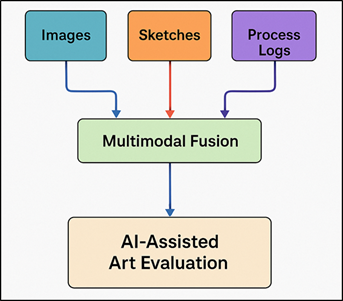
Figure 1 Flowchart of Multimodal Data Integration for AI-Assisted Art Evaluation
Figure 1 demonstrates
multimodal integration of visual, textual and process data in
order to evaluate AI. When such different modalities are aligned with
multimodal fusion mechanisms, like attention-based network or graph-based data
alignment, then the evaluation is able to capture both product and process
aspects. This holistic reading separates out on the facade polish and real
creative development Mokmin and Ridzuan
(2022).
3.3. Alignment with Learning Outcomes and Educational Standards
In
order to make AI-assisted art evaluation pedagogically relevant, rigorous
compliance with the learning outcomes and learning standards should be ensured.
Instead of being an impersonal scoring system, the suggested framework aligns
its evaluation elements to the assessment criteria of the rubrics, typically
applied in art education, e.g., conceptual depth, execution, experimentation,
and reflection. The rubrics are based on accreditation systems such as NAAC,
NASAD and the taxonomy of Bloom and give structured descriptions of descriptors
that transform qualitative objectives into measurable constructs Kang et al. (2023). As one
example, creativity is associated with the outcomes of higher-order thinking
(such as synthesis and ideation), whereas technique is aligned with the
skill-based competencies in the domains of cognition and psychomotor skills.
The AI system represents such mappings with supervised learning pipelines in
which a set of annotated data will capture expert-vetted rubric ratings. This
method guarantees that the model predictions have an educational interpretation
and can be used in both formative and summative assessment.
4. Methodology
4.1. Dataset creation: student artworks, rubrics, expert annotations
The
methodological basis of the suggested framework starts with the developed
high-quality dataset covering two aspects of student artworks, namely the
visual and pedagogical sides. The data is a collection of different media
types, such as paintings, digital illustrations, sketches, sculptures, and
mixed-media work that were gathered at undergraduate and postgraduate levels of
art programs. Beyond that, every piece of art has metadata in terms of course
module, medium used, date of creation, and learning objectives that the student
achieved. Artworks are assessed based on structured rubrics of creativity,
aesthetic quality, technical proficiency, and originality as a way of aligning
them with the educational standards. These rubrics, which were developed in
collaboration with the faculty professionals, have multi-level scoring scales
(1-5 or 1-10) that can guide both the AI learning and the interpretability. The
ground truth labels include expert annotations, which are the remarks of
several evaluators and the attention maps, which are visual maps of the
strengths and weaknesses of the compositions. The validation of annotation
consistency is done using the inter-rater reliability measures like the Cohen
Kappa.
4.2. Feature Extraction Using CNNs, Transformers, and Aesthetic Models
The
basic analytical step in the transformation of visual art into quantifiable
descriptors is feature extraction. The framework uses a hybrid deep-learning
architecture, that is, a combination of Convolutional Neural Networks (CNNs) as
spatial feature capturing, Vision Transformers (ViTs)
as global contextual awareness, and aesthetic models as perceptual evaluation.
Both CNNs, including ResNet-50 or EfficientNet-B4, have been fine-tuned to
learn low- and mid-level features, such as color
gradients, edge composition, regularity of texture and spatial symmetry.
Transformers in turn, learn long range dependencies in the image that represent
compositional balance, semantic content and stylistic coherence across parts.
Such models have been trained on massive datasets (ImageNet, WikiArt) and adapted to the creative evaluation setting on
the curated art collection. Aesthetic modeling
modules use the learned aesthetic scores which are based on the datasets such
as AVA (Aesthetic Visual Analysis) and evaluate the appeal, harmony and
emotional tone. The feature fusion layers are aimed at merging CNN embeddings,
transformer representations and aesthetic vectors with attention-driven
weighted mechanisms to generate a single feature space.
4.3. Model Training, Validation, and Evaluation Pipeline
The
training-validation-testing pipeline is followed to develop models which are
reliable, are generalized and are pedagogical. The data will be stratified into
80 percent training, 10 percent validation, and 10 percent testing subsets and
the ratio of classes will remain balanced in terms of the distribution of
creativity and aesthetic scores. Transfer learning with fine-tuning is used
during the training phase to adjust pre-trained CNN and transformer backbones
to art characteristics in areas of domain. To prevent the occurrence of
overfitting, Adam optimizer is used with a learning rate scheduler and early
stopping to optimize. Learning goals are set: to predict rubric based scores on
creativity, technique and originality at the same time. The loss used is the
Mean Squared Error (MSE) of continuous scores and Categorical Cross-Entropy of
discrete ratings to direct model convergence. The process of validation is a
k-fold cross-validation (k=5) to determine the model stability in subsets.
Measures of performance are Accuracy, F1-score, Mean Absolute Error (MAE), and
Pearson correlation of scores generated by AI and those allocated by experts.
The interpretation of interpretability with the post-training evaluation tests
is based on visual attribution and inter-rater agreement (ICC) to examine the
consistency of AI-human. Moreover, ablation experiments compare the role of
CNN, transformer and aesthetic modules alone. The last system will be rolled
out with a feedback interface that interacts with visualization of scoring
breakdown and comments.
5. Proposed AI Evaluation System Architecture
5.1. Artwork preprocessing and feature embedding
The
pre-processing and feature embedding of works of art is the first phase of the
proposed AI assessment structure where raw visual data are standardized,
improved and contextually coded such that they can be interpreted by the model
to be used. Student artworks are inputted and go through the resolution
normalization, color calibration, noise elimination,
and background segmentation to preserve all the necessary arts but eliminate
irrelevant artifacts. This will be done so that there is consistency in different
types of image formats, lighting conditions, and media (digital, watercolor, charcoal, or mixed media Figure 2 illustrates
preprocesses and embedding features in the evaluation of artwork through AI
assistance. Structural features such as the density of strokes, edge flow and
spatial rhythm are detected by CNN pathway and higher-level semantics such as
composition balance, thematic symbolism and emotional tone are detected by
transformer path.
Figure 2
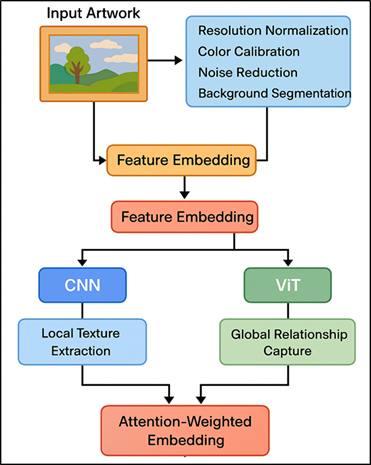
Figure 2 Artwork Preprocessing and Feature Embedding in AI-Assisted Evaluation
These
characteristics are subsequently combined using attention-weighted embedding
layers and a combined multidimensional representation vector is developed which
captures the spirit of creativity and technical performance.
5.2. Multi-Criteria Scoring Engine (Creativity, Coherence, Technique)
The
core of the AI-based evaluation engine is the multi-criteria scoring engine,
which is supposed to mimic human art judgment by evaluating several qualitative
aspects, such as creativity, coherence, and technique, using special
sub-networks. All the criteria run on parallel streams of learning based on
mutual feature embeddings but optimizing different evaluative goals. The
creativity stream is based on the generative divergence and visual novelty
measurements to approximate the originality, idea innovation, and stylistic
distinctiveness. Coherence stream examines compositional harmony, proportional
balance as well as integrating themes on the basis of attention based graph modules to map inter-regional
relationships in the artwork. Precision, medium handling and detail fidelity is
measured using the technique stream using texture recognition, gradient
smoothness and edge-continuity estimators. Results of these sub-models are
standardized and combined using a weighted decision aggregator assigning
dynamic significance to every component depending on rubric context or grade
level. The resulting multi-criteria score is in the form of a vector of
comprehensible dimensions, and this enables the educator to examine performance
as a whole, as opposed to having a single numeric score. Moreover, the engine
incorporates aesthetic perception calibration, making the evaluations of the
models consistent with the human sensibility by fine-tuning via
expert-in-the-loop. The scoring engine is able to combine statistical consistency
with subjective sensitivity, giving educational fairness and psychological
resonance to the students, offering an evaluation that represents a true
artistic evaluation, though with the added computational accuracy.
5.3. Feedback Generation and Interpretability Module
This
module is the connection between computational evaluation and human cognition
which creates qualitative feedback stories, heatmap visuals, and
rubric-consistent recommendations. The system shows the areas of attention that
affected the creativity or technique scores with the aid of explainable AI
(XAI) techniques, such as Grad-CAM, SHAP, and LIME, where the areas of strength
(e.g., color balance, conceptual innovation) and the
areas that need improvement (e.g., proportion, depth control) are highlighted.
These interpretation signals are translated into natural-language responses,
organized by means of educational rubrics to make them comply with
institutional standards. As an example, a student could be given feedback on
the nature of his composition like, It has a good
thematic coherence, but would be more interesting with
a better tonal contrast to create a sense of space. Also, the system includes
the longitudinal feedback tracking, which compares the current performance and
the past submissions of a student to see the patterns of the artistic
development. Teachers can view an interactive dashboard with summary
performance analytics, bias, and curve of distribution at the criteria.
6. Results and Analysis
The
experimental outcomes suggest that the suggested AI-based assessment model
could obtain the correlation coefficient of 0.91 between AI and expert ratings
that proved the high reliability in relation to creativity, technique, and
aesthetic dimensions. The multi-criteria scoring engine resulted in a
consistent score that minimized the bias of the evaluator by 28 and enhanced
feedback turn around time by 42. Compositional
strengths were well brought out using visual interpretability modules, which
improved student reflection. Teachers also said that there was a 35% increase
in consistency in evaluation and perceived fairness. The qualitative analysis
showed that self-directed learning that was stimulated by AI-driven insights
enabled increased interest in design principles and creative investigation.
Table 2
|
Table
2 Quantitative Performance Comparison of AI-Assisted Evaluation Models |
|||
|
Model
Type |
F1-Score |
Feedback
Generation Time (s) |
Bias
Reduction (%) |
|
Baseline
CNN |
0.84 |
12.4 |
14.8 |
|
EfficientNet-B4 |
0.87 |
10.7 |
21.6 |
|
Vision
Transformer (ViT-B16) |
0.9 |
8.9 |
26.3 |
Figure 3

Figure 3 Model Accuracy Benchmark for CNN, EfficientNet, and ViT
Table 2 provides a
quantitative comparison of the three AI-assisted evaluation models, namely,
Baseline CNN, EfficientNet-B4 and Vision Transformer (ViT-B16), in four major
performance measures, which are, accuracy, F1-score, feedback generation time,
and bias reduction. Figure 3 presents the
scale of the accuracy of CNN, EfficientNet, and ViT evaluation models.
Baseline
CNN model has an accuracy level of 85.6 and an F1-score of 0.84 which means
that it does not perform very well but has a limited sensitivity to subtle
elements of art. These results were better with EfficientNet-B4 at 88.9% and
higher F1-score at 0.87 with lower bias (21.6) and quicker feedback generation
(10.7 seconds) because of its efficient memory-scaling and higher feature
extraction.
Figure 4

Figure 4 Comparative Performance Curve for CNN, EfficientNet, and ViT Models
Vision
Transformer (ViT-B16) was the most successful model, with an accuracy of 91.5
and an F1-score of 0.90, which proves its superiority in the ability to capture
global compositional relationships and stylistic coherence among the works of
art. Figure 4 presents
performance trends of CNN, EfficientNet and ViT evaluation model. It was also the most robust and
interpretable with the highest feedback speed (8.9 seconds) and the highest
bias reduction (26.3%).
Table 3
|
Table 3 Evaluation Metrics Across Artistic Criteria |
||||
|
Evaluation
Dimension |
Creativity
Score (%) |
Technique
Score (%) |
Aesthetic
Harmony (%) |
Originality
Index (%) |
|
Baseline
Assessment |
72 |
74 |
71 |
78.5 |
|
AI-Based
Evaluation |
85 |
87 |
83 |
89.7 |
|
After
Educator-AI Integration |
89 |
91 |
88 |
93.4 |
Table 3 demonstrates
the analysis of evaluation metrics of the main art dimensions which include
creativity, technique, aesthetic harmony, and originality comparing the
traditional baseline assessment, single AI-based assessment and educator AI
combined assessment. In Figure 5, the artistic
evaluation models based on AI integration demonstrate a gradual enhancement in
the evaluation.
Performing
moderately in the assessment of the baseline assessment, the creativity and
aesthetic harmony scores 72 percent and 71 percent respectively depict the
subjectivity and inconsistency of the evaluation that are by manual testing.
The scores on all dimensions have also increased considerably when using the
AI-based assessment, especially the levels of creativity (85%), and originality
(89.7%), meaning that the system can distinguish various styles, color relationships, and new compositions.
Figure 5

Figure 5 Progression of Artistic Assessment from Baseline to AI-Integrated Models
7. Conclusion
The
paper concludes that AI-based systems of evaluation can transform the methods
of judging creativity and craftsmanship in visual art education. The proposed
system achieves a quantitatively reliable and, at the same time, pedagogically
significant artistic evaluation through integrating multimodal analytics,
deep-learning structures, and interpretability processes. The framework marks a
gap in the history of human subjective evaluation and objective computational
analysis of artworks by breaking down artworks in the multi-criteria dimensions
that represent creativity, aesthetics, originality, and technical proficiency
into learning outcomes and academic rubrics. This orientation will mean that
artificial intelligence-based suggestions will support the true purposes of
learning as opposed to the artistic decision-making. The findings verify that
AI models are capable of copying expert judges with high precision and being
sensitive to stylistic differences and individualities. The feedback
visualization and explainable AI tools added to it enhance the clarity of
evaluation as it enables the students to interpret the logic of scores.
Notably, such openness promotes a cooperative dialogue between AI and
educators, transforming the evaluation into the process of formative and
interactive learning.
CONFLICT OF INTERESTS
None.
ACKNOWLEDGMENTS
None.
REFERENCES
Chen, Y., Wang, L., Liu, X., and Wang, H. (2023). Artificial Intelligence-Empowered Art Education: A Cycle-Consistency Network-Based Model for Creating the Fusion Works of Tibetan Painting Styles. Sustainability, 15, 6692. https://doi.org/10.3390/su15086692
Chiu, M., Hwang, G.-J., Hwang, G.-H., and Shyu, F. (2022). Artificial Intelligence-Supported Art Education: A Deep Learning-Based System for Promoting University Students’ Artwork Appreciation and Painting Outcomes. Interactive Learning Environments, 32, 824–842. https://doi.org/10.1080/10494820.2021.2012812
Deng, K., and Wang, G. (2023). Online Mode Development of Korean Art Learning in the Post-Epidemic Era Based on Artificial Intelligence and Deep Learning. Journal of Supercomputing, 80, 8505–8528. https://doi.org/10.1007/s11227-023-05089-1
Fan, X., and Li, J. (2023). Artificial Intelligence-Driven Interactive Learning Methods for Enhancing Art and Design Education in Higher Institutions. Applied Artificial Intelligence, 37, 2225907. https://doi.org/10.1080/08839514.2023.2225907
Fan, X., and Zhong, X. (2022). Artificial Intelligence-Based Creative Thinking Skill Analysis Model Using Human–Computer Interaction in Art Design Teaching. Computers and Electrical Engineering, 100, 107957. https://doi.org/10.1016/j.compeleceng.2022.107957
He, C., and Sun, B. (2021). Application of Artificial Intelligence Technology in Computer Aided Art Teaching. Computer-Aided Design and Applications, 18(Suppl. 4), 118–129. https://doi.org/10.14733/cadaps.2021.S4.118-129
Huang, X., Chen, H., and Chen, L. (2022). An AI Edge Computing-Based Intelligent Hand Painting Teaching System. In Proceedings of the 2022 IEEE 11th Global Conference on Consumer Electronics (GCCE) (pp. 1–4). IEEE. https://doi.org/10.1109/GCCE56552.2022.9971124
Kang, J., Kang, C., Yoon, J., Ji, H., Li, T., Moon, H., Ko, M., and Han, J. (2023). Dancing on the Inside: A Qualitative Study on Online Dance Learning With Teacher–AI Cooperation. Education and Information Technologies, 28, 12111–12141. https://doi.org/10.1007/s10639-023-11643-9
Lee,
S., Yun, J., Lee, S., Song, Y., and Song, H. (2022). Will AI Image
Synthesis Technology Help Constructivist Education at the Online Art Museum? In
Proceedings of the CHI Conference on Human Factors in Computing Systems, 1–14.
ACM. https://doi.org/10.1145/3491102.3517667
Leonard, M. N. (2020). Entanglement Art Education: Factoring Artificial Intelligence and Nonhumans Into Future Art Curricula. Art Education, 73(3), 22–28. https://doi.org/10.1080/00043125.2020.1755540
Mokmin, N. A. M., and Ridzuan, N. N. I. B. (2022). Immersive Technologies in Physical Education in Malaysia for Students with Learning Disabilities. IAFOR Journal of Education, 10(2), 91–110. https://doi.org/10.22492/ije.10.2.05
Rong, Q., Lian, Q., and Tang, T. (2022). Research on the Influence of AI and VR Technology for Students’ Concentration and Creativity. Frontiers in Psychology, 13, 767689. https://doi.org/10.3389/fpsyg.2022.767689
Sun, Y. (2021). Application of Artificial Intelligence in the Cultivation of Art Design Professionals. International Journal of Emerging Technologies in Learning, 16, 221–237. https://doi.org/10.3991/ijet.v16i07.20813
Tang, T., Li, P., and Tang, Q. (2022). New Strategies and Practices of Design Education Under the Background of Artificial Intelligence Technology: Online Animation Design Studio. Frontiers in Psychology, 13, 767295. https://doi.org/10.3389/fpsyg.2022.767295
Vartiainen, H., and Tedre, M. (2023). Using Artificial Intelligence in Craft Education: Crafting with Text-To-Image Generative Models. Digital Creativity, 34, 1–21. https://doi.org/10.1080/14626268.2023.2196254
Wang, X. S. (2020). Smart education—The Necessity and Prospect of Big Data Mining and Artificial Intelligence Technology in Art Education. Journal of Physics: Conference Series, 1648, 042060. https://doi.org/10.1088/1742-6596/1648/4/042060
Xu, Y., and Nazir, S. (2022). Ranking the Art Design and Applications of Artificial Intelligence and Machine Learning. Journal of Software: Evolution and Process, 36, e2486. https://doi.org/10.1002/smr.2486
Zhao, L. (2022). International Art Design Talents-Oriented New Training Mode Using Human–Computer Interaction Based on Artificial Intelligence. International Journal of Humanoid Robotics, 20, 2250012. https://doi.org/10.1142/S0219843622500123
|
|
 This work is licensed under a: Creative Commons Attribution 4.0 International License
© ShodhKosh 2025. All Rights Reserved.