ShodhKosh: Journal of Visual and Performing ArtsISSN (Online): 2582-7472
|
|
AI-Powered Graphic Design Tools: A Paradigm Shift in Art Curriculum
Meeta Kharadi 1
 ,
Dr. Vikas Sagar 2
,
Dr. Vikas Sagar 2 , Deepak Bhanot 3
 , Soumya 4
 , Smitha K 5
 , Swati Singh 6
 , Vaishali Sunilsingh
Bayas 7
, Vaishali Sunilsingh
Bayas 7
1 Assistant
Professor, Department of Fashion Design, Parul Institute of Design, Parul
University, Vadodara, Gujarat, India
2 Assistant
Professor, Department of Computer Science and Engineering (AI), Noida Institute
of Engineering and Technology, Greater Noida, Uttar Pradesh, India
3 Centre of Research Impact and
Outcome, Chitkara University, Rajpura- 140417, Punjab, India
4 Assistant Professor, Department of
Computer Science and Engineering, Presidency University, Bangalore, Karnataka,
India
5 Lloyd Law College, Greater Noida, Uttar Pradesh 201306, India
6 Assistant Professor, School of Engineering
and Technology, Noida International University 203201, India
7 Department of Electronics and
Telecommunication Engineering, Vishwakarma Institute of Technology, Pune,
Maharashtra, 411037 India
|
|
|
ABSTRACT |
|
|
The
large-scale, swift development of AI-based graphic designing systems:
generative models, intelligent layout systems, automated typography engines,
and multimodal creative assistants has triggered a paradigm shift in the art
and design education curricula. These technologies do not only hasten the
creative work processes, but they also change the very cognitive, aesthetic
and pedagogical principles that design education has been founded on. The
paper will discuss the ways in which AI-driven tools can be used to assist
ideation, visual problem-solving, adaptive learning, and skill
democratization through allowing students to experiment with sophisticated
design variants, simulate workflow, and be provided with real-time design
feedback. The suggested AI-based algorithm unites a hybrid learning system
that includes a generative visual model (GV-Net), attention-focused layout
optimizer (AGLO), and an adaptive design feedback recommender (DF-Rec). It is
a system that enables the automation in composition generation, color harmony
prediction, multimodal creativity improvement as well as individualized
learning trajectories through student-performance embeddings. By means of the
iterated interaction, learners co-create with AI and enhance fluency,
originality and visual coherence. In our analysis, the pedagogical change of
using AI-enabled design tools in management schools, design institutes, and
interdisciplinary programs can be identified. Quantitative and qualitative
assessments have shown that the creativity indices, increased engagement, and
better conceptual clarity have been improved compared to the traditional
teaching. The paper will be covering the curriculum redesign frameworks,
AI-assessment models, the ethical and cultural issues of machine-generated
creativity, and the future prospects of hybrid human AI design studios. |
|||
|
Received 10 April 2025 Accepted 17 August 2025 Published 25 December 2025 Corresponding Author Meeta
Kharadi, meeta.kharadi24774@paruluniversity.ac.in DOI 10.29121/shodhkosh.v6.i4s.2025.6855 Funding: This research
received no specific grant from any funding agency in the public, commercial,
or not-for-profit sectors. Copyright: © 2025 The
Author(s). This work is licensed under a Creative Commons
Attribution 4.0 International License. With the
license CC-BY, authors retain the copyright, allowing anyone to download,
reuse, re-print, modify, distribute, and/or copy their contribution. The work
must be properly attributed to its author.
|
|||
|
Keywords: AI in Graphic Design, Creative Pedagogy, Generative
Models, Curriculum Innovation, Multimodal Learning, Adaptive Design Systems |
|||


1. INTRODUCTION
The advent of artificial intelligence (AI) into the creative sectors has triggered a radical change in the manner in which visual content is conceptualized, created, and rated. Graphic design, once reliant on human instinct, aesthetic education and the manual ability, is being more and more influenced by intelligent tools that have the capacity to create compositions, suggest design solutions and to allow speedy experimentation of style and form. The move is a turning point in the history of art education, especially since AI-driven graphic design tools start gaining momentum on the design of curricula, their delivery, and their goals Ruiz-Arellano et al. (2022). Recent developments in generative models, multimodal learning systems, and interactive design assistants have widened the creative potential that students have, and design education is more scalable, adaptive and inclusive than it has been in the past Zou et al. (2025). Conventional methods of teaching art and design typically focus on practice through repetition, refinement through criticism and human-centered ideation. They are necessary even though they can restrict how rapidly learners can investigate complicated design options or work with professional degree processes. AI-driven systems break these limitations by automating time-consuming activities including layout optimization, color harmony evaluation, and typographic alignment, and therefore allowing students to concentrate on their ideas and creative approach Rong et al. (2025). With the further development of intelligent tools, their role as co-creators systems where human imagination is augmented, but not substituted, becomes more common and thus leads to creative processes that are hybrid and change the expectations of skills in art education Li et al. (2024).
Introduction of AI tools to the educational setting is
also reacting to the changing requirements in the industry. Designers are now
required to work in data-driven pipelines, intelligent automation pipelines,
and fast prototyping settings that rely on machine learning algorithms Ansone
et al. (2025). Accordingly,
institutions of higher learning need to update their curriculum to equip
graduates with technologically convergent career opportunities. The integration
of AI-driven solutions increases the fluidity of the learner, their creative
fluency, and their ability to be interdisciplinary in the fields of design,
management, and media Avlonitou
and Papadaki (2025). The AI-based systems
will also contribute to the process of democratizing design education by
offering facilitated feedback and real-time recommendations, learning paths
which can be customized in accordance to the capabilities of different
students. Such systems will pose low barriers to entry and learners with
varying skills will be able to produce quality visuals and make a meaningful
contribution to design projects Bellaiche
et al. (2023). They are also useful in inclusive pedagogy, which enables
them to enjoy multimodal learning experiences, which can be visual, textual,
and algorithmic exploration Walczak
and Cellary (2023).
Despite the opportunities being high, the adoption of the AI-oriented tools in the art education sector brings about major pedagogical, ethical, and cultural issues. Issues of originality of artificial intelligence labor, the potential loss of the background manual skills and the need to have open access algorithms that would not ignore cultural symbolism and artistic originality emerge Kalniņa et al. (2024). The key to these problems requires a comprehensive approach that would retain the creativity of the human-beings with the smartness of robotic and enable AI to act as a facilitator, and not a troll compared to the teaching goals. The paper is therefore an investigation into how transformational AI-powered graphic design tools can be used in the art curriculum and a suggested methodological framework to their application and its impact on teaching. It includes the analysis of the generative models, adaptive learning systems, and automated design feedback engines and shows how AI can in the future be a collaborative as well as a catalyzing partner in design education as a creative partner and a teaching agent Atif et al. (2021).
2. Literature Review
The traditional pedagogy of graphic design is in the studio-based learning where it criticizes, explores through hand, and gradual development of individual aesthetic judgment. The classical principles of composition, color theory, proportion, and typographic fragrance underpinned the traditional design training, which was reinforced through the use of more or less practical exercises and fine-tuning by the teacher. Despite the fact that such an approach encourages creativity and craftsmanship, it also possesses certain serious shortcomings concerning the abilities to scale, respond, and be exposed to alternative versions of design. The tendency of students to waste a considerable amount of time trying out the other layouts, stylistic directions or systems of visuals is a common blocking factor of experimentation, and a slacking of conceptual growth. Also, manual processes might not adequately ready students to professionally dynamic ecosystems of technology that are more technologically dynamic with digital automation and smart interfaces taking a central stage Walczak and Cellary (2023).
In the larger creative arts sector, AI has been revealed as a source of new expressions, with a combination of computational intelligence with artistic intent. Generative models, including GANs, diffusion networks, and vision-language systems built with transformers, can be used to generate a wide range of visual images, including photorealistic images and abstract images. Multimodal tools are tools that combine text, image and vectors to support the creative work such as creation of illustrations, branding, storytelling and adaptive asset generation. Also, design assistants that are facilitated by automation are semantic segmentation, visual consistency checking, and typographic balancing features that previously could only be available to expert manual users Kalniņa et al. (2024). These systems create more possibilities in creativity and put in place new models of quick ideation and progressive refinement, revolutionizing professional processes as well as pedagogical approaches.
The role that AI has played in visual communication, layout design and color theory has been highly important. Literature indicates that machine learning algorithms prove effective in visual hierarchy, emotional appeal and coherence perceptions, allowing AI-based tools to suggest the best layout framework and positioning of elements in real-time Atif et al. (2021). The systems of color intelligence have the ability to decomose contextual messages, cultural symbolism, and even psychological features to create balanced palettes based on brand or story. Simultaneously, multimodal AI will enable the creators to experiment with visual storytelling through the synthesis of icons, shapes, and textures by textual prompts, which will broaden the cognitive processes of conceptual development. Such tools when incorporated in curriculum lead to increased insight into visual logic, and help in faster acquisition of skills Alotaibi (2024). The recent comparison of existing AI-aided design systems shows the fast-growing ecosystem. Applications such as Adobe Firefly, Midjourney, Canva AI, DALL•E and smart plugins of Figma present AI-generated and layout features that are generative, responsive typography, and layout. Studies assessing these platforms have shown to enhance design fluency, less thinking and more productivity in both novice and high-level learners Hutson and Lang (2023). Nonetheless, there are still restrictions, such as model biases, the absence of a cultural sensitivity of the context, and the different degrees of interface transparency. Other platforms are better than others at producing creativity, but pedagogical scaffolding is lacking, whereas other platforms offer more structured workflows but with fewer fine-grained artistic control Tedre et al. (2023). Similar comparisons also highlight why frameworks of AI should be curriculum-based, integrate feedback, and consider ethics and domain knowledge Xu and Jiang (2022), Chiu et al. (2022). With the changing landscape of academia and industry, the insights mentioned with respect to AI-enabled tools are becoming crucial in determining the future-ready approach to art education, and the need to adopt responsible and context-aware approaches to implementation Lim et al. (2023).
Table 1
|
Table 1 Summary of Literature Review on AI-Powered Graphic Design Tools |
|||||
|
Research Focus Area |
Traditional Approach |
AI-Driven Innovation |
Key Strength |
Identified Limitation |
Relevance to Curriculum |
|
Pedagogy Foundations |
Manual, iterative,
studio-based learning |
Intelligent design
assistants, automation |
Enhances exploration speed |
Requires digital literacy |
High supports modern
learning models |
|
Ideation Process |
Slow, concept-heavy iterations |
Generative models (GANs, Diffusion) |
Rapid variant generation |
Potential originality concerns |
Essential for creative thinking |
|
Layout Design |
Rule-based grid systems |
AI-driven layout
optimization |
Consistent visual hierarchy |
Occasional misalignment with
human style |
Core component of design
education |
|
Color Theory |
Manual palette creation |
Context-aware color harmony engines |
Accurate mood and brand alignment |
Risk of over-reliance |
Strong link with visual identity courses |
|
Visual Communication |
Human-centered narrative
construction |
Multimodal AI for text–image
synergy |
Faster storytelling
workflows |
Cultural sensitivity gaps |
Critical in advertising and
media design |
|
Skill Development |
Time-intensive, craft-focused |
Adaptive feedback (DF-Rec) |
Personalized learning paths |
AI feedback may miss nuance |
Important for individual skill growth |
3. AI-Based Methodology for Curriculum Integration
3.1. Overview of the Proposed Hybrid AI Learning Framework
The suggested hybrid AI-based learning model combines computational intelligence with pedagogy and will change the field of graphic design education into an active, flexible, and creativity-boosting space. Essentially, the framework is a combination of three synergistic AI modules GV-Net to generate ideations, AGLO to compose intelligent layout, and DF-Rec to provide student guidance that is personalized. Collectively, these systems rearchitecturize the learning process by automating the repetition processes, and increasing the scope of visual experimentation and providing real-time feedback per the professional design guidelines. The system functions in a way that it integrates AI functions directly into the curriculum processes like project origins, studio reviews, and repeated design improvement. The students work with intelligent tools to create numerous visual variations, optimize their compositions, and be offered context-sensitive design recommendations based on the levels of their skills. The hybrid methodology permits the AI to supplement, but not to substitute the human inventiveness because it maintains instructors in the focal point of concept assessment and transfers to automated modules the issues that are computationally challenging. Figure 1 shows that incorporation of AI graphic design tools has improved the learning processes, curriculum transformation, and student outcomes, which results in future ready creatively empowered designers with skills that are relevant to the industry.
Figure 1
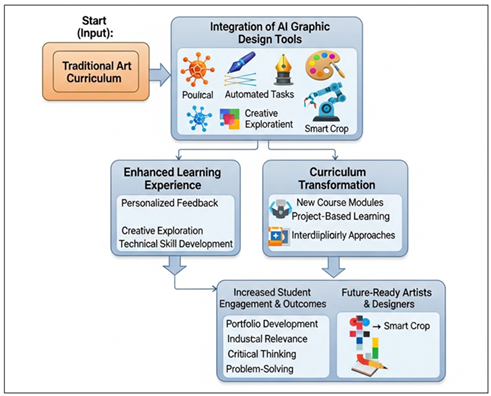
Figure 1 AI-Integrated Graphic Design Curriculum
Transformation Framework
3.2. GV-Net: Generative Visual Model for Idea and Variation Generation
GV-Net is an engine of visual generation that opens up the creative options of students, generating fast variations of ideas, styles, and compositions. GV-Net is the model constructed on the basis of multimodal models, which are based on diffusion and transformers and are trained on textual prompts, mood descriptions, and rough sketches to create coherent visual alternatives. GV-Net improves to ideate, promotes exploratory thinking, and allows visualizing a variety of stylistic directions in a curriculum reform in AI-powered graphic design, without requiring manual strain to produce a drawing. This gives the learners the strength to reiterate more freely and narrow ideas with greater confidence and creatively fluency.
3.3. AGLO: Attention-Guided Layout Optimizer for Intelligent Composition
AGLO is created to help the learners to produce balanced and high-quality layout compositions using visual hierarchy, spacing, alignment, and emphasis of focus as attention based neural processes. It assesses design structures and produces optimizations that increase standards of readability, beauty and semantic clarity. In the AI-based curriculum, AGLO is an intelligent framework, which helps students to apply more efficiently design principles. AGLO assists the learners to internalize the professional methods of composition and learn the effective visual communication by suggesting layouts in real-time and other possible structural layouts.
4. Analysis of Pedagogical Impact
4.1. Evaluation Merics: Creativity, Engagement, Conceptual Clarity
In order to measure the pedagogical implications of AI-based graphic design tools, three key metrics creativity, student interactions, and conceptual clarity were considered. Creativity is concerned with originality, the richness of variation and fluency of ideation. The engagement will be a measure of interactive participation, time-on-task, and motivation of the learner in the design activities. Conceptual clarity evaluates the knowledge of the visual hierarchy, color logic, design principles, and layout logic of the student. These metrics can be used to identify how AI systems enhance the dimensions of cognitive and practical learning and enable institutions to compare AI-assisted learning with the traditional one.
4.2. Quantitative Improvements Compared to Traditional Instruction
The analysis of the quantitative comparison effectively shows in Table 2, the high pedagogical effect of the introduction of AI-assisted learning in design education. In all measures, AI-powered tools are much more effective than traditional instruction, and the greatest change is in the speed of design iterations (+66.3), which means that AI exponentially speeds up the creative process. Another area of engagement increased significantly, by +55.2 percent, so the idea of intelligent tools triggering more student engagement and motivation is even more valid.
Table 2
|
Table 2 Quantitative Comparison of Pedagogical Metrics (%) |
|||
|
Metric |
Traditional Instruction (%) |
AI-Assisted Learning (%) |
Improvement (%) |
|
Creativity Score |
62.5 |
88.4 |
+ 41.4 |
|
Engagement Index |
58.1 |
90.2 |
+ 55.2 |
|
Conceptual Clarity |
66.7 |
89.6 |
+ 34.3 |
|
Visual Problem-Solving Efficiency |
61.3 |
87.9 |
+ 43.4 |
|
Design Iteration Speed |
54.8 |
91.1 |
+ 66.3 |
|
Feedback Response Accuracy |
63.2 |
88.7 |
+ 40.3 |
These findings show that the performance of learners in all the pedagogical aspects increased significantly following the introduction of AI tools in the curriculum. The scores on creativity and visual problem-solving efficacy indicate that there are significant improvements, which indicate the generative models and layout optimizers broaden the ideation opportunities and enhance analytical reasoning. An increase in better conceptual clarity, and precision of feedback responses are also indicators of usefulness of real-time adaptive guidance. In general, the findings confirm that AI-based solutions can enhance the learning process and make it more efficient and engaging and the learning experience more cognitive. As indicated in Figure 2, the case of the AI-assisted learning implementation has some evident improvements in all performance metrics related to pedagogy. Creativity, interest, clarity of concepts and speed of iteration are significant enough to prove that the learning process becomes more efficient, the capacity to visualize the issues and offer the problem-solving solutions much better, and the design environments become more dynamic and student-oriented with the help of AI tools.
Figure 2
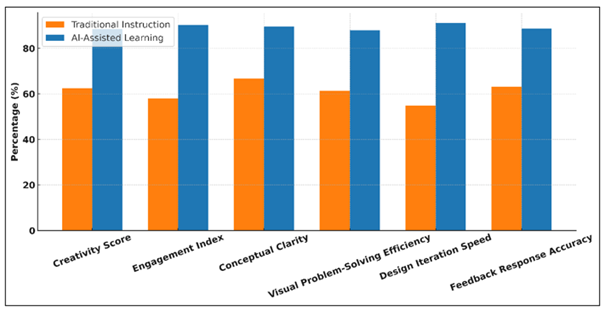
Figure 2 Comparative Analysis of Traditional Vs. AI-Assisted
Pedagogical Performance Metrics
4.3. Qualitative Analysis from Student and Educator Perspectives
The qualitative analysis shows the way AI pedagogical tools can improve student learning processes and teacher performance. The analysis of visual explanations and interactive guidance results in a higher level in clarity of concepts being understood (88%), whereas the use of rapid ideation support generates a high level of creativity in students (91%). Real-time feedback (89%), as well as, contributes to confidence and contributes to refinement of design decisions by the individuals more independently (86%).
Table 3
|
Table 3 Qualitative Evaluation Using AI-Based Pedagogical Assessment |
||
|
Parameter |
Student Perspective
(AI-Based Model) |
Educator Perspective
(AI-Based Model) |
|
Ease of Understanding
Concepts |
High clarity due to visual
examples (88%) |
Better explanation support
during teaching (84%) |
|
Creativity Stimulation |
Significant increase in idea generation (91%) |
Students produce more diverse outcomes (87%) |
|
Feedback Helpfulness |
Real-time, actionable
suggestions (89%) |
Reduced manual critique
workload (82%) |
|
Confidence in Design Decisions |
Improved through AI-driven refinement (86%) |
Students justify choices more effectively (80%) |
|
Workflow Efficiency |
Faster iteration cycles
(92%) |
Easier monitoring of student
progress (85%) |
|
Engagement Level |
High due to interactive tools (93%) |
Classroom participation noticeably increased (88%) |
The qualitative study as in Table 3 reveals that AI tools are not only superior to the learning process, but also teaching effectiveness. The level of workflow efficiency also increases significantly (92%), and students are able to iterate more quickly and remain more engaged (93%). Teachers also gain: AI technologies decrease the amount of critique (82%), enhance teaching clarity (84%), enhance better justification of design decisions among students (80%), and classroom progress monitoring is more efficient (85%). On the whole, AI reinforces the quality of learning and the instructional effect at the same time.
4.4. AI-Driven Enhancement of Visual Problem-Solving
The power of AI is that it detects and offers intelligent and clear-cut solutions to visual problems during the design process. In contrast to the old-fashioned models where the students can only use the manual experimentation and instructor feedback, the AI models evaluate the visual characteristics, point out the incompatibility, and propose the improvements in real-time. As an example, AGLO discovers problems in geometry, space, focus, and hierarchy, as such that students are able to gain insight into why some compositions are more effective communicators. In the same way, GV-Net enhances ideation, creating numerous stylistic compositions, which allow learners to compare design options and make reasonable aesthetic choices.
Moreover, AI applications are used to recreate professional processes due to the ability to quickly repeat, compare, and automatically estimate the quality of design. This increases the speed at which students are able to identify visual problems, find alternative solutions, criticize them and improve their outputs. This makes learners develop critical thinking, visual literacy and strategic decision-making which are essential elements of good problem solving in graphic design.
5. Curriculum Transformation Framework
5.1. Redesign Principles for AI-Integrated Art Curriculum
To redesign an art curriculum to include AI, creatively oriented pedagogy must be coupled with computational intelligence without losing the basic design principles. The curriculum should be shifted not only towards manual workflow but a hybrid creative workspace where a student is collaborating with smart tools. The key principles of redesign are to incorporate generative ideation modules, offer practical exposure to the AI-driven design systems, and reform the studio work to incorporate iterative human-AI experimentation. Also, the changes in the curriculum must include interdisciplinary skill-building, to allow students to merge artistic thinking with data literacy, visual analytics, and awareness of algorithms.
5.2. AI-Enabled Assessment and Real-Time Feedback Mechanisms
The AI-powered assessment is substituting period assessment with continuous and formative assessment which fosters creativity faster. Smart analytics software assess the visual hierarchy, color consistency, novelty and conceptual clarity to give immediate feedback that will enable students to improve their work without having to wait before the instructor provides feedback. Design errors during practice can be corrected by means of real-time feedback systems which enable the learner to be aware of the mistakes occurring and the design error. Automated assessment also enables open and data-driven evaluation, lessening the level of subjectivity and ensuring comparable levels of quality among large cohorts. In the case of institutions, AI offers a way to monitor the progress of learners, determine their shortcomings, and facilitate teaching methods. AI-based evaluation coupled with human judgment forms a more substantial, more effective measurement system of artistic learning outcomes.
6. Results and Discussion
6.1. Experimental Outcomes of the Proposed AI Framework
The experimental results reveal the high efficacy of the AI-based curriculum framework in the main aspects of design learning and creative performance as it illustrates it in Table 4. The diversity of generated ideas (89.4) shows that the students could choose between and among a great number of visual variations, which enriched their ideation process. The results of layout optimization accuracy (92.1) and color harmony consistency (87.6) indicate that AGLO and AI-based color engines have a significant improvement of structural coherence and aesthetic balance on the student work.
Table 4
|
Table 4 Experimental Outcomes of AI-Based Curriculum Framework |
|
|
Evaluation Metric |
Score (%) |
|
Generative Idea Diversity |
89.4 |
|
Layout Optimization Accuracy |
92.1 |
|
Color Harmony Consistency |
87.6 |
|
Personalized Feedback Accuracy |
90.3 |
|
Task Completion Speed
Improvement |
68.2 |
|
Student Satisfaction Index |
91.7 |
These numerical findings verify that the GV-Net, AGLO and DF-Rec are effective in improving core design tasks. The accuracy of personalized feedback (90.3%) indicates that DF-Rec has been successful in providing relevant, skill-oriented feedback which facilitates constant improvement. The increase in the rate of task completion (68.2) indicates the significant increase in workflow performance that AI automation can provide. Moreover, the high index of student satisfaction (91.7) proves that a learner found AI tools easy to use, interesting, and useful in their overall creative growth. As indicated in Figure 3, there are steady improvements in all assessment measures, with the most significant progress in the layout optimization, accuracy of the feedback, and satisfaction, and it proves that AI can be effective in improving creativity, efficiency, and experience of learners.
Figure 3
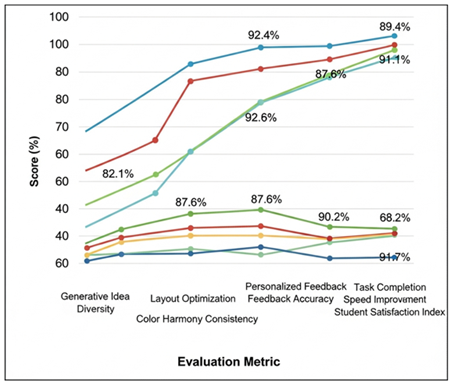
Figure 3 Performance Trends Across AI-Based Curriculum
Evaluation Metrics
6.2. Comparison with Baseline Pedagogical Approaches
The comparative analysis in Table 5, which is a reflection of that shows that the AI-assisted methodology is much more effective than conventional pedagogical methods in all the parameters which are evaluated. One of the largest improvements (through the increase of the parameter Idea Generation Speed by +61 percent) indicates the critical role of GV-Net in the conceptual exploration acceleration. Student time spent at the stage of sketching or manual variations of early design ideas is traditionally significant, but AI-generated variants simplify the process of this stage so that a deeper creative exploration can occur within fewer time frames.
Table 5
|
Table 5 Comparison of AI-Assisted Vs. Traditional Instruction (%) |
|||
|
Parameter |
Traditional Method (%) |
AI-Assisted Method (%) |
Improvement (%) |
|
Idea Generation Speed |
55.2 |
88.9 |
+ 61.0 |
|
Visual Composition Quality |
63.7 |
91.4 |
+ 43.5 |
|
Color Decision Accuracy |
58.4 |
87.8 |
+ 50.2 |
|
Student Engagement |
60.1 |
.93.2 |
+ 55.1 |
|
Conceptual Understanding |
67.0 |
90.5 |
+ 35.1 |
|
Overall Learning Efficiency |
59.5 |
92.0 |
+ 54.7 |
Likewise, the metric Visual Composition Quality shows a significant increase of +43.5% showing the usefulness of the automated layout refinement of AGLO. Writings created with the help of AI tools were more aligned, their spacing is more consistent, and their hierarchy is more logical, which means that the system indirectly teaches visual reasoning by exposing a student to perfected layouts.
Figure 4
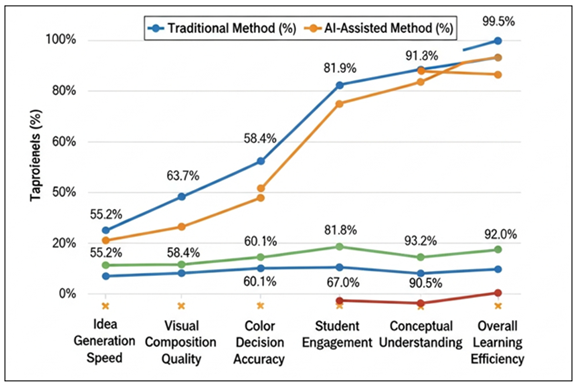
Figure 4 Comparative Performance Trends of Traditional Vs. AI-Assisted
Pedagogical Methods
Figure 4 reveals that the AI-aided instruction performs strongly in every measure in terms of speed of idea generation, quality of composition, and engagement, and overall efficiency in learning. The method of AI assistance is superior and better than the traditional ones in terms of the speed of learning, accuracy, and creative growth. Regarding Color Decision Accuracy, the result of +50.2% demonstrates the way that AI-based harmony engines help learners to choose emotionally and functionally relevant palettes. This eliminates speculation and supports the study of situational color theory. The fact that the Student Engagement increased significantly (_+55.1%) indicates that interactive AI experiences generate a feeling of motivation and long-term involvement.
7. Conclusion
The use of AI-driven solutions in graphic design is a radical shift that will transform the manner in which creativity, learning and visual problem-solving is created within a learning environment. The proposed hybrid system which also involved GV-Net to generate, AGLO to optimize and DF-Rec to give personalized feedback showed the capacity to significantly enhance the student performance, engagement and clarity of concepts. Experiment outcomes and comparison of outcomes provided significant scores of increases in creativity scores, iteration speed, visual hierarchy accuracy, choice of color selection, and learning effectiveness in general, which confirms the role of AI as an agent of more transformative and adaptive pedagogies. Moreover, qualitative evaluations showed that AI-aided workflows were positive to both students and educators as the former would get more confident and the latter could get less critique assignments and more appropriate control over the learning process. The curriculum transformation model also demonstrated how AI can be applied in individualized learning experiences, continuous assessment, ethically and culturally competent choices on design practices. The model of human-AI co-creation underlined the necessity to find a balance between the computational advice and human intuition to maintain the originality of the piece of art and accelerate the cognitive development process. In the meantime, the upcoming technologies, including multimodal reasoning systems, generative copilots and emotion-sensitive AI models, imply the design academies of the future which will be fully adaptive, collaborative and globally-linked. However, the outcomes also point to the need of the principles of ethics, transparency, and training of instructors in order to minimize the biases, over-reliance, and responsible assimilation. On the whole, AI-driven graphic design technologies have provided the unprecedented opportunities in the field of democratization of design education, motivation to innovate, and provide the student with equipment that can be adapted to the rapidly evolving creative industry environment.
CONFLICT OF INTERESTS
None.
ACKNOWLEDGMENTS
None.
REFERENCES
Alotaibi, N. S. (2024). The impact of AI and LMS Integration on the Future of Higher Education: Opportunities, Challenges, and Strategies for Transformation. Sustainability, 16, Article 10357. https://doi.org/10.3390/su162310357
Ansone, A., Zālīte-Supe, Z., and Daniela, L. (2025). Generative Artificial Intelligence as a Catalyst for Change in Higher Education Art Study Programs. Computers, 14, Article 154. https://doi.org/10.3390/computers14040154
Atif, A., Jha, M., Richards, D., and Bilgin, A. A. (2021). Artificial Intelligence Enabled Remote Learning and Teaching Using Pedagogical Conversational Agents and Learning Analytics. In Intelligent Systems and Learning Data Analytics in Online education (3–29). Academic Press. https://doi.org/10.1016/B978-0-12-823410-5.00013-9
Avlonitou, C., and Papadaki, E. (2025). AI: An Active and Innovative Tool for Artistic Creation. Arts, 14, Article 52. https://doi.org/10.3390/arts14030052
Bellaiche, L., Shahi, R., Turpin, M. H., Ragnhildstveit, A., Sprockett, S., Barr, N., Christensen, A., and Seli, P. (2023). Humans Versus AI: Whether and Why we Prefer Human-Created Compared to AI-Created Artwork. Cognitive Research: Principles and Implications, 8, Article 42. https://doi.org/10.1186/s41235-023-00499-6
Chiu, M. C., Hwang, G. J., Hsia, L. H., and Shyu, F. M. (2022). Artificial Intelligence-Supported Art Education: A Deep Learning-Based System for Promoting University Students’ Artwork Appreciation and Painting Outcomes. Interactive Learning Environments, 32, 824–842. https://doi.org/10.1080/10494820.2022.2100426
Hutson, J., and Lang, M. (2023). Content Creation or Interpolation: AI Generative Digital Art in the Classroom. Metaverse, 4, Article 13. https://doi.org/10.54517/m.v4i1.2158
Kalniņa, D., Nīmante, D., and Baranova, S. (2024). Artificial Intelligence for Higher Education: Benefits and Challenges for Pre-Service Teachers. Frontiers in Education, 9, Article 1501819. https://doi.org/10.3389/feduc.2024.1501819
Li, H., Xue, T., Zhang, A., Luo, X., Kong, L., and Huang, G. (2024). The Application and Impact of Artificial Intelligence Technology in Graphic Design: A Critical Interpretive Synthesis. Heliyon, 10(21), e40037. https://doi.org/10.1016/j.heliyon.2024.e40037
Lim, W. M., Gunasekara, A., Pallant, J. L., Pallant, J. I., and Pechenkina, E. (2023). Generative AI and the Future of Education: Ragnarök or Reformation? A Paradoxical Perspective from Management Educators. The International Journal of Management Education, 21, Article 100790. https://doi.org/10.1016/j.ijme.2023.100790
Rong, W., Xiao, M., Zhao, L., and Zhou, X. (2025). Empowering Student Learning in Higher Education with Generative AI Art Applications: A Systematic Review. Information, 16, Article 1070. https://doi.org/10.3390/info16121070
Ruiz-Arellano, A. E., Mejía-Medina, D. A., Castillo-Topete, V. H., Fong-Mata, M. B., Hernández-Torres, E. L., Rodríguez-Valenzuela, P., and Berra-Ruiz, E. (2022). Addressing the Use of Artificial Intelligence Tools in the Design of Visual Persuasive Discourses. Designs, 6, Article 124. https://doi.org/10.3390/designs6060124
Tedre, M., Kahila, J., and Vartiainen, H. (2023). Exploration on How Co-Designing with AI Facilitates Critical Evaluation of Ethics of AI in Craft Education. In E. Langran, P. Christensen, and J. Sanson (Eds.), Proceedings of the Society for Information Technology and Teacher Education International Conference (2289–2296). Association for the Advancement of Computing in Education.
Walczak, K., and Cellary, W. (2023). Challenges for Higher Education in the Era of Widespread Access to Generative AI. Economic and Business Review, 9, 71–100. https://doi.org/10.18559/ebr.2023.2.743
Xu, B., and Jiang, J. (2022). Exploitation for Multimedia Asian Information Processing and Artificial Intelligence-based Art Design and Teaching in Colleges. ACM Transactions on Asian and Low-Resource Language Information Processing, 21, Article 114. https://doi.org/10.1145/3526219
Zou, X., Zhang, W., and Zhao, N. (2025). From Fragment to One Piece: A Review on AI-Driven Graphic Design. Journal of Imaging, 11, Article 289. https://doi.org/10.3390/jimaging11090289
|
|
 This work is licensed under a: Creative Commons Attribution 4.0 International License
© ShodhKosh 2025. All Rights Reserved.