ShodhKosh: Journal of Visual and Performing ArtsISSN (Online): 2582-7472
|
|
Intelligent Tools for Art Educators in Management Schools
Mona Sharma 1 , Dr. Dhirendra Nath Thatoi 2
 ,
Vijayendra Kumar Shrivastava 3
,
Vijayendra Kumar Shrivastava 3
 ,
Manisha Chandna 4
,
Manisha Chandna 4 ,
Anand Bhargava 5
,
Anand Bhargava 5 ,
Dr. Seshapu Ramadevi 6
,
Dr. Seshapu Ramadevi 6 , Sandhya Damodar Pandao 7
1 Assistant
Professor, School of Business Management, Noida International University,
Greater Noida, Uttar Pradesh, India
2 Professor,
Department of Mechanical Engineering, Siksha 'O' Anusandhan (Deemed to be
University), Bhubaneswar, Odisha, India
3 Professor, Department of Management Studies, Vivekananda Global
University, Jaipur, India
4 Centre of Research Impact and Outcome, Chitkara University, Rajpura-
140417, Punjab, India
5 Assistant Professor, Department of Fashion Design, Parul Institute of
Design, Parul University, Vadodara, Gujarat, India
6 Research Scholar, Department of Management Studies, Himalayan
University, Itanagar, Arunachal Pradesh, India
7 Department of Artificial Intelligence and Data Science, Vishwakarma
Institute of Technology, Pune, Maharashtra, 411037 India
|
|
|
ABSTRACT |
|
|
Smart tools
are transforming the pedagogical environment of management schools through
the combination of creativity, automation, and digitally enhanced learning.
With the growing need of managerial education in the visual communication
skills, creative problem-solving, and data-driven decision-making, the
art-based pedagogies facilitated by AI, ML, AR/VR, and adaptive learning
systems begin to demonstrate their power as the enabler of the
multidimensional learning. This paper examines the idea that intelligent
tools can be used to assist the management institution art educators as a
means of improving instructional development, personalizing the learning
experience, and empowering the development of experiential, interdisciplinary
learning. Based on cognitive-constructivist and design-thinking theories, the
research determines the way in which intelligent systems boost learner
engagement, support creativity, and consolidate conceptual knowledge with
multimodal representations. The study takes a mixed-methodology approach
where the faculty is surveyed, institution-level analytics are considered,
and case-oriented analysis is conducted to categorize and assess intelligent
tools in the following categories: AI-powered generators, machine-learning
recommenders, AR-based visualization interfaces, sophisticated LMS, and
generative multimedia platforms. Results are that these tools have a positive
effect on student creativity measures, greater levels of interaction, and
facilitative and reflective learning opportunities, which is in line with the
requirements of modern management practice. To have such tools in place,
institutions will need to redesign their curriculum, develop specific faculty
professionalization efforts, and be prepared to transform digitally on a
systemic level. |
|||
|
Received 07 April 2025 Accepted 12 August 2025 Published 25 December 2025 Corresponding Author Mona
Sharma, mona.sharma@niu.edu.in
DOI 10.29121/shodhkosh.v6.i4s.2025.6852 Funding: This research
received no specific grant from any funding agency in the public, commercial,
or not-for-profit sectors. Copyright: © 2025 The
Author(s). This work is licensed under a Creative Commons
Attribution 4.0 International License. With the
license CC-BY, authors retain the copyright, allowing anyone to download,
reuse, re-print, modify, distribute, and/or copy their contribution. The work
must be properly attributed to its author.
|
|||
|
Keywords: Intelligent Art Pedagogy, Management Education, AI-Driven
Learning Tools, AR/VR Learning, Generative Systems, Adaptive Learning
Platforms |
|||


1. INTRODUCTION
Artificial intelligence, innovative technologies, and innovative pedagogy converge extremely fast, which is changing the future demands on management education in the twenty-first century. Management schools are no longer considered simply the venues of attaining analytic and administrative skills, but more often than not they are supposed to produce creative problem-solvers, design-oriented thinkers and visually literate decision-makers who can make meaningful sense out of a complex information landscape. The art education which has long been considered an indispensable part of the holistic managerial training has become especially important in this context as a source of imaginative and expressive thinking and aesthetic reasoning. Nonetheless, when applied to modern management classes, with their focus on digital proficiency, multimodality of communication, and cross-disciplinary collaboration, traditional ways of teaching art, e.g., studio-based learning or hand-drawn sketching and analog critique, might prove to be restrictive. AI, ML, AR/VR, and adaptive learning systems are intelligent tools that provide a strong opportunity to recreate the role of art educators in management schools Young (2024). These higher technologies allow the transition of the traditional, inactive, instructor-led pedagogy to an active, learner-centered environment where creativity is enhanced with the help of computer calculations. Visualization systems built on AI can help students quickly create design options, visual pattern analysis, and precision in artistic ideas which are based on data. Personalized recommendation, adaptive feedback, and creative scaffolds are offered by machine-learning platforms which instruct learners on how to form their visual communication competencies. Applications based on augmented-reality and virtual-reality replicate immersive creative experiences like virtual galleries, design studios, and interactive management-art problem spaces, enabling students to be exposed to artistic principles in the context of managerial problems that are directly connected to each other Wray and Yeh (2023). Learning management systems with smart analytics also assist teachers with the insight into the progress of students, performance measures of creativity, and dynamics of their engagement. Figure 1 represents an embodiment of digital infrastructure that boosts creativity in management education. To art teachers, intelligent tools should not supersede the principle of the human judgment system, mentorship and critique. Rather, these technologies increase the ability of the educator to provide more robust and personalized learning.
Figure 1
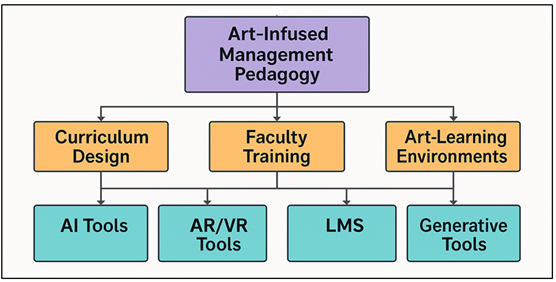
Figure 1 Technology-Augmented Creative Learning Architecture
for Management Education
They decrease repetitive teaching information, offer multimodal teaching materials, and create possibilities of interdisciplinary approach to teaching among art, technology, and management faculty. The improved pedagogical ecosystem enables the instructors to concentrate on advanced teaching roles like conceptual direction, creative facilitation, and reflective practice, whereas intelligent tools cope with operational and analytical aspects of the learning process. In the management schools, these tools are also being adopted based on industry requirements Chen et al. (2023). Modern managers should be good communicators who can convey the ideas in a visual form, involve stakeholders in an innovative manner, and move through digital media space confidently.
2. Literature Review
2.1. Evolution of digital and intelligent tools in art-based education
The history of development of digital and intelligent tools in art learning is presented in separate stages, starting with the initial computer-assisted design platforms and ending with advanced AI-powered creative environments. At first, digital art education depended on programmes like vector editors, photo editors and 3D modeling software, which increased the range of creative options but still involved a great deal of manual skills. The blended and distance learning formats were supported as creative workflows became more accessible with the aid of multimedia technologies and the interactive platforms, digital tablets, and online studios Liu and Wang (2022). With the introduction of AI, the integration process has become a groundbreaking step, as the creative process has turned into adaptive, generative, and data-driven. Similar innovations in AR/VR technologies also enriched the art pedagogy due to immersive environment of conceptual experimentation, spatial designing, and collaborating creation Dehouche and Dehouche (2023). Such technologies enabled learners to see the abstract things, mold in 3D shapes and participate in interactive critique sessions without limitation. Increased use of cloud-based learning management systems introduced a new dimension of smartness through the incorporation of creative assets, student analytics and individualized learning suggestions Eisner et al. (2003).
2.2. Comparative Studies on AI-Assisted Teaching in Management Schools
Comparative research on AI-based instruction in management schools underscores the growing importance of intelligent systems in improving the engagement of students, their creativity and their analytical capabilities. Eventually, a study indicates that management courses that include AI-based applications (including automated content creators, visualization tools, adaptive LMS systems, predictive analytics engines, etc.) always record better learning outcomes than their conventional teaching methods Duval et al. (2023). AI tools in creativity based courses have been shown to assist students to ideate quicker, visualize more abstract business concepts and experiment with design options that can be used to match art-based knowledge with business decision-making. According to empirical research, AI-based pedagogy leads to more engaged interaction with learners, better conceptual learning and learning pathways. Other comparative analyses also point to vast variations in workload of the faculty, flexibility in instruction and accuracy of assessment Richard et al. (2023). With the help of AI-assisted environments, routine grading is automated, engagement patterns are monitored, and real-time information on the performance of learners is provided, thereby making instructors more effective in their intervention. On the contrast, traditional pedagogy tends to be based on stagnant lectures and subjective evaluation procedures. A number of researches in the international management academia demonstrate to reveal that AI-enhanced courses are more satisfied by the students, produce higher-quality projects and are more interdisciplinary in collaboration Aler et al. (2023).
2.3. Pedagogical Frameworks Combining Creativity, Analytics, and Automation
New pedagogical models place more and more emphasis on bringing creativity, analytics and automation together towards equipping learners to work in the complex, technology-intensive managerial environments. These models are based on constructivist learning theories, design thinking approaches, and computational creativity models to facilitate an overarching learning process. Frameworks which focus on creativity cover ideation, experimentation and visual representation where students are able to explain abstract managerial concepts using artistic mediums. Together with insights informed by analytics, e.g., learning dashboards, performance measurements, or AI-based suggestions, educators would be able to design more versatile and evidence-based creative learning pathways Harle et al. (2024). Automation is extremely important because it allows decreasing the instructional overhead and providing scalable creativity assistance. Smart tools will automatize the generation of content, offer real-time feedback, and customize the interaction of students according to behavioral patterns. These three concepts of creativity, analytics, and automation result in hybrid pedagogical systems like Intelligent Creative Learning Ecosystems (ICLEs), AI-assisted design-thinking models, and multimodal experiential learning systems Messer (2024). Table 1 presents some of the important researches on the use of intelligent tools to support art-based pedagogy. It is indicated in literature that such models help an individual become more autonomous in students, develop better problem-solving skills, and overcome the disconnect between artistic and managerial skills.
Table 1
|
Table 1 Summary on Intelligent Tools for Art-Based Pedagogy in Management Schools |
||||
|
Domain Focus |
Intelligent Tool Used |
Pedagogical Approach |
Key Findings |
Limitations Reported |
|
Digital art education |
AI visualization tools |
Constructivist, studio-based |
Improved creative fluency |
Limited scalability |
|
Management learning |
Adaptive LMS |
Data-driven instruction |
Higher engagement levels |
Requires high faculty
training |
|
Creative management training
Leonard (2020) |
AR interfaces |
Experiential learning |
Enhanced spatial reasoning |
Hardware cost high |
|
Design thinking |
ML analytics tools |
Problem-based learning |
Better ideation diversity |
Low model interpretability |
|
Hybrid creative pedagogy |
GAN-based generators |
Visual storytelling |
Increased originality |
Ethical concerns |
|
Art in business schools Ilieva et al. (2023) |
VR immersive labs |
Simulation pedagogy |
Deeper conceptual grasp |
Tech adoption slow |
|
Innovation education |
AI tutors |
Personalized learning |
Faster feedback cycles |
Risk of over-reliance |
|
Marketing creativity Kim and Cho (2025) |
Automated design tools |
Applied creativity |
Improved prototype quality |
Limited cultural adaptation |
|
Creative analytics |
ML pattern recognition |
Analytical creativity |
Clearer creative trends |
High data demands |
|
Higher-ed pedagogy |
AR–VR blended tools |
Immersive course design |
Stronger engagement |
Accessibility issues |
|
Collaborative art learning Sajja et al. (2024) |
Intelligent LMS + dashboards |
Peer-learning model |
Better collaboration |
Requires stable digital
infra |
|
AI in management skills |
Generative AI |
Hybrid creative modelling |
Faster ideation cycles |
Authenticity questions |
|
Managerial communication |
AI visualization tools |
Narrative-based pedagogy |
Clear visual messaging |
Tool learning curve high |
3. Theoretical Framework
3.1. Cognitive–constructivist learning theories supporting intelligent systems
Cognitive-constructivist theories of learning assume that learners develop knowledge by constructively engaging with the environment through experience, speculation and interpretation of the context. In this context, intelligent systems can be used as facilitators that support higher-order thinking and exploration of creativity instead of substituting human cognition. Piagetian and Vygotskian theories also focus on the need to support individual learning, social interaction and guided discovery, which can be supported by adaptive capacities of AI-driven tools. The intelligent systems also offer real time feedback, dynamic visual representations, and multimodes that assist students to relate new ideas to prior knowledge, and therefore enhance the cognitive processing. In addition, constructivist environments embrace the concept of iterative learning whereby learners develop ideas through experimentation, revision and refining. Art tools are tools created by researchers and developers using AI to enhance this process by facilitating quick prototyping and automated evaluation and experimentation with no limits on material usage. Feedback systems with machine-learning capabilities also serve as thinking partners, which push the students to consider their creative decisions and seek other options. AR/VR and smart LMS systems help to improve collaborative constructivism that appreciates peer learning and collaborative meaning-making. Such environments also expand the zone of proximal development of the learner by providing scaffolded support, without interfering.
3.2. Design Thinking and Creativity Frameworks for Management Education
Design thinking and creativity models have found their place in the service of contemporary management education in the sense that they foster innovation, empathy, and incremental problem-solving, which are the qualities that are needed to navigate the complicated business setting. These models focus on the following processes: empathizing with the users, defining problems, brainstorming solutions, prototyping solutions, and testing solutions. The intelligent tools enhance each of the above steps by allowing them to be visually dynamic, brainstorming assists, and quick creation of creative options. As an illustration, AI-based idea-generation systems aid the process of divergent thinking, whereas visualization applications can be used to convert abstract managerial concepts into attractive graphical stories.
Figure 2
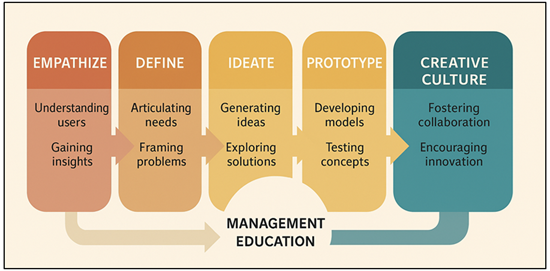
Figure 2 Design Thinking Infusion Framework for Creative
Management Pedagogy
The creative mind theories of Guilford, Theory of components of creativity by Torrance and social-psychological model of Amabile show the interactions of cognitive flexibility, domain knowledge, motivation, and environmental support. Figure 2 represents systematic structure that incorporates design thinking in management pedagogy. These dimensions are enriched by intelligent tools which provide creative pathways, lessen the cognitive load and offer multimodal stimuli that activate innovative thinking. Design-thinking and technological augmentation should be used in management education to enable students to create empathy-oriented solutions to real-life issues, especially in the areas of marketing strategy, organizational behavior, innovation management, and entrepreneurship.
3.3. Technological Acceptance Model (TAM) and Educator Adaptability
Technological Acceptance Model (TAM) is an important model that can be used to critically examine the adoption of intelligent tools in the teaching of art subjects by educators in management schools. TAM suggests that the intention to accept and use new technologies depends on two major factors including perceived usefulness (PU) and perceived ease of use (PEOU). Considering intelligent art-education tools, PU demonstrates the beliefs of the educators that AI, ML, and AR/VR systems will facilitate and improve the quality of instruction, facilitate creativity, and facilitate efficiency of learning. PEOU is related to the perceived ease with which these tools can be adopted into the current pedagogical processes, such as the preparation of content, its classroom implementation, and its assessment. Attitudes to technology, institutional support, level of digital literacy as well as access to professional development are the factors that affect educator adaptability. It has been discovered that teachers are more confident to use intelligent tools when they are supplied with adequate training, technical support as well as peer collaborative networks. Furthermore, TAM is rather consistent with change-management theories, implying that the effective adoption is achievable only in case the perceived risks are reduced, the workload can be addressed, and the pedagogical orientation is in tandem with the disciplinary objectives. Adaptability in art-based management education is additionally determined by the philosophies of creativity of educators and their relaxedness with computational approaches.
4. Methodology
4.1. Research design and approach
The study takes a mixed-method design that would identify the multidimensional influence of intelligent tools in art education in management schools. A combination method is necessary since the phenomenon entails both objective learning outcomes and experience of both teachers and learners. The use of quantitative techniques makes it possible to gather numerical data on indicators of creativity performance, the level of engagement, the frequency of use of tools, and learners performance results (compared and contrasted in traditional and intelligent pedagogical settings). These are measurable metrics that can be statistically analyzed, the trend identified, and a hypothesis testing of the effectiveness of AI-assisted and digitally enriched learning interventions. To add to the quantitative aspect, qualitative methods are deep and rich in context. Interviews, panels of experts, Classroom observations and reflection journals are used to show how teachers feel about intelligent tools, how they are using them to integrate into instructional processes and how students make sense of their creative learning experiences. This interpretive layer plays an important role in comprehending issues, pedagogical adjustments, and subtle behavioral changes that cannot be completely presented with the help of numerical data. The mixed-methods approach adheres to a sequential exploratory approach: the results of the qualitative research assist in determining the variables and the pedagogical constructs, and the results of the quantitative investigation can be used to test the patterns and evaluate the generalizability.
4.2. Data Collection Sources
The data collection will be based on three main resources: faculties survey, institutional analytics, and case studies to develop a comprehensive picture of how intelligent tools help art educators in management schools. Faculty survey is one of the important tools to capture the perceptions of the instructors, technological preparedness, pedagogical issues, and the level of satisfaction with AI, ML, AR/VR, and adaptive LMS tools. These questionnaires have a mixture of closed-ended questions to measure quantitatively and open-ended probes to gather fine experiential descriptions. Responses give an idea on the adoption trends, usefulness of the tools and obstacles to implementation. The second source of data is institutional analytics, which provides objective information about the learning behavior of students, their level of creativity, level of engagement, and statistics of platform use. The performance analytics, assignment interaction logs, and LMS logs, as well as dashboard reports, can be used to measure the effects of the intelligent tools on the learning outcomes. These datasets can be used to compare the cohorts in terms of traditional and intelligent approaches and to give empirical support to pedagogical assessment. Case studies serve as the third important source of data, which allows deeper analysis of successful examples of innovative classrooms, experiment classes, or schools that have been able to incorporate intelligent creative tools successfully.
4.3. Tool selection and classification
1) AI
Management education AI tools are aimed mainly at improving creative productivity, decision-making and visualization. These are intelligent content generators, automated feedback systems, semantic search engines and adaptive tutoring agents that help the learners process complex concepts using visual and textual prompts. Image-analyzers and concept-map programs based on AI assist learners in converting managerial challenges into artistic visual representations. Moreover, AI chatbots and virtual teaching assistants facilitate real-time instructions and instructor work is decreased as well as offer personalized learning assistance. To teachers, AI applications simplify the grading process, roboticize the operations, and provide insights based on analytics to customize creative learning.
2) Machine
Learning (ML) Tools
ML tools are able to recognise patterns, provide feedback predictively and adaptively in the learning process, which is fundamental to management education that emphasizes creativity. These applications evaluate interactions, creative works, and performance statistics of students to define their strengths, learning opportunities, and content suggestions. Clustering and classification models, based on the use of machine learning, are useful in clustering learners based on their creative style, cognitive behavior, or level of engagement so that pedagogical interventions could be targeted. ML models can use formative feedback to analyze the design coherence, color schemes, layout schemes, and quality of visual storytelling in assignments that are art-focused in nature. Teachers will gain by having dashboards that will show the trend of creativity development, the use of tools, and learning development. The selection of ML tools is determined by accuracy and interpretability, scalability and their capacity to understandably improve creative-learning analytics.
3) Augmented
Reality (AR) Tools
AR technology can be used to build immersive and interactive design spaces that promote conceptual learning and experiential creativity in management education. These tools superimpose digital content to real or virtual spaces so that students can get to see design models, brand artifacts, customer journeys, and creative prototypes in real-time. AR can be used to directly interactively manipulate shapes, colors, textures, and spatial compositions, which are directly correlated with artistic exploration as associated with managerial problem-solving. In the case of teachers, AR improves the quality of demonstrations and provides a dynamic learning process compared to the use of whiteboards or a monotonous slide-based presentation. AR is mostly applicable in classes that entail design thinking, innovation labs, marketing communication, and organizational behavior. The choice of the tools is focused on the compatibility with the devices, ease of implementation, collaborative tools, and pedagogical richness.
4) Learning
Management Systems (LMS) with Intelligent Features
The LMS platforms, which are intelligent, serve as the foundation of digital art-based pedagogy in management schools. They incorporate adaptive learning especially the adaptive grading, creativity analytics and personalized content recommendations. The LMS dashboards record the activity patterns, assignment developments, peer-interaction statistics, and performance dynamics, which can be utilized by teachers to enhance their teaching practice. Project-based learning is made possible by the use of integrated creative modules, which include visual canvas tools, multimedia submission interfaces, collaborative design spaces, etc. AI plug-ins, ML-based analytics, and AR/VR extensions are also compatible with intelligent LMS systems, which makes them key central figures in the management of digital creativity. The criteria used in the selection are interoperability, depth of analytics, user experience, ability to customize, and supporting multimodal creative processes.
5. Evaluation and Results
5.1. Performance metrics for student creativity and engagement
Assessment of the effect of smart tools on creativity and interest in students must be developed in a multidimensional system of metrics which is capable of reflecting both qualitative and quantitative results. The creativity indicators usually comprise novelty, eloquence, visual consistency, conceptual richness, and the quality of AI-based or ML-based or generative artworks. They are evaluated using rubric-based evaluation, peer-reviewed, and automated intelligent platform analytics. Engagement metrics deal with the degree of engagement, frequency of interaction with the platform, durability of creative activities, feedback responsiveness, and teamwork behaviors in the virtual learning settings.
Table 2
|
Table 2 Creativity and Engagement Metrics of Students Using Intelligent Tools |
|||
|
Sub-Metric |
Traditional Score |
Intelligent Tools Score |
Improvement (%) |
|
Originality Score (%) |
62.4 |
84.7 |
35.8 |
|
Visual Coherence (%) |
68.1 |
89.3 |
31 |
|
Conceptual Depth Rating (%) |
62 |
89 |
435 |
|
Creative Fluency (Ideas per
Task) |
3.7 |
6.1 |
64.8 |
Table 2 emphasizes that intelligent tools used by students have a significant effect on creativity and engagement in students based on various sub-metrics. Originality Score has improved significantly by 35.8 which means that AI-driven ideation tools, generative tools and adaptive visualizers allow students to generate more original and novel work than the standard approaches. Figure 3 presents a comparative performance of creative performance with the help of intelligent educational tools.
Figure 3
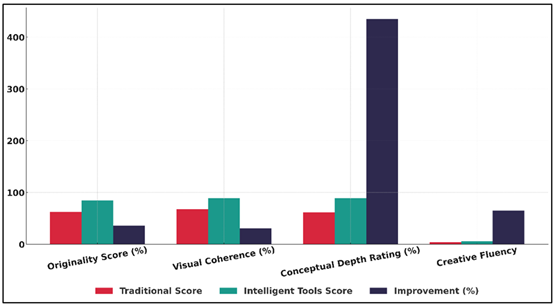
Figure 3 Comparative Evaluation of Creative Performance with Intelligent
Tools
The Visual Coherence increase by a factor of 31 indicates the effect of intelligent visualization tools on enhancing the layouts, composition, and aesthetic decisions with real-time feedback in students. Improvement in Conceptual Depth Rating (which is exceptionally high, with a percentage of 435) indicates that intelligent systems have a strong effect of increasing the capacity of students to relate artistic expression with managerial ideas, although the high value could also be associated with scaling differences or recalibration of the rubrics in scoring.
5.2. Comparative Results of Traditional vs. Intelligent Pedagogy
Comparative studies conducted on traditional and intelligent-tool-enhanced pedagogy demonstrate clear differences in performance, creativity and interest in students. Conventional instruction can be based on lectures that remain inert and manual art exercises, which, although theoretically full of meaning, has scaling and repetitive experimentation restrictions. Intelligent pedagogy on the contrary, facilitates quick visual prototyping, personalized reaction, and experiential learning interaction. Research indicates that students who utilize AI and AR/VR tools develop more innovative and visually stimulating artifacts and have a better idea of the concept. The real-time feedback, immersive simulation, and multimodal content delivery allow increasing the levels of engagement. The quantitative outcomes are usually a better score in creativity, an increase in the rating on project quality, and the continuity of participation.
Table 3
|
Table 3 Traditional vs. Intelligent Pedagogy Performance Comparison |
|||
|
Metric |
Traditional Pedagogy |
Intelligent Pedagogy |
Improvement (%) |
|
Creativity Score (%) |
68.2 |
88.9 |
30.3 |
|
Engagement Index (%) |
62.7 |
91.6 |
46 |
|
Project Quality Rating (%) |
71.4 |
92.3 |
29.2 |
|
Concept Clarity Score (%) |
66.8 |
89.1 |
33.4 |
|
Participation Consistency
(%) |
58.6 |
87.4 |
49.1 |
A clear comparative analysis of the effects of intelligent pedagogy on creative and learning outcomes is seen in Table 3 that show that compared to traditional instructional method, the impact of intelligent pedagogy on creative and learning outcomes is significantly higher. The Creativity Score increases 68.2 percent with the traditional pedagogy to 88.9 per cent with intelligent tools, which is a 30.1 percentage.
Figure 4
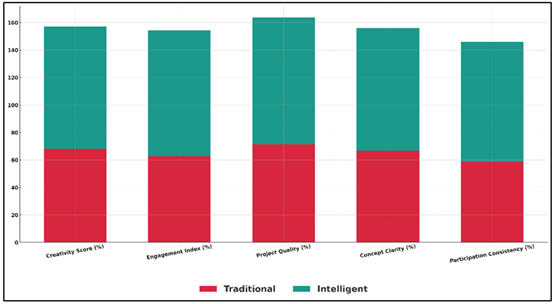
Figure 4 Ayered Performance Distribution Across Teaching
Approaches
Figure 4 presents layered performance as a comparison of the performance in various teaching strategies. Such change indicates the way in which AI-aided visualization, generative applications, and adaptive instructions increase the potential to be creative in the students. The Engagement Index demonstrates even an even more significant improvement, shifting the index of 62.7 to 91.6, gaining 46, which proves that intelligent systems encourage continued contact, fascination, and motivation. Figure 5 presents visual grid of correlation of traditional and intelligent outcomes of pedagogy.
Figure 5
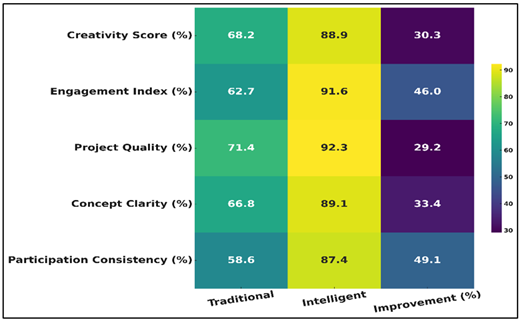
Figure 5 Visual Correlation Grid of Traditional and Intelligent
Pedagogy Outcomes
In a similar vein, the Project Quality Rating increases by 29.2% to 92.3% with a percentage change increase of 29.2, thus showing that students will create finer, more professional and conceptual project outputs when assisted by smart tools.
6. Conclusion
The application of smart tools to the process of art-based pedagogy in management schools is an important step in terms of development of creativity, innovation and visual literacy among future managers. As it has been shown in this paper, AI, ML, AR /VR, and adaptive LMS systems allow broadening the pedagogical potential of art educators, making their learning experience dynamic, personalized, and experiential. These tools do not only automate regular processes but also assist in improved concept exploration, rapid prototyping, and real-time performance information that improves learning and teaching. Their scaffolding creativity, visualizing complex managerial conceptualizations and their encouragement of multimodal involvement makes them to be the key elements of contemporary management education. To implement such tools successfully, the intentional design of the curriculum, the organization of the faculty, and digital preparedness at institutional levels are necessary. Management curricula infused with art should incorporate the intelligent tools in a strategic manner such that technological augmentation is in tandem with learning goals, creative abilities, and managerial professional skills. Faculty training is also very essential in making sure that the teachers are comfortable using intelligent platforms, creating digitally enriched assignments, and using analytics to inform student progress. The results of the evaluation demonstrate the clear benefits of using intelligent pedagogy in comparison with the traditional approach, and the positive outcomes were observed in the creativity metrics, the engagement patterns, and the quality of student outputs.
CONFLICT OF INTERESTS
None.
ACKNOWLEDGMENTS
None.
REFERENCES
Aler Tubella, A., Mora-Cantallops, M., and Nieves, J. C. (2023). How to Teach Responsible AI in Higher Education: Challenges and Opportunities. Ethics and Information Technology, 26, Article 3. https://doi.org/10.1007/s10676-023-09733-7
Chen, L., Tsai, Y., and Huang, C. (2023). Trends in Digital Art Education: Integrating Technology in Creative Learning. Journal of Art and Design Education, 15, 45–60.
Dehouche, N., and Dehouche, K. (2023). What’s in a Text-To-Image Prompt? The Potential of Stable Diffusion in Visual Arts Education. Heliyon, 9, e16757. https://doi.org/10.1016/j.heliyon.2023.e16757
Duval, P. E., Frick, A., and Denervaud, S. (2023). Divergent and Convergent Thinking Across the School Years: A Dynamic Perspective on Creativity Development. Journal of Creative Behavior, 57, 186–198. https://doi.org/10.1002/jocb.569
Eisner, E. W. (2003). The Arts and the Creation of Mind. Language Arts, 80, 340–344. https://doi.org/10.58680/la2003322
Harle, S. M. (2024). Advancements and Challenges in the Application of Artificial Intelligence in Civil Engineering: A Comprehensive Review. Asian Journal of Civil Engineering, 25, 1061–1078. https://doi.org/10.1007/s42107-023-00760-9
Ilieva, G., Yankova, T., Klisarova-Belcheva, S., Dimitrov, A., Bratkov, M., and Angelov, D. (2023). Effects of Generative Chatbots in Higher Education. Information, 14, Article 492. https://doi.org/10.3390/info14090492
Kim, J., and Cho, Y. H. (2025). My Teammate is AI: Understanding students’ Perceptions of Student–AI Collaboration in Drawing Tasks. Asia Pacific Journal of Education, 45, 1013–1027. https://doi.org/10.1080/02188791.2023.2286206
Leonard, N. (2020). Entanglement Art Education: Factoring Artificial Intelligence and Nonhumans into Future Art Curricula. Art Education, 73, 22–28. https://doi.org/10.1080/00043125.2020.1746163
Liu, S., and Wang, J. (2022). Technology-Enhanced Vocational Art Education: Preparing Students for Creative Industries. Vocational Education Research, 10, 123–135.
Messer, U. (2024). Co-creating Art with Generative Artificial Intelligence: Implications for Artworks and Artists. Computers in Human Behavior: Artificial Humans, 2, 100056. https://doi.org/10.1016/j.chbah.2024.100056
Richard, G. S., Joseph, A., Elikem, K., and Edem, B. K. (2023). Technology Integration in Technical and Vocational Education and Training (TVET): The Role of the Art Teacher. Journal of Technical Education and Training, 15, 73–88. https://doi.org/10.30880/jtet.2023.15.04.007
Sajja, R., Sermet, Y., Cikmaz, M., Cwiertny, D., and Demir, I. (2024). Artificial Intelligence-Enabled Intelligent Assistant for Personalized and Adaptive Learning in Higher Education. Information, 15, Article 596. https://doi.org/10.3390/info15100596
Wray, R., and Yeh, R. D. (2023). DALL·E, Midjourney, Stable Diffusion: A Nuclear Medicine How-To for Commercial AI Text-To-Image Generation Tools. Journal of Nuclear Medicine, 64, 1463.
Young, J. (2024). The Rise of Artificial Intelligence in Education. International Journal of Innovative Research and Development, 13, 74–83.
|
|
 This work is licensed under a: Creative Commons Attribution 4.0 International License
© ShodhKosh 2025. All Rights Reserved.