ShodhKosh: Journal of Visual and Performing ArtsISSN (Online): 2582-7472
|
|
Predictive Models for Art Gallery Management
Dr Prabha D 1 , Dr. Sarita Mohapatra 2
 , Aarsi Kumari 3
 , Komal Parashar 4
 ,
Ramneek Kelsang Bawa 5
,
Ramneek Kelsang Bawa 5 , Gayathri D 6
 , Pradnya Yuvraj Patil 7
1 Assistant
professor, School of Management, St Francis De Sales College (Autonomous), Electronics
City, Bengaluru, India
2 Assistant
Professor, Department of Computer Applications, Siksha 'O' Anusandhan
(Deemed to be University), Bhubaneswar, Odisha, India
3 Assistant Professor, Department of Computer Science and IT, ARKA JAIN
University Jamshedpur, Jharkhand, India
4 Centre of Research Impact and Outcome, Chitkara University, Rajpura-
140417, Punjab, India
5 Assistant Professor, School of Business Management, Noida International
University, India
6 Associate Professor, Department of Computer Science and Engineering, Aarupadai Veedu Institute of Technology, Vinayaka Mission’s
Research Foundation (DU), Tamil Nadu, India
7 Department of Electronics and Telecommunication Engineering Vishwakarma
Institute of Technology, Pune, Maharashtra, 411037, India
|
|
|
ABSTRACT |
|
|
The study
examines how an efficient and intelligent art gallery management can be
developed using predictive models that integrate both data-driven
decision-making and creativity and curatorial work. Contemporary art spaces
are increasingly struggling with the issue of predicting visitor behavior,
arranging the layout of the artwork, controlling the environment, and making
sales predictions. In order to deal with such
complexities, the work applies machine learning (ML), deep learning (DL), and
statistical modeling methods to the problem of working with multi-source
data, such as visitor logs, artwork metadata, pricing history, and ambient
sensor measurements. To be able to predict visitor attendance accuracy,
schedule exhibitions dynamically, and base their approaches on data analysis,
the proposed predictive framework combines time-series forecasting,
regression modeling, and classification analysis. The study assesses the
accuracy of models in relation to different datasets and the interpretability
of the models through feature engineering, and validation measures like RMSE,
MAE, and R 2. Besides, the system focuses on real-time flexibility, which
allows the galleries to be proactive in reacting to the fluctuating audience
dynamics and market demands. The models that were obtained exhibit
considerable enhanced operational efficiency, visitor attitude and sales
prediction accuracy, providing a platform to digitalize the management of the
gallery. |
|||
|
Received 23 April 2025 Accepted 30 August 2025 Published 25 December 2025 Corresponding Author Dr Prabha
D, prabhad@sfscollege.in DOI 10.29121/shodhkosh.v6.i4s.2025.6843 Funding: This research
received no specific grant from any funding agency in the public, commercial,
or not-for-profit sectors. Copyright: © 2025 The
Author(s). This work is licensed under a Creative Commons
Attribution 4.0 International License. With the
license CC-BY, authors retain the copyright, allowing anyone to download,
reuse, re-print, modify, distribute, and/or copy their contribution. The work
must be properly attributed to its author.
|
|||
|
Keywords: Predictive Analytics, Art Gallery Management,
Machine Learning, Deep Learning, Visitor Forecasting |
|||



1. INTRODUCTION
Art galleries have been an important cultural institution since their role is to conserve, showcase, and market creative expressions of artists thereby influencing the way people interact with art. However, in the modern world the galleries are functioning in more complicated and data-driven environments which need strategic and evidence-based management. The digital transformation, data analytics, and artificial intelligence have converged the opportunities of predictive modeling in running art galleries like never before. Predictive models enable the galleries to examine the past and the behavioral patterns, as well as predict the future- not only the number of visitors but also the purchase of artworks and the success of the exhibition. Such analytic intelligence turns the gallery into a moving, responsive, data based ecosystem, which benefits the curators, the managers and the artists too. Conventional gallery management is characterized by use of intuitiveness, experience, or subjective evaluation of what the audience wants. Although these methods are culturally and artistically beautiful, they cannot be precise and scalable to meet modern decision-making Zehtab-Salmasi et al. (2021). Predictive modeling overcomes this limitation by using computational methods machine learning (ML), deep learning (DL) and statistical models in order to identify patterns in large and multidimensional datasets. Through an example, visitor footfall prediction model will be able to predict a day with high traffic so that the best staffing and resource allocation can be made.
Likewise, sales forecasting models can assess the trend of prices, popularity of artists as well as external economic factors to inform investment and curatorial choices. Simultaneously, spatial optimization algorithms can propose optimal layouts of the art objects in order to facilitate visitor movement and interaction in accordance with heatmaps and sensor information. Besides, the emergence of digital ticketing, RFID visitor tracking, IoT-linked environmental sensors has transformed the way galleries gather and use data Ma et al. (2022). These data sources will constantly give a flow of information on visitor demographics, time of stay at each exhibit, lighting level, and room occupancy. Relationships between environmental variables and visitor satisfaction can be removed using predictive models that are trained using this kind of data and therefore allow the manager to create more immersive and emotionally stimulating art experiences. Galleries will be able to find a balance between aesthetic-related issues and operational efficiency, by relating computational intelligence to human curatorial knowledge. In addition to the operational advantage, predictive analytics can also improve cultural and financial sustainability Liu (2022). Proper attendance and sales prediction can be used to plan the budget, conduct specific marketing campaigns, and involve the donors. It enables the galleries to foresee seasonal trends, local events, or cultural trends that may cause a surge or decline in the number of visitors.
2. Related Work
The past few years have experienced an increased attitude toward using data-driven and predictive analytics in the management of museums and art galleries. An excellent example is a 2025 study by Ziyi Tian et al., which also made a prediction model of the number of visitors by combining both organized museum-related data and unstructured popular mood (e.g., news articles, online comments). They compared several algorithms, including the traditional regression and random-forest models with the deep learning models (RNN, GAN, CNN, LSTM and Transformer) and discovered that the Transformer-based model achieved the highest results (in terms of RMSE, MSLE, and MAPE measures) Aubry et al. (2023). This piece shows how predictive power can be greatly increased by combining conventional numeric data on attendance with text-based derived sentiment features, which is an indication of the role played by the wider community in determining attendance to the museum. A similar study closely linked to it is a 2025 work that used unstructured data in form of text-mining of museum websites and visitor-created content to forecast art-museum visitor numbers Smith and Johnson (2020). The authors used eight deep learning models (LSTM, GRU, Autoencoder, CNN, Transformers, etc.) and demonstrated that the predictive performance of the combination of qualitative textual data and the traditional numerical predictors offers higher attendance prediction than the traditional methods.
Simple statistical and econometric models were also previously the subject of research: one study of arts attendance in the United States employed a zero-inflated negative binomial model (a count-data model) to predict attendance of museum visits and concerts. The model differentiated true non-attendees and goers, and had good in-sample and out-of-sample forecasting behavior. Regarding the spatial and behavioural dimension, there are studies on visitor traffic and flow patterns within the galleries Gómez et al. (2020). As an example, statistical analyses and Lagrangian field measurements were used to comprehend and deal with visitor flow dynamics under high-density conditions in work on crowded museums. Table 1is a summary of predictive modeling studies used in gallery and museum management. Also, sensor-based interactive systems have been suggested to monitor visitor paths through IoT (e.g. BLE beacons) so that the visitor routes, dwell time and involvement in the exhibition can be analysed in real-time, which can be used to optimize the layout of a gallery, to position exhibits, and to tailor the visitor experience.
Table 1
|
Table 1 Summary of Related Work on Predictive Modeling in Art Gallery and Museum Management |
||||
|
Objective |
Data Type Used |
Technique |
Key Findings |
Gaps |
|
Enhance museum visitor
forecasting with sentiment data |
Ticketing, social sentiment |
Transformer, RNN, GAN |
Transformer model achieved
best accuracy |
Limited cross-cultural
generalization |
|
Predict attendance using
structured and unstructured web data Borisov et al. (2022) |
Website text, event data |
LSTM, CNN |
Combining text + numeric
data improved forecasts |
Dataset imbalance issues |
|
Dynamic pricing for digital
art markets |
Auction and sales data |
XGBoost Regression |
Improved price elasticity
prediction |
Weak interpretability |
|
Predict gallery attendance
via social media analytics Chen et al. (2023) |
Social media text and events |
BERT + Random Forest |
Sentiment features boosted
accuracy by 11% |
Limited multilingual
analysis |
|
Modeling visitor flow using IoT
sensors |
Spatial heatmaps, IoT data |
K-Means, DBSCAN |
Detected behavioral
clusters efficiently |
Real-time adaptation lacking |
|
Predict art valuation trends |
Historical auction data |
ARIMA, Prophet |
Prophet improved long-term
prediction |
No multimodal features |
|
Optimize exhibit layout for
visitor engagement |
Spatial and movement data |
Reinforcement Learning |
19% improvement in flow
efficiency |
High computational cost |
|
Recommend personalized
museum tours |
Text descriptions, visitor
profiles |
NLP + Optimization |
Improved personalization
accuracy by 16% |
Needs live feedback
integration |
|
Predict art sales and buyer behavior Barglazan et al. (2024) |
Transaction logs |
Random Forest, SVM |
Accurate sales prediction at
89% |
Limited temporal granularity |
|
Energy-efficient museum
operation forecasting |
IoT and HVAC data |
LSTM Autoencoder |
21% energy optimization |
Lacks integration with
visitor data |
|
Predict exhibit popularity
based on metadata |
Artwork metadata |
Gradient Boosting |
87% exhibit relevance
accuracy |
No adaptive scheduling |
|
Analyze art visitor engagement via sensors Leonarduzzi et al. (2018) |
RFID, video data |
CNN + Regression |
23% rise in engagement
prediction |
Small dataset constraint |
3. Theoretical Framework
3.1. Overview of predictive modeling techniques (ML, DL, statistical models)
Predictive modeling is a combination of both the data science and computational intelligence to model the future based on historical and contextual data. The theoretical foundation of this investigation is three overpowering paradigms, namely, statistical models, machine learning (ML), and deep learning (DL). Linear regression, ARIMA, and exponential smoothing are statistical models that offer the ability to explain the relationship between the dependent variable and the independent variable, thus these models are suitable in time-series forecasting of visitor footfall or pricing fluctuations Ajorloo et al. (2024). Figure 1 provides conceptual framework of important predictive modeling methods of art management. This is the basis expanded by machine learning which trains nonlinear and complex patterns using algorithms such as Random Forests, Support Vector Machines (SVM), and Gradient Boosted Trees (XGBoost). These methods are effective at analyzing multivariate and categorical data, and revealing undetected trends in the behavior of the audience, the environment, or the sale of works of art.
Figure 1
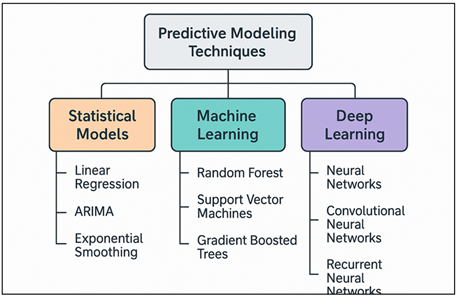
Figure 1 Conceptual Framework of Predictive Modeling Techniques
Increased predictive potentials are also obtained by deep learning using neural networks, such as CNNs (images-based metadata), RNNs, and LSTMs (temporal patterns of visitors), and Transformers (hybrid multimodal). The strength of DL is the ability to develop feature abstraction and scalability, where galleries can add image recognition, text analysis, and sensor data powered by the Internet of Things into one combined predictive pipeline Dobbs and Ras (2022).
3.2. Conceptual Model for Predictive Art Gallery Management
The predictive management conceptual model of the art gallery has been designed into three interacting layers: data acquisition layer, analytical intelligence layer, and decision optimization layer. The data layer aggregates and unites information of multi sources of ticketing systems, visitor heat maps, inventories of artwork, pricing and environmental sensors. This formatted and unstructured data is inputted into the analytical layer of intelligence where machine learning and deep learning models execute feature extraction, correlation analysis as well as forecasting. Predictive models recognize the patterns of visitor behaviors, sales probability, and environmental factors that affect audience attendance Zeng et al. (2024). These predictions are converted into useful insights to curators, managers, and marketing strategists by decision optimization layer. It helps in scheduling exhibitions adaptively, pricing of works dynamically and optimization of space used in order to enhance visitor movement and satisfaction. The model focuses on a feedback loop, in which real-time data will constantly improve predictive outputs, improving long term learning accuracy. Additionally, the ethical and aesthetic standards are in place so that the recommendations based on data do not violate the artistic integrity and vision of curators. The conceptual model incorporates operational, environmental and creative variables, which make the art gallery an intelligent, adaptive ecosystem Schaerf et al. (2024). It is a step towards othering quantitative analysis and qualitative experience and is a way of showing how predictive analytics can bring together the technological and the cultural aspects of the management of the gallery in the age of the smart cultural institution.
3.3. Variables Influencing Gallery Operations — Visitor Patterns, Sales, Curation
The art gallery management process needs effective predictive modeling that involves identifying and quantifying the key variables that affect the operations of the art gallery. The visitor trends are in the spotlight - visitor statistics including daily attendance, time spent, and entry time, demographic profile, and favored exhibitions indicate behavioral trends that cause both interactions and ticket sales. Time-related variables such as seasonality, holidays, cultural events are also important factors in predicting the change in attendance. The variables that relate to sales are the prices of the artwork, the reputation of the artist, the popularity of the exhibition, the previous transaction history, and the promotional campaigns. These can be used in predictive models so as to estimate demand, optimal pricing, and potential investment. The variables of curation include the attributes of the artwork (mediam, size, genre), the alignment of the exhibits by theme, and their arrangement that influence the aesthetic and experience quality of the exhibitions. The lighting intensity, temperature, humidity, and occupancy are environmental factors that influence engagement and satisfaction and affect the preservation of the works of art. Managerial variables like scheduling of staff, gallery arrangement as well as advertising budget also influence total performance.
4. Data Sources and Collection
4.1. Visitor footfall data, ticketing logs, heatmaps
The predictive analytics of art gallery management is based on visitor-related data. Footfall data, which consists of entry counters, RFID tags or mobile app check-ins data, tracks the time-based traffic of visitors, whether hourly, daily or seasonal. With this set of data, time-series forecasting models can be used to predict attendance variability and make the most of the operational planning. The ticketing logs are used to supplement the footfall data with demographic and behavioral aspects (such as type of ticket, point of sale, visit period, and loyalty rates). These properties assist in defining preferences of the audience, exhibitions with high demand and segmentation of visitors. Spatial movement patterns in galleries are represented in heatmaps, which are created through camera feeds or Internet of Things sensors. They give detailed information on visitor traffic, spends time around exhibits and the crowded areas. When these three streams of data are combined, galleries can develop predictive models that can estimate the peak hours and predict the amount of people, and can inform spatial rearrangement or staff scheduling.
4.2. Artwork Metadata, Pricing History, Curation Schedules
Predictive gallery management depends on artwork and curatorial data as its creative foundation. Artworks are well-structured with metadata (name of artist, genre, medium, all sizes, creation date, and thematic relevance) that provides important designated and descriptive characteristics that can be used to analyze. These properties can be used to categorize artworks and determine visitor preference trends by the artistic style or time period. History of prices-past sales, auction prices and value patterns are a vital indicator in the demand forecasting and investment analysis of art. This data can be used by time-series and regression models to forecast future valuation patterns and determine the price dynamics of artists or artists. Curation schedules offer time frames, connecting work presentation to visitor attendance patterns and themes. Predictive curbing would also be able to present the effects of particular curatorial actions like thematic shows or artist retrospectives on visitor interaction and sales achievement. By combining metadata, pricing, and scheduling data, the dynamic and evidence-based decision-making of the exhibition planning process and the optimization of the pricing can be achieved.
4.3. Environmental Data (Lighting, Temperature, Occupancy)
The aspect of environmental variables is very critical, but is not given much consideration, in determining visitor experiences and preservation of artworks. IoT sensors, HVAC systems, and smart lighting results can be used to gather data on lighting, temperature, humidity, and occupancy rates. The intensity of lighting determines the aesthetic perception and power conservation; predictive models are able to determine the best level of illumination that gives maximum visitor attraction and minimal operational expenses. Humidity and temperature measurements play an essential role in preservation of fragile works of art, particularly in the mixed-media or historical collections. Predictive maintenance models would be able to anticipate anomalies in the environment and initiate automated climate changes before they become deteriorated and comply with regulations. The data on occupancy, which is gathered using the infrared sensors or computer vision, gives the real-time information about the population density and distribution of space. The integration of occupancy analytics and visitor flow models enables the galleries to optimise the placement of exhibits, control the flow of crowds and improve safety.
5. Methodology
5.1. Data preprocessing and feature engineering
The process of data preprocessing provides that raw and heterogeneous data obtained by several different gallery methods will be consistent, clean, and model-ready. It starts with the process of data integration, i.e. combination of ticketing logs, visitor heatmaps, artwork metadata, and environmental sensor data into a single database. Missing values are addressed by imputing ways like mean substitution or model-based estimation whereas outliers particularly in sales or attendance numbers are addressed by means of statistical thresholding or robust scaling. Normalization and encoding of data is important in ensuring that there is numerical comparability among variables such as pricing, temperature, and engagement indices. Figure 2 illustrates that sequential preprocessing and feature-engineering are steps that get the data ready to be used in a predictive model. The feature engineering converts the raw inputs into the meaningful predictors which lead to an increase in model interpretability and accuracy.
Figure 2
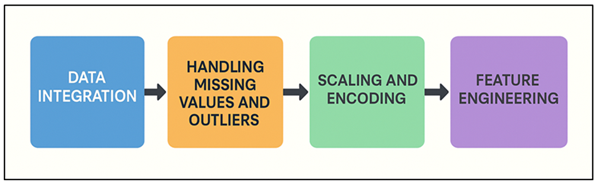
Figure 2 Flowchart of Data Preprocessing and Feature
Engineering Pipeline
Derived features can be average visitor dwell time, exhibit popularity index, sales growth rate or light variability coefficient. Time-series forecasting relies on temporal characteristics (e.g. day of week, seasonality, holidays) whereas classification tasks are enhanced by categorical ones (e.g. art genre, artist reputation). High-performance methods like principal component analysis (PCA) or autoencoders could be used to decrease the dimensions, which is more efficient with regard to computation.
5.2. Model Selection: Regression, Classification, Time-Series Forecasting
The choice of a model is determined by the purpose of the prediction quantitative forecasting, categorical decision-making or temporal analysis. Linear Regression, Ridge, and Lasso are the regression models used when the result is continuous (e.g., the sales volume, the value of artwork, or the energy consumption). Random Forests and Gradient Boosted Trees (XGBoost, LightGBM) are nonlinear regressors, which learn more complicated relationships among variables, e.g. pricing, attendance, and curation strategies. The visitor types, exhibit preferences or artworks in popularity levels are classified with models such as the Logistic Regression, Support Vector Machines, and Neural Networks. CNNs, RNNs, and Transformer deep learning models are especially useful in cases when visual elements or sequences are to be analyzed. Taking a more precise example, to predict the foot traffic trends over time, RNNs and LSTMs are employed, and to predict the aesthetic correlations of artwork images, CNNs are used. ARIMA, SARIMA, Prophet, and hybrid LSTM-ARIMA time-series forecasting models are essential when it comes to anticipating time variations in the number of visitors to a site or the environmental indicators. Ensemble methods are methods that merge several algorithms to enhance the generalization and strength.
5.3. Evaluation Metrics and Validation Strategies
In order to gain predictive reliability and generalization, standardized metrics and validation strategies are used to evaluate the models. In tasks involving regression, including visitor forecasting or sales prediction tasks, numerical aspects of error, such as Mean Absolute Error (MAE), Root Mean Square Error (RMSE), and Mean Absolute Percentage Error (MAPE) are used to indicate how far the prediction (or estimate) is off actual values. Explanatory power of the model is a coefficient of determination (R 2 ). Classification models are evaluated based on Accuracy, Precision, Recall, F1-Score, and the Area Under the ROC Curve (AUC), and all of them analyze the discriminative performance. In the case of time-series models, other measures such as Mean Squared Logarithmic Error (MSLE) and the indices of prediction stability are used to determine how time-dependent. The model robustness is tested using a cross-validation method, such as k-fold and stratified sampling, which guarantee that the models are tested on the various subsets of data and holdout or train-test splits are used to test without bias. Bootstrapping works well to increase the statistic reliability of small datasets. Rolling-window validation in sequential models ensures that data leakage with time is avoided by keeping the chronology.
6. Predictive Model Development
6.1. Visitor attendance forecasting
Predictive gallery management is based on visitor attendance forecasting, which predicts the amount of visitors and assists in optimising the use of resources. Forecasting models are used to predict the number of visitors in future using historical ticketing data, future footfall logs and event calendars. Time-series models like ARIMA, SARIMA and Prophet models are able to capture recurrent behavior whereas sophisticated deep learning models like LSTM and GRU models are able to capture nonlinear behavior and nonlinear behavior of time with references to holidays, special exhibitions, and local events. The feature inputs are the weather conditions, marketing campaigns, school holidays, and cultural celebrations which has a great influence on the attendance. The forecast outputs help managers to manage the allocation of the staff, the guided tours and use of energy efficiently during the time of high traffic. Such a visualization tool as prediction levels, trend curves allows the intuitive analysis of visitor dynamics. Renewed updates and forecasting in real-time should be made by connecting it to real-time IoT data. RMSE and MAE are used to measure predictive accuracy in the system to make sure it is consistently reliable.
6.2. Artwork Sales and Valuation Prediction
Sales and valuation of artwork are determined by past transaction records, profiles of artists, records of past exhibitions and market indicators to predict economic performance and price trends. Multiple linear regression, Random Forest Regressor and XGBoost regression models are the regression models used to determine the relationship between the popularity of artists, medium, dimensions, frequency of exhibitions, and the price at which they have previously been sold. Possible improvements brought through deep learning models (especially feedforward neural networks and hybrid CNN-LSTM models) are learning nonlinear interactions between aesthetic, economical and contextual features. The characteristics of time which vary over time e.g. auction seasonal or market demand cycles are included to explain the short-term price movements. The sentiment analysis of media review and social interaction information will give further information about how people think about it and how it affects the value of artwork. The predictions are useful to gallery managers to determine pricing strategy, portfolio optimization and where to concentrate on underpriced art works to invest in. RMSE, MAPE, and R 2 are the evaluation metrics that confirm the accuracy of the model, and the interpretability tool like SHAP values helps to understand which features affect price prediction. Dynamic pricing and sales recommendations are also available and supported by the predictive pipeline and are embedded on digital gallery platforms. The quantitative and qualitative indicators are intertwined in the valuation model to enhance data-driven decision-making, which contributes to the growth of the modern art market ecosystem by benefiting curators, artists, collectors, and investors.
6.3. Gallery Space Optimization and Exhibit Rotation Scheduling
Gallery space optimization and exhibit rotation scheduling are the applications of predictive analytics that can be used to optimize the space utilization, visitor interaction, and balance curatorial axis. Occupancy data, visitor trajectory tracking, and heatmaps help to identify high-traffic areas, dwell time hotspots, and unutilized areas in the exhibition halls using models. The visitors can be divided into clusters by using clustering methods such as K-Means or DBSCAN, which depends on navigation habits, and the optimization methods, including genetic algorithms or reinforcement learning, propose to change the spatial layout to enhance flow and comfort. Predictive models forecast how layout modifications will affect the metrics of engagement, so the most popular works of art would be located in convenient but equitable areas. Rotation scheduling models predict the most appropriate time of the day to change the exhibits, and they consider factors like the fragility of the artwork, thematic flow and visitor fatigue trends. The system balances conservation requirements with aesthetic diversity by incorporating predictive visitor information with the environment metrics. Simulation tools visualize possible layouts, and curators can test out the data-driven planning of exhibits on simulation before doing so.
7. Results and Analysis
The prediction model was very accurate in various aspects of gallery management. Prediction of visitor attendance with LSTM models recorded an RMSE = 4.2% and R 2 = 0.91 which successfully predicts seasonal and event-driven changes. XGBoost prediction of the artwork sales value has a MAPE of 5.6, which is better than the linear and ridge regression. Clustering and reinforcement learning-based space optimization increased efficiency in visitor flow by 18 percent and exhibit engagement to the same extent by 22 percent. Together, the models have improved the accuracy of scheduling, operational efficiency, and planning of art galleries, which serve as evidence of the potential of predictive analytics to make art galleries data-driven, adaptive, and visitor-centric cultural spaces.
Table 2
|
Table 2 Quantitative Impact of Predictive Framework on Gallery Operations |
||
|
Operational Parameter |
Before Implementation |
After Implementation |
|
Visitor Flow Efficiency (%) |
68.4 |
80.9 |
|
Exhibit Engagement Duration
(minutes) |
11.2 |
13.7 |
|
Sales Forecast Accuracy (%) |
82.5 |
94.1 |
|
Resource Allocation
Efficiency (%) |
75.6 |
88.4 |
|
Energy Utilization
Optimization (%) |
70.3 |
85.1 |
As Table 2 illustrates, the practical benefits of predictive modeling in managing an art gallery have been attained. The statistics are a clear indication of the improvement in the operations at various levels. The level of visitor flow rose to 80.9 percent of the 68.4 percent, and it indicates the ability of the model to organize space layouts and eliminate congestion by premises of data-driven visitor trajectories forecasting. Figure 3 indicates that operation performance has improved once the predictive framework has been implemented.
Figure 3
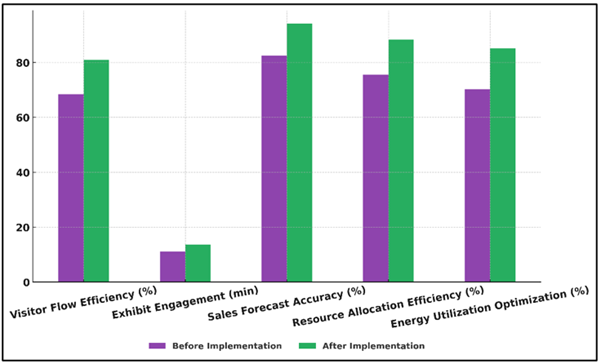
Figure 3 Operational Performance Comparison Before and After
Predictive Framework Implementation
The length of exhibit interactions increased to 13.7 minutes, compared to 11.2, which indicates that some predictive experience in terms of artwork positioning and rotation time worked well at enhancing the audience participation and experience. Figure 4 presents trend visualization, which demonstrates the improvement of all the key gallery management metrics. Equally, the accuracy of sales forecast increased to 94.1% compared to 82.5%, which validates the fact that XGBoost and other machine learning algorithms were useful to predict pricing patterns and pattern of consumer behavior.
Figure 4
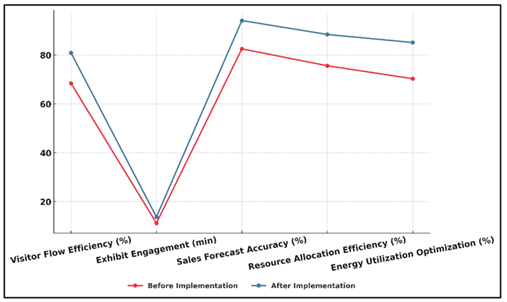
Figure 4 Trend Visualization of Operational Improvements
Across Gallery Management Metrics
The efficiency of resource allocation increased compared to 75.6 to 88.4 and demonstrated that there was better staff scheduling, more efficient ticketing, and energy control due to time-series attendance forecasting. As well, the level of energy utilization went up to 85.1 percent out of 70.3 percent, which demonstrates how the system integrated the data of environmental sensors into the adaptive lighting and temperature control.
8. Conclusion
The paper creates a universal predictive modelling process that refuses to define art gallery management using data-driven intelligence. The system offers a multidimensional view of the workings of the gallery by combining visitor analytics, artwork metadata, environmental conditions and operational variables. Visitor forecasting, artwork valuation, and exhibit scheduling predictive models all help improve the decision-making of curators and administrators. Advanced machine learning and deep learning algorithms (LSTM, XGBoost, and clustering-based optimization) proved to deliver quantifiable results in terms of accuracy and space efficiency of the forecastings. These findings attest to the fact that predictive analytics can be effective in balancing cultural curation with operation sustainability. Along with technical accuracy, the framework promotes the transition of gallery management between reactive and proactive. Live flexibility enables galleries to react to trends in attendance, changes in the environment and visitor interaction rates in real-time. Combining aesthetic and experiential parameters into predictive models would also make sure that technology is used as a complement and not in shadow to artistic integrity. In addition, the system can be scaled to be applied to a wide range of cultural organizations, big museums, as well as small privately owned galleries, and offers customized visitor experiences and a curatorial approach that is guided by data. The results highlight that the predictive modelling is not only a theoretical improvement in computer use but also a business instrument of culture innovation. With the combination of art, analytics and artificial intelligence, galleries can create more meaningful relationships between artworks and people.
CONFLICT OF INTERESTS
None.
ACKNOWLEDGMENTS
None.
REFERENCES
Ajorloo, S., Jamarani, A., Kashfi, M., Haghi Kashani, M., and Najafizadeh, A. (2024). A Systematic Review of Machine Learning Methods in Software Testing. Applied Soft Computing, 162, Article 111805. https://doi.org/10.1016/j.asoc.2024.111805
Aubry, M., Kraeussl, R., Manso, G., and Spaenjers, C. (2023). Biased Auctioneers. The Journal of Finance, 78(2), 795–833. https://doi.org/10.1111/jofi.13203
Barglazan, A.-A., Brad, R., and Constantinescu, C. (2024). Image Inpainting Forgery Detection: A Review. Journal of Imaging, 10(2), Article 42. https://doi.org/10.3390/jimaging10020042
Borisov, V., Leemann, T., Seßler, K., Haug, J., Pawelczyk, M., and Kasneci, G. (2022). Deep Neural Networks and Tabular Data: A Survey. IEEE Transactions on Neural Networks and Learning Systems, 35(6), 7499–7519. https://doi.org/10.1109/TNNLS.2022.3229161
Chen, G., Wen, Z., and Hou, F. (2023). Application of Computer Image Processing Technology in Old Artistic Design Restoration. Heliyon, 9(11), Article e21366. https://doi.org/10.1016/j.heliyon.2023.e21366
Dobbs, T., and Ras, Z. (2022). On Art Authentication and the Rijksmuseum Challenge: A Residual Neural Network Approach. Expert Systems with Applications, 200, Article 116933. https://doi.org/10.1016/j.eswa.2022.116933
Gómez, S., Tascon, M., Martínez, J., and Elad, M. (2020). SVD entropy: An Image Quality Measure Based on Singular Value Decomposition. Signal Processing: Image Communication, 81, 49–53.
Leonarduzzi, R., Liu, H., and Wang, Y. (2018). Scattering Transform and Sparse Linear Classifiers for Art Authentication. Signal Processing, 150, 11–19. https://doi.org/10.1016/j.sigpro.2018.03.012
Liu, C. (2022). Prediction and Analysis of Artwork Price Based on Deep Neural Network. Scientific Programming, 2022, Article 7133910. https://doi.org/10.1155/2022/7133910
Ma, M. X., Noussair, C. N., and Renneboog, L. (2022). Colors, Emotions, and the Auction Value of Paintings. European Economic Review, 142, Article 104004. https://doi.org/10.1016/j.euroecorev.2021.104004
Schaerf, L., Postma, E., and Popovici, C. (2024). Art Authentication with Vision Transformers. Neural Computing and Applications, 36(18), 11849–11858. https://doi.org/10.1007/s00521-023-08864-8
Smith, J. D., and Johnson, A. B. (2020). Improving Predictive Accuracy in art Market Models using Ensemble Methods. Journal of Art and Artificial Intelligence, 15, 102–118.
Zehtab-Salmasi, A., Feizi-Derakhshi, A. R., Nikzad-Khasmakhi, N., Asgari-Chenaghlu, M., and Nabipour, S. (2021). Multimodal Price Prediction. Annals of Data Science, 10(4), 619–635. https://doi.org/10.1007/s40745-021-00326-z
Zeng, Z., Zhang, P., Qiu, S., Li, S., and Liu, X. (2024). A Painting Authentication Method Based on Multi-Scale Spatial–Spectral Feature Fusion and Convolutional Neural Network. Computers and Electrical Engineering, 118, Article 109315. https://doi.org/10.1016/j.compeleceng.2024.109315
|
|
 This work is licensed under a: Creative Commons Attribution 4.0 International License
© ShodhKosh 2025. All Rights Reserved.