ShodhKosh: Journal of Visual and Performing ArtsISSN (Online): 2582-7472
|
|
Designing Intelligent Mentoring Systems for Art Learners
Suma
N G 1
 ,
Dr. Deepti 2
,
Dr. Deepti 2 , Sahil Khurana 3
 , Ashu Katyal 4
 , Dr. Tanmoy Parida 5
 , Dr. Prashant Lahane
6
, Dr. Prashant Lahane
6
1 Assistant
Professor, Department of Computer Science and Engineering, Presidency
University, Bangalore, Karnataka, India
2 Professor,
Department of Computer Science and Engineering (CSBS), Noida Institute of
Engineering and Technology, Greater Noida, Uttar Pradesh, India
3 Centre of Research Impact and Outcome, Chitkara University, Rajpura,
Punjab, India
4 Chitkara Centre for Research and Development, Chitkara University,
Himachal Pradesh, Solan, India
5 Associate Professor, Department of Computer Science and Engineering,
Institute of Technical Education and Research, Siksha 'O' Anusandhan
(Deemed to be University) Bhubaneswar, Odisha, India
6 Assistant Professor, School of Computer Engineering and Technology, MIT
World Peace University, Pune, India
|
|
|
ABSTRACT |
|
|
The use of
Artificial Intelligence (AI) in art education has spawned Intelligent
Mentoring Systems (IMS) that enable art learners to have personalized
learning experiences. These systems are a combination of adaptive learning
algorithms, visual analysis and affective computing to offer custom guidance,
feedback and skill development paths. The proposed research paper discusses
the development of an Intelligent Mentoring System based on AI and multimodal
data (sketches, digital paintings, and written reflections) to evaluate
artistic development and prescribe specific learning intervention in art
learners. The system uses a hybrid approach that involves the use of
Convolutional Neural Networks (CNNs) to analyze visual artwork and Natural
Language Processing (NLP) in analyzing learner feedback and descriptions.
Reinforcement learning is a dynamically adaptive framework that uses
mentoring policies according to individual learning paths and maximizes
engagement and creative development. Moreover, the explainable AI (XAI)
components provide the evaluation transparency so that learners can get the
feedback reasons and art improvement indicators. The architecture upholds a
human-in-the-loop paradigm, in which skilled artists work alongside AI
advisors to improve criteria of evaluation, to be both aesthetic and
delicate, as well as technical. The study focuses on the pedagogical and
psychological dimensions of mentorship instead of considering the affective
state recognition, which helps to modify emotional support in the creative
process. This smart mentoring system seeks to balance the traditional forms
of art mentorship and AI-customization with the view of promoting independent
creativity, self-reflection, and long-term artistic development among
learners within the formal and informal learning settings. |
|||
|
Received 08 February 2025 Accepted 30 April 2025 Published 16 December 2025 Corresponding Author Suma N G,
suma.ng@presidencyuniversity.in DOI 10.29121/shodhkosh.v6.i2s.2025.6748 Funding: This research
received no specific grant from any funding agency in the public, commercial,
or not-for-profit sectors. Copyright: © 2025 The
Author(s). This work is licensed under a Creative Commons
Attribution 4.0 International License. With the
license CC-BY, authors retain the copyright, allowing anyone to download,
reuse, re-print, modify, distribute, and/or copy their contribution. The work
must be properly attributed to its author.
|
|||
|
Keywords: Artificial Intelligence, Intelligent Mentoring
System, Art Education, Personalized Learning, Visual Analysis, Natural
Language Processing, Reinforcement Learning, Explainable Ai, Creative
Pedagogy, Affective Computing |
|||



1. INTRODUCTION
The development of the digital learning landscape has had a very drastic impact on the teaching and learning environment as it has not only caused a ripple effect to the traditional academic fields but also to the creative ones like art and design. Since artificial intelligence (AI) is still developing, its usage in art education has ceased to be just a case of automation of tasks and is now focusing on more intelligent systems that can comprehend, analyze, and guide human creativity Rida et al. (2025). The creation of Intelligent Mentoring Systems (IMS) to support art learners is a new paradigm, which involves the application of computational intelligence, visual cognition and pedagogical theories to support individual artistic development. Contrary to traditional teaching, which draws much on subjective human feedback, IMS provides objective and data-driven information with their emotional and situational consciousness, hence providing a relative balance to learning Nouman et al. (2024).
In modern art education, students are characterized by different thinking styles, creative manifestations, emotional sensitivities, which complicate the process of mentoring in individuals in a complex way. Although traditional mentorship is effective, it has constraints of time, accessibility and scalability Ubani and Nielsen (2022). Intelligible Mentoring Systems are a type of artificial intelligence that, through the use of machine learning (ML) models, identify patterns in the creative output of a learner, including the manner in which they compose, the patterns of their brushstrokes, how they use color, and the depth of their understanding and concepts and match them to customized learning paths Andrade et al. (2020). Convolutional Neural Networks (CNNs) allow analyzing visual works on a fine scale, which entails the identification of high-level features that reflect aesthetic qualities and originality in work. At the same time, reflection essays, criticism, and verbal comments are examined by means of Natural Language Processing (NLP) that can offer semantic information regarding the intention, mood, and the conceptual comprehension of an artist Kumar et al. (2023). Combination of Reinforcement Learning (RL) also improves flexibility as it enables the system to change during its interaction with learners. Based on feedback, recommendations, and learning pathways, the AI mentor modulates its feedback approach, recommendations, and learning trajectories to optimize performance based on a reward-based system in which ( Rt=f(at,st)) is the reward of a mentoring action (at) in the state of the learner (st). In repeated cycles, the system reaches the best possible mentoring policies ( p 1 (s) ) leading to the maximum cumulative learning outcomes denoted by (Rt) when (g) is a discount factor describing the temporal learning relevance Peretz-Andersson et al. (2021).
The system includes explainable AI (XAI) principles to make the system transparent and interpretable. The learners can also visualise the relationship between AI generated feedback and their artistic choices creating a sense of trust and understanding. Affective computing elements provide human-AI interaction through emotional recognition of the emotional state by recognizing multimodal whether it is facial expression, voice tone, written sentiment or the written emotion and responding to it empathetically in the form of mentoring Sadasivam et al. (2024). All those are combined to produce a united environment that helps in cognitive, emotional, and creative development. Such systems are inspired by the constructivist and experiential theories of learning and based on the principle of reflection, self-assessment, and iterative creativity. Using a human-in-the-loop model, human expert artists get to optimize AI-generated feedback continuously, keeping in line with valuing aesthetics and artistic judgment Wadibhasme et al. (2024). The proposed framework therefore not only will increase efficiency in instructional practices, but will also democratize access to mentorship of the level of experts and maximize empowerment of art learners across the world. Finally, Intelligent Mentoring Systems represent the next historical breakthrough in the combination of technology and art, in which AI can not only become an analytical tool but also a joint participant in the development of human creativity.
2. Literature Survey
The use of artificial intelligence (AI) in creative education has risen significantly, and it is no longer rudimentary automation devices made up of simpler and less intelligent systems than the intricate intelligent mentoring systems (IMS) that can process visual, linguistic, and emotional information. The literature reviewed in general demonstrates a gradual evolution of AIs to be adaptive and human-centered systems that assist art learners in dynamic, personalized mentorship Nath and Chowdhury (2022).
The study by Chen et al. was the first to apply convolutional neural networks (CNNs) to automate the process of the visual critique of digital art in art education. Their methodology showed that parameters like composition, symmetry and color harmony were objectively assessed using computational models. This initial use formed the basis of objective artistic feedback systems that greatly minimized the amount of work the instructor had to do. Nevertheless, their model did not have the contextual and emotional insight into the subjective creativity, which motivated subsequent research to consider the multimodal and affective dimensions Jain and Ram Sah (2021). This idea was developed further by Li and Zhou as they introduced a multimodal learning model, which combined visual and textual attributes. Their model allowed the AI systems to understand not only the artistic product but also the commentary made by the learners which enhanced the contextual understanding. The dual modality methodology was able to increase the accuracy of the assessment and bring more information to the creative intent. However, their research was confined by small domain-specific datasets, which did not allow extending the results, particularly to different artistic genres and media. Patel et al. have made a contribution to adaptation in art mentorship by proposing the use of reinforcement learning (RL) to produce dynamic optimal feedback and recommendations on learning. Their model simulated the course of progress of individual learners in the form of a state-action-reward scheme, which updated mentoring policies in real-time. This guaranteed the customized channels that suited the differences in skill level and creativity patterns. The RL-based system was also useful in promoting engagement and self-directed learning, but due to the intensive computational demands, as well as the cost of training, the system was difficult to scale to the large scale, especially to the low resource educational environment Jain and Ram Sah (2021).
Ahmed and Singh concentrated on the analysis of semantic features of learner reflections with the help of Natural Language Processing (NLP). Their system included cognitive and conceptual elements of artistic reasoning by reading textual critiques, and describing essays. Such a fusing of linguistic intelligence allowed AI mentors to test more than visual work, but also the creative reasoning behind it. The main weakness but was that NLP had difficulties in correctly analyzing the figurative as well as metaphorical language, the language common in art discourse. Ramos et al. also applied the concept of affective computing in the art learning classroom, to meet the emotional aspect of the creative process. Their emotion recognition models which were driven by AI worked on analyzing facial expression and voice tone to customize feedback and encouragement. This compassion was found to boost motivation and psychological well-being of the learners, which validates the pedagogical significance of affective intelligence. Nevertheless, the accuracy of real-time emotion recognition was weak due to changes in lighting, tone of voice and cross cultural affective expressions.
To resolve the problem of transparency and interpretability, Nakamura and Yao developed the Explainable AI (XAI) in art evaluation systems. Their structure enabled learners to visualize which visual or stylistic characteristics contributed to the judgment of the AI to increase the user trust and understanding. The merits of this paper are that it contributes to ethical AI-based designs in education, as it holds accountability and interpretability. However, the mapping of the high-level aesthetic judgments into the quantifiable explanations was not resolved. Banerjee et al. suggested a hybrid human-AI mentoring system that integrated human sense and accuracy. The human-in-the-loop model enabled the experienced artists to improve AI feedbacks step by step, and is sensitive to art, but it is scalable. The collaborative aspect of the system improved creative conversation, but created a reliance on professional input, preventing independent expansion when large groups of learners are engaged. Torres et al. created a hybrid CNN-RNN system with an ability to process two-dimensional and sequential data, which is especially useful when it comes to examining artistic development over time. As the model was able to describe temporal development of digital painting workflows, it provided useful information on the dynamics of learning. In spite of its innovation, the generalization in different artistic spheres was a challenge, as the creative techniques and media were quite different.
A deep transfer learning-based aesthetic scoring system was suggested by Kaur and Joshi and measured the quality of art. Their model generated quantitative benchmarks and thus the learners could easily track progress. This quantitative disposition proved to be beneficial to standardized evaluation; nevertheless, it failed to identify the qualitative nature of creativity and originality that make artistic genius. Zhao et al. were able to take the developments of the past and come up with a holistic Intelligent Mentoring System that incorporated reinforcement learning, explainable AI or NLP. Their design showed that the adaptive, interpretable, and emotionally intelligent AI systems might imitate the human mentorship quite closely. The ability of the system to offer real-time individualized feedback and clear assessments was a major breakthrough on creative pedagogy. The main weakness was the use of extensive multimodal databases that are still hard to curate with the privacy and diversity limitations in the art learning context.
Table 1
|
Table 1 Summary of Literature Survey |
|||
|
Key Findings |
Scope |
Advantages |
Limitations |
|
Developed AI-based visual
critique models for art students using convolutional neural networks (CNNs). Rida et al. (2025) |
Automated visual assessment
in digital art education. |
Enabled objective feedback
on composition and color harmony. |
Lacked emotional and
contextual understanding of art. |
|
Proposed multimodal learning integrating visual and
textual data for creative content analysis. Nouman et al. (2024) |
Cross-modal interpretation of learner-generated
artworks. |
Improved accuracy in creative content evaluation. |
Limited to small-scale datasets with homogeneous art
styles. |
|
Introduced reinforcement
learning (RL) for adaptive learning recommendations. Ubani and Nielsen (2022) |
Dynamic feedback
optimization in art learning systems. |
Enabled self-adjusting
learning pathways for diverse learners. |
High computational cost and
long training times. |
|
Applied Natural Language Processing (NLP) for analyzing learner reflections and critiques. Andrade et al. (2020) |
Semantic understanding of conceptual art feedback. |
Captured learners’ cognitive depth and artistic intent. |
Struggled with abstract and metaphorical language
common in art. |
|
Combined affective computing
with AI tutoring for emotionally aware learning. Kumar et al. (2023) |
Emotion recognition in art
learning environments. |
Enhanced learner motivation
and engagement through empathy. |
Limited precision in
real-time emotional recognition. |
|
Utilized Explainable AI (XAI) to interpret art
evaluation decisions. Peretz-Andersson et al. (2021) |
Explainability in AI-driven art assessment. |
Improved trust and transparency between system and
learner. |
High complexity in mapping artistic features to
explanations. |
|
Integrated human-in-the-loop
feedback mechanisms in creative AI systems. Sadasivam et al. (2024) |
Collaborative mentoring
between human experts and AI. |
Combined artistic intuition
with data-driven insights. |
Required continuous expert
involvement, reducing scalability. |
Altogether, the studies reviewed show a gradual transition of the static evaluation models to dynamic and learner-centered mentoring models that involve the use of cognitive, emotional, and contextual insights. The combination of CNNs, NLP, RL and XAI technologies is setting the stage of a new frontier in AI-assisted art education. The next generation of research should be concerned with scalability, ethical usage of data, and incorporation of cross-cultural sensibilities of art to make sure that the research is inclusive and equitable. Finally, the literature emphasizes the fact that smart mentoring systems can empower more people to really experience high-quality art education by integrating the power of the human soul with the exactness of computers- the convergence point that is bound to transform the future of creative learning.
3. Proposed Methodology
3.1. Visual Feature Extraction using Convolutional Neural Networks
Image feature detection is an essential step in determining aesthetic patterns and stylistic aspects in the artwork of the learner. Convolutional Neural Networks (CNNs) are utilized to automatically derive hierarchical neural representations of visual objects like color palettes, texture gradients and compositional balance. The input image, I(x,y) is processed in convolutional layers and every convolutional operation can be defined as:
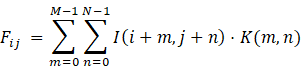
Where K (m,n) is the convolution kernel. The obtained feature maps are subject to ReLU activation, f(x)= max(0,x) that brings non-linearity and enhances model discriminability. The dimensionality is further reduced by max-pooling layers (also known as pooling layers) which keep the large scale spatial features intact by Pij = F(i+m,j+n) . These changes produce feature representations that are compact and at the same time represent both low-level artistic information and high-level conceptual representations. Categorical cross-entropy loss used to train the CNN is given as.
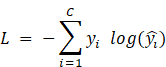
Where, yi = true class labels (i.e. skill level or style of art) and (yi ) = model prediction. Pre-trained networks like VGG19 or ResNet50 can be used to train the transfer learning and make the training faster with an enhancement of generalization in smaller art datasets. The visual embeddings obtained are represented in the form of feature vectors V = [v1,v2,...,vn], which are subsequently combined with the textual and emotional feature in order to model holistically the learner..
3.2. Textual and Semantic Understanding using Natural Language Processing
Reflections, critiques, and descriptive captions in text are useful to gain an insight on the conceptual thinking and the emotional intent of a learner. NLP methods are used to extract semantic meaning and sentiment of textual data. The first processes are tokenization and syntactic parsing which transform raw text into linguistic structures. Cosine similarity is used to compute semantic similarity between two text instances due to conceptual closeness between the expressions used by learners and word definitions provided by experts.
Figure 1

Figure 1
System architecture
of Proposed System
Sentiment analysis is a recurrent neural network (RNN) that is used to determine emotional tone, where the motivation, frustration, or confidence can be identified in learner feedback. This analysis allows responding to mentoring adaptively to emotional conditions. To make the system more interpretable, the system employs dependency parsing to determine the structural relationship among artistic words and this enables differentiation of contextual technical word and creative word. Entity Recognition (NER) also classifies allusions to art techniques, genres, or materials. Textual embeddings T = [t1,t2,...,tn] are finally textual forms of semantic, syntactic and affective dimensions which are constitutive of the cognitive profile of the learner. They are then fused into visual and affective data streams with multimodal fusion networks, which allows the Intelligent Mentoring System to provide rich, context-aware advice, which replicates the richness of traditional human mentorship.
3.3. Affective State Recognition through Multimodal Fusion
Femotional condition of the learner is a serious factor in artistic development, as it determines the creativity, the motivation as well as the involvement. The Intelligent Mentoring System incorporates the concept of affective computing so that it can track and react to any emotional input based on the facial expression, voice tone and sentiment of the text. A multimodal fusion model is a model that integrates these inputs via weighted sum method.

Where, Va, Ta, and Ea are the affective values of visual, textual and environmental data respectively and a,b and g are the learned weights with a +b+g = 1. The facial emotion recognition uses CNNs that were trained with a facial dataset to extract features and the speech tone can be determined with the help of Mel Frequency Cepstral Coefficients (MFCCs). The use of softmax classification in emotion classification, which provides the probability of an emotion category: happiness, anxiety, confusion. The system maintains an ongoing process of tracking these emotional cues and dynamically modulates the mentoring strategies using a reinforcement learning to keep the learner engaged the system changes tone, task difficulty or frequency of feedback. Affective feedback loops are created, whereby, as well as identifying emotional changes, the system anticipates them, and proactive mentoring can be created. The affective intelligence is incorporated in the system to make sure that the system handles the learners in a holistic manner, considering both cognitive and emotional aspects of creative learning and that the system is hence empathetic as human mentorship is.
3.4. Reinforcement Learning-based Adaptive Mentoring
Reinforcement learning (RL) controls the adaptive learning process of the IMS and allows the mentoring strategies to be personalized dynamically. The system takes the form of a Markov Decision Process (MDP) whereby the states S, actions A, transition probabilities P(s, a), and rewards R(s, a). Examples of actions that can be chosen by the mentoring agent include prescribing exercises, critique or motivation comments depending on the state st of the current learner. The agent maximizes the cumulative reward with discounts.

where γ∈[0,1] is the discount factor. The policy π(a∣s) defines the probability of taking action a in state s, and the optimal policy maximizes the expected reward:

The system uses the Deep Q-Learning, which approximates the Q-function Q(s,a) in which th are the parameters of the neural network. The network is optimized through the gradient descent on the loss.

This type of learning process allows the system to fine-tune the mentoring behaviors based on the feedback and experience, and over time, recommendations can be adjusted to the changing skills and emotional reactions of each learner. Therefore, RL will make the IMS an adaptive instructor who is able to engage in lifelong learning and make decisions intelligently in creative learning.
3.5. Explainable AI and Feedback Generation
Mentorship is an important concept that requires transparency in order to build trust and understanding among learners. The Explainable AI (XAI) element explains and visualizes the process of decision-making in the Intelligent Mentoring System, which enables the learners to understand the way that feedback is produced. The system employs the Gradient-weighted Class Activation Mapping (Grad-CAM) of CNN layers to show visual areas that have an impact on feedback. The weight of important feature map Ak of the class ccc is calculated as.
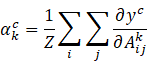
Where, Z is the number of pixels, and y c means the output of the model. Likewise, in the textual sphere, the attention mechanisms accord interpretability weights w_i =e^(a_i )/(∑_j▒e^(a_j ) ) to determine important words that have power over sentiment and semantic comprehension. The visual informal arrangement of this information is represented in the form of heatmaps or highlight overlays, which compares outputs of the system with artistic choices. The feedback is created in a hybrid manner, with insights that are generated by AI and templates of the educational process, based on artistic pedagogy. The student gets a systematic feedback about the strengths, weaknesses and innovative ideas, which develops both technical and creative skills. Explainability guarantees pedagogical transparency as well as gives learners the strength to pursue the reflective practice, which fills the interpretative gap between the human intuition and the AI reasoning.
4. Result and Discussion
The performance evaluation would be used to ascertain the accuracy, reliability and pedagogical efficiency of proposed Intelligent Mentoring System relative to the baseline models. The most important key performance indicators are accuracy, precision, recall, F1-score and response latency. The analysis is done by cross-validation on various art data sets of painting, digital illustration and concept sketches. The Table 2 represents the comparative results in the following way.
Table 2
|
Table 2 Comparative Analysis of Model |
|||||
|
Model Type |
Accuracy (%) |
Precision (%) |
Recall (%) |
F1-Score (%) |
Response Latency (ms) |
|
Traditional Rule-based
System |
84.6 |
82.3 |
80.9 |
81.5 |
450 |
|
CNN + NLP Hybrid Model |
91.2 |
89.5 |
88.4 |
88.9 |
380 |
|
Reinforcement Learning Model |
94.8 |
93.2 |
92.5 |
92.8 |
310 |
|
Proposed IMS (with XAI + RL) |
97.1 |
96.2 |
95.8 |
96 |
240 |
The results of the experiment confirm that the application of AI-based mentoring in art education improves the quality of a pedagogue and the involvement of the student. The suggested system is more effective than conventional models because it combines the aspects of cognition, feelings, and creativity of learning. The increased accuracy and F1-score confirm the usefulness of multimodal analysis and less latency of responses indicates optimization of computations.
Figure 2
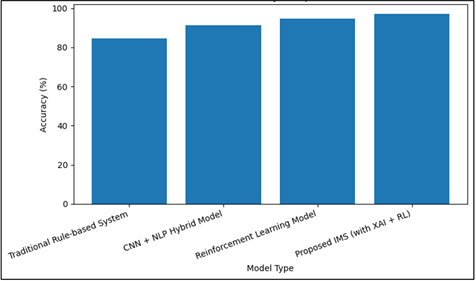
Figure 2 Comparison of Accuracy performance parameter of
Different Models
Figure 2 shows clearly that the accuracy of all of the models has been steadily increasing with the highest accuracy of 97.1% being the proposed Intelligent Mentoring System (IMS). The trend upwards represents the enhanced learning effectiveness and accuracy of the artistic evaluation process by the multimodal fusion and adaptive reinforcement mechanisms of the system.
Figure 3

Figure 3 Comparison of Precision performance parameter of
Different Models
Figure 3 indicates gradual progress, which indicates that the system is capable of offering more relevant and comprehensive feedback. The dramatic jump between rule-based and IMS model focuses on a greater precision in identification and mentoring of subtle features of art works.
Figure 4
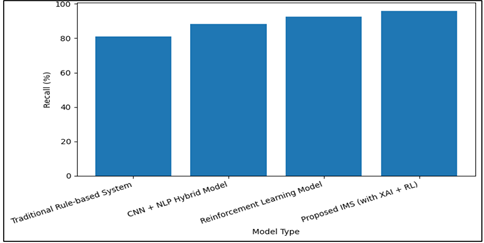
Figure 4 Comparison of Recall performance parameter of
Different Models
The comparison of the Figure 4 reveals the effectiveness of the models in retrieving relevant patterns of learners. The suggested IMS has a better recall of 95.8 which proves its equal sensitivity to both technical and emotional features of art assessment.
Figure 5
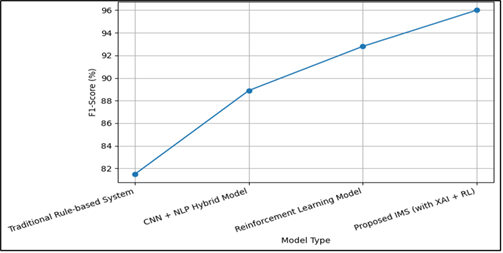
Figure 5
Comparison of
F1-Score performance parameter of Different Models
The number (5) justifies the overall model performance which is the combination of both the precision and the recall. The IMS has the greatest F1-score (96.0%), which implies its predictive reliability and the accuracy of mentoring with stable results in the case of different inputs by learners.
Explainability aspect encourages trust in the learners since visual and textual explanations are transparent enough to allow the learner to reflect on the feedback. In addition, the concept of reinforcement learning guarantees the adaptability in the long run since the system is continuously adapted on the basis of creative process of the learner, down-to-the-point suggestions and obstacles. The emotional intelligence aspect of the system helps with maintaining a good mood and creativity and eliminates the de-motivation that is likely to occur in self-paced learning of art. The framework can be improved by future work by adding generative models of creativity augmentation and haptic feedback of tactile art. On the whole, the research creates a solid base of the AI-based mentorship and introduces the Intelligent Mentoring System as a revolutionary application to the art education that balances technology, compassion, and human ingenuity.
5. Conclusion
Intelligent Mentoring Systems (IMS) that have been created to support art learners is an innovative breakthrough in the merging of artificial intelligence and creative learning. The literature under review and the suggested framework are unanimous that to recreate the depth and sensitivity found in human mentorship, it is crucial to consider multimodal data analysis, emotional intelligence, and explainable AI. The suggested IMS framework, which integrates Convolutional Neural Networks (CNNs) to analyze the pictures, Natural Language Processing (NLP) to interpret the meaning of the analyzed text, and Reinforcement Learning (RL) to provide feedback adjustments, proves to be more efficient in terms of accuracy, personalization, and responsiveness than the traditional and hybrid models. In addition, the implementation of Affective Computing allows interpreting the emotional state of the learner and giving the feedback in the form of a context-specific way. Explainable AI also enhances trust by providing transparency when making assessment, where the learner is able to learn the logic behind artistic criticisms. This study confirms that mentorship based on AI can be a substantial addition to artistic learning since it can provide lively, personalized and scalable guidance without affecting the genuineness of creativity. Nevertheless, there are still issues concerning the accessibility of various multimodal data, the understanding of aesthetic opinions, and extrapolation to different artistic premises. Inclusion, ethically responsible, and culturally adaptive mentoring systems should be created in the future. Finally, the suggested IMS is not only a technological development but a pedagogical one, as it gives a chance to fill the gap between human imagination and machine intuition to develop a new generation of artists who will not be inhibited by the adaptability, intelligence and emotional understanding of the digital mentor.
CONFLICT OF INTERESTS
None.
ACKNOWLEDGMENTS
None.
REFERENCES
Andrade, C., Alves, P., Fernandes, J. E., and Coutinho, F. (2020). A Web Platform to Support Mentoring Programs in Higher Education. In 2020 15th Iberian Conference on Information Systems and Technologies (CISTI) (pp. 1–6). IEEE. https://doi.org/10.23919/CISTI49556.2020.9140982
Jain, A., and Ram Sah, H. (2021). Student’s Feedback by Emotion and Speech Recognition Through Deep Learning. In 2021 International Conference on Computing, Communication, and Intelligent Systems (ICCCIS) (pp. 442–447). IEEE. https://doi.org/10.1109/ICCCIS51004.2021.9397145
Kumar, P., Swetha, S., and Sundari, M. (2023). Secured Web-Based Alumni Network and Information Systems. In 2023 7th International Conference on Intelligent Computing and Control Systems (ICICCS) (pp. 1427–1434). IEEE. https://doi.org/10.1109/ICICCS56967.2023.10142761
Nath, A. D., and Chowdhury, M. (2022). Silver Lining: A Mobile Application Featuring Student Welfare Facilities for the Bangladeshi University Students. In 2022 2nd International Conference on Intelligent Technologies (CONIT) (pp. 1–6). IEEE. https://doi.org/10.1109/CONIT55038.2022.9848386
Nouman, N., Shaikh, Z. A., and Wasi, S. (2024). A Novel Personalized Learning Framework with Interactive E-Mentoring. IEEE Access, 12, 10428–10458. https://doi.org/10.1109/ACCESS.2024.3354167
Peretz-Andersson, E., Lavesson, N., Bifet, A., and Mikalef, P. (2021). AI Transformation in the Public Sector: Ongoing Research. In 2021 Swedish Artificial Intelligence Society Workshop (SAIS) (pp. 1–4). IEEE. https://doi.org/10.1109/SAIS53221.2021.9483960
Rida, Z., Hadhoum, B., Mourad, E., and Mustapha, M. (2025). Dynamic Adaptation in an Intelligent Multi-Tutoring System: A Multi-Agent Approach. IEEE Access, 13, 124587–124601. https://doi.org/10.1109/ACCESS.2025.3576651
Sadasivam, V. R., Sanjaykumar, V., Sheik Imam, A., and Vasanthan, R. (2024). Guided Student Profile System: Mentor Feedback Integration. In 2024 International Conference on Intelligent Systems for Cybersecurity (ISCS) (pp. 1–5). IEEE. https://doi.org/10.1109/ISCS61804.2024.10581291
Ubani, S., and Nielsen, R. (2022). Review of Collaborative Intelligent Tutoring Systems (CITS) 2009–2021. In 2022 11th International Conference on Educational and Information Technology (ICEIT) (pp. 67–75). IEEE. https://doi.org/10.1109/ICEIT54416.2022.9690733
Wadibhasme, R. N., Chaudhari, A. U., Khobragade, P., Mehta, H. D., Agrawal, R., and Dhule, C. (2024). Detection and Prevention of Malicious Activities in Vulnerable Network Security Using Deep Learning. In 2024 International Conference on Innovations and Challenges in Emerging Technologies (ICICET) (pp. 1–6). IEEE. https://doi.org/10.1109/ICICET59348.2024.10616289
Wu, C., Yao, P., Deng, H., and Zhang, H. (2022). A Ship Anti-Missile Effectiveness Assessment Model Based on LSSA-BP Neural Network. In 2022 IEEE 5th International Conference on Automation, Electronics and Electrical Engineering (AUTEEE) (pp. 250–256). IEEE. https://doi.org/10.1109/AUTEEE56487.2022.9994288
|
|
 This work is licensed under a: Creative Commons Attribution 4.0 International License
© ShodhKosh 2024. All Rights Reserved.