ShodhKosh: Journal of Visual and Performing ArtsISSN (Online): 2582-7472
|
|
AI and the Evolution of Post-Digital Art Movements
Muthuraju V 1
 ,
Rajat Saini 2
,
Rajat Saini 2 , Jatin Khurana 3, Sanchi Kaushik 4
 , Syed Rashid Anwar 5
1 Assistant
Professor, Department of Computer Science and Engineering, Presidency
University, Bangalore, Karnataka, India
2 Centre
of Research Impact and Outcome, Chitksara University, Rajpura, Punjab, India
3 Chitkara Centre for Research and
Development, Chitkara University, Himachal Pradesh, Solan, India
4 Assistant Professor, Department of
Computer Science and Engineering (AIML), Noida Institute of Engineering and
Technology, Greater Noida, Uttar Pradesh, India
5 Assistant Professor, Department of
Computer Science and IT, ARKA JAIN University Jamshedpur, Jharkhand, India
|
|
|
ABSTRACT |
|
|
The evolution
of post-digital art experiences paradigm shift of the use of technology by
artists not to the novelty of the digital but to a comprehensive critical
engagement with the artificial intelligence (AI) as a medium and a
collaborator. The paper addresses AI overlap with post-digital art, and
traces the historical and theoretical development of the creative systems and
the way they shape the creative processes and artistic ideology
transformation. The transition between the digital and post-digital culture
signified the transition of the technological interest and reflective
interaction, the greater emphasis on the hybridity, materiality and symbiosis
between the humans and computers. With machine learning and generative
algorithms taking over as the main forces behind creativity, AI has become
the new center of creativity, spawning such new movements as computational
expressionism, interactive installations, or data-driven aesthetics. These
activities interfere with the traditional constructs of authorship,
originality, and agency of the artwork and lead to the posthumanist
perspectives that derail the distinctions between author and work. There are
also important cultural and economic consequences of the AI integration into
the art world, which have effects on the market, the institutional practice
and ethics of creative production. The sustainability, bias and artistic
integrity concerns become more pronounced as artists become more involved in
working with autonomous systems. Finally, the intersection of AI and
post-digital art does not only mark the beginning of the change in technology
but also the alteration of the very definition of creativity, that which is
regarded as a dialogic between the human intuition and the algorithmic
intelligence, and its future. |
|||
|
Received 15 February 2025 Accepted 09 May 2025 Published 16 December 2025 Corresponding Author Muthuraju
V, muthuraju.v@presidencyuniversity.in DOI 10.29121/shodhkosh.v6.i2s.2025.6736 Funding: This research
received no specific grant from any funding agency in the public, commercial,
or not-for-profit sectors. Copyright: © 2025 The
Author(s). This work is licensed under a Creative Commons
Attribution 4.0 International License. With the
license CC-BY, authors retain the copyright, allowing anyone to download,
reuse, re-print, modify, distribute, and/or copy their contribution. The work
must be properly attributed to its author.
|
|||
|
Keywords: Post-Digital Art, Artificial Intelligence,
Generative Aesthetics, Algorithmic Creativity, Posthumanism, Machine Learning
in Art |
|||


1. INTRODUCTION
The beginning of the twenty first century has also observed the paradigm shift in how art is being practised, and this was a product of the intersection of digital technologies and artificial intelligence (AI). Even though the late twentieth century was also associated with the appearance of digital art, which is defined with the application of computers, programs, and other digital media as the primary tool of composition, the modern period is characterized by what the scholars and practitioners call the post-digital condition. This term does not imply the termination of the digital technology; conversely, it is the recall of the cultural and philosophical transformation of the initial enthusiasm about the digital to a more cautious assessment of the implications. The terrain of technology is no longer an apparent as a new appearance on the exterior but a transparent, smooth, invisible component of day-to-day living and innovative expression. In this regard, AI has emerged as one of the most vivid forces, both of production and of creation that alters the aesthetics, strategies, and definitions of post-digital art. Creativity based on AI is a radical re-design of the relationship between human imagination and machine intelligence Li et al. (2022). Algorithms are not the only tools that artists operate with now, but also objects that are capable of creating, to draw meaning and even learn based on information. Neural networks and generative adversarial networks (GANs) are machine learning models that may be used and applied to create complicated works of visual, auditory and per formative art that transcends traditional authorship. This is the kind of shift in which the boundary between the algorithm and the artist is distorted, just as the intentional and the accidental. AI art is, therefore, not an easy extension of digital art, but a form of post-digital sensibility, thoughtful, hybrid and critically concerned with not just human, but also non-human agency Li et al. (2022). Moreover, the post-digital era also leads to the reconstruction of ontological position of art in the age of automation and ratification. Where interaction and virtuality used to be a hymn to digital art, post-digital art poses the question of social, ethical and epistemological consequences of ubiquitous computation.
Figure 1
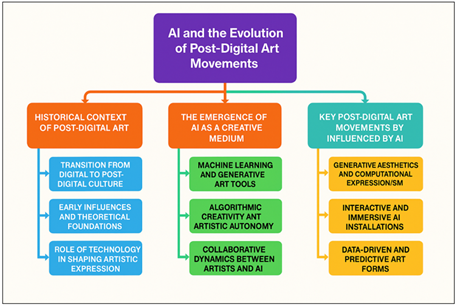
Figure 1 Conceptual Architecture of AI and the Evolution of
Post-Digital Art Movements
Figure 1 demonstrates the pattern of the structural impact of AI on the changing practices of post-digital art Tabbussum and Dar (2021). Their publications emphasize the potential of AI to act as a reflection and mediator of the human experience to reflect the collective memory, cultural biases, and even aesthetic intuitions but in the same time contravene them.
2. Historical Context of Post-Digital Art
2.1. Transition from Digital to Post-Digital Culture
The digital to the post-digital culture is a serious redefinition of the relationship between humanity and the utilization of technology and creative production. Digital art came to light in the late twentieth century as a reaction to increasing availability of personal computers, the internet and multimedia software. The digital medium was enthusiastically welcomed by artists as an icon of innovation and they experimented with interactivity, virtuality, and cyber aesthetics. Nonetheless, when digital tools became a part of every-day life, they became less novel Miao et al. (2020). The so-called post-digital era did not emerge as a response to the denial of the digital technology but as a result of its profound penetration into the social, cultural, and artistic practices. Post-digital culture is a result of technological saturation in which a line between the digital and the physical is severely blurred. It is no longer about the glorification of technological capability but the critical look at its cultural and philosophical consequences. Artists started to think of technology as a component of the material world and not as a tool Chauhan and Shah (2021). In such a scenario, art is simultaneously a place of resistance as well as reflection, which considers the emotional, political, and ethical aspects of an algorithm-mediated and networked world Guo et al. (2021). This development preconditioned the rise of AI as one of the key creative powers of the artistic discourse of the twenty-first century.
2.2. Early Influences and Theoretical Foundations
The post-digital art has theoretical roots in the late twentieth-century congruencies of media theory, cybernetics and conceptual art. Marshall McLuhan, Jean Baudrillard, and Vilhelm Flusser were thinkers, which had significant impact on the early digital culture by unravelling how the media technology impacts perception and communication. The concept of the global village originated by McLuhan and his statement that the medium is the message were predetermined by the networked state of post-digital life when meaning is created in the technological process of mediation Pareek and Thakkar (2021). On the same note, the theories of simulation and hyperreality as theorized by Baudrillard foresaw the perception of the unidentification of borders between the real and the virtual that is one of the main themes of post-digital aesthetics. Computational art the pioneers of computational art were artists in the 1960s and 1970s (namely Nam June Paik, Vera Molnár, and Frieder Nake) who experimented with television, video synthesis, and algorithmic drawing. These concepts were increased by the emergence of the interactive installation and the net art of the 1990s that questioned the idea of a static sense of authorship and audience interaction Giczy et al. (2022). The foundations that resulted in the post-digital condition were the critical theory and democratization of digital tools.
2.3. Role of Technology in Shaping Artistic Expression
Technology has never ceased to be a driver and a reflection of the development of art not only in terms of the tools of art but also in terms of the conceptual frameworks, which shape art itself. Since photography and cinema were invented to the emergence of digital media, every new technological creation has redefined how artists see and depict the world. In the post-digital environment, technology is not a helper but a partner of ontology, a participant in the creative process Roberts et al. (2021). However, with the spread of these tools, artists started to pay diminished attention to technological spectacle and start to critically engage with technology. The post-digital artist moves between materiality and abstraction of the digital, balancing between the possibilities of technology to mediate perception, emotion and identity. This has also spawned hybrid art forms including glitch art, generative design, and machine autonomy where malfunctioning, chance, and machine autonomousness is itself a form of aesthetics Huang and Li (2020). The artist is now working in automation and surveillance systems, in which creativity mixes with computation. Table 1 presents the significant researches that associate AI with the development of post-digital art.
Table 1
|
Table 1 Related Work on AI And Post-Digital Art Movements |
|||
|
Focus Area |
Technology Used |
Contribution/Concept |
Relevance to Post-Digital
Art |
|
Generative Portraiture |
GANs (Neural Networks) |
Explores machine creativity
and aesthetic autonomy |
Demonstrates AI as a
self-learning visual artist |
|
Data Sculptures Liu et al. (2018) |
Machine Learning, Data Visualization |
Transforms massive datasets into immersive art |
Embodies AI-driven sensory environments |
|
Data and Bias Exploration |
GANs, Custom Datasets |
Connects tulip mania with AI
dataset ethics |
Examines data aesthetics and
authorship |
|
Human–Robot Collaboration |
Robotics + AI |
Co-creation between artist and robotic system |
Symbolizes human-machine symbiosis |
|
Algorithmic Portrait Choi and Woo (2022) |
GANs |
First AI artwork auctioned
at Christie’s |
Marks commercial entry of AI
art |
|
Early Algorithmic Art |
Rule-Based AI |
Pioneer of autonomous drawing programs |
Foundation of machine-generated creativity |
|
Immersive Digital Art Wu et al. (2024) |
Interactive AI Systems |
Uses motion and data for
evolving installations |
Redefines audience
interaction in AI spaces |
|
Social Interaction and Surveillance |
AI Assistants, Sensors |
Explores intimacy and privacy in AI-mediated life |
Critiques AI’s social integration in art |
|
Fashion and AI Integration |
Algorithmic Design |
Uses generative design in
wearable art |
Extends post-digital
aesthetics to material form |
|
Perceptual AI Art Alzoubi et al. (2021) |
Deep Neural Networks |
Visualizes machine perception as artistic vision |
Bridges cognition and computation |
|
Autonomous Simulation Art |
AI Simulation |
Creates evolving digital
lifeforms |
Examines AI as living
narrative agent |
|
Generative Systems Prudviraj and Jamwal (2025) |
Processing, Code Art |
Focuses on procedural visual design |
Key influence in computational expressionism |
|
Autonomous Creativity |
Neural Networks |
AI artist trained to create
original works |
Demonstrates machine
aesthetic decision-making |
|
Evolutionary Art |
Genetic Algorithms |
Explores artificial life and aesthetic evolution |
Integrates biology-inspired computation in art |
3. The Emergence of AI as a Creative Medium
3.1. Machine Learning and Generative Art Tools
Machine learning has transformed artistic creation in that it allows analyzing, learning, and generating patterns by machines on their own, resulting in the development of generative art as a significant creative paradigm. The initial generative systems were based on rule-based programming, in which an artist provided clear cut algorithms to generate a visual or audio work. Nevertheless, the advent of deep learning and neural networks specifically Generative Adversarial Networks (GANs) and diffusion models have radically changed the situation and enabled machines to learn using large datasets and generate original compositions that can automatically replicate or recreate human aesthetics. Machine learning systems like Runway ML, DeepDream, DALL•E, and Stable Diffusion are used by contemporary artists to experiment with the new forms of expression that combine computational reasoning with human intuition Chatterjee (2024). These networks make AI creativity democratized and allow professional artists as well as amateurs to participate in complicated generative work. The results are usually uncertain, as they develop out of the original purpose of the artist in displaying new aesthetics based on data and probability.
3.2. Algorithmic Creativity and Artistic Autonomy
The issue of algorithmic creativity defies the conventional concepts of authorship through the decentralization of the locus of control over artistic creativity. In traditional forms of art-making the form and meaning of the work was determined by the intention of the artist. Nevertheless, AI-driven systems work in a dynamic nature of autonomy and unpredictability and a new paradigm involving human and machine sharing creativity emerges.
Figure 2
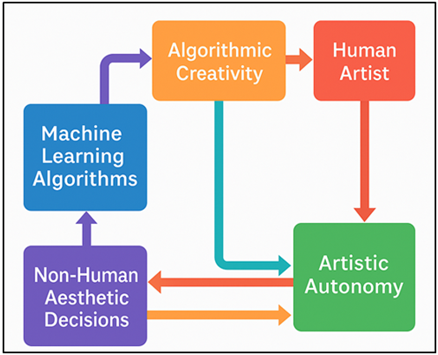
Figure 2 Interaction Model Between Human and Algorithmic
Agency in Creative Processes
The output of algorithms, especially reinforcement-trained and unsupervised-trained ones, are ability to produce aesthetic choices without human control, creating a kind of artificial autonomy to the creation of artistic works. Figure 2 indicates cooperation between the human creativity and the algorithmic intelligence. This change has provoked philosophical discussions of whether AI can be creative in its capacity or it is only a simulation of human activity. Although machines do not possess consciousness or emotional intuition, they are nonetheless able to achieve the results, which cause interpretation, surprise, and beauty-values, which were traditionally linked with the creative genius. Scholars believe that AI creativity is not created but created by complexity: the ability of the system to create unexpected outcomes with system-based parameters. To the artists, algorithmic creativity transforms their position into a creator to a curator, guide, or collaborator.
3.3. Collaborative Dynamics Between Artists and AI
This partnership between artists and AI is a model of co-creation with a new trend of transformation as human intuition meets the machine calculation. Unlike the previous digital tools which were used as a passive tool, AI systems are engaged in the creative conversation and their outputs can challenge or inspire their human counterparts. These partnerships are regularly carried out in terms of experiment and feedback. Datasets or parameters are fed into the algorithm by artists, which enables interpretation, remix, and evolution of the material by the algorithm. The output of the works, be it visual art, music, performance, or the literature, reflects, in most cases, a combination of human sensibility and algorithmic logic. This can be seen in the work of Refik Anadol, like his data sculptures, which visualize the data of memory by neural networks, or in robotic projects by Sougwen Chung, which convert human gestures into machine generated images. Those projects represent how AI might be a creative partner and a mirror reflecting a human experience.
4. Key Post-Digital Art Movements Influenced by AI
4.1. Generative Aesthetics and Computational Expressionism
generative aesthetics, computational expressionism is a paradigm shift in the way in which the concept of creativity can be conceived and realized in post-digital art. Generative art is based on the algorithmic processes and makes use of AI to create changing, self-organizing visual or auditory work that is beyond the direct control of the artist. Artists do formulate algorithms which can simulate creative thought and these systems can produce unexpected outputs that can be both mathematically and aesthetically intuitive. This trend has transformed creativity into a process of emergent activities as opposed to execution where art is discovered through computation as opposed to created by hand. A sub movement of this movement is called Computational expressionism, which combines emotional expression and algorithmic rigor. It is inspired by the spontaneity of abstract expressionism but puts it into the format of data, computer code, and likelihood. GANs and diffusion algorithms are machine learning models that process large datasets of images learning the stylistic subtleties which they can subsequently replicate into new forms. The resulting works tend to be organic, painterly in their appearance even though they were produced by code. Examples of such a practice include artists such as Mario Klingemann, Anna Ridler and Sofia Crespo, who utilize AI to visualize cognition, memory and biological systems in ways not usually possible to achieve more traditionally. It is then a conversation between intuition and computation that generative aesthetics is so focused on the beauty of algorithmic randomness. To this end, AI can be described not as an automation tool but as an expression tool, unveiling the possibilities of digital logic to be made human, emotional, and sensual in the changing environment of post-digital art.
4.2. Interactive and Immersive AI Installations
The most vibrant crossover of technology and audience participation in post-digital art has been in interactive and immersive AI installations. These pieces of art turn the audience into more of participants than spectators and as a result, their presence, movements or information shape the changing art piece directly. AI systems react by identifying the behavior of the audience and can create personalized experiences through adaptive or responsive and artificial responses by incorporating real-time sensing technologies into their behavior, including motion tracking, facial recognition, natural language processing, or even environmental data. Such movement reflects the post-digital spirit of relational aesthetics, in which art is a living system, which is developed through human-technical interaction. Such artists as Refik Anadol, TeamLab and Sougwen Chung use AI-driven environments to create fluid spaces in which perception, data and emotion merge. An example of this is Machine Hallucinations by Refik Anadol, who uses large datasets as a basis to dynamically build visual architectures that surround the audience in algorithmic dreamscapes, and installations created by TeamLab which integrate AI with environmental sensors to create responsive and fully immersive ecologies. Such installations also break the conventional models of exhibition whereby the lines between art, architecture and performance are blurred.
4.3. Data-Driven and Predictive Art Forms
Predictive and data-driven art works investigate the aesthetic possibilities of information in itself, holding raw data into expressive and conceptual content. In art after the digital, data no longer is a product of digital culture, but rather the medium of artistic production. AI systems process large volumes of data, including social media trends and biometric data and convert them into a visual, sonic or spatial format. This operation transforms the intangible systems of data capitalism into actual, concrete art. Predictive art goes further to include machine learning models which predict trends, behaviors or environmental results thus interacting with the temporal and speculative. Refik Anadol and Lauren McCarthy are artists who use predictive code to visualize the rhythm of human activity or the development of the digital memory, and tend to expose the prejudices, fears, and hopes inherent to the algorithmic systems. These readings cause one to critically consider the issues of surveillance and privacy and agency in a world dominated by predictive analytics. Aestheticizing data, artists are able to reveal the beauty as well as the obscurity of systems on which the modern life is based.
5. Theoretical and Philosophical Implications
5.1. Rethinking Authorship and Originality
Conventional aesthetics heaped a lot of glory on the artist as a unique genius, whose creations were an expression of personal vision and will. Nonetheless, this paradigm is broken by AI which has provided systems that can autonomously produce, transform, and reinterpret artistic material without necessarily being commanded to do so. In this regard, authorship is shared between the artist, the algorithm and the data that drives it. The concept of originality is also changed. Because AI is trained on existing sets of data, such as thousands of preexisting works of art, outputs will be automatically derivative, but new in their combination. This is problematic of traditional distinctions between imitation and innovation, and so creativity might not grow out of solitude but connectedness. The role of the artist therefore changes to that of an organizer, the organizer of algorithmic processes, the organizer of data but not the creator of original items. This philosophical shift can be related to the idea of the death of the author of Roland Barthes, who believes that the meaning can appear as a result of interpretation and not intention.
5.2. Posthumanism and the Role of Agency in Art Creation
Posthumanism offers an essential philosophical perspective of the role of AI in post-digital art. Posthumanism opposes the anthropocentric perspective, placing human beings in a larger system of intelligent beings biologic, mechanical, and digital who produce a meaning and a culture together. In this line of thought, AI is not just a technological instrument but a participant in the artistic process, having some kind of operational agency that shapes creative process. In Figure 3, there is shared agency between humans, AI and creative work of art. This re-direction of the human artist as the unique determiner of artistic purpose decentralizes the human artist. Rather creativity is an emergent property created through the interaction of humans and machines.
Figure 3
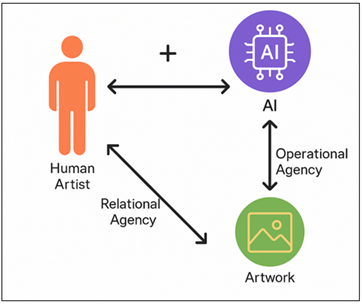
Figure 3 Relational Model of Posthuman Agency in AI-Driven
Art Creation
The artist ceases to exercise control over the materials but cooperates with the algorithmic systems having their own generative logic. In this respect, the posthumanist art is the hybrid one- organic intuition with the computational cognition. Such artists as Sougwen Chung and Refik Anadol are the examples of posthumanist practice, according to which AI is viewed as a creative partner, which allows expanding perception and redefining the embodiment. The lines between the subject and the object, the creator and the creation, are erased as data and algorithms can acquire aesthetic value. Such paradigm also attacks ethical and ontological claims: in case AI is able to act and respond creatively, is it voluntarily acting?
5.3. AI as Co-Creator Versus Instrument
The controversy surrounding the idea of whether AI should be considered a co-creator or just a tool is the center of the post-digital artistic discussion. Conventionally, tools were used to multiply human capacity and did not have agency of their own. Nevertheless, through AI systems, which can learn, develop, and create new outputs, the boundary between instrumentality and autonomy is obscured. The difference is currently based on the extent of cooperation, interpretation and uncertainty in the creative process. As an instrument, AI represents a complex continuation of the visual vision of the artist, much like a brush or a camera, only it is transformed by calculation. The artist establishes parameters, filters data, and interprets outcomes and has conceptual control. On the contrary, looking at AI as a co-creator acknowledges its ability to cause randomness, redefinition and emergent behavior beyond its programming. Through this model, art turns out to be a discourse between the machine intelligence and the human intention.
6. Cultural and Economic Impact
6.1. AI Art in the Contemporary Art Market
AI art has altered the contemporary art market dynamism very fast bringing both innovation and disruption. AI-generated works have been initially seen as a technological novelty, but they have become legitimate due to high-profile sales and institutional acceptance. In 2018, when Christie auctioned a Portrait of Edmond de Belamy, made by the group Obvious using a Generative Adversarial Network (GAN), more than $400,000 was bid. It was the first commercial mainstream appearance of AI art and the starter of the debate over authorship, authenticity and value in the digital world. The interest of the market in AI art is in its duality, both human and non-human, creative and computational. The fact that it has conceptual depth and novelty attracts collectors, and that investors see its potential in the growing digital economy. This tendency has been enhanced even further by blockchain technologies and NFTs (non-fungible tokens) that offer new ways of establishing ownership and provenance in a medium that in fact can be reproduced. But this commodification is subject to an ethical and aesthetic question. Placing an economic value on AI art has been more dependent on the technological interest or the name of the artist than on the conventional artistic quality.
6.2. Changing Modes of Art Production and Consumption
Recommendation systems based on AI manipulate the aesthetic exposure, controlling the taste, visibility, and experience of the engagement. Figure 4 represents the changing creation of art and interaction with the audience in the post-digital culture. This is the algorithm of mediation that turns the audience into the contributors of data, and artistic consumption turns into the process of feedback and personalization.
Figure 4
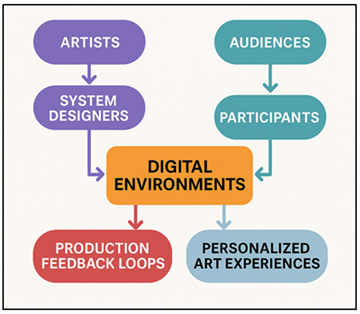
Figure 4 Illustrating Changing Modes of Art Production and
Consumption in the Post-Digital Era
Moreover, AI technology makes it more democratic to be creative, as non-experts can make complex artworks with easy-to-use demos such as Runway ML or Midjourney. Even though such inclusion increases creative involvement, the question of artistic authenticity and oversaturation arises. The demarcation between the producer and the consumer is becoming incredibly permeable as AI dissolves the lines between professional art and the algorithmic engagement.
6.3. Institutional Responses and Exhibition Practices
The cultural institutions, including museums, galleries, and biennales have been instrumental in justifying AI as a creative tool and evolve to meet its demands. Both timorously and progressively, institutions have adopted AI art as a curatorial and educative agenda because of its ability to capture the sociotechnical realities in the reality of contemporary life. The overlap between creativity, morals and computation has been discussed in major exhibitions like AI: More than Human in the Barbican Centre and Unhuman: Art in the Age of AI, with AI being both method and subject of artistic practice, and a philosophical question. Curatorial approaches to AI art tend to focus more on interactivity and process, rather than more on display. Instead of displaying completed artworks, the institutions emphasize the algorithmic systems and data that are behind them, as well as encourage viewers to engage with the logic of making itself. This participatory design takes on a new meaning of exhibition design, with data visualisation, immersive projection, and live generative performance.
7. Future Directions of AI in Post-Digital Art
7.1. Hybrid Art Practices and Emerging Technologies
The future of art after the digital era is the way AI intersects with other emerging technologies in enabling the integration of hybrid practices through traditional media limits. Painters are also beginning using AI alongside augmented reality (AR), virtual reality (VR), blockchain, robotics and biotechnology in order to make experience multisensory and interactive. These trans-disciplinary escapades dissolve borders between physical and virtual, organic and synthetic, art is posed as an evolving ecology, rather than as an object. The change in role of the artist into a technologist and a philosopher through hybrid practices allows the artist to experience multiple systems of creating. One such case is the AI-based robotics which can be deployed to perform a show partnership with machines that express movement chorography and VR and AR worlds with actors being able to inhabit algorithmically simulated worlds. The combination of blockchain and AI art forms new authorship and ownership models and digital provenance models that redefined creative exchange economies. The emergence of new technologies like quantum computing and neural rendering will most likely expand the creative potential of AI as, in the future, one will be able to produce complex and adaptive art in real-time. Through these inventions, the artists are able to challenge the boundaries of perception, consciousness and materiality.
7.2. Sustainability and Ethical Frameworks
Sustainability and ethics now become one of the key concerns of the future of AI art and can shape its further evolution. Their production of works generated by means of AI can take up large amounts of information and will have a high energy demand, which raises the questions of the ecological implication and digital citizenship. With artists and institutions beginning to seek out solutions of sustainability, such as making algorithms energy-efficient, using renewable computing materials, and identifying solutions of low-carbon practices of data, artistic innovation is entering into ecological consciousness. Ethical issues may also be viewed in the context of the cultural and social aspects of the AI art. The possibility of reaffirming any stereotypes and imbalance with the help of biased or unintentionally gathered datasets raises the question of the integrity of creative expression. Hence, there is a growing number of artists and scholars who support transparent, inclusive and accountable AI practices. There are efforts such as those taken by groups such as the Ethical AI Art that aim at having responsible data management, fairness of the algorithm and intellectual property. Moreover, sustainability in AI art may be applied both to the environmental sustainability and to the persistence of the digital art. The AI systems are dynamic software and hardware-based, and, therefore, their archival maintenance must be dynamic. This is done with the intention of ensuring that even in the next few years, these works will be enjoyed by the audiences without being outdated by the new technology.
7.3. Potential Trajectories of AI-Aesthetic Evolution
AI art aesthetic development will move away on technological innovation to deeper philosophical and experiential levels. As AI becomes more of a reality, it is likely that the art movements of the future will focus on the emotional, cognitive and relationship aspects of machine creativity. Artists will increasingly be able to design systems that generate an image or a sound but engage in an affective and contextual thinking- they will generate works that respond empathically to human feeling and situation. One of the new directions is the neurasthenic integration, where AI devices utilize neural or biometric data to generate a work of art that mirrors the human perception or mood. The other is independent aesthetic intelligence where AI develops their styles or conceptualizations without being imitated by humans. The allusions to this directions suggest that parody becomes self-referential creativity, i.e. machines which are able to develop their aesthetic sense. Besides, shared and decentralized creativity will arise, altering the author and collaboration. The networks of human and AI agents can become dynamic art ecosystems, continuing to develop constantly by means of communication and feedback. This has served as a pointer to a potential future which is creative, adaptive, and generative among the multiple intelligences.
8. Conclusion
Post-digital art, the existence of which is closely associated with artificial intelligence, is a new phase in the history of human creativity. The initiation of an exploration of the digital experience has turned into a detailed dialogue between man and machine intelligence. The new possibilities of AI as a medium and a partner have expanded the frames of artistic production in that artists begin to rethink the sides of creation and authorship and the vision of the tool in the era when technology is not only an instrument but also a member of a production process. In this discovery, it becomes clear that AI-inspired art is a representation of a post-digital state, which is an agent of hybridity, interactivity, and critically thinking about the ubiquity of the technology in cultural activities. Combining computing with feeling, algorithms with intuition, AI art adopts the shapes of generative aesthetics and immersive installations, data-driven and predictive forms. Besides the practices triggering the conventional concept of originality and agency, they contribute to the redefinition of creativity as a group, emergent phenomenon that transcends paradigms that treat human beings. AI has revolutionized the global art scene in terms of culture and economics influencing the production and distribution of works, as well as institutional interaction. Nonetheless, moral consciousness and sustainability is also necessary in this change so that the innovation is not opposed to ecological and social responsibility.
CONFLICT OF INTERESTS
None.
ACKNOWLEDGMENTS
None.
REFERENCES
Alzoubi, A. M. A., Qudah, M. F. A., Albursan, I. S., Bakhiet, S. F. A., and Alfnan, A. A. (2021). The Predictive Ability of Emotional Creativity in Creative Performance Among University Students. SAGE Open, 11(2), 21582440211008876. https://doi.org/10.1177/21582440211008876
Chatterjee, S. (2024). DiffMorph: Text-Less Image Morphing with Diffusion Models. arXiv.
Chauhan, U., and Shah, A. (2021). Topic Modeling Using Latent Dirichlet Allocation: A Survey. ACM Computing Surveys, 54(1), 1–35. https://doi.org/10.1145/3462478
Choi, H., and Woo, J. R. (2022). Investigating Emerging Hydrogen Technology Topics and Comparing National-Level Technological Focus: Patent Analysis using a Structural Topic Model. Applied Energy, 313, 118898. https://doi.org/10.1016/j.apenergy.2022.118898
Giczy, A. V., Pairolero, N. A., and Toole, A. A. (2022). Identifying Artificial Intelligence (AI) Invention: A Novel AI Patent Dataset. Journal of Technology Transfer, 47, 476–505. https://doi.org/10.1007/s10961-021-09900-2
Guo, K., Yang, Z., Yu, C. H., and Buehler, M. J. (2021). Artificial Intelligence and Machine Learning in Design of Mechanical Materials. Materials Horizons, 8, 1153–1172. https://doi.org/10.1039/D0MH01451F
Huang, M., and Li, Y. (2020). Research Progress and Prospect of Artificial Intelligence Education in China: Statistical Analysis Based on CNKI Journal Literature. Cross-Cultural Communication, 16, 44–53.
Li, K. Q., Kang, Q., Nie, J. Y., and Huang, X. W. (2022). Artificial Neural Network for Predicting the Thermal Conductivity of Soils Based on a Systematic Database. Geothermics, 103, 102416. https://doi.org/10.1016/j.geothermics.2022.102416
Li, K. Q., Liu, Y., and Kang, Q. (2022). Estimating the Thermal Conductivity of Soils Using Six Machine Learning Algorithms. International Communications in Heat and Mass Transfer, 136, 106139. https://doi.org/10.1016/j.icheatmasstransfer.2022.106139
Liu, K., Hu, X. G., Ma, Y. H., Na, D., and Zhang, Y. H. (2018). Outline of Artificial Intelligence Research in China’s Educational Field: Based on the Perspective of General Artificial Intelligence. Open Education Research, 24, 31–40.
Miao, Z., Du, J., Dong, F., Liu, Y., and Wang, X. (2020). Identifying Technology Evolution Pathways Using Topic Variation Detection Based on Patent Data: A Case Study of 3D Printing. Futures, 118, 102530. https://doi.org/10.1016/j.futures.2020.102530
Pareek, P., and Thakkar, A. (2021). A Survey on Video-Based Human Action Recognition: Recent Updates, Datasets, Challenges, and Applications. Artificial Intelligence Review, 54, 2259–2322. https://doi.org/10.1007/s10462-020-09904-8
Prudviraj, J., and Jamwal, V. (2025). Sketch and paint: Stroke-by-Stroke Evolution of Visual Artworks. arXiv. https://doi.org/10.1007/978-3-031-92808-6_13
Roberts, H., Cowls, J., Morley, J., Taddeo, M., Wang, V., and Floridi, L. (2021). The Chinese Approach to Artificial Intelligence: An Analysis of Policy, Ethics, and Regulation. AI and Society, 36, 59–77. https://doi.org/10.1007/s00146-020-00992-2
Tabbussum, R., and Dar, A. Q. (2021). Performance Evaluation of Artificial Intelligence Paradigms—Artificial Neural Networks, Fuzzy Logic, and Adaptive Neuro-Fuzzy Inference System for Flood Prediction. Environmental Science and Pollution Research, 28, 25265–25282. https://doi.org/10.1007/s11356-021-12410-1
Wu, Z., Gong, Z., Ai, L., Shi, P., Donbekci, K., and Hirschberg, J. (2024). Beyond Silent Letters: Amplifying LLMs in Emotion Recognition With Vocal Nuances. arXiv. https://doi.org/10.18653/v1/2025.findings-naacl.117
|
|
 This work is licensed under a: Creative Commons Attribution 4.0 International License
© ShodhKosh 2025. All Rights Reserved.