ShodhKosh: Journal of Visual and Performing ArtsISSN (Online): 2582-7472
|
|
AI-Based Learning Systems for Photography Students
Dr. Cholaraja Mudimannan 1 , Asad Mohammed Khan 2
 , Pooja Srishti 3
 , Lovish Dhingra 4
 , Anubhav Bhalla 5
 ,
Dr. Vaishali Vivek Patil 6
,
Dr. Vaishali Vivek Patil 6
1 Campus
Law Centre, Faculty of Law, University of Delhi, India
2 Assistant
Professor, Department of Computer Science and Engineering, Presidency
University, Bangalore, Karnataka, India
3 Assistant Professor, School of Business Management, Noida International
University, Greater Noida, Uttar Pradesh, India
4 Chitkara Centre for Research and Development, Chitkara University,
Himachal Pradesh, Solan, India
5 Centre of Research Impact and Outcome, Chitkara University, Rajpura,
Punjab, India
6 Professor and Senior Associate Dean, Research and Publication and
Information Technology, Principal L. N. Welingkar Institute of Management
Development and Research (PGDM), Mumbai, India
|
|
|
ABSTRACT |
|
|
The advent of
Artificial Intelligence (AI) in the education industry has transformed the
learning process, especially in the creative profession like photography.
This paper discusses the creation and effectiveness of AI-powered learning
platforms that are specific to photography students and highlight their
promise to increase creativity, technical skills, and personalized education.
Through clever algorithms, they offer real-time feedback, customized learning
journeys and adaptable evaluations which meet the various learning
requirements. The study is based on the mixed-method research design, which
implies the use of surveys as the quantitative method to assess students
performance, and interviews with educators and AI developers to learn about
the practical implications. The analyses of the learning outcomes
statistically show the improvement of the skills of the students, and the
thematic analysis indicates the increase in the motivation and the engagement
of the students that were provided by the interactive opportunities of AI.
Moreover, AI applications including image recognition and automated editing
programs are used to help students to perfect composition, lighting, and
post-processing methods. Although the advantages are quite obvious (e.g.
efficiency in the learning process, accessibility, and the ability to learn
at your own pace) there are still difficulties. The issues involved are the
possibility of excessive technology dependence, matters of ethical issues
concerning authenticity of creativity, and access because of the prohibitive
cost and technological infrastructure. The results reveal the necessity of
the harmonious combination of AI and human mentorship in order to save the
artistic nature of photography and make the most of technological benefits.
The presented study adds to the more comprehensive knowledge about the ways
in which AI can transform the field of photography education and make it
creative and people-oriented in the digital age. |
|||
|
Received 18 February 2025 Accepted 12 May 2025 Published 16 December 2025 Corresponding Author Dr
Cholaraja Mudimannan, drcholaraja@clc.du.ac.in
DOI 10.29121/shodhkosh.v6.i2s.2025.6729 Funding: This research
received no specific grant from any funding agency in the public, commercial,
or not-for-profit sectors. Copyright: © 2025 The
Author(s). This work is licensed under a Creative Commons
Attribution 4.0 International License. With the
license CC-BY, authors retain the copyright, allowing anyone to download,
reuse, re-print, modify, distribute, and/or copy their contribution. The work
must be properly attributed to its author.
|
|||
|
Keywords: Artificial Intelligence, Photography Education,
Personalized Learning, Creative Technology, Adaptive Learning Systems |
|||



1. INTRODUCTION
1.1. Background of AI in education
Artificial Intellect (AI) is currently one of the most transformative technologies in the sphere of education that alters the way knowledge is delivered, learned, and evaluated. In the last ten years, AI has transformed simple automation tools to advanced systems that can analyze data on students and forecast learning outcomes and individualize the instruction. These smart systems use algorithms, machine learning models and natural language processing to analyze the behavior of learners and modify learning content to suit personal requirements. The implementation of AI in education has resulted in intelligent tutoring systems, adaptive learning systems, and virtual assistants that can support and help learners in real-time. The result of this evolution has been more active and data-driven pedagogical methods in which educators are able to detect gaps in learning within their students, monitor their advancement, and streamline their teaching methods in the best way possible. Moreover, AI-based analytics helps institutions to make decisions, design courses and allocate resources. AI is used in higher education to facilitate research based on automated data analysis tools and literature reviews that speed up discovery and innovations. The introduction of AI into the educational sector all over the world marks a paradigm change towards the traditional and one-size-fits-all approaches to education to learner-oriented and result-driven models. Nonetheless, AI implementation also causes issues, such as the problem of ethicality, data privacy, and fair access. With the development of AI, it is hard to deny the potential of this solution to transform education and provide unlimited opportunities to improve creativity, engagement, and academic outcomes and reestablish the position of educators and learners in the new digital world.
1.2. Importance of AI in Creative Fields like Photography
Artificial Intelligence (AI) is a rapidly spreading force behind the creative industry, and photography is quickly becoming one of the most volatile spheres of change. AI in photography education is a creative companion and learning resource that can help students to experiment with artistic expression with data-driven suggestions and automation. The applications based on AI help students learn advanced skills in image composition, color grading, correction of light, and editing by using intelligent feedback systems. Figure 1 illustrates improved creativity, personalization, feedback and skill improvement. Such systems can process the work of students in real-time, offer suggestions, and even recreate the process of professional editing, improving technical skills and aesthetic knowledge.
Figure 1
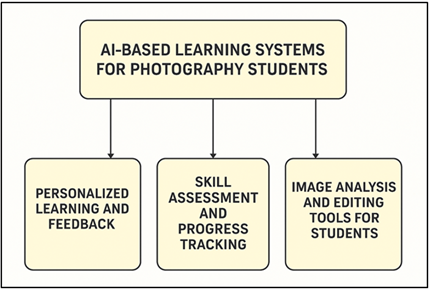
Figure 1 Framework of AI-Based Learning Systems for
Photography Education
In addition to technical aid, AI enhances creativity because it releases learners by giving them the opportunity to develop concepts and tell stories, which are central components of visual art. Individualized AI-driven learning models allow learners to learn at a slower pace and tailor instructional processes, depending on the level of skills, learning type, and creative ambitions. Moreover, AI applications such as generative image models and neural networks introduce the student to the latest types of digital art and experimentation with images. It is also advantageous to instructors because they can monitor the progress of students, their strengths, and their weaknesses and provide feedback appropriately.
2. Background Work
The rise of the Artificial Intelligence (AI) in the educational sector has provided the basis of the new era of the personalised and technology-enhanced learning. Past research and advancements have established that AI has a big potential to enhance the learning process and experiences through personalizing learning instructional materials, interpreting performance information, and providing real-time feedback. The initial studies concentrated on AI application in STEM whereby intelligent tutoring systems and adaptive learning algorithms were utilized to help students to master complicated courses like mathematics and computer science. These systems adopted machine learning to forecast learning patterns and recommend personalized interventions that resulted in observable student outcomes and student engagement. The incorporation of AI in creative industries such as photography has increasingly received interest over the last few years. Researchers and teachers have discussed the ways in which smart systems can be used to facilitate creativity and better the artistic education process. Indicatively, image recognition and editing AI tools have been utilized to learn the rules of composition, exposure, and color theory, since they can automatically analyze the work of the students and propose ways to improve it. Research has also brought out how AI is being used to offer adaptive learning environments that facilitate technical and artistic development. Educational applications built around the use of AI and artistic imagination (like Adobe Sensei and DeepDream by Google) are the inspiration behind creating tools to combine creative learning with advanced editing, style transfer, and generative art methodologies. Table 1 presents past research studies that have brought out the role of AI in education. Furthermore, other learning institutions and scholars have explored the application of AI in supporting formative assessment in photography classes by automatically assessing visual quality and stylistic consistency. The possibilities of the AI in collaborative learning are also highlighted in the literature, with intelligent systems assisting peer feedbacks and virtual studio settings.
Table 1
|
Table 1 Related Work on AI-Based Learning Systems in Photography and Creative Education |
||||
|
Research Methodology |
AI Technique Used |
Domain |
Benefits Identified |
Impact on Photography
Education |
|
Mixed-method |
Neural networks for image
analysis |
Art and media students |
Personalized feedback |
Improved artistic confidence
and composition skills |
|
Quantitative |
Machine learning algorithms |
Undergraduate photography students |
Adaptive tutorials |
Faster skill acquisition |
|
Qualitative |
Computer vision feedback
model |
Visual arts learners |
Automated assessment |
Enhanced collaboration and
reflection |
|
Review study |
Natural language processing (NLP) |
Cross-disciplinary |
Resource accessibility |
Interdisciplinary skill development |
|
Experimental |
Deep learning image
enhancement |
Photography students |
Automated corrections |
Professional-level workflow
learning |
|
Quantitative |
Predictive analytics |
Design students |
Continuous evaluation |
Improved teacher intervention |
|
Case study |
Generative AI (GANs) |
Creative arts students |
Idea generation support |
Expanded artistic boundaries |
|
Experimental |
Computer vision + ML |
Photography courses |
Objective evaluation |
Enhanced aesthetic quality |
|
Mixed |
Adaptive learning systems |
Media students |
Self-regulated learning |
Individualized study paths |
|
Theoretical |
AI ethics framework |
Creative education sector |
Ethical awareness |
Encouraged responsible AI use |
|
Quantitative |
Pattern recognition |
Beginner photographers |
Performance tracking |
Data-driven learning
insights |
|
Experimental |
AI tutoring system |
Digital arts students |
Collaborative learning |
Maintained human creativity |
|
Mixed method |
AI feedback and adaptive
systems |
Photography education |
Personalized adaptive
learning |
Holistic educational
transformation |
3. Methodology
3.1. Research design (qualitative, quantitative, or mixed)
The study of AI-based learning systems in photography students embraces a mixed-method research design which combines qualitative and quantitative research methods to present a whole picture of the phenomenon. The given design is chosen due to the possibility to investigate not only the measurable results, like learning performance and skills growth, but also the subjective experience, perceptions, and attitude of students and teachers to the AI integration. The quantitative aspect is aimed at gathering numerical data by using structured surveys and performance tests. These measures will be useful in assessing the impact of AI tools in the achievement of learning efficiency, creativity and technical competency of photography students. The correlation and regression analysis are used as statistical methods to assess the correlation between AI-based interventions and the quantifiable learning outcomes. This experimental data provides knowledge on the efficiency and applicability of AI-based education. Qualitative component, in its turn, offers the depth and context through the reflection of the lived experience of the participants. The interviews and the focus group discussions with the students, instructors, and AI developers are carried out to investigate the attitude of the respondents on the pedagogical and creative possibilities of the AI tools. Thematic analysis has been used to determine the patterns, difficulties, and emotional reactions that occur frequently in regards to the use of AI in photography learning settings.
3.2. Data collection methods
1) Surveys
or questionnaires to assess student experiences
In photography education, surveys and questionnaires can be used as the major quantitative data collection instruments to find out the experience of students with AI-based learning systems. The tools will be used to collect systematized feedback on different aspects of learning such as usability, engagement, creativity improvement, and total satisfaction. The surveys will include both closed-ended questions (including Likert scale items to assess the level of agreement) and open-ended questions (so that the students will be able to expound on their views and recommendations). Questionnaires will be sent to the students of photography that have encountered AI-based systems or applications, including intelligent editing software, automated feedback systems, or adaptive learning modules. The information gathered is aimed at determining the impact of AI on their learning rate, the understanding of photographic principles, and their capacity of using technical and artistic competencies. Other sections examine how the students regard AI as being fair, accessible, and promoting independent creativity. They are done first through pilot testing to assess their validity and reliability before being distributed in large numbers so that the required revisions may be done to enhance clarity and consistency. The answers are coded and statistically processed with the descriptive and inferential methods to find the patterns, trends and correlations.
2) Interviews
with Instructors and AI Developers
The qualitative basis of this study is the interviews with the instructors and the developers of the AI that will give detailed information about the pedagogical and technological aspects of the AI implementation in photography education. The semi-structured interviews are used so as to give room to flexibility and yet to have a consistent line of inquiry. Through these interviews, the researcher will examine the experiences, perceptions, and professional opinion of the participants about the implementation, advantages, and issues of AI-based learning systems. In the case of instructors, the questions center on the way AI tools would impact pedagogical practices, classroom relationships, and learners. Among the topics of conversation, there are the degree to which AI can facilitate personalized learning, improve the feedback process, and help judge creative tasks. Teachers are also helpful to make their suggestions on the ethical issues, adapting the curriculum, and striking a balance between the human creativity and machine results. On the other hand, the interviews conducted with AI developers will seek to identify the technical and design philosophy of educational AI applications. Artistic learning environments are discussed by developers in terms of algorithmic design, data processing, user interaction models and system adaptability. They also illuminate weaknesses that include bias, privacy of data, and access that can be encountered in AI implementation.
3.3. Data analysis techniques
1) Statistical
analysis of learning outcomes
One of the quantitative approaches that can be used to assess the effects of AI-based learning systems on the academic and creative work of the photography students is statistical analysis. It starts with the numerical data collection by the surveys, questionnaires, and performance measures. Such sets of data comprise the satisfaction levels of students, their learning efficiency, time at work, and an increase in technical skills such as composition, lighting, and post processing that can be measured. To start with, the descriptive statistics, namely, mean, median and standard deviation are used to describe the data and give a clear overview of general tendencies. The strength and significance of the relationship between AI integration and learning outcomes are then established through inferential statistical methods such as correlation, regression and t-tests. As an example, some correlations can help determine the relation between the frequency of using AI tools and student creativity or skill development. Figure 2 demonstrates the sequential method of the analysis of the educational learning results. Also, comparative studies can be carried out in control and experimental groups (students learning traditionally and using AI-improved platforms) to evaluate the differences in the levels of achievement. The results are processed and visualized with the help of statistical software, SPSS or Excel, and allow interpreting the results in an accurate and clear way.
Figure 2

Figure 2 Process Flow of Statistical Analysis of Learning
Outcomes
The results obtained in the course of this analysis can be used to confirm the efficacy of AI-based solutions, see the areas of improvement, and make evidence-based conclusions regarding their role in learning photography among students.
2) Thematic
Analysis of Qualitative Responses
The qualitative approach used being thematic analysis to analyze the responses in the interview and open-ended questions in the survey. Such an analytical solution would allow this researcher to identify common patterns, meanings, and themes that depict the experiences and the perceptions of photography learning participants regarding AI-based learning. This will be done by firstly transcribing all the data in the interviews and then carefully reading as a way of familiarizing myself with what has been written. Major statements/ideas are then coded initially and then syntactically grouped into larger themes like personalized feedback, enhancement of creativity, ethical issues, and technology challenges. This approach will make sure both the explicit and underlying meanings are retrieved out of the qualitative data. The researcher employs an inductive methodology in which the themes are extracted out of the data, as opposed to a researcher placing predetermined categories on the data. The use of such tools as NVivo or manual coding framework can be used to ensure the consistency and accuracy of the analysis. After identifying major themes, they are revised, narrowed down, and discussed with regard to the objectives and the literature available on the study.
4. AI Integration in Photography Education
4.1. Role of AI in personalized learning and feedback
Artificial Intelligence (AI) is a disruptive technology that can be used to provide personalized learning experiences to students of photography, designing educational material and feedback according to their learning preferences, preferences, and skills. Conventional classroom designs are unable to meet the needs of a diverse audience of learners, whereas AI-based programs can break this barrier due to the adaptive algorithms, which evaluate the performance of students, their interaction behaviour, and creativity. These systems vary the level of difficulty of tasks, suggest specific learning materials and give real-time feedback to maximize the learning curve. An example of this can be the use of AI-based learning environments to analyze a photo that a student has created (e. g. in terms of framing, exposure, composition, etc.) and provide suggestions that the student can immediately get (to improve his or her techniques without interacting with the instructor). This feedback loop is personal and promotes constant improvement of self and increases motivation. Additionally, AI-based tools can be used to monitor personal progress over time to determine the strengths and weaknesses and, therefore, the educator can create an intervention that is more effective.
4.2. Use of AI for Skill Assessment and Progress Tracking
The AI-based learning systems are transforming the way the skills of the photography students are evaluated and monitored throughout their learning process. Contrary to the conventional evaluation tools which are based on subjective scoring and manual viewing, AI proposes data-driven, objective, and continuous evaluation processes. With the help of computer vision and pattern recognition, AI is able to analyze the photographs of students in the context of technical parameters, which include lighting, color balance, composition, and sharpness. They are compared with professional standards to create immediate feedback and rating in terms of skills. Besides this, AI systems track the learning process (the time it takes to complete the project, how often the tool is used, and how the performance is improving) to build a comprehensive performance portrait of each student. This knowledge is applied in creating individualized progress reports that will indicate the strengths in innovativeness or technical prowess and the areas that need additional improvement. This constant assessment will help the learners to realize their development pathway and encourage them to have realistic learning objectives. Machine learning algorithms are also used to assist instructors in that they can be used to automate tedious grading and give an overview of learning trends across the entire class. These analytics can help teachers to make changes in their teaching methods, allocate resources effectively, and provide struggling students with specific assistance. Moreover, AI-based dashboards present progress in the form of graphs and metrics, which enables the students and the teachers to track the progress in an open and transparent manner.
4.3. AI-Powered Image Analysis and Editing Tools for Students
Image analysis and editing applications based on AI have now become a part of the modern photography teaching curriculum and offer students not only technical accuracy but also expressiveness by offering them intelligent assistance. These are computer vision, deep learning and neural network algorithms used to analyze, categorise and enhance pictures based on the standards of professional photography, automatically. As an illustration, AI can identify such problems as the inappropriateness of exposure, imbalance, or noise and propose adjustments immediately. The existence of applications like Adobe Sensei or Luminar Neo and AI editing features on Google Photos allow a student to test out more advanced editing capabilities, like automatic retouching, background enrichment, or color grading, without having to learn the technical skills of a professional. This quickens the learning process as the students can pay more attention to the creative decision making as compared to manual adjustments.
5. Benefits of AI-Based Learning Systems
5.1. Enhanced learning efficiency and creativity
Learning systems based on AI show great potentials in improving the learning efficiency and creativity in photography education through providing intelligent, adaptive, and interactive experiences. Such systems examine individual learning patterns, performance information, and creative work in order to provide individualized learning, which fits the pace and capability of individual learners. This customization enables the learners to be able to understand the complicated photographical concepts like exposure, depth of field, and composition much faster than the conventional instruction techniques. The automation of routine and technical processes like image correction and balancing color allows AI to enable the student to spend more time on the creative elements of photography concept development, storytelling and expression of feelings. By using intelligent feedback systems, which can be driven by computer vision and machine learning, it is possible to do real-time evaluation and suggestion of improvements, promoting the value of learning by trial and error and artistic development.
5.2. Improved Access to Learning Resources
AI-based learning systems enhance access to wide and high-quality learning materials, which is a democratic approach to learning, especially to photography students who value visual and interactivity learning materials. Intelligent recommendation algorithms facilitate the creation of personalized learning paths, which are proposed to individual students, through the intelligent recommendation of tutorials, online workshops, digital libraries, and multimedia content based on their level of skills and learning goals. Artificial intelligence systems built on the cloud and virtual classrooms make sure that learners have access to resources anytime and anywhere, without considering geographical and economic boundaries. The process of accessing learning resources is enhanced by AI as illustrated in Figure 3. To photography students, this implies that they can now access large databases of images, editing software and professional case studies without necessarily having to spend money on hardware and specialized studio environments. There is also AI-based translation and voice-recognition technology that facilitates inclusivity, as non-native speakers can now participate in education about the world of photography without any problem. Also, AI-based platforms combine both augmented and virtual reality modules, thus providing the immersive learning capabilities like simulated photo shoots and lighting setups.
Figure 3
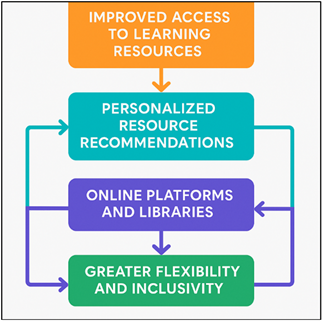
Figure 3 Process Flow of Resource Accessibility in AI-Based
Learning Systems
These interactive environments enable students to experiment with safety and repeat the experiment until the mastery is attained. In addition, AI can be used to optimize the resources used by teachers by analyzing the data of student engagement and providing recommendations on additional material that should be used to improve the weak points. This guarantees the more equitable spread of educational opportunities among various groups of learners.
5.3. Support for Self-Paced and Adaptive Learning
The application of AI-based learning systems enables photography students to learn at their own pace and in a manner that is more customized to ensure that all learners develop at their own pace, interests, and creative maturity. As compared to traditional classroom settings, where students are allocated with the same speed, AI is able to dynamically change the level of difficulty, order of content and the intensity of feedback depending on the continuous performance feedback. These adaptive systems track learning patterns by analyzing the data to determine areas where students have done well in or have failed to perform. As an example, when a learner is good in technical skills such as aperture control, composition is a weakness, the AI platform will automatically suggest specific exercises, tutorials, and projects that optimize the area of the weakness. This style induces independence, trust and greater conceptual insight. The self-paced learning process is especially useful in photography whereby creativity and technical experimentation among students is more differentiated. Learners can repeat lessons, learn to edit, and interpret feedback as many times as they need to by using AI tools and are not limited in time. Moreover, smart learning boards will visually monitor the process to ensure that students have achievable goals and celebrate the success.
6. Challenges and Limitations
6.1. Technical and ethical concerns
The introduction of the AI-based learning systems in the sphere of photography education introduces a variety of technical and ethical issues that have to be properly considered. Technically, AI applications are based on the presence of big data and intricate algorithms that can occasionally give inaccurate or biased results. Computer-based evaluation of composition or aesthetic, as used in photography where creative interpretation is a subjective quality, might not reflect the emotional or artistic intent of a photograph. Moreover, the errors in the system, the time-consuming nature of the data processing, and the lack of interoperability with other existing educational software may be the obstacles to the successful integration. On the ethical front the increased role of AI brings up the issue of data privacy, intellectual property and artistic originality. Numerous AI applications demand personal data and its analysis, such as the works of students, which creates the risks of the use of this information inappropriately and unauthorized access. Moreover, in case there are AI-generated outputs, which are similar or altered to original photos, ownership and originality issues emerge. The other ethical issue is the use of algorithms to assess creativity, which is a human and emotional process.
6.2. Overreliance on AI and Reduced Human Interaction
The threat of excessive dependence on technology possibly resulting in a lack of human interaction and critical thinking is one of the major limitations of AI-based learning systems in teaching photography. Students may be less capable of making their own creative decisions as they grow more reliant on AI tools to guide and analyze their work and edit it. In the long run, such dependence can diminish their ability to experiment with the art and to reveal their emotions which are the fundamental aspects of photography as an art form. The human educators are incomparable as they mentor, inspire, and give more profound meaning of creative work, which cannot be entirely represented by AI machines. Over automation of the learning process may turn the learning process into a cold machine whereby algorithmic feedback is given instead of a meaningful conversation and collaboration with peers. Such inability to interact with people can also influence the communication skills of students, teamwork, and cultural awareness, which are critical to the development of professionalism in the world of creativity. Moreover, AI-generated feedback is more likely to focus on technical correctness, as opposed to artistic intuition, and it is likely that students will focus on technical perfection promoted by machines, instead of genuine expression. Lack of the human critique restricts exposure to a variety of views, emotional comprehension and understanding, as well as cultural interpretation.
6.3. Cost and Accessibility Issues
Although it has the ability to change the face of photography education, there are significant cost and access obstacles to integrating AI-based learning systems into photography education. Installation of modern AI technology is a costly venture in terms of funds invested in infrastructure, software license, storage and maintenance. Most of the institutions, especially in developing countries, do not have the technical resources or the funds to facilitate such systems. There is also the challenge of having to update software regularly and upgrade hardware which also increases the costs and does not make long term maintainability easy. To students, AI-based learning platforms might be inaccessible because of high costs of subscription, use of powerful computers, or a good internet connection. This digital disparity brings limitless disparity among the learners of different socioeconomic statuses and may exclude a talented student who may not be able to afford such technologies. Further, as much as cloud-based AI applications have the benefit of accessibility, the applications also require the presence of a stable internet connection, which is not a reality in every geographic location.
7. Result and Discussion
The results disclose that AI-based systems of learning can serve as a powerful means of educating in photography to increase the efficiency of learning, creativity, and engagement. Quantitative data reveal significant improvements in the technical skills and artistic confidence of students, whereas the qualitative data demonstrate that students have positive attitudes towards the individual feedback and availability of AI. Nevertheless, there are some problems, such as ethical issues, excessive technological use, and lack of human communication. On the whole, AI implementation shows high potential to supplement the conventional pedagogy, enhance creativity and flexibility in the teaching of photography and highlight the necessity of the human-AI interaction.
Table 2
|
Table 2 Comparison of Student Performance Before and After AI Integration |
|||
|
Learning Parameter |
Before AI Integration (Mean Score) |
After AI Integration (Mean Score) |
Improvement (%) |
|
Technical Photography Skills |
68.4 |
87.9 |
28.40% |
|
Image Composition and Creativity |
70.2 |
89.3 |
27.10% |
|
Editing and Post-Processing
Skills |
65.8 |
90.1 |
36.90% |
|
Conceptual Understanding of Photography |
72.5 |
88.6 |
22.20% |
The findings of Table 2 indicate a high level of performance of photography students that has improved after the adoption of AI-based learning systems. Within all the learning parameters, there is observed significant improvement which indicates the efficiency of AI in improving technical and creative abilities. Figure 4 indicates that AI has a positive effect on the performance of photography learning. The largest improvement can be seen in Editing and Post-Processing Skills where the mean score rose by 36.9% with the initial score of 65.8 changing to 90.1. It means that AIs can help learn by hand a lot, making the process of complex image processing much easier with the assistance of automated editing assistants and smart filters.
Figure 4
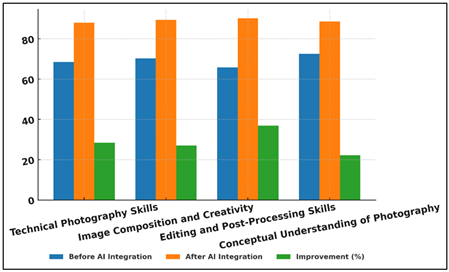
Figure 4 Impact of AI Integration on Learning Performance
Across Photography Skills
Likewise, Technical Photography Skills, Image Composition and Creativity record 28.4% and 27.1% respectively. Figure 5 indicates that there was a dramatic change in photography skills in the case of AI integration.
Figure 5
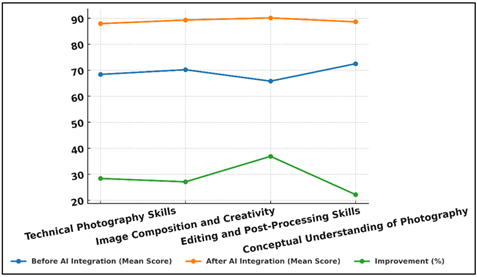
Figure 5 Progress in Photography Learning Parameters Before
and After AI Integration
The fact that Conceptual Understanding of Photography was slightly reduced (22.2%), though, the growth comes down to the contribution of AI to theoretical knowledge by providing intelligent content and analysis in real-time.
8. Conclusion
The paper finds that AI-based learning systems are an innovative breakthrough in the field of photography education that integrates technology and creativity to create more customized, efficient, and interactive educational experiences. Through incorporating artificial intelligence into the instructional design, students access adaptive tools that analyse their work, give real-time feedback and take them through a data-driven learning experience in a self-paced manner. Besides improving technical skills (composition, lighting, and editing), these systems can also stimulate artistic creativity in that learners are exposed to a wide range of possibilities in creativity. The study also demonstrates that AI will enable fair distribution of good learning resources among students who belong to diverse geographical and socioeconomic backgrounds to enjoy the benefits of digital education. By monitoring and assessing learning outcomes continuously and automatically, teachers and learners can establish better insights into the patterns and results of learning, which contributes to the higher level of academic performance and creativity. But notwithstanding all its benefits, AI integration has issues as well. Such problems like the privacy of data, excessive reliance on technology, and the danger of losing human mentorship should be resolved with the help of responsible implementation and ethical norms. To make sure that AI is not displacing human creativity, it is necessary to make sure that it is used as a supplementary resource instead of replacing photography.
CONFLICT OF INTERESTS
None.
ACKNOWLEDGMENTS
None.
REFERENCES
Agrawal, S., Panda, R., Mishro, P. K., and Abraham, A. (2022). A Novel Joint Histogram Equalization Based Image Contrast Enhancement. Journal of King Saud University–Computer and Information Sciences, 34, 1172–1182. https://doi.org/10.1016/j.jksuci.2019.05.010
Archana, R., and Jeevaraj, P. E. (2024). Deep Learning Models for Digital Image Processing: A Review. Artificial Intelligence Review, 57, Article 11. https://doi.org/10.1007/s10462-023-10631-z
Badjie, B., Cecílio, J., and Casimiro, A. (2024). Adversarial Attacks and Countermeasures on Image Classification-Based Deep Learning Models in Autonomous Driving Systems: A Systematic Review. ACM Computing Surveys, 57(1), 1–52. https://doi.org/10.1145/3691625
Cai, Y., Zhang, W., Chen, H., and Cheng, K. T. (2025). Medianomaly: A Comparative Study of Anomaly Detection in Medical Images. Medical Image Analysis, 102, 103500. https://doi.org/10.1016/j.media.2025.103500
Chen, W., Feng, S., Yin, W., Li, Y., Qian, J., Chen, Q., and Zuo, C. (2024). Deep-Learning-Enabled Temporally Super-Resolved Multiplexed Fringe Projection Profilometry: High-Speed kHz 3D Imaging with Low-Speed Camera. PhotoniX, 5, Article 25. https://doi.org/10.1186/s43074-024-00139-2
Emek Soylu, B., Guzel, M. S., Bostanci, G. E., Ekinci, F., Asuroglu, T., and Acici, K. (2023). Deep-Learning-Based Approaches for Semantic Segmentation of Natural Scene Images: A Review. Electronics, 12(12), 2730. https://doi.org/10.3390/electronics12122730
Gano, B., Bhadra, S., Vilbig, J. M., Ahmed, N., Sagan, V., and Shakoor, N. (2024). Drone-Based Imaging Sensors, Techniques, and Applications in Plant Phenotyping for Crop Breeding: A Comprehensive Review. The Plant Phenome Journal, 7, e20100. https://doi.org/10.1002/ppj2.20100
Gui, S., Song, S., Qin, R., and Tang, Y. (2024). Remote Sensing Object Detection in the Deep Learning Era: A Review. Remote Sensing, 16(2), 327. https://doi.org/10.3390/rs16020327
Lepcha, D. C., Goyal, B., Dogra, A., Sharma, K. P., and Gupta, D. N. (2023). A Deep Journey into Image Enhancement: A Survey of Current and Emerging Trends. Information Fusion, 93, 36–76. https://doi.org/10.1016/j.inffus.2022.12.012
Liu, Y., Bai, X., Wang, J., Li, G., Li, J., and Lv, Z. (2024). Image Semantic Segmentation Approach Based on Deeplabv3+ Network with an Attention Mechanism. Engineering Applications of Artificial Intelligence, 127, 107260. https://doi.org/10.1016/j.engappai.2023.107260
Pandeeswari, M. R. M. A., and Rajakumar, G. (2025). Deep Intelligent Technique for Person Re-Identification System in Surveillance Images. Pattern Recognition, 162, 111349. https://doi.org/10.1016/j.patcog.2025.111349
Rao, B. S. (2020). Dynamic Histogram Equalization for Contrast Enhancement for Digital Images. Applied Soft Computing, 89, 106114. https://doi.org/10.1016/j.asoc.2020.106114
Vijayakumar, A., and Vairavasundaram, S. (2024). YOLO-Based Object Detection Models: A Review and Its Applications. Multimedia Tools and Applications, 83, 83535–83574. https://doi.org/10.1007/s11042-024-18872-y
Wang, A., Chen, H., Liu, L., Chen, K., Lin, Z., and Han, J. (2025). YOLOv10: Real-Time End-To-End Object Detection. Advances in Neural Information Processing Systems, 37, 107984–108011. https://doi.org/10.52202/079017-3429
Zhang, P., Zhou, F., Wang, X., Wang, S., and Song, Z. (2024). Omnidirectional Imaging Sensor Based on Conical Mirror for Pipelines. Optics and Lasers in Engineering, 175, 108003. https://doi.org/10.1016/j.optlaseng.2023.108003
Zhao, S., Chen, H., Zhang, X., Xiao, P., Bai, L., and Ouyang, W. (2024). RS-Mamba for Large Remote Sensing Image Dense Prediction. IEEE Transactions on Geoscience and Remote Sensing. https://doi.org/10.1109/TGRS.2024.3425540
Zhao, T., Guo, P., and Wei, Y. (2024). Road Friction Estimation Based on Vision for Safe Autonomous Driving. Mechanical Systems and Signal Processing, 208, 111019. https://doi.org/10.1016/j.ymssp.2023.111019
|
|
 This work is licensed under a: Creative Commons Attribution 4.0 International License
© ShodhKosh 2025. All Rights Reserved.