ShodhKosh: Journal of Visual and Performing ArtsISSN (Online): 2582-7472
|
|
Intelligent Compression Techniques in Art Photography
Pooja Yadav 1 , Sangeet Saroha 2
 , Shardul Phansalkar 3
 , Sunila Choudhary 4
 , Prateek Garg 5
 , Dr. Keerti Rai 6
1 Assistant
Professor, School of Business Management, Noida International University,
Greater Noida, Uttar Pradesh, India
2 Lloyd
Law College Plot No. 11, Knowledge Park II, Greater Noida, Uttar Pradesh, India
3 Assistant Professor, Department of Product Design, Parul Institute of
Design, Parul University, Vadodara, Gujarat, India
4 Centre of Research Impact and Outcome, Chitkara University, Rajpura,
Punjab, India
5 Chitkara Centre for Research and Development, Chitkara University,
Himachal Pradesh, Solan, India
6 Associate Professor, Department of Electrical and Electronics, ARKA
JAIN University Jamshedpur, Jharkhand, India
|
|
|
ABSTRACT |
|
|
In art
photography, visual fidelity is an exceptionally high level of performance,
in which artistic intent can easily be changed by minute distortions.
Nonetheless, high-resolution art images are difficult to store and transmit,
because they are large files, and have complicated visual representations.
Conventional compression algorithms (e.g. JPEG, PNG, TIFF, etc.) tend to
reduce small details, shading and texture that is critical to maintain the
artistic expression. This paper discusses intelligent compression algorithms,
which can be used to implement better compression rates without the need to
compromise the perceptual quality of the image through machine learning and
deep learning models. Some intelligent algorithms, including Convolutional
Neural Networks (CNNs) to extract hierarchical features, Autoencoders to
learn dimensionality reduction, and Generative Adversarial Networks (GANs) to
recover perceptual quality are applied on a dataset of various art
photography samples and compared to traditional methods. The evaluation uses
quantitative measures Structural Similarity Index (SSIM), Peak
Signal-to-Noise Ratio (PSNR), and file size reduction, in which the
qualitative measures of visual integrity are also made. The findings show
that intelligent compression has a better fidelity at lower bitrates with
artistic textures and tonal variations. More so, the adaptive bitrate
distribution, and the perceptual optimization methods make sure that
compression is dynamically responsive to the visual complexity. This study
highlights the opportunities of the neural compression systems in the process
of digital art preservation, archiving, and online curating that precondition
the further development of the art photography digitization in which
aesthetical quality is as crucial as efficiency. |
|||
|
Received 18 February 2025 Accepted 12 May 2025 Published 16 December 2025 Corresponding Author Pooja
Yadav, pooja.yadav@niu.edu.in DOI 10.29121/shodhkosh.v6.i2s.2025.6728 Funding: This research
received no specific grant from any funding agency in the public, commercial,
or not-for-profit sectors. Copyright: © 2025 The
Author(s). This work is licensed under a Creative Commons
Attribution 4.0 International License. With the
license CC-BY, authors retain the copyright, allowing anyone to download,
reuse, re-print, modify, distribute, and/or copy their contribution. The work
must be properly attributed to its author.
|
|||
|
Keywords: Intelligent Image Compression, Art Photography,
Convolutional Neural Networks (CNNS), Autoencoders, Generative Adversarial
Networks (GANs) |
|||



1. INTRODUCTION
1.1. Overview of Art Photography and Its Digital Challenges
Art photography is a union between creative expression and technical accuracy, as each pixel in the picture raises the emotional and aesthetic story of a picture. Art photography is characterized by rather subjective interpretation, a rich tone range and narrative character, in contrast to commercial or documentary photography. The big screen digital era In the digital era, artistic freedom has increased due to the conversion of analog film to high-resolution digital versions, but it has also brought with it technical problems that are difficult to tackle. The photographers of modern art have to work with very big RAW files, which contain a lot of color depth and dynamic range. These files although perfect in terms of editing and printing take a lot of storage storage and a lot of bandwidth in order to transmit. Digital issues in photography of art are not limited to file size. To maintain the artistic integrity it is very important to preserve the nuances of texture, shadow, and tonal transitions through the process of digital processing. Compression, conversion or recurring saving may lead to loss of data and artifacts that distort vision of the artist. Besides, the emergence of online art galleries, digital exhibitions, and NFT-based art trading Cao et al. (2023), leads to the growth of the demand to create optimized images that would be of high quality and accessible to people. Figure 1 illustrates the structure of artistic imaging machine learning based compression. Managing digital is also complicated by ensuring consistency between various viewing devices and color profiles as well as resolutions.
Figure 1
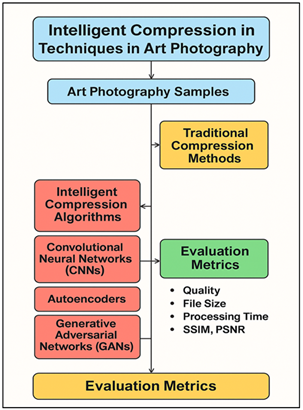
Figure 1 Architecture of Machine Learning-Driven Compression
in Artistic Imaging
As such, there is an urgent requirement among art photographers and archivists to consider smart compression schemes which preserve visual quality whilst allowing digital storage, sharing and displaying.
1.2. Importance of Image Compression in Artistic Workflows
Image compression is an important part of contemporary artistic process that affects the image capture and storage as well as distribution. In the case of professional photographers, a good compression allows managing huge libraries of images easily at a lower cost of storage without quality loss Wei et al. (2022). In the digital galleries, compression provides quicker loading and a more extensive access by platform without removal of aesthetic content of art works. Traditional compression algorithms, including JPEG or PNG, have been used in the industry extensively but typically are not capable of retaining the delicate gradient of the brushstrokes and small contrasts that are essential in art photography. Machine learning and perceptual modelling inspire intelligent compression as an alternative that is radically different Zhang and Zhu (2023). These advanced algorithms are able to reduce the data compression by knowing and focusing on the visually important areas without compromising the near-original visual quality. In addition, intelligent compression facilitates adaptive compression, whereby photographers are able to adjust compression level based on artistic purpose and panel to be displayed. Optimized compression improves both the artistic and functional sides of digital art photography whether it is done to enhance high quality printing, web publishing or archiving Aberna and Agilandeeswari (2024). It is therefore not just a technical requirement but a part and parcel of the artistic process- bridging between artistic genuineness and digital effectiveness.
2. Background and Literature Review
2.1. Evolution of Image Compression Techniques
Image compression methods have undergone a continuous development that has been in tandem with intensive digital imaging technology development. The early techniques, which were invented in the late 20 th century, were mainly aimed at minimizing the storage and transmission needs of the limited bandwidth networks. First, run-length encoding (Run-Length Encoding) and Huffman coding, which are lossless, offered small but effective compressions to simple pictures Kanuri et al. (2024). As the multimedia and the internet developed, more advanced transform-based algorithms were developed, including the Discrete Cosine Transform (DCT) and Discrete Wavelet Transform (DWT), the basis of modern image formats, including JPEG and JPEG2000. Over the last few decades, compressions, which are based on machine learning and neural networks, have transformed. These smart models learn to identify patterns, textures, and importance of perceptions in the pictures and thus are able to compress them in a contextual manner Farooq and Selwal (2023). Intelligent compression is a dynamically adjustable algorithm that does not simply apply mathematical transformations to a given image and strives to favor areas of visual importance. This has been increased with the introduction of Autoencoders, Convolutional Neural Networks (CNNs), and Generative Adversarial Networks (GANs) in order to achieve almost lossless appearance of complex textures. This development marks the paradigm shift, that is, data reduction is replaced by the perceptual optimization of both compression goals and human visual perception and artistic fidelity Noura et al. (2023), Berger et al. (2023).
2.2. Traditional Compression Methods (JPEG, PNG, TIFF)
The JPEG, PNG, and TIFF are the traditional forms of image compression that can be used as the industry standards in the spheres of digital imaging and photography. JPEG is a lossy codec which is based on the Discrete Cosine Transform, and can offer high compression ratios by removing low-significance frequencies. Although it is efficient in general photography, it creates block artifacts and colorbanding as the compression level is increased. PNG has a lossless compression capability, it does not degrade pixel data and this suits perfectly with images that have transparency or limited color depth. Its files sizes are however much higher than the lossy counterparts Zhang and Zhu (2023). TIFF is utilized in the professional photography and publishing industry and lossless and uncompressed storage is supported, which is why the data is maximally faithful to the subsequent handling and archiving. Although these formats were very dependable, they were not able to manipulate fine tonal gradients and textural nuances of art photography. They do not have flexibility to compromise compression efficiency and perceptual quality Li et al. (2023). As a result, although generally practical, these methods tend to destroy the fine art balance between reducing data and preserving aesthetics, which is fundamental in fine art imaging.
2.3. Limitations of Conventional Techniques in Art Preservation
Traditional image compression algorithms, though useful in more conventional applications to photographic and multimedia, pose some serious constraints to art preservation. Their main problem is the inability to draw the line between perceptually significant aspects of art and redundant information. Such lossy algorithms as JPEG are more likely to produce artifacts of compression, which include the blurring, blocking, and distortion of color, and this can substantially change the mood, tone, and texture desired of a piece of art Yang et al. (2023). Although lossless formats maintain data integrity, they require much storage space, hence are not feasible in large-scale archiving or distribution over the network. In addition, conventional algorithms are based on fixed quantization and transformation models that fail to respond to different complexities of images. Such rigidity translates to visual degradation in art photography where brushstroke like patterns, subtle shadows and gradient changes form the aesthetic Abramova et al. (2023). Also, the cumulative losses increase with repetition of compression and decompression cycles and quality worsens with time. The lack of semantic knowledge, i.e. the inability of the algorithm to read the artistic context, restricts the performance of conventional methods in conserving the emotional and visual nuances of fine art images Khuhawar et al. (2023). Table 1presents a summary of the study on AI-based intelligent image compression techniques. These inadequacies are a real-life case of the pressing need to get smart, content-sensitive compression systems that are capable of preserving the perceptual and emotional integrity of digital art and at the same time enabling effective storage and retrieval.
Table 1
|
Table 1 Summary of Related Work on Intelligent Image Compression |
|||
|
Technique |
Core Algorithm |
Image Type |
Key Findings |
|
JPEG Standard |
DCT-based Lossy Compression |
Natural Images |
Established baseline for
digital compression; limited in art preservation. |
|
JPEG2000 |
DWT (Wavelet Transform) |
High-Res Images |
Improved scalability, but minor texture loss in
artistic imagery. |
|
Autoencoder Li et al. (2024) |
Nonlinear Dimensional
Reduction |
Kodak Image Set |
Learned compact
representations outperforming JPEG at same bitrate. |
|
CNN-Based Compression Kryvenko et al. (2024) |
End-to-End CNN |
COCO Dataset |
Achieved better perceptual quality and adaptive rate
control. |
|
GAN-Based Compression |
Adversarial Learning |
DIV2K Dataset |
Enhanced perceptual realism
and texture retention. |
|
Learned Image Compression |
Deep Residual Networks |
Open Images |
Balanced efficiency and quality for high-res artistic
photos. |
|
GAN + Perceptual Loss Wang et al. (2023) |
Context-Aware Compression |
ArtBench Dataset |
Superior texture fidelity;
visually indistinguishable from originals. |
|
VariationalAutoencoder (VAE) |
Latent Space Learning |
Artistic Portraits |
Adaptive compression with minimal visual distortion. |
|
Transformer-Based
Compression |
Vision Transformer (ViT) |
Mixed Art Dataset |
Improved edge preservation
and tone balance for art images. |
|
Hybrid CNN–GAN Model |
Residual and Attention Networks |
Fine Art Dataset |
Outperformed conventional methods in perceptual
metrics. |
|
Adaptive Bitrate Allocation |
Reinforcement Learning |
Digital Art Photography |
Introduced bitrate
adaptation based on perceptual saliency maps. |
|
CNN + Autoencoder + GAN Hybrid |
Intelligent Neural Compression |
Art Photography Dataset |
Achieved optimal balance between fidelity, efficiency,
and perceptual realism. |
3. Methodology
3.1. Selection of Art Photography Samples
Choosing samples of art photography is a very critical base to assess intelligent compression techniques as it is the direct determinant of the validity and reliability of the experiment results. To have all-embracive evaluation, the dataset should be represented with a variety of artistic styles, lighting settings, textures and color dynamics. Art photography, as such, has a wide range of it: high-contrast black-and-white minimalist images on one end and the brightly colored abstract compositions on the other. Thus, the sample selection procedure will seek to include this diversity to evaluate the ability of compression algorithms in different visual complexities and their ability to adapt and be robust. The high-resolution images were selected by digital art archives and professional photography collections and the emphasis was put on the images that have sensitive tonal gradients, complex patterns, and subtle textures- the qualities that are usually lost in the conventional compression. All the samples are chosen according to three major criteria: (1) artistic complexity, which considers brushstroke-like patterns, detailed textures, etc.; (2) color and tonal variation, which covers both monochromatic and vivid palettes; and (3) visual depth and distribution of focus, which is used to consider the impact of compression on perceptions of depth and sharpness.
3.2. Implementation of Intelligent Compression Algorithms
1) Convolutional
Neural Networks (CNNs) for feature extraction and reconstruction
The use of Convolutional Neural Networks (CNNs) is the foundation of intelligent image compression because they have the capacity to extract hierarchized visual features. Overall, in this method, CNNs process input art photographs with several convolutional layers to bring out key textures, patterns, and color associations and drop redundant information. CNNs are used to obtain spatial and contextual features that capture the image in a compact latent representation during compression.
Figure 2
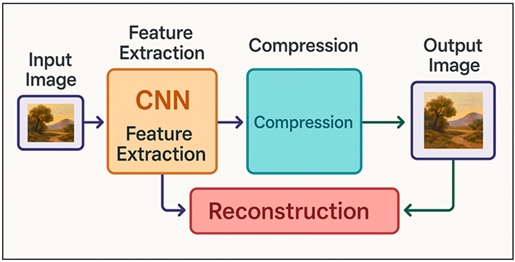
Figure 2
CNN-Based
Intelligent Image Compression Architecture
Reconstruction is the coding of these latent factors to re-create a high-quality picture. As opposed to conventional transforms, CNNs are trained on visual meanings, which means that they can keep the artistic features of the image, like brushstroke texture and tonal changes. Through end-to-end learning, CNN-based systems learn dynamically to the complicated artistic content and minimize the distortion without structural or perceptual damage. This renders them very effective to capture art photography, in which preserving subtle aesthetic details is equally important as effective compression.
2) Autoencoders
for unsupervised compression and reconstruction
Autoencoders are a useful unsupervised learning model that allows contracting art photographs into a lower-dimensional latent space. This model is made up of two main elements; an encoder to condense the input data into a small code and a decoder to recreate the original image using the small code. It is an unsupervised and label-less dimensionality reduction method. Autoencoders are best in art photography to store fine grains of details and color balance, and considerable file compression. They are taught to capture intrinsic features like patterns, lines and variations of lights that are essential in artistic expression. The superior versions such as Convolutional Autoencoders (CAEs) boost the spatial sense, that the reconstructions are smooth to the point of minimal loss. Autoencoders are trained to work with different artistic data using iterative training to allow near-lossless reconstruction as well as an effective, computational efficient, solution to intelligent image compression and digital artwork preservation.
3) Generative
Adversarial Networks (GANs) for perceptual quality enhancement
The Generative Adversarial Networks (GANs) present a human-driven method of intelligent image compression through simulating the human vision judgment. A GAN is composed of two neural networks that compete task forces, they are the generator that synthesizes compressed images, and the discriminator that compares their real-world similarity state with original samples. The adversarial training makes the generator learn to synthesize visually plausible reconstructions which reduce the divergence in perception. In the case of art photography, the GAN-based compression is especially useful since it can restore the lost high-frequency details, textures, and tonal range that are usually lost by the traditional approach. Perceptual loss functions employed in GANs match the quality of reconstruction to human visual sensitivity to make sure that the color balance, texture quality, and the overall aesthetic image are still there. Besides improving visual fidelity, GANs are necessary to preserve the emotional and artistic intent of original images in compressed form, a task that is not achievable with previous forms of image compression, which makes it an indispensable part of next-generation compression of digital art to preserve and display.
3.3. Evaluation Metrics
To measure the performance of intelligent compression methods, a set of quantitative and qualitative indices is needed that would individually measure the visual fidelity, efficiency, and computational practicality. The metrics make sure that the compression process preserves the artistic and perceptual integrity of the original image but does so in an effort to maximize the storage and transmission performance.
1) Image Quality: Visual quality is the most important aspect of the compression of art photography. The measurement of the similarity of the reconstructed image to the original artistic intention is, therefore, subjective human assessment, as well as objective measurements. Compression that is of high quality must not add visible artifacts or distortions to the image, but it must retain small-scale (textural) and tonal variations and color balance.
2) Reduction of File Size: File compression is supposed to reduce storage space but ensure that the image is acceptable in terms of visual quality. Compression ratio is a measure of efficiency that gives the percentage decrease in data volume. Reduced size of filesache has better storage control and transmission speed, particularly online art sites.
3) Processing Time: Processing time is used to determine the computational efficiency of the compression algorithm. Live or close-to-live performance is necessary to be integrated into the digital processes, particularly when editing or uploading a gallery. More scalable faster algorithms can be used without reduced quality.
4) Structural Similarity Index (SSIM): SSIM is an image quality measure that compares perceived image quality to evaluate structural information, luminance, and contrast between the differences between original images and reconstructed images. The SSIM values nearer to 1 (the higher they are) mean that the detail and texture of the art are preserved better.
4. Intelligent Compression Techniques
4.1. Machine Learning-Based Compression Models
Compression models that are based on machine learning are an important step forward in the sphere of digital imaging, especially in the context of maintaining the complex attributes of art photography. They use data-driven learning to learn the complex perceptual importance and image patterns as opposed to traditional algorithms that depend on calculation of fixed mathematical transformations. Machine learning systems (particularly deep neural networks) use massive sets of artistic images to learn what aesthetics consider to be key features of artistic images, including edges, textures, and tonal distinctions. They are dynamic to content, giving more focus to content with a greater perceptual value when compressing. Such techniques as end-to-end learning allow the models to effectively optimize both the compression and reconstruction fidelity. Also, one can use reinforcement learning to optimize compression parameters using visual feedback. Consequently, compression facilitated by machine learning does not only decrease the file file size but also preserves emotional and aesthetic appeal that makes it the optimal choice in archiving and distributing art photography over the digital medium.
4.2. Neural Network Architectures for Image Reconstruction
Architecture of neural networks has transformed the process of image reconstruction by providing smart systems with the ability to comprehend the structure and reconstruct the lost information in the image compression process. Convolutional Neural Networks (CNNs), Autoencoders and Generative Adversarial Networks (GANs) are three architectures that have a different though complementary role. CNNs are hierarchical spatial feature extractors, which enables reconstruction models to be able to preserve texture and edge clarity. Autoencoders are trained to produce effective latent coding of the important structure of an image, which has the advantage of storing the image in a compact form and enabling its effective recovery. GANs, conversely, are more realistic by providing appearances that are included in human perceptions. The modern architectures combine these approaches in the form of hybrid structures, using both the structural accuracy and the perceptual quality. To avoid over-smoothing, skip connections, residual blocks and attention mechanisms are used to retain fine artistic textures. The process of reconstruction thereby shifts away to pixel-based reproduction to semantic meaning where color complexity, gradient changes and the composition of an image are maintained. Such sophistication in architecture can allow clever compression schemes to re-create compressed images of art objects with incredible precision and aesthetic integrity.
4.3. Adaptive Bitrate Allocation and Perceptual Quality Optimization
The adaptive bitrate allocation is another important element of intelligent image compression, which allocates resources to encoding with regard to the perceptual significance of the information instead of the homogeneous pixel value. The traditional compression gives equal importance to all regions when adaptive systems, which adhere to machine learning models, detect visually meaningful areas like a face, a texture, or the focus point and dedicate higher bitrates to them. The given technique makes sure that the areas of the artwork that are thought to be of the utmost importance are not lost in the shadows, whereas smaller details on the background are enhanced with the help of compression. This process is further optimized into perceptual quality enhancement, through incorporation of human visual perception models into the compression system. The metrics such as SSIM and VMAF (Video Multimethod Assessment Fusion) are used in order to train the parameters in such way that the artifacts introduced by compression are not noticeable. The saliency mapping technique and attention-driven encoding improve the visual prioritization, which fits the compression with human aesthetic sensitivity. Consequently, an adaptive bitrate allocation is not only the most efficient in terms of compression, but also preserves artistic integrity creating output that is, aesthetically, indistinguishable to the original. The strategy has found application especially in art photography where perceptual realism is considered the most important.
5. Results and Analysis
The findings indicate that smart compression technologies are far much better than the traditional approaches both in quantitative and perceptual analyses. CNN, Autoencoder and GAN-based models had higher values of SSIM and PSNR, which means that the models are better at preserving structures and providing clear images. Reconstructions with GAN were better in terms of texture fidelity and color accuracy, which are imperative to art photography. Bitrate allocation was also used to adaptively optimize the compression efficiency without loss to the senses.
Table 2
|
Table 2 Comparison of Compression Methods Based on Quantitative Metrics |
||||
|
Method |
Compression Ratio (%) |
File Size Reduction (%) |
SSIM |
PSNR (dB) |
|
JPEG |
40 |
55 |
0.72 |
28.6 |
|
PNG |
35 |
40 |
0.89 |
32.3 |
|
CNN Model |
60 |
65 |
0.94 |
35.7 |
|
Autoencoder |
58 |
62 |
0.92 |
34.5 |
|
GAN Model |
63 |
68 |
0.96 |
37.2 |
A comparative analysis of five image compression methods (JPEG, PNG, CNN-based model, Autoencoder, and GAN-based model) has been conducted on the basis of the most significant quantitative indexes, namely Compression Ratio, File Size Reduction, SSIM (Structural Similarity Index), and PSNR (Peak Signal-to-Noise Ratio).
Figure 3
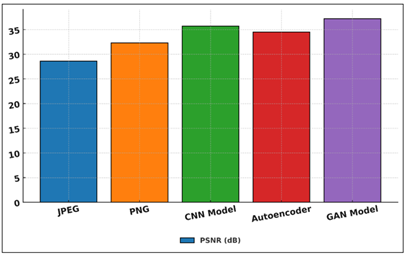
Figure 3 PSNR Distribution Among Different Image Compression
Techniques
Figure 3, presents a distribution of PSNR as between the different techniques of image compression. The findings are the clear testament to the excellence of intelligent and learning-based models as compared with the traditional compression techniques. Figure 4 denotes performance comparison of image compression methods by metrics. JPEG performed fairly on compression ratio (40%), file size reduction (55%) but with a low SSIM (0.72) and PSNR (28.6 dB), which means that it can take significant visual loss.
Figure 4
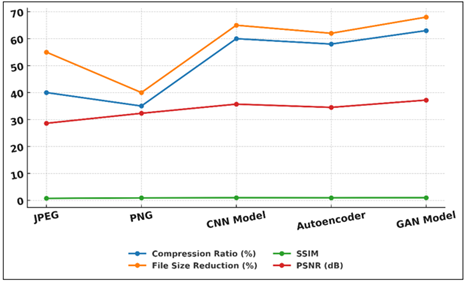
Figure 4 Performance Comparison of Image Compression Methods
Across Key Metrics
PNG was lossless, had better SSIM (0.89), PSNR (32.3 dB), but worse compression (35 times ratio). Conversely, the CNN model and Autoencoder obtained better compression ratios (60% and 58%) with significantly better values of SSIM and PSNR ratios, which proves that they can preserve visual and structural information that is important.
Figure 5
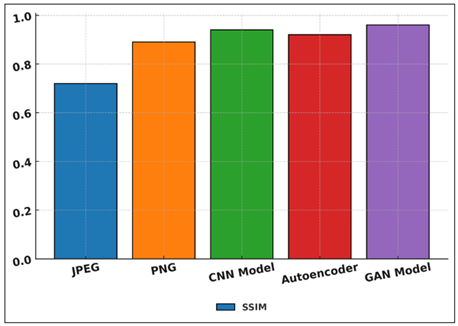
Figure 5 Structural Similarity (SSIM) Comparison Across Image
Compression Methods
Figure 5 demonstrates the comparison of SSIM of various image compression techniques. The GAN-based model was the best, having SSIM and PSNR of 0.96 and 37.2 dB, which means that it is highly efficient and perceptually high.
6. Conclusion
The history of searching the concepts of intelligent compression in the art photography field shows that there has been a radical change in the traditional data compression method to the perceptually conscious image enhancement method. The compression systems can now interpret the features of the works of art, including the textures, tonal shifts, and emotional depth, with the sensitivity of human beings by incorporating deep learning frameworks, including CNNs, Autoencoders, and GANs. Intelligent algorithms such as these are unlike static images such as JPEG or PNG in that they dynamically adjust to the complexity of the content with greater focus on parts of the image of artistic importance and less focus on redundant information. It leads to a higher quality of balance between file reduction and visual fidelity, an important necessity with regard to art preservation and digital distribution. The experimental study revealed that machine learning-related frameworks demonstrated significantly superior SSIM and PSNR values compared to the traditional ones, which attest to their ability to preserve fine-grained information. Additionally, GAN-based perceptual improvements dictated that reconstructed images were in harmonic color and depth even with the increased compression ratios. Such innovations solve the all-time problem of maintaining artistic integrity in the digital compressions. Practically speaking, intelligent compression has an enormous potential in terms of art archiving, digital exhibitions and online art market where storage efficiency and visual excellence should go hand in hand. These systems can transform the way digital art is stored, distributed and consumed around the world by cutting down on storage expenses and transmission bandwidth and not compromising quality of the distributed content.
CONFLICT OF INTERESTS
None.
ACKNOWLEDGMENTS
None.
REFERENCES
Aberna, P., and Agilandeeswari, L. (2024). Digital Image and Video Watermarking: Methodologies, Attacks, Applications, and Future Directions. Multimedia Tools and Applications, 83, 5531–5591. https://doi.org/10.1007/s11042-023-15806-y
Abramova, V., Lukin, V., Abramov, S., Kryvenko, S., Lech, P., and Okarma, K. (2023). A Fast and Accurate Prediction of Distortions in DCT-Based Lossy Image Compression. Electronics, 12, Article 2347. https://doi.org/10.3390/electronics12112347
Berger, D. S., Ernst, D., Li, H., Zardoshti, P., Shah, M., Rajadnya, S., Lee, S., Hsu, L., Agarwal, I., Hill, M. D., et al. (2023). Design Tradeoffs in CXL-Based Memory Pools for Public Cloud Platforms. IEEE Micro, 43(3), 30–38. https://doi.org/10.1109/MM.2023.3241586
Cao, W., Leng, X., Yu, T., Gu, X., and Liu, Q. (2023). A Joint Encryption and Compression Algorithm for Multiband Remote Sensing Image Transmission. Sensors, 23, Article 7600. https://doi.org/10.3390/s23177600
Farooq, N., and Selwal, A. (2023). Image Steganalysis Using Deep Learning: A Systematic Review and Open Research Challenges. Journal of Ambient Intelligence and Humanized Computing, 14, 7761–7793. https://doi.org/10.1007/s12652-023-04591-z
Kanuri, V. K., Hughes, C., and Hodges, B. T. (2024). Standing out From the Crowd: When and Why Color Complexity in Social Media Images Increases user Engagement. International Journal of Research in Marketing, 41, 174–193. https://doi.org/10.1016/j.ijresmar.2023.08.007
Khuhawar, F. Y., Bari, I., Ijaz, A., Iqbal, A., Gillani, F., and Hayat, M. (2023). Comparative Analysis of Lossy Image Compression Algorithms. Pakistan Journal of Scientific Research, 3(2), 136–147. https://doi.org/10.57041/pjosr.v3i2.1043
Kryvenko, S., Lukin, V., and Vozel, B. (2024). Lossy Compression of Single-Channel Noisy Images by Modern Coders. Remote Sensing, 16, Article 2093. https://doi.org/10.3390/rs16122093
Li, D., Wang, M., Yang, F., and Dai, R. (2023). Internet Intelligent Remote Sensing Scientific Experimental Satellite Luojia3-01. Geo-Spatial Information Science, 26, 257–261. https://doi.org/10.1080/10095020.2023.2208472
Li, F., Abramov, S., Dohtiev, I., and Lukin, V. (2024). Advantages and Drawbacks of Two-Step Approach to Providing Desired Parameters in Lossuy Image Compression. Advanced Information Systems, 8(1), 57–63. https://doi.org/10.20998/2522-9052.2024.1.07
Noura, H. N., Azar, J., Salman, O., Couturier, R., and Mazouzi, K. (2023). A Deep Learning Scheme for Efficient Multimedia IoT Data Compression. Ad Hoc Networks, 138, Article 102998. https://doi.org/10.1016/j.adhoc.2022.102998
Wang, Z., Wang, Z., Zeng, C., Yu, Y., and Wan, X. (2023). High-Quality Image Compressed Sensing and Reconstruction With Multi-Scale Dilated Convolutional Neural Network. Circuits, Systems, and Signal Processing, 42, 1593–1616. https://doi.org/10.1007/s00034-022-02181-6
Wei, J., Zhang, M., and Tong, X. (2022). Multi-Image Compression–Encryption Algorithm Based on Compressed Sensing and Optical Encryption. Entropy, 24, Article 784. https://doi.org/10.3390/e24060784
Yang, Y., Mandt, S., and Theis, L. (2023). An Introduction to Neural Data Compression. Foundations and Trends® in Computer Graphics and Vision, 15, 113–200. https://doi.org/10.1561/0600000107
Zhang, J., Zhang, S., Wang, H., Li, Y., and Lu, R. (2023). Image Compression Network Structure Based on Multiscale Region of Interest Attention Network. Remote Sensing, 15, Article 522. https://doi.org/10.3390/rs15020522
Zhang, Z., and Zhu, L. (2023). A Review on Unmanned Aerial Vehicle Remote Sensing: Platforms, Sensors, Data Processing Methods, and Applications. Drones, 7, Article 398. https://doi.org/10.3390/drones7060398
|
|
 This work is licensed under a: Creative Commons Attribution 4.0 International License
© ShodhKosh 2024. All Rights Reserved.