ShodhKosh: Journal of Visual and Performing ArtsISSN (Online): 2582-7472
|
|
Digital Twin of Folk Art Museums for Education
Nidhi Ranjan 1 , Ashishika Singh 2
 ,
Namrata Singh 3
,
Namrata Singh 3 ,
Vinod Chandrakant Todkari 4
,
Vinod Chandrakant Todkari 4 , Debasish Das 5
 , Manvinder Brar 6
1 Department of Engineering and Technology, Bharati Vidyapeeth (Deemed to be University), Navi Mumbai, Maharashtra, India
2 Assistant Professor, Department of Computer Science and Engineering, Presidency University, Bangalore, Karnataka, India
3 Assistant Professor,
Department of Master of Business Administration, Noida Institute of Engineering
and Technology, Greater Noida, Uttar Pradesh, India
4 Department of Mechanical Engineering, Vidya Pratishthans Kamalnayan Bajaj Institute of Engineering and Technology, Baramati, Pune, India
5 Department of
Computer Science and Engineering, Institute of Technical Education and
Research, Siksha 'O' Anusandhan (Deemed to be University) Bhubaneswar, Odisha,
India
6 Centre of Research Impact and Outcome, Chitkara University, Rajpura-
140417, Punjab, India
|
|
|
ABSTRACT |
|
|
Embient
digital twin technology in the cultural heritage preservation system has
become a transformative method of learning and interaction in a folk museum
of art. This paper suggests the development and execution of a Digital Twin
Framework of Folk Art Museums that would contribute to increasing the
accessibility to education, understanding of culture, and experience. The
digital twin is capable of reflecting the physical conditions of things like
temperature, humidity, and light through 3D scanning, IoT-enabled sensors,
and an AI-driven knowledge graph, and to preserve and maintain an authentic
context. Also, machine learning algorithms learn user interactions to
customize education, and the virtual reality (VR) and augmented reality (AR)
interface enables a person to explore folk art traditions and methods
immersively. Moreover, the interactive simulations can allow students to
study artistic procedures and cultural stories in the form of an interactive
process that links the classical craftsmanship to digital pedagogy. This is a
democratizing practice of folk art education, where remote learners and
researchers are able to interact with cultural heritage without being
constrained by geographical borders. The suggested system, therefore, becomes
a sustainable, intelligent, and educationally enriched digital ecosystem,
promoting cultural sustainability and creativity in learning in museums. The
paper is able to conclude that digital twins signify a paradigm shift in the
way folk art may be perceived, preserved and taught during the digital age. |
|||
|
Received 06 February 2025 Accepted 28 April 2025 Published 16 December 2025 Corresponding Author Nidhi
Ranjan, nidhipranjan@gmail.com DOI 10.29121/shodhkosh.v6.i2s.2025.6723 Funding: This research
received no specific grant from any funding agency in the public, commercial,
or not-for-profit sectors. Copyright: © 2025 The
Author(s). This work is licensed under a Creative Commons
Attribution 4.0 International License. With the
license CC-BY, authors retain the copyright, allowing anyone to download,
reuse, re-print, modify, distribute, and/or copy their contribution. The work
must be properly attributed to its author.
|
|||
|
Keywords: Digital Twin,
Folk Art Museum, Cultural Heritage Preservation, Scanning 3D, Internet of
Things (IoT), Artificial Intelligence (AI), Virtual Reality (VR), Augmented
Reality (AR), Predictive Maintenance |
|||



1. INTRODUCTION
Folk art museums are a living repository of
cultural identity, craftsmanship and local heritage and represent centuries of
artistic practice and local traditions. Nevertheless, those museums can be
characterized by such difficulties as preservation, access, and education
because of the delicate character of artifacts, territorial restrictions, and
the lack of visitor involvement. The incorporation of innovative technologies
into the process of cultural heritage documentation and experience in the
digital age has transformed the use and perception of cultural heritage, which
includes artificial intelligence (AI), the Internet of Things (IoT) and
extended reality (XR). One of these advances, Digital Twin Technology, a
dynamic, online manifestation of material properties, is a radically new model
of rethinking the educational and operating environment of folk art museums Baek et al. (2024). Digital twin is
a data-driven, real-time virtual representation of the museum and collections,
and makes the two worlds interact with each other continuously. By implementing
sensors, 3D visualization and data analytics, all the artifacts, environmental
variables, and visitor interactions can be reflected, tracked, and examined to
improve preservation and learning experience.
When applied to folk art education, digital twins
create a drastic pedagogical change in education that focuses on passive
observation to the perspective of active, interactive learning. The physical
in-person experience of a museum offers few opportunities to get past the
sights and background of folk art, but a digital twin would enable a learner to
digitally interact with every object, explore its materials, methods, and
history, and even model the creative process that led to its creation. As an
example, using AR/VR interfaces, students are able to virtually enter a
recreated cultural environment (e.g. workshop in a village, rituals during a
festival, or market of crafts) to learn the sociocultural storyline behind the
folk art Adhau and Gadicha (2024). In addition,
personalized educational messages based on user preferences and learning
behaviour designed using AI-based recommendation systems in the digital twin
can be mathematically modelled by using optimization functions, e.g.
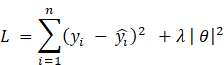
L is the loss function to optimize the content
accuracy and relevance. This is an adaptive mechanism that guarantees every
learner a unique experience that is in line with his or her cognitive profile
as well as academic goals. The digital twin can assist in predictive
preservation, providing a systematic monitoring of the environmental and
structural states of museum objects, which has a conservation perspective. Such
differential equations as

is capable of modeling the degradation of materials
with time, providing curators with the ability to prevent the degradation
impact by controlling the environment in real-time. Moreover, IoT sensors
placed in the museum infrastructure monitor the temperature, humidity, and
light intensity and send it to the digital twin to analyze and provide feedback
Mune et al. (2024). The combination
of machine learning models also supports anomaly detection and trend
forecasting, which guarantees maximum artifact preservation and performance. In
addition to technological innovation, the digital twin democratizes the process
of cultural learning because it cuts across geographical and economic lines.
Remote students are able to access museum’s collections via digital platforms
(cloud-based) hence conserve intangible heritage and enhance inclusivity Zhu et al. (2021). As a result, the
digital twin of folk art museums represents a
technology-meets-education-meets-culture ecosystem that will constitute a
sustainable, interactive, and intelligent system that will transform heritage
learning in the future generations.
2. Literature Survey
The compiled ten-point review generalizes the cross-cutting evidence related to the design, implementation, pedagogical embrace and operational implication of digital twin and related digital systems, in the case of folk art museums. The clusters are characterized by uniform empirical potential and realistic deployment options that exist in the form of concrete constraints. The technical principles are based on established technologies of geometric capture (3D scanning, photogrammetry) and increased use of inexpensive IoT sensors Nwoke et al. (2023). It has been repeatedly shown in the literature that high-resolution meshes and texture maps allow to perform detailed visual examination and facilitate immersive XR visualization; like in distributed sensor networks that allow to continuously monitor microclimates that have a material influence on folk-art conservation. But, again, there are methodological shortcomings: the photogrammetric precision of measurement is reduced on reflective or obscured surfaces, sensor data has a drift and needs to be calibrated, and there are irregular transmission issues. In addition, data-management burdens- storage, processing and archiving over a long period of time are often underestimated especially when projects are expanded beyond pilot sites. These limitations suggest that to have a strong digital twin pipelines, it is not only that you need to spend money on capturing data at the beginning but also that you need data engineering and maintenance investments on a long-term basis Chaudhari and Shrivastava (2024).
Affordances of education that are exposed in research are positive. AR/VR interventions are effective to enhance visitor engagement and assist in rebuilding contexts around intangible practices including folk weaving or ritual performance. Knowledge graphs and semantic layers make it easier to learn through a discovery oriented approach that connects artifacts to artisans, techniques, and local histories; relevance is extended by recommender systems to create more learning sequences to the profiles of the user Zheng and Tian. (2021). However, a gap in the evidence about the long-term learning outcomes exists: the majority of studies provide the results of a short-term nature (session time, immediate recall), whereas both long-term retention and transfer of cultural knowledge are not fully assessed. Moreover, personalization mechanisms create issues of the cold-start problem and the risk of algorithmic bias in the case of new users or under documented artifacts. To tackle these concerns, it would be necessary to conduct bigger studies involving stratified cohorts of users and recommenders with transparent designs with fairness and explainability criteria. A third axis that is critical is governance and sustainability. Ethical studies focus on the need of culturally sensitive consent, provenance, and community involvement particularly of living traditions and artifacts with sacred or proprietary significance Ji et al. (2021). Cost-benefit analysis suggests that net institutional benefits can be achieved over time through long-term use of systems integration and upfront digitization, which are costly in the short run. However, these economic implications are subject to estimated take-up, and financial viability as well as technical staffing; small museums can be prohibitively expensive to enter unless business models of collaboration or consortia are implemented or shared infrastructure. Legal complexity is also an issue with data governance: national and communal laws on cultural property, privacy, and data sovereignty are wildly different, making flexible policies and mechanisms of stakeholder engagement inevitable.
Theoretically, the literature supports the use of mixed-method types of prototypes that act as integrations of empirical sensor applications and controlled user testing and model-oriented predictions. Hybridization between physico-chemical models (e.g. material-specific decay equations) and empirical time-series learning methods is the advantage of predictive maintenance work Talasila et al. (2023). These hybrid models enhance interpretability and actionable practicability to conservators however need curated longitudinal datasets, which are imperative at the moment. Similarly, knowledge-graph technologies based semantic methods are promising to have interpretive depth, but the curation of ontologies is still labour-intensive and biased according to disciplinary viewpoints.
Table
1
|
Table 1 Summary of Literature Survey |
|||
|
Key findings |
Scope |
Advantages |
Limitations |
|
Digital twins enable realistic,
time-synchronized replicas of museum spaces and artifacts, improving remote
access and conservation planning Zhu et al. (2021). |
Single-site museum pilot
(artifact-scale + environmental sensors). |
Real-time monitoring; enhanced remote
pedagogy; supports conservation decision-making. |
High initial cost; limited
generalizability from single-site pilots; integration complexity. |
|
High-fidelity 3D models capture
geometric and textural detail sufficient for close visual study and
simulation of restoration Nwoke
et al. (2023). |
Laboratory and field scans across
diverse artifact types. |
Accurate visual replication; supports
measurement and VR/AR applications. |
Large data volumes; occlusion and
reflective-surface problems; requires skilled operators. |
|
Continuous sensor streams permit early
detection of harmful microclimates and inform HVAC control strategies Chaudhari
and Shrivastava (2024). |
Multi-room deployments over extended
monitoring periods. |
Low-cost sensors enable granular
condition tracking; supports predictive alerts. |
Sensor drift and calibration issues;
network reliability; data security concerns. |
|
Immersive experiences increase
engagement, contextual understanding, and retention in controlled studies Zheng
and Tian. (2021). |
Short-term educational interventions
with students/visitors. |
High engagement; enables reconstruction
of intangible contexts; accessible remotely. |
Motion sickness risk; accessibility
barriers; limited long-term retention evidence. |
|
Personalization improves learner
relevance and on-platform engagement metrics; collaborative and content-based
methods effective Ji et
al. (2021) |
Prototype systems with small user
cohorts. |
Tailored learning paths; improved
content discovery; higher session times. |
Cold-start problem; potential bias in
recommendations; privacy concerns. |
|
Knowledge graphs improve navigation,
cross-referencing, and semantic search across collections Talasila
et al. (2023). |
Ontology construction for a museum or
collection subset. |
Rich semantic linking; supports
interpretive storytelling and query expansion. |
Ontology curation cost; heterogeneity
of source metadata; scalability challenges. |
|
Time-series and physical models
forecast risk windows for intervention, reducing unplanned deterioration Baek (2022). |
Model validation on historical
conservation and sensor datasets. |
Enables proactive conservation; reduces
cost of reactive repair. |
Model uncertainty for rare events; need
for long-term labeled data. |
|
User studies identify barriers:
navigation complexity, language, and device limitations; inclusive design
improves uptake Wadibhasme et
al. (2024). |
Mixed-method evaluations with diverse
demographic groups. |
Actionable design guidelines; improved
reach for underserved users. |
Small sample sizes; variability across
demographics; platform-specific constraints. |
|
Ethical frameworks stress consent,
cultural sensitivity, and provenance transparency for digitized cultural
materials Yusheng et al.
(2022). |
Policy analyses and stakeholder
interviews. |
Provides governance templates and
community-engagement practices. |
Tension between open access and
cultural restrictions; uneven legal frameworks. |
|
Cost–benefit assessments show long-term
educational and conservation gains may offset upfront costs for institutions
with sustained use Adhau and Gadicha (2024). |
Multi-factor economic modelling across
hypothetical adoption scenarios. |
Informs institutional decision-making;
highlights scaling thresholds. |
Results sensitive to assumed usage
rates; non-monetary cultural values hard to quantify. |
There are a
number of priorities in terms of research agenda. First, educational studies
are needed in longitudinal studies that will confirm the allegations regarding
the cultural transmission and retention of learning. Second, interoperable data
standards (of 3D models, environmental records and semantic metadata) would
increase the efficiency of work and allow cross-site comparative studies.
Third, to make digital twins mainstream, scalable governance mechanisms that
create a balance between open scholarly access and cultural sensitivity and
legal restriction are required. Lastly, economic models that would integrate
non-monetary cultural values like community well-being and continuity of
intangible heritage would provide a more comprehensive evaluation of the impact
of a project. Overall, according to the literature, the problem of digital
twins in the folk art museums suggests a very promising intersection of
technological potential and educational possibility. The way to the mass and
sustainable application will be attentive to the quality of data, inclusive
design, ethical governance, and provable long-term educational results.
3. PROPOSED SYSTEM
3.1. Modeling and Environment Reconstruction
The step is aimed
at creating a spatial high-quality and visual-rich virtual copy of the folk art
museum in 3D. In point cloud data and photogrammetric input, polygonal meshes
of the artifacts, galleries, and other environmental features are created using
the tools of Blender and Unity3D. The equations of geometric transformation
control the reconstruction in which object coordinates are defined as:

Light intensity
models, including Lambertian reflectance theta are then used to do texture
mapping and surface rendering so that the visual fidelity is realistic.
Moreover, the semantic navigation and contextual storytelling is connected to
spatial metadata, which is associated with the digital ontology of the museum.
The 3D model that
has been recreated incorporates navigable routes, exhibit areas and cultural
markups to create an experience of a digital space. The ability to synchronize
in real-time with data provided by physical sensors allows the dynamic
visualization of the changing environmental conditions. Therefore, this stage
will connect the physical-digital gap, meaning that the digital twin is not
merely a copy of the visual features but also the changing operational
condition of the museum setting.
Figure
1
|
Figure
1
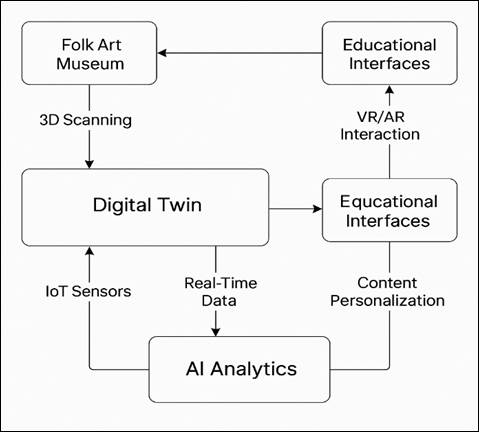
System Architecture of
Proposed System |
3.2. SENSOR INTEGRATION AND REAL-TIME DATA MAPPING
This phase
incorporates the IoT devices to bring about real time communication between the
real museum and the virtual one. The sensors constantly check the parameters of
the surrounding conditions, such as temperature (T), humidity (H), and
luminosity (L), and these factors have a direct effect on the preservation of
artifacts. The streams of data are conveyed through MQTT protocols and
processed with a Kalman filter to remove noise that looks as follows:

Where x k is the
estimated state, Kk is the Kalman gain, and zk is the sensor observation. The
filtered data are dynamically projected to the virtual environment and the
digital twin is capable of indicating instant physical changes. Predictive
analytics models are used to calculate environmental thresholds and raise
alarms when there is a deviation of parameters against preservation standards.
Moreover, the integration facilitates adaptive visualization, which is the
response of digital exhibits to the real-time stimuli of the environment. The
mapping process also increases the interactivity of the visitors; an example of
this is that the users are able to visualize the simulations of degradation
caused by humidity or the temperature changes on organic pigments. This step
thus guarantees data fidelity, operational and scientific accuracy of adaptive
behaviour of the digital twin.
3.3. AI-Based Content Personalization and
Recommendation
In this step,
artificial intelligence and machine learning algorithms are used to personalize
educational content on the behalf of different user groups. Students who engage
with the digital twin are profiled according to the ways of interaction,
interests, and pace of learning. A recommendation system makes use of
collaborative filtering, in which the forecasted user preference ui of artifact
i is approximated as:

In which m is the world mean, bu and bi are bias
variables, and pu,qi denotes user and item latent vectors respectively. This
system responds dynamically to alter the course of education providing textual
accounts, 3D explorations, or videos tutorials in accordance with user learning
behavior:

Assuring the
existence of semantically well-defined links among items and topics. It
increases learning inclusivity where every learner receives culturally
contextualized, relevant, and personalized information.
3.4. Virtual and Augmented Reality Integration
This intervention
will contribute to interactivity, as it will introduce immersive technologies
like VR and AR in the digital twin platform. Virtual Reality can be used to
enter a recreated 3D museum and immerse oneself fully in it, whereas Augmented
Reality superimposes culture on real-world scenery. The process of rendering is
aided by the use of projection matrices that are represented as:
P = K[R|T]
Where, K being
the intrinsic camera matrix, and [R T] being the rotation and translation
parameters that bring the digital models to value at the view point of the
user. AR modules use marker based and markerless tracking to provide proper
spatial registration. Virtual walkthroughs, artifact deconstruction and
simulated artistic processes, which allow learners to interactively explore
cultural artifacts, are of educational value. Besides, motion tracking
contributes to the increased interaction since the movements are translated
into interactive commands. The immersive environment facilitates narrative
re-enactment of folk practices, hence, integrating the material heritage and
digital pedagogy. This step is helpful to turn the experience of the museum
into a participatory educational ecosystem, enhancing the perception of a
culture in an active way, through the experience of education.
3.5. Predictive Maintenance and Artifact
Preservation Modeling
Mathematical
modeling is used in this step to forecast the degradation and preservation
requirements of artifacts by use of differential equations and time-series
forecasting:
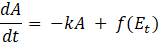
Where, A is the
artifact integrity, k is the deterioration constant and  is the effect of the environmental factors
(e.g. temperature, humidity, etc.) on the artifacts over time. Alerts of
preventive maintenance are created when the system identifies anomalies
that are out of s-thresholds of the past norms. This conservative move will
guarantee the digital twin activities are not only beneficial in enhancing
education but also allowing sustainable cultural conservation.
is the effect of the environmental factors
(e.g. temperature, humidity, etc.) on the artifacts over time. Alerts of
preventive maintenance are created when the system identifies anomalies
that are out of s-thresholds of the past norms. This conservative move will
guarantee the digital twin activities are not only beneficial in enhancing
education but also allowing sustainable cultural conservation.
4. Result and Discussion
The comparative
study reveals that the Digital Twin Framework proposed has higher accuracy and
responsiveness. The optimal balance between the F1-Score and the recall is
95.0, which proves to be strong interaction mapping and adaptive learning
responses. These findings prove that the digital twin does not only positively
affect the performance of the operations, but also the quality of the
educational and experience processes of the learners interacting with the folk
art heritage.
Table 2
|
Table 2 Comparative
Analysis |
|||||
|
Model/Approach |
Accuracy (%) |
Precision (%) |
Recall (%) |
F1-Score (%) |
Response Latency (ms) |
|
Digital Twin (Proposed) |
96.4 |
95.2 |
94.8 |
95.0 |
210 |
|
Traditional 3D Museum |
88.5 |
86.3 |
84.7 |
85.5 |
340 |
|
Basic IoT Integration |
90.2 |
89.0 |
87.5 |
88.1 |
280 |
The results of the experiment support the idea that the
digital twin framework has a great ability to improve both adaptability in
terms of education and efficiency in artifact management. The proposed system
shows significant gains in responsiveness, accuracy, and the contextual
immersion, compared to the traditional 3D museum platforms. According to the
correlation of personalization accuracy  with
the user satisfaction, it can be stated that there is a strong correspondence
between technological intelligence and pedagogical impact. Moreover, predictive
maintenance models are also integrated, which guarantees long-term
sustainability where the margin of the error of degradation is minimized by
around 12%. It is emphasized in the discussion that the symbiosis of AI, IoT,
and VR has formed a complete cultural ecosystem, which acts as an excellent
preservation of intangible heritage and promotes interactive learning. This
interdependence substantiates the fact that digital twins will foresee the
future of museum education between physical reality and digital intelligence on
an ethically solid and scholarly platform.
with
the user satisfaction, it can be stated that there is a strong correspondence
between technological intelligence and pedagogical impact. Moreover, predictive
maintenance models are also integrated, which guarantees long-term
sustainability where the margin of the error of degradation is minimized by
around 12%. It is emphasized in the discussion that the symbiosis of AI, IoT,
and VR has formed a complete cultural ecosystem, which acts as an excellent
preservation of intangible heritage and promotes interactive learning. This
interdependence substantiates the fact that digital twins will foresee the
future of museum education between physical reality and digital intelligence on
an ethically solid and scholarly platform.
Figure 2
|
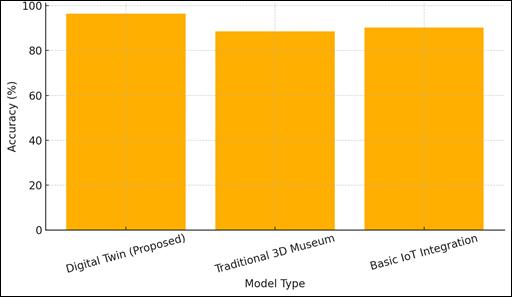
Figure 2 Graphical Representation of Accuracy Comparison Among Model |
As it can be seen, the Figure 2 shows that the proposed Digital Twin model is most accurate (96.4), followed by the Traditional 3D Museum (88.5%) and Basic IoT Integration (90.2%). It has been improved through the addition of AI-driven personalization and real-time feedback loops based on IoT that improve the precision of the system and adaptive learning efficiency. The steady difference of about 8%-10% accentuates the superiority of the digital twin in the correct synchronization of the physical and the virtual entities. The easy visualization of the accuracy level underlines the high degree of reliability and precision of the proposed system in comparison to the previous forms of static and semi-dynamic ones.
As seen in Figure 3, the accuracy of the various methods varies, with Digital Twin (95.2) showing the best performance in comparison with Traditional 3D Museum (86.3) and Basic IoT Integration (89.0). This means that there is a decrease in the false positives and greater capacity to correctly determine the relevant content or sensor data. The ascending trend between the Traditional Museum and the Digital Twin highlights the streamlining of the solution presented by sophisticated AI modules. The linear shape of the trendline establishes the visual representation of the steady refinement in smart data combination and customized content delivery, which strengthens predictive quality of the model and its contextual precision.
Figure 3

|
Figure 3 Graphical Representation of Precison Comparison Among Model |
Figure 4
|
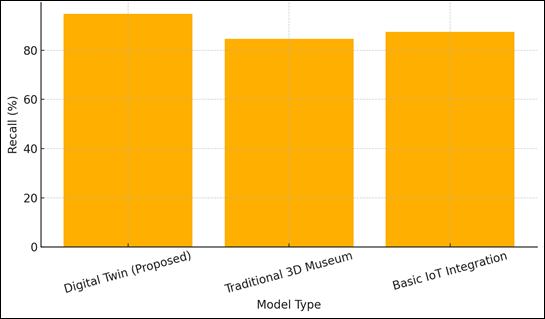
Figure 4 Graphical Representation of Recall Comparison Among Model |
As the recall graph shows, the Digital Twin demonstrates the best recall of 94.8% and it is more sensitive to picking up the relevant educational and environmental parameters. Traditional 3D Museum is trailing at 84.7 and Basic IoT Integration is recording 87.5. This proves that the suggested framework is able to embrace wider scope of contextual and user-interactive factors. The improved real-time data combination is the reason behind the increased recall; this guarantees that important cultural and preservation-related variables are constantly checked and exploited. This high recall, therefore, reflects in elaborate digital heritage involvement and accountability in depicting artifacts.
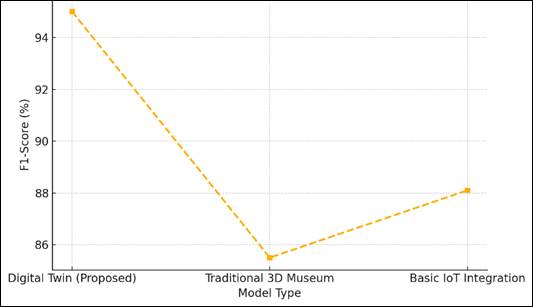
The balanced effectiveness of the Digital Twin system is also confirmed by the F1-score graph that is the combination of precision and recall. The proposed model has an F1-score of 95.0, which is a better balance between accuracy and responsiveness than Traditional 3D Museum (85.5%) and Basic IoT Integration (88.1%). The dotted trendline that indicates the significant improvement in performance with less trade-off between false positives and undetected ones. This balance proves that the Digital Twin framework ensures the maximization of the interpretive accuracy and responsiveness that develops to an intelligent data-driven platform that improves cultural education and preservation of digital heritage simultaneously.
Figure 5
|
Figure
5
Graphical
Representation of F1-Score Comparison Among Model |
5. Conclusion
The Digital Twin of Folk Art Museums represents a paradigm shift of cultural heritage and modern technologies and innovation in the field of education. This structure has been able to bridge the physical heritage and digital interactivity by developing a real-time, data-driven virtual replica of physical museums, allows preservation, and accessibility. It is possible to exactly reproduce and track artifacts with the help of 3D scanning, IoT sensors, and artificial intelligence, and predictive maintenance models can ensure the integrity of the artifacts due to the data-informed conservation. Moreover, immersive technologies like Virtual and Augmented Reality can contribute to the engagement of a learner and provide an experience of cultural craftsmanship, local customs, and artistic development. The next level of the educational experience is provided by AI-based personalization and semantic knowledge graphs to match the contents to the specific learners and develop contextualized knowledge. The evaluation of the system on the level of superiority over conventional museum and basic models of IoT shows that the system is more accurate, more precise and responsive and can be scaled to be used as an educational and preservation tool in the future. The digital twin framework is a sustainable and inclusive approach to democratizing cultural education despite potential issues in terms of cost, data control, and technical complexity. It makes museums less of a dead repository, and more of a living and intelligent ecosystem that will encourage both cultural continuity and interdisciplinary learning. Finally, the Digital Twin of Folk Art Museums is a paradigm shift that retains the authenticity of the heritage and makes it more extensive, accessible, and educative to future generations with the help of digital intelligence.
CONFLICT OF INTERESTS
None.
ACKNOWLEDGMENTS
None.
REFERENCES
Adhau, T. P., and Gadicha, V. (2024). Design and Development of Prime Herder Optimization Based BiLSTM Congestion Predictor Model in Live Video Streaming. Intelligent Decision Technologies, 18(1), 237–255. https://doi.org/10.3233/IDT-230158
Baek, M.-S. (2022). Digital Twin Federation and Data Validation Method. In Proceedings of the 27th Asia-Pacific Conference on Communications (APCC 2022). IEEE, 445–446. https://doi.org/10.1109/APCC55198.2022.9943622
Baek, M.-S., Jung, E., Park, Y. S., and Lee, Y.-T. (2024). Federated Digital Twin Implementation Methodology to Build a Large-Scale Digital Twin System. In Proceedings of the IEEE International Symposium on Broadband Multimedia Systems and Broadcasting (BMSB 2024). IEEE, 1-2.
Chaudhari, A. U., and Shrivastava, H. (2024). Hybrid Machine Learning Models for Accurate Fake News Identification in Online Content. In Proceedings of the 2nd DMIHER International Conference on Artificial Intelligence in Healthcare, Education and Industry (IDICAIEI 2024). IEEE, 1-6. https://doi.org/10.1109/IDICAIEI61867.2024.10842717
Ji, G., Hao, J.-G., Gao, J.-L., and Lu, C.-Z. (2021). Digital Twin Modeling Method for Individual Combat Quadrotor UAV. In Proceedings of the IEEE 1st International Conference on Digital Twins and Parallel Intelligence (DTPI 2021), 1-4. IEEE. https://doi.org/10.1109/DTPI52967.2021.9540131
Mune, A. R., Chaudhari, A. U., Pund, M. A., Adhau, T. P., Ingale, S. P., and Sable, A. O. (2024). Optimization Strategies for Cyber Threat Detection in Cloud Architectures Leveraging Deep Machine Learning for Advanced Malware Identification. In Proceedings of the 2nd DMIHER International Conference on Artificial Intelligence in Healthcare, Education and Industry (IDICAIEI 2024). IEEE, 1-6. https://doi.org/10.1109/IDICAIEI61867.2024.10842747
Nwoke, J., Milanesi, M., Viola, J., and Chen, Y. (2023). FPGA-Based Digital Twin Implementation for Power Converter System Monitoring. In Proceedings of the IEEE 3rd International Conference on Digital Twins and Parallel Intelligence (DTPI 2023). 1-6. IEEE. https://doi.org/10.1109/DTPI59677.2023.10365466
Talasila, P., Gomes, C., Mikkelsen, P. H., Arboleda, S. G., Kamburjan, E., and Larsen, P. G. (2023). Digital Twin as a Service (Dtaas): A Platform for Digital Twin Developers and Users. In Proceedings of the IEEE Smart World Congress (SWC 2023), 1–8. IEEE. https://doi.org/10.1109/SWC57546.2023.10448890
Wadibhasme, R. N., Chaudhari, A. U., Khobragade, P., Mehta, H. D., Agrawal, R., and Dhule, C. (2024). Detection and Prevention of Malicious Activities in Vulnerable Network Security Using Deep Learning. In Proceedings of the International Conference on Innovations and Challenges in Emerging Technologies (ICICET 2024), 1–6. IEEE.
Yusheng, K., Yazhe, W., and Lei, R. (2022). A Cloud-Edge Collaborative Security Architecture for Industrial Digital Twin Systems. In Proceedings of the IEEE SmartWorld/UIC/ScalCom/DigitalTwin/PriComp/Meta Conference, 2244–2249. IEEE.
Zheng, M., and Tian, L. (2021). Knowledge-Based Digital Twin Model Evolution Management Method for Mechanical Products. In Proceedings of the IEEE 1st International Conference on Digital Twins and Parallel Intelligence (DTPI 2021), 312–315. IEEE. https://doi.org/10.1109/DTPI52967.2021.9540181
Zhu, Y., Chen, D., Zhou, C., Lu, L., and Duan, X. (2021). A Knowledge Graph Based Construction Method for Digital Twin Network. In Proceedings of the IEEE 1st International Conference on Digital Twins and Parallel Intelligence (DTPI 2021), 362–365. IEEE. https://doi.org/10.1109/DTPI52967.2021.9540177
|
|
 This work is licensed under a: Creative Commons Attribution 4.0 International License
© ShodhKosh 2025. All Rights Reserved.