ShodhKosh: Journal of Visual and Performing ArtsISSN (Online): 2582-7472
|
|
Data driven patron Engagement in Art Institutions
Sameer Bakshi 1
 ,
Sudhanshu Dev 2
,
Sudhanshu Dev 2 ,
Ananta Narayana 3
,
Ananta Narayana 3 ,
Rahul Thakur 4
,
Rahul Thakur 4 ,
Dr. B. Anupama 5
,
Dr. B. Anupama 5
1 Assistant
Professor, Department of Visual Communication, Parul Institute of Design, Parul
University, Vadodara, Gujarat, India
2 Chitkara
Centre for Research and Development, Chitkara University, Solan 174103,
Himachal Pradesh, India
3 Assistant
Professor, School of Business Management, Noida International University,
203201, India
4 Centre
of Research Impact and Outcome, Chitkara University, Rajpura 140417, Punjab,
India
5 Assistant
Professor, School of Management, Presidency University, Bangalore, Karnataka,
India
|
|
|
ABSTRACT |
|
|
The
institutions of art find themselves in that situation more
and more, trying to maintain the attention of the visitors because of
shifting expectations of the audience, the disruptive influence of digital
technologies, and the lack of understanding of the heterogeneous behavior of
the patrons. Conventional methods of engagement are based on intuit,
stationary surveys or post-experience surveys and they have little abilities
in forseeing inclinations, customizing experiences,
or institutional decision-making. This paper aims to discuss the issue of a
lack of evidence-based, methods of cognition and control of the work with patrons in real and virtual art
environments. The main goal is to come up with a structured framework
utilizing data to model visitor behavior, preferences and pattern of
interaction in order to facilitate adaptive
engagement approaches in art institutions. The given methodology combines
multi-source data, such as ticketing data, time-spent in exhibitions, digital
interactions history, social media indicators, and demographic features.
Clustering, predictive analytics, and recommendation models are machine
learning methods that are used to create segments, predict attendance
patterns, curatorial, educational, and marketing interventions. They have
explainable analytics to guarantee transparency and institutional
interpretability of insights. The results of empirical studies indicate that
data-based engagement strategies have a significant positive effect on
visitor retention, frequency of participation, and satisfaction rates
relative to conventional ones. Customized content delivery and direct
outreach boosts the recurrent visitation and
predictive models enhance proactive programming in tune with the demand of
the audience. The framework also aids in planning strategies as it helps to
show what sections are under-engaged and measure the effect of exhibitions
and events on a near time basis. Comprehensively,
the paper shows that evidence-based patron-facing allows art organizations to
move beyond their reactive management and adopt the more adaptive,
audience-focused ecosystems to increase the cultural accessibility,
institutional sustainability and creation of long-term value to the
population. |
|||
|
Received 24 February 2025 Accepted 18 May 2025 Published 16 December 2025 Corresponding Author Sameer
Bakshi, sameer.bakshi89041@paruluniversity.ac.in DOI 10.29121/shodhkosh.v6.i2s.2025.6703 Funding: This research
received no specific grant from any funding agency in the public, commercial,
or not-for-profit sectors. Copyright: © 2025 The
Author(s). This work is licensed under a Creative Commons
Attribution 4.0 International License. With the
license CC-BY, authors retain the copyright, allowing anyone to download,
reuse, re-print, modify, distribute, and/or copy their contribution. The work
must be properly attributed to its author.
|
|||
|
Keywords: Data-Driven Engagement, Art Institutions, Visitor
Analytics, Machine Learning, Audience Segmentation, Cultural Analytics |
|||



1. INTRODUCTION
The museums, galleries, and cultural centers are currently experiencing a paradigm shift that is being prompted by the swift changes in the audience behavior both in the physical and online space. Modern consumers are demanding more and more delivered culture in the form of interactive, customized, and mediated by digital means instead of just consuming the exhibitions passively. The proliferation of mobile technologies, online cultures and social media has changed the ways in which audiences find, participate in, and consume artistic offerings leading to shorter attention spans and increased channels of participation Giannakoulopoulos et al. (2025). Virtual tours, online archives, and social interaction now complement and even replace physical visitation and develop new patterns of interaction that are complex, multi-channel, and are difficult to model in any traditional institutional model Ncube and Ngulube (2025). Regardless of such alterations, most art institutions still depend on the traditional methods of engagement and feedback, including occasional surveys, number of visits, and informal observations. Such techniques have their advantages, but tend to be retrospective, low-resolution and restrictive to the discovery of dynamic visitor behavior or latent preferences Harding et al. (2019). They usually see audiences as homogenous masses, ignoring individual paths, time differences, and contextual issues that can affect interaction. Furthermore, response to exhibitions or events may not be much assistance in making decisions in real-time, hence limiting responsiveness of institutions in adapting their programming, interpretation, and outreach strategies Choi and Kim (2021). Figure 1 presents an outline of the end-to-end data-driven patron engagement model involving the combination of multi-source audience data with analytics, segmentation and personalization modules to aid making informed curatorial decisions, developing targeted marketing efforts, and providing an improved visitor experience in both physical and virtual art settings.
Figure 1

Figure 1 Overview of Data-Driven Patron Engagement Framework for Art Institutions
The increased availability of data of digital interaction, including ticketing systems and dwell-time sensors to online engagement metrics and social media cues, is a big opportunity in overcoming these constraints. Data-oriented solutions facilitate the automatic study of large and heterogeneous data on patrons to gain insights about their behavioral tendencies, audience segmentation, and engaging results Bhebhe and Ngoepe (2022). Through machine learning and sophisticated analytics, the art institutions will be able to go beyond descriptive statistics to predictive and prescriptive insights to support adaptive engagement strategies. The models enable the process of making audience-centered decisions, which are based on matching curatorial narratives, education programs and communication strategies with empirically measured patron interests and behaviors Saurombe and Ngulube (2016). This study is driven by the necessity to fill in the research gap between the expanding nature of the audience participation and the narrow analytical frameworks that are currently in application in cultural institutions. In an ever-tighter competitive cultural environment, it is crucial to develop data-driven adaptive engagement models to remain relevant, accessible, and institutional. In addition to operational advantages these strategies also serve more general cultural ends by facilitating inclusive participation, finding audiences that are underrepresented and by maximizing the value of art institutions to the general population Njobvu et al. (2012). This research thus aims at developing a sound analytical base on data-oriented patron engagement by showing how audience intelligence can help turn the art institutions into reactive organisations into proactive and learning cultural ecosystems.
2. Related Work
The visitor studies and engagement theory in museums and galleries have long been focused on researching the cognitive, emotional, and social aspects of interaction with art by the audience. The initial studies conducted on visitors were based on observational techniques, interviews, and post-visit questionnaires to determine learning outcomes, satisfaction and interpretive effectiveness. Through these studies the engagement models were developed based on people as the active creators of meaning, as opposed to the passive consumers, and further factors like prior knowledge, motivation and social situation were identified to influence museum experiences Njobvu et al. (2012). Later theoretical work broadened involvement beyond learning outcomes to emotional resonance, identity formation and participatory practices as museums and galleries were seen as dialogic spaces through which the audience participates in creating cultural meaning Chaterera and Rodrigues (2019). Although these frameworks contributed to a higher level of conceptual insight, they are also mostly qualitative or small-scale, which inhibits their application to large and heterogeneous audience and in real-time institutional decision-making Maluleka et al. (2023).
Digitisation of cultural organisations has created additional forms of interaction and increased the range of visitor analytics. Museums are becoming more and more adopters of digital kiosks and mobile apps, virtual exhibitions, and online collections, which provide endless streams of interaction information. Studies in this area have investigated the ways digital platforms expand the institutional reach, enable the participation remotely, and make the stories deeper in interpretation by using multimedia and interactive storytelling Saurombe (2020). Digital studies that are powered by analytics prove that the data of digital engagement can show temporal trends, content popularity, and actions that are not easily measured by conventional means Marini (2019). Nevertheless, a lot of the current work revolves around descriptive analytics or platform-specific measures, and provides only a little integration between both physical and virtual touchpoints. Consequently, in many cases, institutions have a fragmented approach to analysis, which is not able to link visits at the location with the internet and long-lasting relationships with the audience Giannakoulopoulos et al. (2022).
In much more recent times, machine learning applications have become a promising source of audience-behavior analysis in the cultural field. Behavioral and demographic characteristic based clustering and segmentation methods have been employed to determine different types of visitors so as to be able to conduct more focused communication and program strategies Christ et al. (2021). The use of predictive models to predict attendance, membership renewal and event participation has shown to improve the performance of the heuristic or rule based planning techniques Pergantis et al. (2023). Recommendation systems, which are influenced by e-commerce and media websites, have been modified to suggest exhibitions, educational materials, or online content based on the interests of specific individuals Khashabi et al. (2020). In spite of these developments, there are still a number of issues as far as data sparsity, data interpretability, and ethical visitor data utilization are concerned. Most studies focus on prediction performance without proper consideration of transparency, institutional usability or conformity to curatorial values Trichopoulos et al. (2023). Thus, it is obvious that there is a necessity of integrated, explainable and ethically based machine learning systems that would coordinate the computational capabilities with the cultural mission of art institutions Church et al. (2021).
Table 1
|
Table 1 Summary of Related Work on Data-Driven Patron Engagement in Art Institutions |
|||||
|
Study Focus |
Data Type Used |
Analytical Method |
Key Contribution |
Limitations |
Relevance to This Study |
|
Visitor engagement theory |
Surveys, interviews |
Qualitative analysis |
Established
cognitive–emotional engagement models |
Small-scale, non-predictive |
Conceptual foundation |
|
Online visitor behavior |
Clickstreams, usage logs |
Pattern analysis |
Identified navigation
patterns |
Fragmented data |
Behavioral indicators |
|
Integrated cultural
analytics |
Physical + digital data |
Dashboard analytics |
Argued for unified analytics |
Lacked ML depth |
Motivation for integration |
|
Audience segmentation |
Demographic, behavior |
Clustering (k-means) |
Identified visitor segments |
Static segmentation |
Basis for personalization |
|
Attendance prediction |
Ticketing records |
Predictive modeling |
Improved forecasting
accuracy |
Limited explainability |
Predictive layer |
|
Cultural recommender systems |
Interaction history |
Recommendation algorithms |
Personalized content
delivery |
Cold-start issues |
Personalization design |
|
ML ethics in museums |
Visitor data policies |
Conceptual analysis |
Emphasized transparency and
trust |
No implementation |
Explainable analytics |
3. Data Sources and Patron Interaction Modeling
3.1. Multi-source data acquisition
The study will use the multi-source data acquisition approach to obtain the entire range of patron interactions in both the physical and digital art space. Ticketing and membership systems are used to gather structured data which serve to indicate visit frequency, channel of booking, the choice of the exhibition, and the time of attendance. Anonymized sensors, beacons, or camera-based counters can be used to obtain on-site behavioral data, which is dwell time and movement patterns, to have insight on spatial engagement with galleries and exhibits. Off-site interaction behaviour is recorded in digital interaction logs of institutional websites, mobile applications, and virtual exhibitions, which are views of the content, navigation paths, and depth of interaction. Simultaneously, social media data in the form of likes, shares, comments, and sentiment towards exhibitions and events are collected via the platform APIs to obtain the discourse of the external audience and the cultural reach. These data streams of heterogeneity are temporally synchronized and determined to form a single patron interaction dataset to facilitate the engagement path analysis in its entirety and not its individual touchpoints.
Figure 2

Figure 2 Closed-Loop Data-Driven Patron Engagement Workflow for Art Institutions
The ensuing knowledge supplies the specific engagement tactics, such as customized recommendations and efficient planning of events, as shown in Figure 2. The adaptive learning processes are made feasible through continuous feedback and closed optimization loops, thus ensuring the institutions can further develop the engagement tactics and make continuous and gradual improvements in terms of the quality of the overall visitor experience and the effectiveness of the institution.
3.2. Data preprocessing, normalization, and privacy considerations.
Raw data of various sources are cleaned to overcome missing data, noise, and differences due to diverse collection mechanisms. The temporal normalization aligns the interactions between different time scales, whereas the feature scaling makes it possible to compare behavioral, digital, and demographic variables. Categorical variables are coded with appropriate representations and outliers are treated using effective statistics. The preprocessing pipeline is focused on privacy and ethics: all personal information is either erased or filed under the pseudonym, access to the data is governed by the institutional rules, the analysis is conducted according to the legislation on data protection. Individual privacy is not violated by patron analytics as aggregation and consent-aware processing can guarantee that patron analytics serve as an aid to engagement information.
3.3. Feature engineering for behavioral, temporal, and demographic patterns
Feature engineering is a method that converts the processed data into useful signals of customer behavior. The characteristics of behavior are frequency of visits, dwell-time distribution, diversity of interactions and intensity of engagement online. The temporal features reflect seasonality, recency, intervals between visits and reaction to events or exhibition. Contextual support Demographic features (when anonymized) facilitate contextual insight into the diversity of the audience. These designed properties make it possible to have strong segmentation and predictive modeling of engagement dynamics.
3.4. Patron interaction representation and engagement indicators
The interactions with customers are modeled in the form of sequence ordered profiles and time-based series that display changing engagement levels. The metrics of audience participation are composite engagement indicators, which are depth of engagement, consistency and cross-channel involvement. This representation carries out clustering, prediction, and explainable analysis, which is the basis of analytical analysis of the audience-driven engagement strategies that rely on data.
Table 2
|
Table 2 Comparative Analysis of Multi-Source Data Acquisition for Patron Engagement |
||||
|
Data Source |
Engagement Dimension Captured |
Data Granularity |
Analytical Value |
Limitations |
|
Ticketing systems |
Visit frequency, attendance
timing |
Structured, event-level |
Core indicator of physical
participation |
Limited behavioral depth |
|
Membership records |
Loyalty and repeat
visitation |
Longitudinal, individual-level |
Retention and lifecycle
analysis |
Static attributes |
|
Dwell-time sensors |
Spatial engagement intensity |
Fine-grained, temporal |
Exhibit-level interaction
insights |
Infrastructure dependent |
|
Movement tracking
(beacons/counters) |
Navigation and flow patterns |
High-resolution spatial |
Space optimization and
layout analysis |
Privacy sensitivity |
|
Website interaction logs |
Content interest and
browsing behavior |
Click-level digital traces |
Off-site engagement
measurement |
Platform-specific |
|
Mobile app analytics |
Personalized interaction
behavior |
Session-level, contextual |
Context-aware engagement
insights |
App adoption bias |
|
Virtual exhibition logs |
Remote participation depth |
Interaction-level |
Global reach assessment |
Limited emotional cues |
4. Data-Driven Engagement Methodology
4.1. Patron segmentation using clustering and behavioral profiling
Segmentation of patrons is a cornerstone of the suggested data-driven engagement approach that allows the art institutions to learn the heterogeneous audience behavior beyond aggregate attendance data. Segmentation in this study is done in terms of unsupervised clustering algorithm on engineered behavioral, temporal and demographic characteristics based on multi-source patron data. The first step is to build detailed patron profiles that include the frequency of visits, distributions of dwell-time, exhibitions diversity attended, and the intensity of digital interactions and temporal predictability of interactions. These characteristics provide the level and size of patron engagement in both physical and online platforms.
Customers are clustered according to their behavioral patterns and algorithms like k-means, hierarchical clustering or density-based are used to cluster patrons. The distance metrics are chosen so as to create balance between numeric and categorical variables to have a meaningful grouping. The resulting clusters will usually provide clear engagement archetypes, including highly engaged frequent visitors, occasion-oriented occasional visitors, digitally inclined remote visitors, or low engagement first-time visitors. Behavioral profiling also adds more segmentation value as it describes each cluster using descriptive terms that can be interpreted such as favorite content types, times of the day they visit most, and sensitivity to programming or outreach.
4.2. Predictive analytics for attendance and participation forecasting
Predictive analytics is applied to support in predicting the future level of attendance, participation patterns thereby facilitating engagement planning before responding. In this study, predictive models are trained using previous ticketing history, past attendance data and temporal, and contextual factors including seasonal, type of exhibition, and advertising. Regression-based models, ensemble models or time-series predictors are machine learning models used to learn associations between drivers of engagement and observed outcomes. Temporal characteristics identify repetitive trends whereas behavioral features represent audience loyalty and responsiveness. These models, once developed, will produce prediction of what lies ahead in terms of exhibitions, events, or time of the year, which will enable the institutions to predict the demand changes. Forecast outputs aid in the staffing, scheduling, marketing intensity and capacity decisions.
More importantly, scenario analysis is also possible with the help of predictive analytics. Institutions are able to model the effects that can be caused by alterations in programming, timing, or outreach strategies on attendance to facilitate evidence-based experimentation. Performance of a model is constantly monitored and forecasts are revised in case new information is available, and that provides flexibility. With predictive analytics embedded into the workflows of engagement, art institutions will be able to match their resources with the demand, minimize uncertainty, and improve the participation outcomes in the form of informed and forward-thinking approaches.
Algorithm: Attendance and Participation Forecasting
Input: Historical engagement data D, contextual features C
Output: Predicted attendance Â
1) Aggregate D into time-based intervals
2) Engineer temporal and behavioral features
3) Split data into training and validation sets
4) Train predictive model M on (D, C)
5) Validate M and tune hyperparameters
6) Generate future predictions Â
7) Update model periodically with new data
4.3. Personalized recommendation and content delivery mechanisms
Individualized recommendation tools seek to match exhibitions, events and online materials to the interests of individual patrons, increasing their relevance and interest. Recommendations in this study are based on the outputs of patron segmentation along with their history of individual interactions. The patron profiles have preferences based on the previous visits, dwell-time focus, digital content engagement; and frequency of engagement. These profiles are used as inputs in recommendation models to predict the possibility of interest in the offerings or offerings that are available or are to come. The content delivery is done in physical and digital channels. To facilitate on-site interaction, individualized recommendations can be used to shape specific messages, for example, exhibition recommendations or invitations to events. Recommendation systems, in online contexts, rank dynamically the contents of the sites or mobile apps. Strategies of collaborative and content-based filtering are implemented to the cultural background, and tend to focus on interpretability and diversity, instead of focusing on pure optimization. Feedback loops measure the reactions of the patrons on the recommendation so that the preference models can be continually improved.
This model balances between automation and curatorialism by enabling institutions to moderate the constraints of recommendations yet using the benefits of data-driven personalization. Consequently, patrons are exposed to content that appeals to their interests whilst institutions are able to enhance the level of engagement and recurrence with no loss of cultural value.
Algorithm: Personalized Content Recommendation
Input: Patron profile P, content set S
Output: Ranked content list R
1) Extract preference features from P
2) Compute similarity between P and each item in S
3) Score items based on relevance and diversity
4) Rank items to form R
5) Deliver top-N recommendations
6) Collect feedback and update P
5. Results and Discussion
Table 3 shows the magnitude of the effects of the data-driven engagement framework implementation, which clearly shows uniform positive dynamics in all the key performance indicators. There was a 16.4-percent growth in visitor retention which shows that highly individual and anticipatory engagement strategies are useful in fostering long-term relationships with patrons as opposed to single visits. Repeat visitation increased by 16.5 implying that information-based programming and communication intervention boosts long-term interest in events and exhibitions. There is an increase in event attendance of 17.2% as the offerings of the event are becoming more aligned with the preferences of the audience as determined by predictive analytics. Interestingly, the strongest growth was observed in digital engagement (22.3%), which is indicative of the efficiency of the personalized tools of content delivery and the use of analytics in the outreach to increase the off-site and hybrid engagement. The visitor satisfaction increased by 14.3 which was a confirmation that relevance and personalization result in increases in the quality of experience. On the same note, the 17.2% increase in membership renewal highlights the role played by the framework in the institutional sustainability by strengthening the loyalty and perceptions of value.
Table 3
|
Table 3 Quantitative Impact of Data-Driven Engagement Framework |
|||
|
Metric |
Baseline (Traditional) |
Data-Driven Approach |
Improvement (%) |
|
Visitor retention rate |
42.5 |
58.9 |
+16.4 |
|
Repeat visitation |
36.2 |
52.7 |
+16.5 |
|
Event participation rate |
28.4 |
45.6 |
+17.2 |
|
Digital engagement rate |
31.8 |
54.1 |
+22.3 |
|
Visitor satisfaction score |
68.3 |
82.6 |
+14.3 |
|
Membership renewal rate |
40.7 |
57.9 |
+17.2 |
These findings suggest that all indicators of engagement showed continuous and significant changes in the direction of positive changes after implementing strategies that are data-driven. Figure 3 demonstrates that there is a performance difference between the conventional engagement and data-driven strategies. The data strategy is always superior to the baseline strategies in terms of retention, repeat attendance, event attendance, online interactions, satisfaction, and renewing of membership indicating that analytics-driven and customized engagement models work in art organisations.
Figure 3

Figure 3 Comparative Performance of Traditional and Data-Driven Patron Engagement Metrics
Table 4 gives a subtle discernment of the segments of patrons and interaction dynamics, which indicates a significant behavioral heterogeneity of the audience. Exceedingly active loyalists record the greatest visit rate, online communication, and retention likelihood, which are an essential customer group that can be customized and promoted with more individualized approaches. Visitors with the highest experience demonstrate the highest average length of stay and a high level of event attendance, which indicates that the immersive and interpretive programming has a very strong appeal to experience-driven visitors. Digital-first consumers show a high level of online engagement and low level of physical activity and the need to consider hybrid types of engagement. Less frequent and new visitors show less engagement parameters and retention rates, meaning the possibility of special onboarding and re-engagement measures. These tables, combined, confirm the usefulness of segmentation-based, data-based engagement strategies in meeting the various needs of patrons on both physical and online platforms.
Table 4
|
Table 4 Patron Segments and Engagement Characteristics |
|||||
|
Patron Segment |
Visit Frequency |
Avg. Dwell Time |
Digital Interaction |
Event Participation |
Retention Probability |
|
Highly engaged loyalists |
7.8 |
46.2 |
72.4 |
68.1 |
0.81 |
|
Experience-driven visitors |
4.6 |
52.7 |
38.9 |
61.3 |
0.63 |
|
Digital-first patrons |
2.1 |
18.4 |
85.6 |
29.7 |
0.54 |
|
Occasional attendees |
2.8 |
31.6 |
22.5 |
24.9 |
0.42 |
|
First-time visitors |
1.0 |
27.3 |
19.8 |
15.4 |
0.31 |
The segmentation shows evident behavioral diversity, which is distinguished by unique engagement paths, both on physical and digital platforms.
Figure 4
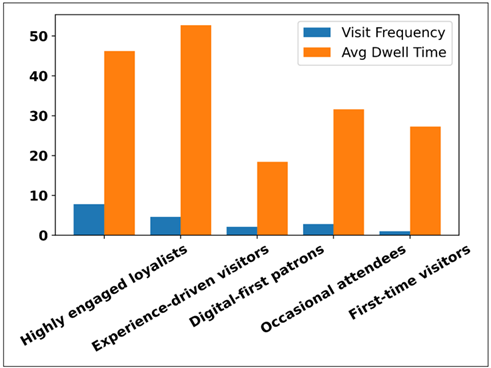
Figure 4 Comparison of Visit Frequency and Average Dwell Time
across Patron Segments
In Figure 4, the relative frequencies of visits and the average time spent in the restaurant are compared based on patron groups, and it can be noted that physical engagement rates varied significantly. The most active loyalists are those who visit regularly with a high dwell rate and visitors who have experience are the ones who visit with the highest dwell rate appearing to have immersed in the exhibitions. Occasional and first-time visitors have lesser visit frequency and moderate dwell time, which implies that there are prospects of enhancing onboarding and experience design to foster repeat visits.
Figure 5 represents the correlation between digital interaction and probability of retention by patron segments. Online patrons demonstrate the best online activity but an average retention, and it is necessary to make them turn online interest into the physical one. The most active loyalists sustain good online communication and retention, whereas the decreasing statistics of the occasional and first-time visitors illustrate the need to pursue specific digital re-visitorship campaigns.
Figure 5

Figure 5 Digital Interaction Versus Retention Probability Across Patron Segments
5.1. Impact of predictive insights on curatorial and marketing decisions
Predictive analytics made a significant difference in the curatorial and marketing decision-making process since it allowed proactive instead of reactive approaches. Forecasts of attendance enabled the curator to match the themes of the exhibition, timing and level of interpretation to the interest of the target audience, thus eliminating uncertainties in the planning of programs. Exhibitions with high demands were assisted with longer periods and complementary events and the programs of less forecast were supplemented with specific outreach and interpretive additions. The marketing teams were also informed by the predictive insights on the best timing, channel, and segments of the market to deploy the campaigns. The institutions did not use holistic, general promotions but rather focused and specific promotional content in line with anticipated responsiveness of the patrons, which increased the response rates and lowered promotion wastage. Forecasting on a scenario basis also allowed trying the different methods of programming and pricing first, reducing operational risk. Notably, such predictive insights generated cross-departmental synergies because the curatorial, education, and marketing departments had a common evidence base on which they made decisions. All in all, predictive analytics turned engagement data into active foresight, institutional agility and alignment of the audience.
5.2. Institutional strategy implications.
The results indicate that evidence-based patron interaction has strong strategic purpose to art institutions. To start with, institutions will be able to abandon their intuitive planning approach in favor of evidence-based governance, enhancing accountability and resource efficiency. Second, segmenting of the audience helps to implement differentiated engagement strategies, which respect various visitor motivations, and this contributes to inclusivity and cultural accessibility. Third, predictive insights help in long-term sustainability by stabilizing the attendance, enhancing membership, and optimizing the marketing investment. Organizational wise, analytics integration promotes the learning culture in which the engagement strategies are reviewed and improved. Notably, explainable and privacy-conscious analytics will make sure that the data-driven approaches are consistent with the institutional values and popular confidence. Art institutionally-wise, those that pursue such structures are in a better place to address evolving trends of cultural consumption, strike a balance between physical and online experiences, and exhibit quantifiable value to funders and stakeholders. All of this adds together to indicate that data-driven engagement is a key facilitator of resilient, audience-centric, and future-ready cultural institutes.
6. Conclusions
This study offers a holistic evidence-based architecture of patron behavior in art institutions in response to the increased complexity of the audience behavior in both physical and virtual space. The paper illustrates that a multi-source data, sophisticated analytics, and explainable machine learning can be effectively used to gain a better insight into the dynamics of engagement between patrons. Major results demonstrate quantifiable benefits in visitor retention, visitor participation, visitor satisfaction and visitor membership renewal, as opposed to the conventional methods of engagement. Predictive analytics and customer segmentation were also found to be quite helpful in recognizing different engagement patterns, as well as proactively making decisions driven by audiences and focusing them on curatorial and marketing efforts. Evidence-based interaction is essential in developing sustainable art system due to the ability to balance institutional provisions and the changing demands of audiences and the efficient use of resources. By converting the engagement information into practical insights, art institutions can become more accessible, inclusive, and culturally relevant, and improve the long-term value index among the population, as well as financial sustainability. Notably, the framework facilitates hybrid participatory modes that strike a balance between face-to-face experiences and online involvement, as it is a modern trend in cultural consumption. Although these contributions are made, there are still limitations. The quality and extent of insights is related to data availability, institutional infrastructure and audience approval. The privacy, transparency, and possible bias related to the ethical considerations should be handled attentively to ensure that the population does not lose trust. It is necessary to use explainable analytics and consent-wise data processing, therefore.
CONFLICT OF INTERESTS
None.
ACKNOWLEDGMENTS
None.
REFERENCES
Bhebhe, S., and Ngoepe, M. (2022). Political and Socio-Economic Dynamics on the Access to Oral Sources at National Archives in Zimbabwe and South Africa. Collections, 18, 176–201. https://doi.org/10.1177/15501906211052716
Chaterera, F., and Rodrigues, A. (2019). Use of Public Programming Strategies in Promoting Access to Documentary Heritage at Zimbabwe National Archives. In P. Ngulube (Ed.), Handbook of Research on Advocacy, Promotion, and Public Programming for Memory Institutions (Chapter 7). IGI Global Scientific Publishing. https://doi.org/10.4018/978-1-5225-7429-3.ch007
Choi, B., and Kim, J. (2021). Changes and Challenges in Museum Management After the COVID-19 Pandemic. Journal of Open Innovation: Technology, Market, and Complexity, 7, 148. https://doi.org/10.3390/joitmc7020148
Christ, A., Penthin, M., and Kröner, S. (2021). Big Data and Digital Aesthetic, Arts, and Cultural Education: Hot Spots of Current Quantitative Research. Social Science Computer Review, 39, 821–843. https://doi.org/10.1177/0894439319888455
Church, E. M., Zhao, X., and Iyer, L. (2021). Media-Generating Activities and Follower Growth Within Social Networks. Journal of Computer Information Systems, 61, 551–560. https://doi.org/10.1080/08874417.2020.1824597
Giannakoulopoulos, A., Pergantis, M., Konstantinou, N., Kouretsis, A., Lamprogeorgos, A., and Varlamis, I. (2022). Estimation on the Importance of Semantic Web Integration for Art and Culture Related Online Media Outlets. Future Internet, 14, 36. https://doi.org/10.3390/fi14020036
Giannakoulopoulos, A., Pergantis, M., Lamprogeorgos, A., and Lampoura, S. (2025). A Data-Driven Approach to Estimating the Impact of Audiovisual Art Events Through Web Presence. Information, 16, 88. https://doi.org/10.3390/info16020088
Harding, C., Liggett, S., and Lochrie, M. (2019). Digital Engagement in a Contemporary Art Gallery: Transforming Audiences. Arts, 8, 90. https://doi.org/10.3390/arts8030090
Khashabi, D., Min, S., Khot, T., Sabharwal, A., Tafjord, O., Clark, P., and Hajishirzi, H. (2020). UnifiedQA: Crossing Format Boundaries With a Single QA System (arXiv:2005.00700). arXiv. https://doi.org/10.18653/v1/2020.findings-emnlp.171
Maluleka, J., Nkwe, M., and Ngulube, P. (2023). Online Presence of Public Archival Institutions of South Africa. Collection and Curation, 42, 88–93. https://doi.org/10.1108/CC-10-2022-0034
Marini, F. (2019). Exhibitions in Special Collections, Rare Book Libraries and Archives: Questions to Ask Ourselves. Alexandria, 29, 8–29. https://doi.org/10.1177/0955749019876122
Ncube, M. M., and Ngulube, P. (2025). Harnessing Data Analytics for Enhanced Public Programming in Archives and Museums: A Scoping Review. Heritage, 8, 163. https://doi.org/10.3390/heritage8050163
Njobvu, B., Hamooya, C., and Mwila, P. C. (2012). Marketing and Public Programming at the National Archives of Zambia. Mousaion, 30, 219–227.
Pergantis, M., Varlamis, I., Kanellopoulos, N. G., and Giannakoulopoulos, A. (2023). Searching Online for Art and Culture: User Behavior Analysis. Future Internet, 15, 211. https://doi.org/10.3390/fi15060211
Saurombe, N. (2020). Taking Archives to the People: An Examination of Public Programs in the National Archives of the Eastern and Southern Africa Regional Branch of the International Council on Archives. ESARBICA Journal, 48, 25–44. https://doi.org/10.1080/01576895.2019.1604242
Saurombe, N. P., and Ngulube, P. (2016). Public Programming Skills of Archivists in Selected National Memory Institutions of East and Southern Africa. Mousaion: South African Journal of Information Studies, 34, 23–42. https://doi.org/10.25159/0027-2639/379
Trichopoulos, G., Konstantakis, M., Alexandridis, G., and Caridakis, G. (2023). Large Language Models as Recommendation Systems in Museums. Electronics, 12, 3829. https://doi.org/10.3390/electronics12183829
|
|
 This work is licensed under a: Creative Commons Attribution 4.0 International License
© ShodhKosh 2025. All Rights Reserved.