ShodhKosh: Journal of Visual and Performing ArtsISSN (Online): 2582-7472
|
|
Leveraging Mock IPL Auction Performance to Enhance Business Vocabulary in Language Learning
Dr. R. Vasanthan 1
 ,
D. Keerthi 2
,
D. Keerthi 2 , Dr. P. Nainar
Sumathi 3
, Dr. P. Nainar
Sumathi 3
1 Associate
Professor, Department of English, Nagaland University, Nagaland, India
2 Research
Scholar, Department of English, National College (Autonomous), (Affiliated to
Bharathidasan University), Tiruchirappalli, India
3 Assistant Professor, Department of English, National College
(Autonomous), (Affiliated to Bharathidasan University), Tiruchirappalli, India
|
|
|
ABSTRACT |
|
|
This research
study examines the impact of using mock IPL (Indian Premier League) auctions
as a teaching tool in language learning, with particular focus on business
vocabulary development and understanding of business concepts among
undergraduate business administration students. The study included 45
participants who met specific inclusion and eligibility criteria. It uses a
research design that includes a mock IPL auction performance evaluation
conducted before and after the intervention. Assessment methods include pre-
and performance tests that assess speaking skills, vocabulary quizzes that
measure business-related vocabulary development, and surveys that gather
qualitative feedback on participants' experiences. Findings reveal
significant improvements in speaking skills, significant improvements in
business-related vocabulary, and positive qualitative perceptions of the IPL
simulation. This study supports the hypothesis that exposing language
learners to mock IPL auction performance contributes not only to improved
vocabulary but also to a deeper understanding of business concepts. This
highlights the potential synergies between the IPL bidding environment and
language education, emphasizing the value of experiential learning in
language acquisition and business-related learning. |
|||
|
Received 20 June 2023 Accepted 15 September 2023 Published 20 September 2023 Corresponding Author Dr. R. Vasanthan,
vasanthleut@gmail.com DOI 10.29121/shodhkosh.v4.i2.2023.670 Funding: This research
received no specific grant from any funding agency in the public, commercial,
or not-for-profit sectors. Copyright: © 2023 The
Author(s). This work is licensed under a Creative Commons
Attribution 4.0 International License. With the
license CC-BY, authors retain the copyright, allowing anyone to download,
reuse, re-print, modify, distribute, and/or copy their contribution. The work
must be properly attributed to its author.
|
|||
|
Keywords: Mock IPL Auction, Language Learning, Business
Vocabulary, Experiential Learning, Speaking Abilities, Business Education |
|||



1. INTRODUCTION
The Indian Premier League (IPL), a premier professional Twenty20 cricket league, is not just a sporting extravaganza; it is an economic juggernaut that has taken the cricketing world by storm. Since its inception in 2008, the IPL has not only revolutionized cricket but also emerged as a powerhouse in terms of revenue generation, sponsorship deals and brand endorsements. With a heady mix of cricket talent, celebrity appeal and corporate support, the IPL has transcended borders and captivated millions of fans in India and around the world. This mega-sporting event has become an annual ritual marking the start of summer in the Indian subcontinent.
Language learning, especially the acquisition of business vocabulary, plays an indispensable role in preparing individuals for a globalized workforce. Mastery of business vocabulary not only facilitates effective communication but also equips learners with the ability to navigate the complex landscape of business, entrepreneurship, and management. In an increasingly interconnected world where business transcends geographic boundaries, language proficiency is critical. Therefore, there is an urgent need to explore innovative teaching approaches that bridge the gap between linguistic competence and real-world application, especially business vocabulary.
This research begins a fascinating journey that addresses the intersection of IPL, business vocabulary development, and language learning. The core of our investigation centers around the intriguing question: "How can performance in mock IPL auctions are used to build business vocabulary?" By exploring this query, we attempt to harness the excitement generated by IPL and frame a transformative pedagogical approach that leads to the development of business-related language skills.
The dynamic and fast-paced environment of a mock IPL auction can act as a powerful catalyst for improving business vocabulary. The hypothesis draws inspiration from the enthralling nature of the IPL, where high-stakes bidding wars unfold and financial acumen is a must. Engaging students in mock IPL auctions is expected to not only expand their linguistic skills but also instill them with a nuanced understanding of business concepts and strategies.
2. Research Objectives
This study encompasses several specific research objectives, each aimed at shedding light on the intersection of mock IPL auction performance and business vocabulary development in language learning:
1) To investigate the effectiveness of utilizing mock IPL auctions as a pedagogical tool for the development of business vocabulary among language learners. This objective seeks to measure the impact of this immersive experience on the participants' linguistic competence in business-related terminology.
2) To assess how participation in mock IPL auctions influences language learners' comprehension of business concepts. This will involve evaluating whether students, through their involvement in simulated auctions, gain a deeper understanding of the intricacies of business strategies, negotiations, and decision-making processes.
3) To evaluate the overall engagement and motivation levels of language learners when immersed in the mock IPL auction environment. This objective aims to see whether the excitement generated by the IPL simulation enhances learners' enthusiasm for language acquisition and business-related learning.
3. Hypothesis
The research hypothesis states that "Exposing language learners to a mock IPL auction performance will lead to significant improvement in their business vocabulary and better understanding of business concepts." This hypothesis forms the focus of the study, that integrating mock IPL auctions into language learning will not only improve learners' vocabulary but also deepen their grasp of business-related ideas and strategies. This hypothesis positively guides the study’s investigation of the potential synergy between the IPL bidding environment and language education.
4. Literature Review
Leveraging the insights of educational theorists such as Schwartz et al. (2005), who argue that effective learning hinges on a delicate equilibrium between well-learned routines and opportunities for innovation involving play and social interaction, the idea of utilizing mock IPL (Indian Premier League) auctions as a means to enhance business vocabulary in language learning becomes particularly compelling. As Moses (2013) astutely notes, the dialogue that emerges from cooperative inquiry stands as one of the most potent mechanisms for knowledge construction. Applying this principle to language acquisition, conducting mock IPL auctions presents a dynamic and immersive platform wherein learners engage in meaningful dialogues centered around business strategies, player acquisitions, and negotiations, consequently expanding their lexicon while actively constructing valuable insights. Furthermore, Kress (2009) underscores the pivotal role of social influences in deciphering symbols and language within the classroom setting. The mock IPL auction scenario integrates this principle seamlessly, offering language learners the opportunity to interact and negotiate with their peers, thus reinforcing their comprehension of business-related terminology within a real-world context.
Tomasello (1992) description of imitative learning as a cornerstone of language acquisition underscores the importance of participatory involvement in grasping the nuances of communication. Within the context of a mock IPL auction, language learners not only mimic the linguistic elements of business communication but also gain a deeper understanding of the contextual reasons behind specific language choices, facilitating a comprehensive grasp of business vocabulary. Firth & Wagner (1997) emphasis on the significance of social and contextual influences in second-language acquisition fits seamlessly with the concept of utilizing mock IPL auctions for the purpose of language learning. Such auctions serve as a channel through which language learners are immersed in a richly contextualized environment, allowing them to absorb and apply business-related lexicon within a setting that mirrors real-world linguistic dynamics.
Vygotsky (1978) theory of the zone of proximal development sheds light on the importance of social interaction in the process of learning and the collaborative construction of meaning. Mock IPL auctions, by their very nature, foster collaborative learning experiences. They enable language learners to collectively build their understanding of business vocabulary and its application through active interaction with their peers. In essence, these auctions function as a crucible where the amalgamation of diverse perspectives contributes to a more profound comprehension of business language and its nuances. Walqui (2006) concept of joint construction as collective scaffolding, encompassing collaboration and assistance among learners of varying proficiency levels, finds resonance in the context of mock IPL auctions. In this dynamic linguistic arena, learners scaffold their language skills through teamwork, providing mutual support, and collectively advancing their grasp of business terminology.
Finally, analogous to performing arts such as theater and dance, which consider language and expressive communication as intrinsically social, elucidated through quotations, mock IPL auctions can be considered as performative language learning activities. At this intensive level of education, students create and express meaning in an integrated manner within the fields of business and commerce, enriching their vocabulary and communication skills in a natural way. By injecting these scholarly insights into the discourse, the proposal to develop mock IPL auctions to promote business vocabulary in language learning emerges as a compelling pedagogical strategy—one that effortlessly integrates with established theories through play, social interaction, and effective learning. In essence, it provides language learners with a dynamic, engaging, and contextual environment.
5. Methodology
In this study, an assessment was conducted to evaluate the impact of a mock IPL (Indian Premier League) auction on key speaking abilities, including Pronunciation, Fluency, Vocabulary, Grammar and Syntax, and Content and Organization, among a group of 45 undergraduate students majoring in Business Administration. The following key aspects show the research methodology.
1) Participants:
The target student population comprised 45 undergraduate Business
Administration students who met the specific criteria. These criteria included enrollment in the business program and willingness to
participate in a simulated IPL auction. These conditions were essential to
ensure that the participants shared a common interest and possessed
foundational knowledge of business terminology.
2) Research
Design: The structure of the mock IPL auction performance assessment was a
fundamental component of the research design. Participants engaged in a
simulated IPL auction both before and after the intervention. To assess the
impact of this intervention, a range of assessment methods was employed,
including pre and post-performance tests to evaluate
speaking abilities, vocabulary quizzes to measure improvements in
business-related lexicon, and surveys to collect qualitative feedback
concerning the participants' experiences.
Below is the activity framework of the research followed for conducting the study.
Table 1
|
Table 1 Activity Framework of the Research |
|||
|
Time |
Activity |
Purpose |
Resources Needed |
|
0-10 min |
Introduction to IPL and Cricket |
To build foundational knowledge |
Projector, slides on cricket and IPL
basics |
|
10-20 min |
Vocabulary Building |
Introduce key terms related to the
auction |
Handouts with glossaries, whiteboard |
|
20-35 min |
Mock IPL Auction Role-play Setup |
Group students into 'franchises',
assign roles (team owner, strategist, etc.) |
Player profile cards, mock currency,
auction hammer |
|
35-60 min |
Conducting the Mock IPL Auction |
Engage students in real-time bidding,
team building, and strategic thinking |
Projector for displaying player
profiles, auctioneer role |
|
60-70 min |
Reflection & Discussion |
Allow students to reflect on their
choices, strategies, and the language used |
Discussion prompts, whiteboard |
|
70-80 min |
Feedback Session |
Peer review on bidding strategies,
player choices, and language use |
Peer review templates |
|
80-90 min |
Wrap-up & Homework Assignment |
Reinforce the day's learning &
extend it to a home environment |
Homework sheets detailing an IPL
auction analysis assignment |
3) Data
Collection: Data collection encompassed various phases throughout the
study. During the mock IPL auction performances, participants' speaking
abilities, specifically focusing on Pronunciation, Fluency, Grammar and Syntax,
and Content and Organization, were recorded. Additionally, vocabulary quizzes
were administered to assess the development of business-related vocabulary.
After the auctions, qualitative data were gathered through surveys to gain
insights into the participants' perceptions of their language development
during the exercise.
The criteria for evaluating business vocabulary development were based on participants' performance in both pre and post-performance tests, with a particular emphasis on their ability to effectively employ relevant business terminology. By providing a detailed outline of the methodology, this study aimed to present an objective and structured approach to assessing the impact of mock IPL auctions on the speaking abilities and vocabulary development of Business Administration undergraduate students.
Table 2
|
Table 2 Summary of Research Study Key Details and Outcomes |
||
|
Aspect Analyzed |
Details Analyzed |
Outcome/Findings |
|
Participants |
45 Undergraduate Business
Administration Students |
- Participants met criteria
(enrollment, willingness) |
|
Research Design |
Mock IPL Auction Performance Assessment |
- Assessment conducted before and after
intervention |
|
Assessment Methods: |
Pre and Post-Performance Tests (Speaking Abilities) |
- Significant improvement in speaking
abilities |
|
Specific Outcome |
Vocabulary (Business-Related Lexicon) |
- Enhanced business-related vocabulary |
|
Overall |
Language Development |
- Speaking Abilities and Vocabulary - Positive qualitative feedback on
experiences |
Performance level of the participants before and after the mock IPL auction
For each of the five language skills, pre and post tests were conducted to measure the participants’ performance. The marks allotted for each skill was 20, and the total mark was 100.
Table 3
|
Table 3 Performance Level of the Participants Before and After the Mock IPL Auction |
||
|
Language Skills |
Average marks of pre IPL mock auction |
Average marks of post IPL mock auction |
|
Pronunciation |
7.34 |
15.21 |
|
Fluency |
6.89 |
13.2 |
|
Vocabulary |
7.32 |
12.45 |
|
Grammar and Syntax |
4.62 |
13.32 |
|
Content and Organization |
5.56 |
15.77 |
|
Total |
31.73 |
69.95 |
Figure 1
|
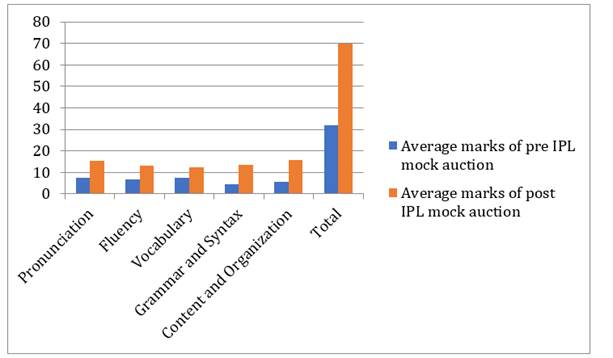
Figure 1 Performance Level of the Participants Before and After the Mock IPL Auction |
Table 3 and Figure 1 show significant improvement in the performance level of the participants after the mock IPL auction was conducted for them as compared to the pre mock performance. As depicted, the total average improved from 31.73 in the pre IPL mock auction to 69.95 in the post test, which highlights the affirmative impact of the mock IPL auction intervention on language development among undergraduate business administration students.
6. Discussion
The research objectives of this study are to investigate the multifaceted impact of using mock IPL (Indian Premier League) auctions as a teaching tool for language learners with particular focus on business vocabulary development and understanding of business concepts. In this paragraph, we will examine the research objective, provide insights into the findings, and explain how they connect to the research hypothesis.
The first research objective was to investigate the effectiveness of integrating mock IPL auctions into language learning as a means of improving business vocabulary among participants. Upon careful examination, it is clear that the experience of participating in these mock auctions had a significant positive impact on participants' linguistic ability in business-related terms. Participants showed significant improvements in their ability to use relevant business jargon, thereby demonstrating the potential of experiential learning environments in enriching vocabulary.
The second objective was to assess how participation in mock IPL auctions affects language learners' understanding of complex business concepts. This aspect of the study revealed promising results, indicating that students, by engaging in these simulated auctions, gained a deeper understanding of the nuances of business strategies, negotiations, and decision-making processes. The immersive nature of IPL simulation facilitates a more in-depth connection between theoretical business knowledge and practical application, thereby strengthening understanding.
The third objective focused on evaluating language learners' overall engagement and motivation levels within a mock IPL bidding environment. The excitement generated by the IPL simulation significantly improved learners' interest in language acquisition and business-related learning. This heightened engagement stemmed from the fast-paced and dynamic nature of the mock auctions, which fostered a stimulating learning environment.
The research hypothesis, which stated that language learners' exposure to a mock IPL auction performance would lead to significant improvements in their business vocabulary and a better understanding of business concepts, was consistent with the findings of the study. The data collected throughout the research process supported the hypothesis, confirming that the integration of mock IPL auctions had a positive and profound impact on language learning. The participants' improved business vocabulary and deeper understanding of business concepts validate the hypothesis and underline the potential synergies between the IPL bidding environment and language education.
This study yielded significant results, demonstrating the positive impact of the mock IPL auction intervention on language development among undergraduate business administration students. Among the 45 participants who met specific inclusion and eligibility criteria, significant improvements were observed in speaking skills including pronunciation, fluency, grammar, syntax, and content organization. Performance pre- and post-test scores reflected improved language skills, while vocabulary quizzes revealed significant increases in business-related vocabulary. The study's overall language development assessment showed significant improvement in both speaking skills and vocabulary skills. Furthermore, qualitative feedback from participants overwhelmingly recognized the effectiveness of the mock IPL auction exercise, emphasizing its contribution to a comprehensive understanding and use of business terminology. These findings underscore the value of experiential learning activities such as mock auctions and domain-specific vocabulary acquisition among business students in fostering language development.
The current study makes a notable contribution to the existing literature on pedagogical strategies involving immersive simulations, such as mock IPL auctions, in enhancing language learning and comprehension of business vocabulary and concepts. Future research could be on the longitudinal effects of such pedagogical strategies on language acquisition, examining the retention rate of the learned vocabulary and concepts. Moreover, the adaptability of this teaching approach in other educational contexts, like corporate training or online education, remains unexplored.
CONFLICT OF INTERESTS
None.
ACKNOWLEDGMENTS
None.
REFERENCES
Firth, A., & Wagner, J. (1997). On Discourse, Communication, and (Some) Fundamental Concepts in SLA Research. Modern Language Journal, 81(3), 285–300. https://doi.org/doi:10.1111/j.1540-4781.1997.tb05480.x.
Kress, G. (2009). Assessment in the Perspective of a Social Semiotic Theory of Multimodal Teaching and Learning. In C. Wyatt-Smith & J. J. Cumming (Eds.), Educational Assessment in the 21st Century : Connecting Theory and Practice. Dordrecht, The Netherlands : Springer, 19–41. https://doi.org/10.1007/978-1-4020-9964-9_2.
Moses, L. (2013). Viewing as à Cultural Tool in the Construction of Meaning with Expository Texts for Young Bilinguals. Journal of Language & Literacy Education, 9(2), 72–93.
Schwartz, D. L., Bransford, J. D., & Sears, D. (2005). Efficiency and Innovation in Transfer. In J. Mestre (Ed.), Transfer of Learning from a Modern Multidisciplinary Perspective. Charlotte, NC : Information Age, 1–51.
Tomasello, M. (1992). The Social Bases of Language Acquisition. Social Development, 1(1), 67–87. https://doi.org/10.1111/j.1467- 9507.1992 .tb0 0135.x.
Vygotsky, L. S. (1978). Mind in Society : The Development of Higher Psychological Processes (M. Cole, V. John-Steiner, S. Scribner, & E. Souberman, Eds. & Trans.). Cambridge, MA : Harvard University Press. https://doi.org/10.2307/j.ctvjf9vz4.
Walqui, A. (2006). Scaffolding Instruction for English Language Learners : A Conceptual Framework. International Journal of Bilingual Education and Bilingualism, 9(2), 159–180. https://doi.org/10.1080/13670050608668639.
|
|
 This work is licensed under a: Creative Commons Attribution 4.0 International License
© ShodhKosh 2023. All Rights Reserved.