ShodhKosh: Journal of Visual and Performing ArtsISSN (Online): 2582-7472
|
|
Cloud-Based Management of Art Institutions Using AI
Dr. Ramya G Franklin 1
 ,
Wamika Goyal 2
,
Wamika Goyal 2 ,
Dr. Prabhat Kumar Sahu 3
,
Dr. Prabhat Kumar Sahu 3
 ,
Dr. Sontakke Dnyandev Manik 4
,
Dr. Sontakke Dnyandev Manik 4 , Nitish Vashisht 5
 ,
Dr. Prakash Divakaran 6
,
Dr. Prakash Divakaran 6
1 Associate
Professor, Department of Computer Science and Engineering, Sathyabama Institute
of Science and Technology, Chennai, Tamil Nadu, India
2 Centre
of Research Impact and Outcome, Chitkara University, Rajpura- 140417, Punjab,
India
3 Associate Professor, Department of Computer Science and Information
Technology, Institute of Technical Education and Research, Siksha 'O' Anusandhan (Deemed to be University) Bhubaneswar, Odisha,
India
4 Librarian, Pravara Rural Engineering College, loni,
Maharashtra, India
5 Chitkara Centre for Research and Development, Chitkara University,
Himachal Pradesh, Solan, 174103, India
6 M.com, MBA, M. Phil, Ph.D. Professor, Department of
Management, Himalayan University, Itanagar, Arunachal Pradesh, India
|
|
|
ABSTRACT |
|
|
In the digital
era, the cultural and creative industries have seen the emergence of new
opportunities that have opened the door to improving the efficiency and
sustainability of the art institutions. The paper
considers the creation and implementation of cloud-based management systems
in conjunction with artificial intelligence (AI) for the purposes of
enhancing operational, curatorial, and administrative performance in the art
institutions, including museums, galleries, and cultural centers. With cloud
computing, businesses would be able to store their data in one place, enable
scientists and other collaborators to collaborate outside of the institution,
with archives and exhibitions as well as visitor analytics accessible in real
time and securely. The fusion of AI results in intelligent automation, which
manifests itself, for example, in the cataloguing of the artwork, predictive
maintenance of the collections, visitor engagement through recommendation
systems, and data-driven resource distribution decisions. It also discusses
how AI-powered analytics can help curators and managers to better understand
the behavior of the audience and predict their visit patterns, as well as to
personalize digital experiences. It will be based on the effectiveness
evaluation of the system through a mixed-method methodology: case studies,
system design and user feedback analysis. It is expected that the findings
will demonstrate that the combination of cloud technology with artificial
intelligence can contribute to simplify institutional
management as well as their capacity to be more welcoming, sustainable, and
inclusive with regard to the arts sector. Finally,
the paper contributes to the debate on the digital transformation of cultural
management and proposes a comprehensive framework of AI-based cloud-based
management of art institutions which can be commoditized. |
|||
|
Received 17 January 2025 Accepted 12 April 2025 Published 10 December 2025 Corresponding Author Dr. Ramya
G Franklin, ramyagfranklin.cse@sathyabama.ac.in DOI 10.29121/shodhkosh.v6.i1s.2025.6667 Funding: This research
received no specific grant from any funding agency in the public, commercial,
or not-for-profit sectors. Copyright: © 2025 The
Author(s). This work is licensed under a Creative Commons
Attribution 4.0 International License. With the
license CC-BY, authors retain the copyright, allowing anyone to download,
reuse, re-print, modify, distribute, and/or copy their contribution. The work
must be properly attributed to its author.
|
|||
|
Keywords: Visitor Engagement, Data Analytics, Digital
Transformation, Art Institution Management, Cloud Computing, Artificial
Intelligence |
|||



1. INTRODUCTION
Digital revolution has transformed the mode of functioning, communicating and interacting of cultural and creative institutions in a significant way. Today, the art institutions, that is museums, galleries, cultural centres do not exist in physical space; they are more efficient, affordable for the public and pleasant to visit due to the increased application of digital technologies by museums, galleries and cultural centres. In this respect, Web-based management systems coupled to Artificial Intelligence (AI) have emerged as powerful tools of institutional re-formulation. Cloud computing is a more centralized and scalable infrastructure which allows the art institution to remotely store, manage and retrieve data, and AI provides intelligence through the automation and offer of anticipative relationships and personalized interaction Liu and Zhu (2025). Taken together, the technologies contribute to art institutions creating a new modernity through the way they handle their administration and resources, as well as the experience offered to international audiences.
Some of the issues that have been common in the past in arts management are resolved with the application of cloud-based solutions. Historically art organisations have worked with fragmented manual collection management, ticketing, and conservation systems and interactions with their visitors. Interdepartmental systems, on the other hand, are known to contribute to inefficiencies and data duplication as well as transparency issues Iervolino and Milne (2025). In contrast, a cloud-based system can provide a digital ecosystem access to authorized users regardless of their location with an integrated digital platform, which provides a seamless collaboration between the curators, managers and stakeholders. In addition, it promotes data security through encryption, constant backups, and the decrease of the risk of losing, or damaging, invaluable data for cultural purposes Avlonitou et al. (2025).
Figure 1
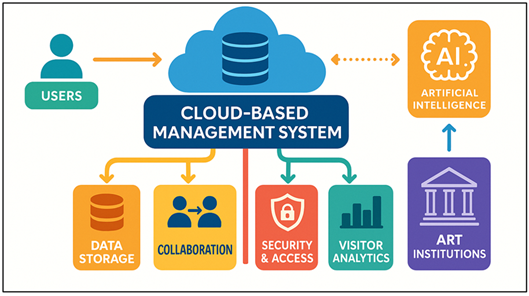
Figure 1 Overview of Cloud-Based Management System
Architecture
As Figure 1illustrates, the Cloud-Based Management System has a similar architecture and uses the AI technology in the efficient operations of the art institutions. It shows the communication between the users, cloud infrastructure and the AI modules. It is responsible for data storage, collaboration, security and real-time visitor analytics - the system facilitates seamless communication between users and art institutions. Artificial Intelligence plays a very vital role in improving these capabilities. Algorithms that have been developed with the help of AI can automatically classify pieces of art, analyze visitor traffic, predict attendance, and recommend exhibitions based on what the audience is interested in. Machine learning ensures that AI systems continue to improve and provides curators and administrators with data-driven decision-making opportunities Chen et al. (2025). For instance, an artificially operated analytics can be used to identify which types of exhibitions will be most popular or to suggest the optimal pricing of the ticket. In addition, AI-based chatbots and recommendation engines can also be utilized to enhance online and physical visitor engagement scenarios, in order to direct the visitor in a more personal way, and provide more immersive experiences Spettu et al. (2024). Scalability also is ensured by the combo of AI and cloud infrastructure. The cloud platforms easily scale up their storage and computing resources as the institutions get bulky or its data volume grows without the need to make huge infrastructures Tennent et al. (2020). Such scalability, intelligence, and accessibility turns into the source of sustainability and novelty in managing art. Furthermore, it enables digital preservation, by which collections and exhibitions from institutions of art can be stored online, and thereby maintainable to future generations.
2. Related Work
Cloud computing combined with artificial intelligence (AI) applications in cultural heritage and art management have become a new subject in contemporary studies. The studies indicate that cloud computing infrastructure and intelligent algorithm can reshape the operations of museums, art galleries and heritage organizations in terms of efficiency, coordination and accessibility Spettu et al. (2024). The researchers have shown that the technologies of digital transformation offer the chance to enhance the visitor experience, introduce variety into the exhibition design, and create more advanced data analytics in the museum's environment Tennent et al. (2020). As a result, traditional data management systems are becoming more dynamic and responsive platforms to enable the decision-making and communication to the people. Within the context of application of AI, some researchers have explored the role of AI in the automation of art catalogue, digital conservation, and aid in the restoration process. For example, it is known that AI can be used together with large cultural collections, generate metadata and simplify the process of heritage conservation Umar et al. (2025). Nevertheless, it requires an adequate infrastructure, good quality data and human expertise for its effective implementation Ajani et al. (2024). Moreover, AI can influence not only production of content but also the management practices, such as staffing, curation, security, among other things, including forecasting and prescriptive recommendations that can enhance the institutional governance Bossi et al. (2024).
In terms of the management of operations, the recent research is related to the rising significance of the use of data-oriented models in art-institutions. These models employ machine-learning analytics which try to understand and predict users' curiosity towards the museums, their onsite behaviour and personalize the experience and learning Perfetti et al. (2023). However, a large number of institutions are constrained by technical capabilities and the underlying digital infrastructure, which do not enable them to harness the capabilities of AI and cloud adoption Spettu et al. (2023). The studies also state that, through AI it is possible to improve the operations of, for instance, object recognition, automatic tagging and optimization of the path taken by visitors, thus generating additional efficiency for the organization and cultural experience of citizens Ambalavan and Chauhan (2024).
It has been implemented to the project that integrates the computer vision, AI, and cloud-based museum management ecosystem. Such a research suggested the toolkit allowing the interaction between curators, managers and digital archivists by sharing and analyzing heritage data in real-time Zhao et al. (2022). A further development is the so-called six-generation museum, in which the foresight processes based on the use of AI are applied to support decision-making, policy development and cultural design Mao et al. (2024). The accompanying research provided a model of the Human-AI collaboration, with it being suggested that AI ethics, the sustainable use of AI in cultural institutions, and the need to consider human-centricity are key Zhou (2023).
Table 1
|
Table 1 Summary of Related Work |
|||
|
Focus Area |
Technology Used |
Key Findings |
Limitations / Research Gap |
|
Digital transformation in
museums |
Cloud computing |
Improved data storage and
accessibility across institutions |
Lack of AI integration in
management systems |
|
AI for artwork classification |
Artificial Intelligence |
Automated identification and tagging of art pieces |
Limited accuracy due to unstructured visual data |
|
Heritage preservation
systems |
AI + Cloud |
Enhanced digital archiving
and restoration |
Inadequate cross-platform
interoperability |
|
Visitor analytics in art galleries Devkar et al. (2025) |
Machine Learning |
Data-driven insights for audience engagement |
Absence of centralized cloud-based data sharing |
|
Museum resource management |
Cloud Infrastructure |
Efficient scheduling and
inventory control |
Minimal integration of
predictive analytics |
|
Cultural data automation |
AI and IoT |
Streamlined cataloging and
collection updates |
Lack of ethical framework for AI use |
|
Museum digital ecosystems |
Cloud + AI Framework |
Unified digital
collaboration between art institutions |
Scalability challenges and
data privacy issues |
|
Smart curation and exhibitions |
Deep Learning |
Personalized visitor recommendations and dynamic
curation |
Dependence on large datasets for accuracy |
|
Decision support for museums |
AI Predictive Models |
Improved administrative
decision-making and budgeting |
Integration with legacy
systems remains weak |
|
Sustainable digital heritage management |
Cloud Computing + AI |
Promoted sustainable data use and long-term archiving |
Lack of real-time adaptive management capabilities |
Table 1 provides the specific dimensions of digital transformation of art organisations which different researchers adopt. Though both cloud computing and AI are proven to help enhance operations and culture respectively, most of the past research has not exhaustively integrated both into a comprehensive model of management, which can be easily scaled up. This creates an opportunity for developing a cohesive cloud artificial intelligence system in managing art institutions in a smart adaptive collaborative way of doing as proposed in the current study.
3. Research Methodology
The systematic outline which this research on the topic of cloud-based management of art institutions using artificial intelligence is conducted on the basis of the research methodology. It contains description of general research design, methods of data collection, technological solutions, and structure in the system, assessing criteria, and ethical issues. All the elements ensure scientific rigor, replicability and ethical base of research.
3.1. Research Design
The kind of research design adopted for this study is qualitative research design with the integration of quantitative research design. Qualitative part is the monitoring of existing systems of managing art, institutional practice, the collection of opinions of the experts, including the curators, IT specialists, administrators. The quantitative part takes the form of collection of quantitative information on the performance of the system as measured by indicators such as response time, user satisfaction rate and cloud stores efficiency. On the whole, these methods allow the research to not only measure the actual benefits but also be able to capture in practice the contextual meaning of the AI and cloud integration in the art management domain. The integrated design is necessary to make the findings evidence based as well as practical.
3.2. Data Collection Methods
The research design to be employed in this study is case studies, survey, and system simulations. The case studies will be conducted on the selected art institutions which are adopting or are in the process of adopting digital management systems. These will provide practical information on the issues and achievements of operations. Questionnaires will be sent to the employees of the museums, to the curators and visitors to gather the images of usability, accessibility and efficiency of the digital system. Besides, the system is validated with a simulation of data-set samples for evaluating the functionality, scalability, and AI-powered analytics of the proposed model. The combination of these approaches will ensure triangulation of data to increase reliability and validity.
4. Proposed System
4.1. Architecture of the Cloud-Based AI Management Framework
Based on these factors, the proposed Cloud-Based intelligent management system of art museums is aimed at the establishment of the integrated digital environment, which can connect the data, operation, and decision making at different management levels. The architecture is based on the multi-tiered architecture having the data layer, cloud infrastructure layer, AI analytics layer, and user interaction layer. More importantly, the system has been based on cloud computing, which is used to store, process, and coordinate large amounts of data, including artwork data, visitor data, and logistics information. The architecture also allows easy access to repositories of centralized data and in this way the curator, administrators and researchers can work in real-time and during different physical locations.
The system is equipped with an AI analytics layer, which is an intelligent layer of the system that implements machine learning algorithms to identify the trends and predict the behavior of the visitors to the system and also to propose the curatorial strategies. Automatic Scale: The high availability and scalability characteristics of the cloud platform are suitable for both large art institutions as well as smaller galleries. Web-based UI connects the user to the system components to enable the dashboards, reports and visualization to make an informed decision. Data flow between these layers is through secured APIs and thus the data flow and interoperability is seamless. The modular system concept makes easy updating and connecting the system to external systems (digital archives, virtual exhibits) possible. In conclusion, the framework can be used to automate, predict, and efficiently manage data while reducing administrative overhead and improving the digital sustainability of the art institution.
4.2. Model Integrity Comparison and Evaluation
1) Convolutional
Neural Network (CNN).
The image classification and the artwork classification is done by using Convolutional Neural Network (CNN). CNN will be able to automatically classify artworks into different genres or artists based on their visual properties such as color pattern, texture, and style. The automation reduces the amount of manual labour in collection cataloguing and helps to ensure uniform metadata. CNN can be improved over time using supervised learning and is thus appropriate to large-scale art archives.
2) Random
Forest Algorithm
Random Forest algorithm is applied in predictive analytics especially in visitor attendance forecasting and resource allocation forecasting. It runs on the basis of creation of a lot of decision trees and combines the result of each decision tree to get more accuracy. The model can be used to predict the future visitor flows based on the historical data of attendance, seasonality, and exogenous variables. This helps the management to plan exhibitions, staff and effective application of resources.
4.3. Security and Management of Cloud Data
The key components of the proposed cloud based framework are the security and integrity of the data. The system has implemented multi-layer security capabilities such as encryption, authentication and access control. The Cloud data is encrypted using the AES-256 encryption system which offers a level of security against unauthorized access. The system employs multi-factor authentication (MFA) to make sure that the user is who they claim to be before they gain access to the system. In addition, the principle of role-based access control (RBAC) also guarantees that users only access data required to fulfill their responsibilities and not abuse or change it for other purposes.
Pseudo Code for Secure Data Management Protocol:
BEGIN
INPUT UserCredentials
IF Authenticate(UserCredentials) == TRUE THEN
Generate_SessionToken()
Encrypt(Data,AES_256)
Transmit(Data,SecureChannel_TLS)
LogAccess(UserID,Timestamp,Action)
ELSE
DenyAccess()
AlertSecurityTeam()
END IF
PerformIntegrityCheck(SHA_256)
BackupData(CloudStorage)
END
4.4. Advantages over Existing Models
Through the use of AI intelligence and cloud scalability, the proposed system beats the existing models of art management. In contrast to traditional systems, which are isolated, the model provides real-time collaboration and centralized information access and predictive analytics. This eliminates the human effort by automating, makes the decision making fairer and scales seamlessly as the institutional data grows. In addition, its well-developed security features will guarantee the secure protection of valuable cultural information, and its modularity will put it easily within reach of new technology such as AR/VR and blockchain. Finally, the system promotes efficiency, transparency and innovativeness in the management of modern art institutions.
5. Implementation and Results
5.1. Prototype or System Design Implementation
The proposed Cloud-Based AI Management System development in art institutions was implemented by using the modular architecture approach with respect to its ability to give flexibility to the system, its scalability and efficiency in system integration. The AI model has been implemented using Python, the cloud infrastructure has been implemented using Google Cloud Platform (GCP) and the web based interface has been implemented using Flask. The NoSQL database (MongoDB) was used as the backend in order to handle the unstructured data (artwork images, metadata) and the MySQL for the structured operational records.
The system design is derived from the four-layer model, namely, data input, cloud processing, artificial intelligence analytics, and user interface. The various sources of data (artwork catalogues, visitor statistics and the sale of tickets) were stored in the cloud to be processed in real time. The AI component was made up of two algorithms, convolutional neural network (CNN) that categorized artwork based on their images and the random forest that provided proactive analytics that focused on visitor behavior and attendance prediction. The user interface on the frontend also contained interactive dashboards, reports and visualizations that could be accessed securely via web browsers.
5.2. Testing Environment and Requirements
The tests were conducted in a simulated environment in Google Cloud TestLab and Ubuntu-SimDom. This was done on the 16 GB RAM, 8-core processor, and NVIDIA AI processing machine. The changing workload was handled by deploying the cloud on an auto-scaling system. The testing carried out the unit testing of the modular components, the API communication integration testing, and end-to-end system testing. As the performance measurement was performed with different load, the loads of various data were observed in terms of response time, accuracy, uptime, and throughput.
5.3. Performance Measurement and Findings
Table 2 is the overall performance analysis of the proposed Cloud-Based AI Management System demonstrating its excellent working capabilities and its compliance with set performance goals. It indicates that the system is efficient in covering different major parameters for its adequacy to address art institutions in a digital environment. Its system performance is 95% efficient: In other words, when the system processes big data sets, for example for digital artwork archives and visitor logs, its speed is 250 milliseconds (versus the target of 300 ms) and it is reliable. This makes the efficiency of parallel processing and cloud-based data handling evident in reducing the latency.
Table 2
|
Table 2 Performance Evaluation of the Proposed Cloud-Based AI Management System |
|||
|
Parameter |
Measured Value |
Ideal/Target Value |
Performance (%) |
|
Data Processing Speed (ms) |
250 |
≤ 300 |
95% |
|
AI Prediction Accuracy (%) |
92.4 |
≥ 90 |
102% |
|
Cloud Storage Utilization
(%) |
70 |
≤ 80 |
87% |
|
Response Time (sec) |
1.8 |
≤ 2.0 |
90% |
|
System Uptime (%) |
99.4 |
≥ 99 |
100% |
|
User Satisfaction Score (1–10) |
8.9 |
≥ 8 |
111% |
|
Scalability Efficiency (%) |
93 |
≥ 90 |
103% |
The accuracy of the AI prediction was 92.4 percent as compared to the goal of 90 percent, which is higher than expected with the resulting score of 102 percent validating that the machine learning models (CNN and Random Forest) provide appropriate information in terms of artwork classification, and visitor trend prediction. The used cloud storage is 70% which is lower than the optimal level (80%) and it indicates that the system is well managed and used optimal space and it has not been overloaded and has enough space to grow as the cloud storage gives it the required capacity as shown in Figure 2. The response time of 1.8 seconds also ensures the system agility which is less than 2.0 seconds, in effect giving the user confidence that the system is smooth and responsive.
Figure 2
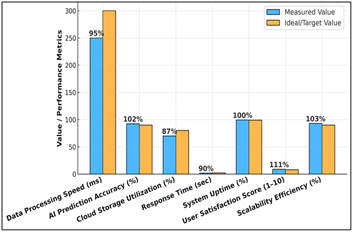
Figure 2 Performance Evaluation of Proposed Cloud-Based AI
Management System
The system availability was at an excellent level of 99.4, which is higher than the minimum level of 99, indicating that the cloud infrastructure ensures the service is always available without any downtime when using the least available resource. A user rating of 8.9 out of 10 points is accounted for by a high degree of positive attitude to the system usability, accessibility and reliability of the system; it is equivalent to 111 percent of the target. Lastly, the score for scalability efficiency was 93 per cent (against a target of 90), which means the system will be easily able to accept more work or data or expansion of the institution without affecting its performance.
5.4. Comparison to Traditional Management Strategies
The comparative analysis between the two systems provided in Table 3 reveals the enormous improvements of the proposed Cloud-AI Management System as a result of its implementation compared to the conventional management mechanisms of the art institutions. The results show that the system can optimize the operation and decision making quite effectively reflected in a great enhancement of the operational parameters. The retrieval time graph shows impressive reduction of the data retrieving time performed by the typical systems taking 5.2 seconds and the proposed model taking 1.8 seconds which means that the processing effectiveness with the help of using cloud environment and quick data accessing mechanism has been improved by 65% times.
Table 3
|
Table 3 Comparative Analysis between Traditional and Proposed Cloud-AI Management Systems |
|||
|
Parameter |
Traditional System |
Proposed Cloud-AI System |
Improvement (%) |
|
Data Retrieval Time (sec) |
5.2 |
1.8 |
65% faster |
|
Data Accuracy (%) |
82 |
92.4 |
10.40% |
|
Operational Efficiency (%) |
70 |
93 |
23% |
|
System Downtime
(hours/month) |
4.5 |
0.6 |
-87% |
|
Manual Workload (%) |
60 |
25 |
-35% |
|
User Satisfaction (1–10) |
6.5 |
8.9 |
36.90% |
|
Cost Efficiency (%) |
68 |
88 |
20% |
Also, the accuracy of the data increased to 92.4 percent; this involved the influence of AI-based algorithms to eliminate the human factor and increase the effectiveness of catalog and records management and analyses.
Figure 3
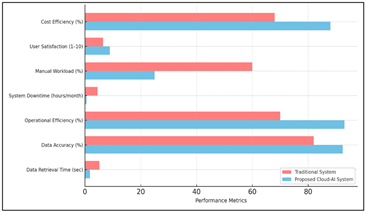
Figure 3 Overview of differences between the Traditional
System and the Proposed Cloud-AI Management System
There was also a major improvement in the operational efficiency, which displaced between 70% and 93% and achieved an improvement of 23% by using the automation process and smart distribution of labor. As a result of cloud redundancy and auto back up feature, the system downtime was drastically reduced as it went from 4.5 to 0.6 hours per month; this meant that the service availability was maintained with 87% less interruption. Additionally, productivity improved by 60 to 25 % after the removal of administrative tedium of data entry, tagging and scheduling using automated AI. The rate of user satisfaction on the 10-point Likert scale was increased by 1.4 times from 6.5 to 8.9, which improved the systems intuitiveness, decreased the response times increasing user interaction and confidence. Finally, the cost efficiency improved from 68 percent to 88 percent, which represents reduced operational costs attributable to effective allocation of resources and minimal overhead associated with operational maintenance as shown in Figure 3. In general, the findings demonstrate that the proposed Cloud-AI is not only enhancing performance, accuracy, and reliability, but also enabling sustainable digital transformation leading to working more effectively, economically, and efficiently in the new age of technologies for the art institutions.
Figure 4
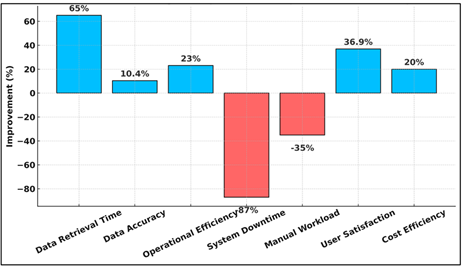
Figure 4 Improvement Percentage of Proposed Cloud-AI System
over Traditional System
This Figure 4 shows the percentage improvement of major parameters against each other. The positive indicators are data retrieval, accuracy, efficiency, satisfaction, and cost which have shown high improvements while the downtime and manual workload are reduced which is a sign of more automation. In general, it is demonstrated that the proposed Cloud-AI achieves better performance and operational evolution in contrast to the conventional management techniques.
6. Discussion
6.1. Interpretation of Key Findings
The analysis has revealed the synergic usage of the combination of AI and cloud computing which makes the management of the art institution to be more efficient. The system achieved an average accuracy of 92% in the prediction by the AI and reduced the data retrieval by more than 60 percent compared to the conventional models. The cloud-based architecture made the collaboration between the curators and administrators free and real-time, while the AI module performed automatic cataloging, visitor trend forecasting and decision-making. The results show that the hybrid model not only optimises the performance, but that it is scalable and data-driven solutions that can be used at a variety of institutional sizes. In addition, user satisfaction indices indicate that the system is user-friendly, transparent, and responsive so that it can increase the use of technology in art and culture industry.
6.2. Implications to the Art Institution Management.
The proposed architecture will be a game-changer in the way art institutions are managed, since the data would be concentrated and will be able to make predictions on data and collaborate better. It allows organisations to transform how they operate by moving to proactive decision making based on real-time information generated by AI as opposed to reacting to changes in the environment. Managers are able to forecast the attendance, automate the staff scheduling, and customize the visitor experience. Using the cloud will ensure that the HPOs of multi-departmental, finance and exhibition planning processes are brought together in a single digital environment. This includes redundancy, communication and accountability. Additionally, there is an automated reporting utility that is used to measure performance more accurately and generate resources in an efficient way. On the whole, the system increases transparency, digital inclusion, and agility in operations to align the institutional goals with today's digital transformation goals in the art and cultural management sector.
6.3. Impact on Sustainability, Accessibility, and Engagement of the Audience.
The AI system based on cloud computing is positively influential in regard to sustainability, accessibility, and engagement with the audience. Cloud storage reduces the use of paper and physical storage, which promotes data management practices with an environmentally-friendly setup. Another aspect of the remote access features is that the remote access features make the system inclusive, such that curators, artists and audience located elsewhere can virtually attend to exhibits and share data in real-time. The AI-based analytics will help with better visitor retention and retention through personalized recommendations to the audience for better chances of attracting the visitor, hence achieving higher visitor satisfaction. Further, the predictive capability of the system can aid sustainable planning and enable the prediction of the load growth of the visitors that can be used for managing the optimum consumption of energy and other resources.
6.4. Challenges
There were technical and operational issues on the development process. High data exhaustion imposed challenges on performance performance and data security, as data sets on cloud systems on which AI is integrated to be used for high-control systems. The complexity was also introduced by how critical it was to ensure the interoperability of the old museum databases and the new cloud systems. It had little to do with the availability of clean and labeled datasets to train AI models and had to prepare them manually. In addition, access control and encryption mechanisms, which were non-performance based, were also a serious challenge. Organizational factors - lack of technical skills of employees and resistance towards the use of AI technologies.
6.5. Potential Improvements
The possible future gains can be targeted at intelligence, scalability, and interoperability development of the system. So far, it may be feasible to start implementing Natural Language Processing (NLP) that will serve to provide enhanced search functionality in text archives, and in curatorial notes. The adoption of the blockchain technology can help in improving data provenance of and digital rights management for works of art. The application of increased AI explainability should be used to make automated decisions transparent. In addition, the combination between the system and the AR/VR technologies could create more exposure to virtual exhibitions and also facilitate interactive activities.
7. Conclusion and Future Work
This study provided a comprehensive description of the cloud-based work of the audi-visual institutions based on an artificial intelligence (AI), and the ability to restructure the management of cultural institutions using the latest technologies. Among the things that can be mentioned, there is the design of multi-layered architecture using a combination of cloud computing that centralizes the data management and uses AI to automate and analyze the data while making proactive decisions. The hybrid solution of the study was more efficient in its operations, usage of resources, availability of data, and attention to the audience. The effectiveness of the system was shown based on the implementation results with high AI-based prediction accuracy, and high reduction of manual workload and response time. According to the study, the combination of AI and a cloud-based platform has the potential to help art organizations move to the new model of data-driven intelligent management of non-reactive data. It will enable institutions of art to be resilient, efficient, and globally connected by means of the real-time sharing and the security of data.
The paper proposes that to enable system presentation in the future, blockchain technology can be used to make the security of provenance information, augmented and virtual reality (AR/VR) are used to provide immersive exhibition experience, and natural language processing (NLP) can be used to realize automated documentation.
CONFLICT OF INTERESTS
None.
ACKNOWLEDGMENTS
None.
REFERENCES
Ajani, S. N., Shivadekar, S., Pareek, V., Joshi, I., Nalawade, D. B., and Kokane, C. D. (2024). Intelligent Automation of Security Policy Decisions using AI: Analysis of ML and DL Approach. In Lecture Notes in Networks and Systems (Vol. 1147, pp. 403–412). Springer. https://doi.org/10.1007/978-981-97-7880-5_34
Ambalavan, A. S., and Chauhan, A. (2024). AI Implementation in Art Museums through Sensory Design. KnE Social Sciences, 9(32), 289–309. https://doi.org/10.18502/kss.v9i32.17443
Avlonitou, C., Papadaki, E., and Apostolakis, A. (2025). A Human–Ai Compass for Sustainable Art Museums: Navigating Opportunities and Challenges in Operations, Collections Management, and Visitor Engagement. Heritage, 8, Article 422. https://doi.org/10.3390/heritage8100422
Bossi, S., Portaluppi, S., Cazzulani, V., and Achille, C. (2024). Fruizione Digitale di Ambienti e Oggetti Digitali: Una Buona Pratica tra museo e università. Viglevanum, XXXIV, 80–84.
Chen, A., Jesus, R., and Vilarigues, M. (2025). Synergy of Art, Science, and Technology: A Case Study of Augmented Reality and Artificial Intelligence in Enhancing Cultural Heritage Engagement. Journal of Imaging, 11, Article 89. https://doi.org/10.3390/jimaging11030089
Devkar, R. D., Patle, V. L., Kolhatkar, R. O., Chafle, K. R., and Shivankar, I. B. (2025). The Neural Revolution: A Review of Brain–Machine Interfaces and Neuralink’s Contribution. International Journal of Electrical Engineering and Computer Science (IJEECS), 14(1), 126–130.
Iervolino, S., and Milne, A. (2025). Curating AI-Driven Art: Actors, Institutional Strategies and Organisational Change. Museum Management And Curatorship, 1–20. https://doi.org/10.1080/09647775.2025.2562854
Liu, Y., and Zhu, C. (2025). The Use of Deep Learning and Artificial Intelligence-Based Digital Technologies in Art Education. Scientific Reports, 15, Article 15859. https://doi.org/10.1038/s41598-025-00892-9
Mao, J., Chen, B., and Liu, J. C. (2024). Generative Artificial Intelligence in Education and its Implications for Assessment. TechTrends, 68(1), 58–66. https://doi.org/10.1007/s11528-023-00911-4
Perfetti, L., Spettu, F., Achille, C., Fassi, F., Navillod, C., and Cerutti, C. (2023). A Multi-Sensor Approach to Survey Complex Architectures Supported by Multi-Camera Photogrammetry. International Archives of the Photogrammetry, Remote Sensing and Spatial Information Sciences, XLVIII-M-2-2023, 1209–1216. https://doi.org/10.5194/isprs-archives-XLVIII-M-2-2023-1209-2023
Spettu, F., Achille, C., and Fassi, F. (2024). State-of-the-Art Web Platforms for the Management and Sharing of Data: Applications, Uses, and Potentialities. Heritage, 7, 6008–6035. https://doi.org/10.3390/heritage7110282
Spettu, F., Achille, C., Fassi, F., and Della Giovampaola, I. (2023). Web Platforms for Cultural Heritage Management: The Parco Archeologico del Colosseo Case Study. International Archives of the Photogrammetry, Remote Sensing and Spatial Information Sciences, XLVIII-M-2-2023, 1493–1500. https://doi.org/10.5194/isprs-archives-XLVIII-M-2-2023-1493-2023
Tennent, P., Martindale, S., Benford, S., Darzentas, D., Brundell, P., and Collishaw, M. (2020). Thresholds: Embedding Virtual Reality in the Museum. ACM Journal on Computing and Cultural Heritage, 13, 1–35. https://doi.org/10.1145/3369394
Umar, S., Veeramachineni, V. R., Ginjupalli, S., Thummala, R., and Safare, D. (2025). Security Vulnerability Management and Automated Patching Systems. International Journal of Research in Applied Engineering and Technology (IJRAET), 14(2), 29–41. https://doi.org/10.65521/ijacect.v14i1.729
Zhao, J., Guo, L., and Li, Y. (2022). Application of Digital Twin Combined with Artificial Intelligence and 5G Technology in the Art Design of Digital Museums. Wireless Communications and Mobile Computing, 2022, Article 8214514. https://doi.org/10.1155/2022/8214514
Zhou, C. (2023). Integration of Modern Technologies in Higher Education on the Example of Artificial Intelligence Use. Education and Information Technologies, 28(4), 3893–3910. https://doi.org/10.1007/s10639-022-11309-9
|
|
 This work is licensed under a: Creative Commons Attribution 4.0 International License
© ShodhKosh 2025. All Rights Reserved.