ShodhKosh: Journal of Visual and Performing ArtsISSN (Online): 2582-7472
|
|
Chhath Puja: Vedic Sun Worship and the Eternal Bond of Dharma – A Historical Analysis
Dr. Sanjeev Kumar Mishra 1

1 Kendriya
Vidyalaya Sangathan Ministry of Education (Government of India), India
|
|
|
ABSTRACT |
|
|
Chhath Puja is
one of the most ancient and ecologically rooted Vedic festivals of the Indian
subcontinent, centered on the worship of Surya, the solar deity, and Chhathi
Maiya, the divine feminine principle of fertility and protection. Observed
predominantly in the Gangetic plains, this festival reflects a living
continuity of Vedic sun worship, emphasizing gratitude, discipline, and
harmony between humans and nature. This historical analysis explores the
origins of Chhath Puja within early Vedic traditions, tracing its references
in ancient scriptures, epics, and Puranic literature. The ritual
practices—such as arghya offered to the rising and setting sun, rigorous
fasting, and water-based worship—embody the core principles of dharma,
self-restraint, and cosmic balance. Unlike many ritualistic observances,
Chhath Puja is marked by its inclusivity, simplicity, and absence of idol
worship, reinforcing its philosophical depth and ethical purity. The study
further examines the festival’s socio-cultural evolution across centuries and
its role in preserving collective memory, environmental consciousness, and
moral responsibility. By situating Chhath Puja within the broader framework
of Vedic cosmology and dharmic thought, this paper highlights the festival’s
enduring relevance as a symbol of spiritual resilience, cultural identity,
and the eternal bond between humanity, nature, and righteous living. |
|||
|
Received 07 November 2025 Accepted 13 December 2025 Published 10 January 2026 Corresponding Author Dr.
Sanjeev Kumar Mishra, sanjeevmishrasrs@gmail.com
DOI 10.29121/shodhkosh.v7.i1.2026.6662 Funding: This research
received no specific grant from any funding agency in the public, commercial,
or not-for-profit sectors. Copyright: © 2026 The
Author(s). This work is licensed under a Creative Commons
Attribution 4.0 International License. With the
license CC-BY, authors retain the copyright, allowing anyone to download,
reuse, re-print, modify, distribute, and/or copy their contribution. The work
must be properly attributed to its author.
|
|||
|
Keywords: Chhath Puja, Vedic, Worship, Dharma |
|||



1. INTRODUCTION
In the heartlands of India—along the serene banks of rivers, amid chants of ancient hymns and the fragrance of incense—unfolds one of the most spiritually profound and visually captivating festivals of the Indian subcontinent: Chhath Puja. It is not merely a festival; it is a living embodiment of the Vedic spirit, a tribute to the eternal relationship between humankind and nature, between the devotee and the divine light that sustains all life—the Sun, or Surya Dev. Deeply rooted in antiquity, Chhath Puja transcends the boundaries of caste, creed, and social hierarchies, uniting millions in a shared expression of gratitude, faith, and discipline. It stands as one of the oldest surviving traditions of Vedic Sun Worship, a sacred observance that reveres the cosmic order, which forms the essence of Dharma itself.
The term Chhath literally means “six,” referring to the sixth day of the lunar month of Kartika (October–November), when the Sun’s position marks the transition towards winter. On this day and the ones preceding and following it, devotees perform a series of rigorous rituals and fasting to express their devotion to Surya, the source of life and energy. But beyond the external rituals, Chhath Puja represents a profound spiritual philosophy—a dialogue between the microcosm and the macrocosm, between the human soul (Atman) and the cosmic soul (Brahman). It celebrates the eternal bond of Dharma, the universal law that sustains creation, guiding humanity toward harmony with nature and divinity.
Among the ancient and uninterrupted traditions of Sanatan Dharma, Chhath Puja holds an unparalleled place. Known as the festival of Surya Arghya (offering prayers to the Sun God), it is celebrated with deep devotion, austerity, and ecological consciousness. Although it has been historically rooted in Bihar, Jharkhand, and eastern Uttar Pradesh, the festival has transcended its regional boundaries and today resonates as a pan-India celebration.
Unlike many festivals that have undergone significant transformation under the influence of medieval invasions and colonial interpretations, Chhath Puja has remained relatively untouched by external distortions. Its purity of practice, absence of idol worship, and direct communion with Surya (the Sun God) connect it with the pristine Vedic age. For this reason, it is often described as the most authentic survival of Vedic ritualism in modern India.
2. The Vedic Roots of Sun Worship
The origins of Chhath Puja are deeply entwined with the Vedic civilization, one of the oldest known cultures to revere the Sun as a visible manifestation of the divine. In the Rigveda, the Sun is addressed as Savita and Surya, the all-seeing eye of the gods, the witness of truth, the dispeller of darkness, and the fountain of all vitality. Hymns such as the Gayatri Mantra—“Om Bhur Bhuvah Svah, Tat Savitur Varenyam…”—reveal a profound spiritual insight: that the light of the Sun is not merely physical illumination but the light of consciousness that awakens wisdom and truth within the human heart.
The Vedic seers perceived Surya not just as a celestial body but as the manifest form of the Supreme Reality, the one who sustains life on Earth through energy, warmth, and time. The Sun was both a god and a principle—a symbol of cosmic rhythm, moral order, and divine justice. In this sense, worshiping the Sun was synonymous with aligning oneself to Dharma, to the eternal order of existence. Every sunrise and sunset became a sacred reminder of the cyclic nature of life—birth, growth, decay, and renewal.
Chhath Puja preserves this essence of Vedic spirituality in its purest form. Unlike most festivals that revolve around idols or temples, Chhath is performed directly in nature’s sanctum—the rivers, ponds, and ghats—where devotees face the rising and setting Sun, offering arghya (libations of water) as a symbol of surrender and gratitude. This simplicity is what makes it profoundly Vedic—it seeks no mediator between man and God, emphasizing direct communion between the devotee and the divine energy Saran and Pandey (1992).
The practice of Arghya—offering water to the rising or setting Sun—has deep Vedic roots. It is considered a way to absorb solar energy, harmonize the body with cosmic rhythms, and attain spiritual merit. In fact, the six Vedangas (limbs of Vedic study) themselves were influenced by the importance of precise pronunciation and cosmic alignment, both of which connect to solar cycles.
The festival also honors Shashthi Devi, a manifestation of Prakriti (Nature), worshipped on the sixth day (Chhath). According to the Skanda Purana and folk traditions, Shashthi Devi blesses devotees with fertility, child protection, and family well-being. The fusion of Surya worship with Shashthi Devi makes Chhath both a cosmic and maternal festival.
3. Mythological Perspective and Divine Narratives
Like every ancient Indian ritual, Chhath Puja is woven with rich threads of mythological symbolism. Several legends in Hindu scriptures illuminate the sanctity of this festival.
1) Karna
and the Mahabharata
One of the most revered accounts associates Chhath with Suryaputra Karna, the heroic son of the Sun God from the Mahabharata. Karna, known for his unmatched generosity and martial prowess, was a devout worshipper of Surya. It is said that he would stand waist-deep in water for hours, offering prayers and meditating upon the Sun to draw strength and divine blessings. The ritual of offering arghya to the Sun during sunrise and sunset is believed to be inspired by this very act of Karna’s devotion Gupta et al. (2008).
2) Draupadi
and the Pandavas
Another narrative connects Chhath Puja with Draupadi and the Pandavas during their exile. According to legend, Draupadi performed Chhath Puja to seek Surya’s blessings for the Pandavas’ strength, prosperity, and eventual victory. Pleased by her devotion, the Sun blessed her with divine energy, and soon after, the Pandavas regained their lost kingdom. This story highlights the transformative power of Chhath Puja—not just as a ritual for material wellbeing but as a path to spiritual empowerment and divine grace.
3) Lord
Rama and Sita in the Ramayana
According to the Ramayana, when Lord Rama and Goddess Sita returned to Ayodhya after 14 years of exile, they observed a fast and offered Arghya to Surya Dev on Shukla Paksha Shashthi of Kartika month. This act symbolized gratitude for their safe return and the restoration of Dharma after the defeat of Ravana. Thus, the observance of Chhath is also connected with Rama Rajya and the triumph of righteousness.
4) Shashthi
Mata
In folk traditions, Shashthi Mata—a mother goddess worshipped on the sixth day—is believed to protect children, ensure fertility, and bless households with happiness. The Chhath rituals therefore honor both the masculine solar principle (Surya) and the feminine nurturing principle (Shashthi).
A more cosmic origin of the festival is found in the Brahma Purana and other Puranic texts, which link the observance to Usha, the goddess of dawn, and Pratyusha, the goddess of dusk—the two consorts of Surya. The festival honors these two moments of transition—sunrise and sunset—as gateways between the earthly and celestial realms. Offering prayers during these times symbolizes the devotee’s attempt to transcend the boundaries of time and matter, to touch the eternal.
4. The Divine Presence of Shashthi Mata and the Cosmic Sun
The sacred celebration of Chhath Puja finds its deepest meaning not only in its Vedic reverence for Surya Dev but also in the divine grace of Shashthi Mata, the benevolent mother-goddess who presides over fertility, childbirth, and the protection of children. Together, Surya and Shashthi Mata represent the two complementary forces of existence—the paternal and maternal energies of the cosmos, the light that gives life and the womb that sustains it. The worship of both these deities in Chhath Puja symbolizes the perfect balance of creation: energy and nurture, radiance and compassion, discipline and tenderness.
4.1. The Divine Origins of Shashthi Mata
In Hindu tradition, Shashthi Mata (also known as Chhathi Maiya in local dialects) is one of the most revered forms of the Mother Goddess (Devi). The name “Shashthi” comes from the Sanskrit word for “sixth,” reflecting both her cosmic association with the sixth tithi (day) and her role as the protector of newborns from the sixth day after birth. This connection to the number six also explains the festival’s name, Chhath—a term that signifies the sixth day when this divine energy is celebrated.
According to the Skanda Purana and Devi Bhagavata Purana, Shashthi is described as the Manas Putri (mind-born daughter) of Lord Brahma. She is the Goddess of fertility, vegetation, and child welfare, responsible for ensuring that life continues in the mortal realm. In some accounts, she is considered a manifestation of Katyayani, one of the forms of Goddess Durga, while in others she is an emanation of Parvati, who nurtures and protects children from disease and misfortune.
The myths portray Shashthi Mata as the divine nurse and guardian of all living beings. She carries the kalash (pot of life) and the katara (protective dagger) symbolizing creation and preservation. Her vahana (vehicle) is often depicted as a cat, representing swiftness, maternal vigilance, and mystery. In the folk imagination of northern India, Chhathi Maiya is seen as the compassionate goddess who visits every household to bless newborns and ensure their health. The ritual performed on the sixth day after a child’s birth, known as Chhathi, is deeply tied to this belief and reflects the same spirit that pervades Chhath Puja.
4.2. Chhath Puja and Shashthi Mata: The Maternal Aspect of the Sun Ritual
While Chhath Puja is primarily known for its veneration of Surya Dev, the rituals and prayers are equally dedicated to Shashthi Mata—the maternal counterpart of the Sun’s life-giving energy. In many households, especially in Bihar, Jharkhand, and eastern Uttar Pradesh, the female devotees or vratinis are believed to embody the grace of Chhathi Maiya during the festival. Their rigorous fasting, purity, and prayers are seen as acts of maternal devotion not only toward their own families but toward all creation.
The merging of Sun worship and goddess veneration reveals the duality of divine power in Hindu cosmology. Surya represents cosmic light, the masculine principle (Purusha), while Shashthi Mata embodies fertility and nourishment, the feminine principle (Prakriti). The Chhath ritual thus becomes a symbolic union of these energies—a reaffirmation of the eternal rhythm of creation where life is sustained by both the fatherly radiance of Surya and the motherly compassion of Shashthi.
This synthesis also reflects the ancient Vedic philosophy of complementarity—that the universe operates through the harmonious cooperation of opposites: light and darkness, day and night, heaven and earth, male and female. Through Chhath, devotees honor this cosmic harmony by acknowledging both energies within the same act of worship.
5. Scriptural Roots and References
Though Chhath Puja’s rituals have primarily been preserved through oral traditions and folk customs, their roots extend deep into the Vedas and Puranas. Several references underscore the importance of Surya Aradhana (Sun worship) as a sacred duty.
1) Rigveda
and the Aditya Hymns
The Rigveda’s Surya Sukta (Book 1, Hymn 50) extols Surya as the source of life and the witness of truth:
“The Sun rises, illuminating all that exists,
He shines forth, the eye of the gods, the eye of the world.”
This hymn lays the philosophical foundation of Chhath Puja—the act of offering arghya to the Sun at sunrise and sunset signifies the devotee’s gratitude for the divine light that sustains existence.
2) Atharvaveda
The Atharvaveda contains hymns to Savita, the solar deity associated with creative energy and healing powers. Many scholars believe the Gayatri Mantra—dedicated to Savita—represents the spiritual essence of Chhath Puja: the invocation of divine illumination upon the human intellect.
3) Brahma
Purana and the Shashthi Katha
In these texts, Shashthi Mata is invoked as a goddess who grants progeny and protects mothers. A well-known legend tells of a king named Priyavrata and his wife Malini, who remained childless for years. When they prayed to Shashthi, the goddess blessed them with a son. However, due to their neglect of her rituals, the child was taken away by celestial forces. Upon repentance and renewed devotion, Shashthi returned the child, teaching them that divine blessings must be honored with reverence and discipline. This story encapsulates the moral essence of Chhath Puja—faith, gratitude, and humility before divine law.
4) Mahabharata
and Draupadi’s Worship
In the epic Mahabharata, as mentioned earlier, Draupadi and the Pandavas performed rituals similar to Chhath to please Surya. The inclusion of Shashthi in these stories is symbolic: while Surya grants power and success, Shashthi grants continuity of lineage and protection—together ensuring both survival and dharma.
6. The Feminine Energy and the Law of Dharma
The veneration of Shashthi Mata during Chhath underscores a profound truth about Dharma—that it is not sustained by power alone, but by compassion, balance, and continuity. The masculine and feminine forces in Hindu cosmology are never in conflict but in dynamic balance, each complementing the other to uphold Rta—the cosmic order.
Shashthi Mata represents nurturing dharma—the quiet, sustaining principle that ensures the growth of life. Her worship, often led by women, expresses the unspoken strength of motherhood, the discipline of sacrifice, and the capacity to endure hardship with faith. The vratinis who stand waist-deep in the chilly waters at dawn embody this same maternal resolve—the power to nurture through endurance and devotion.
The fast observed during Chhath, where devotees abstain from food and even water, symbolizes a voluntary act of self-purification and offering of the body to the divine. This austerity, far from being a denial of life, is an affirmation of life’s sacredness. It is as if the devotee, in union with Shashthi Mata, offers her entire being to sustain the cosmic cycle of creation.
6.1. Shashthi Mata in Folk Culture and Oral Tradition
The reverence for Shashthi Mata finds its most vivid expression in the folk songs and oral narratives sung during Chhath Puja. These songs, passed down through generations, describe her as Chhathi Maiya, the benevolent mother who listens to the cries of her children and blesses those who serve her with pure hearts. She is invoked not with grandeur but with intimacy—like a daughter calling upon her mother.
The songs often narrate her celestial journey, her blessings upon childless couples, and her role in maintaining family harmony. Women, as they prepare offerings, sing these hymns with deep emotion, turning the ritual into a collective act of cultural memory—a continuity of ancient Vedic faith expressed through maternal devotion and folk simplicity.
Figure 1
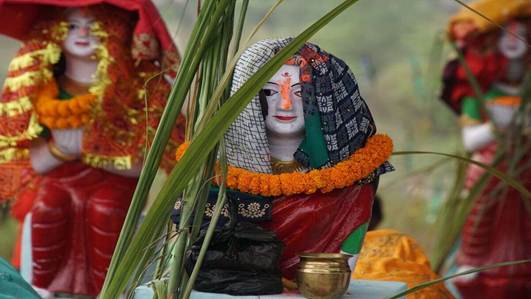
Figure 1 Chhath Puja as the Reunion of Light and Life
When devotees stand on the riverbanks, palms folded toward the setting Sun, they are not only offering water to Surya but also symbolically feeding the Sun with their devotion, ensuring that the cycle of life continues. The water acts as a medium of reflection—just as the physical Sun illuminates the world, the inner Sun (spiritual consciousness) must illuminate the heart.
And as the first rays of dawn touch the waters the next morning, the vratinis offer arghya once more—this time to the rising Sun and Shashthi Mata together—signifying renewal, hope, and the eternal victory of light over darkness. The ritual thus binds the devotee, the Sun, and the Earth in one sacred thread of Dharma, symbolizing the unbroken relationship between humanity and the cosmic forces that govern existence.
7. Rituals and Their Symbolism
Beyond its visible austerity and ritual beauty, Chhath Puja is a profound spiritual discipline that mirrors the inner journey of the human soul. It is not only an act of worship but a process of self-purification, inner alignment, and transcendence, echoing the deepest truths of Vedic philosophy and yogic psychology. Every stage of the festival — fasting, bathing, silence, and offering — carries symbolic meaning that points inward, toward the awakening of consciousness and harmony with the cosmic rhythm Prasoon et al. (2004).
The four-day discipline of Chhath reflects the fourfold path of spiritual purification: cleansing the body, controlling desires, focusing the mind, and surrendering the ego. The first day (Nahay-Khay) symbolizes purification of the physical self through sacred water — the first step toward inner cleanliness. The second day (Kharna), marked by fasting and self-restraint, represents control over the senses — a fundamental principle in yoga known as pratyahara. The third and fourth days, when offerings are made to the setting and rising Sun, symbolize balance and transcendence — honoring both decline and renewal, dusk and dawn, death and rebirth.
1) Nahay Khay (Day 1): Devotees bathe in rivers or ponds, symbolizing purification of body and mind. Satvik (pure vegetarian) food is prepared, often cooked in new earthen pots to maintain sanctity.
2) Kharna (Day 2): A full-day fast is observed, broken only after sunset with a simple offering of kheer, roti, and fruits. After this, devotees begin a 36-hour Nirjala fast (without water), reflecting supreme self-control and devotion.
3) Sandhya Arghya (Day 3): The central ritual of Chhath is performed at sunset, where devotees stand in rivers or ponds and offer Arghya to the setting Sun. It symbolizes humility and gratitude for the life-giving energy of the Sun.
4) Usha Arghya (Day 4): The fast ends at dawn, with offerings made to the rising Sun. This represents new beginnings, vitality, and eternal cycles of life.
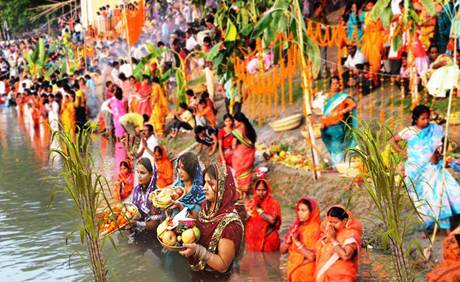
In yogic philosophy, the sunrise and sunset correspond to the transitions between waking and dreaming states of consciousness — times when the mind is most still and receptive. The act of offering arghya during these moments is a meditative gesture, aligning human breath and thought with the rhythm of the cosmos. It is during these liminal hours that the soul, freed from restlessness, can glimpse the eternal.
The fasting and silence observed during Chhath are not acts of denial but of liberation. By abstaining from food, speech, and worldly distraction, the devotee turns inward, allowing the subtle energies (prana) to flow freely. The body becomes a temple, the mind a mirror, and the Sun — both outer and inner — the deity that illumines the truth of existence. The energy harnessed through such austerity leads to mental clarity, emotional stability, and spiritual awakening.
Philosophically, Chhath Puja embodies the eternal Dharma of balance — between nature and man, body and soul, action and stillness. It reminds humanity that enlightenment is not achieved through excess or indulgence but through harmony, gratitude, and self-discipline. In bowing to the Sun, one bows to life itself — the eternal flame that burns in every heart Kathopa et al. (1999).
Thus, Chhath Puja, in its purest essence, is not an external ritual but an inner pilgrimage — a journey from darkness to light, from ignorance to wisdom, from the fragmented self to the radiant wholeness of the divine.
8. Cultural Evolution and Pan-India Expansion of Chhath Puja
The story of Chhath Puja is not just the story of a festival; it is the story of an entire civilization’s continuity — of how ancient Vedic rituals, grounded in the worship of the life-giving Sun and the nurturing Mother Goddess, have survived the tides of time, foreign invasions, and societal transformations. What began as a humble agrarian ritual along the riverbanks of ancient Bihar and Mithila has, in the modern era, transformed into a Pan-Indian celebration that resonates from the Himalayan foothills to the coastal plains, and even across the Indian diaspora worldwide Aiyar et al. (2003).
Chhath Puja’s endurance through millennia is not a matter of chance. It embodies the resilience of Dharma, the eternal moral and natural law that has kept Indian civilization spiritually alive even amidst material and political upheavals. The festival’s journey — from the Vedic plains to modern cities — mirrors India’s own evolution: deeply traditional yet ever-adapting, rooted in faith yet embracing universality.
1) From
Vedic Hearths to the Heartland of Mithila
The cradle of Chhath Puja lies in the ancient Vedic geography of the Gangetic plain, particularly the regions of Mithila (northern Bihar), Magadha, and Koshala. These were not merely political regions; they were the centers of spiritual and philosophical innovation. The people here lived in close communion with nature, dependent on rivers, sunlight, and fertile soil for their sustenance.
Sun worship was integral to their daily life — not as mere superstition, but as acknowledgment of Surya’s vital role in agriculture, health, and cosmic order. The Rigvedic hymns dedicated to Surya, Savita, and Aditya found living expression in the local customs of water offerings, fasting, and purification. Over time, these Vedic practices coalesced into what became Chhath Puja — a structured ritual cycle combining austerity, devotion, and ecological reverence.
It is believed that King Priyavrata’s legend — recorded in the Brahma Purana — may have been one of the earliest symbolic references to this observance. The people of ancient Mithila, deeply influenced by such mythological traditions, began celebrating this festival as a collective act of thanksgiving to the Sun and the Goddess for sustaining life Nagar et al. (1992).
In Mithila culture, where every festival carries philosophical symbolism, Chhath Puja soon became a sacred occasion to purify the soul and strengthen family and community ties. The ghats of rivers like the Ganga, Gandak, Kosi, and Kamla became sacred sites where devotees, clad in simple traditional attire, would gather in silence and humility to greet the setting and rising Sun — a scene that continues unchanged even today.
2) The
Agrarian Connection: Worship as Ecology
Chhath Puja also reflects the agrarian essence of Indian civilization. For centuries, the prosperity of the people depended on the Sun’s benevolence — a good harvest was possible only through balanced sunlight and rain. Hence, thanking Surya for abundance and praying for protection against famine or natural calamity became not just spiritual but existential acts.
The festival’s timing, just after the Kharif harvest and before the onset of winter, is agriculturally significant. It coincides with the season of new crops, symbolizing both gratitude for the past yield and hope for future fertility. The ritual offerings — thekua, sugarcane, fruits, coconuts, rice, and turmeric — are not random; each represents the bounty of the land and the cycle of creation Bhaskar et al. (2012).
Chhath Puja thus functioned as an ecological covenant between humanity and nature. It taught communities to live with restraint, purity, and respect for natural elements. The act of fasting, the insistence on cleanliness, and the use of biodegradable materials (earthen pots, bamboo baskets, and river water) made it an early model of sustainable living, centuries before modern environmentalism emerged.
Even today, this aspect of Chhath distinguishes it from many other celebrations. It requires no pomp, no loud music, no consumption — only simplicity, purity, and discipline. In a world increasingly detached from nature, Chhath stands as a spiritual reminder of ecological ethics, of the Dharma that binds humanity to the Earth.
3) The
Folk Continuity: Chhathi Maiya and the Rural Soul
Throughout history, as India witnessed the rise and fall of empires, the invasions of foreign powers, and the gradual urbanization of society, it was folk traditions that kept the civilizational spirit alive. Among these, the worship of Shashthi Mata or Chhathi Maiya remained the emotional and spiritual anchor of the rural population.
In the villages of Bihar, Jharkhand, and eastern Uttar Pradesh, Chhathi Maiya is not perceived as an abstract goddess but as a living maternal presence — a guardian who visits every home to bless children and protect families. Her songs are sung in Bhojpuri, Maithili, and Magahi dialects — languages that carry both tenderness and devotion. Women sing of her mercy, her vigilance, and her power to grant health and prosperity. These songs, passed down through oral tradition, have preserved the festival’s emotional and cultural continuity for thousands of years.
It is this human warmth and emotional intimacy that has kept Chhath alive even among people who migrated far from their homeland. The rural devotion to Shashthi Mata has become a transregional faith, a spiritual bridge connecting migrants to their ancestral soil.
4) Survival
through the Ages: The Cultural Resilience of Chhath
Unlike other major Hindu festivals that received royal patronage or scriptural codification, Chhath Puja remained a people’s festival — nurtured by the humble, preserved by women, and sustained through oral traditions. This grassroots nature proved to be its greatest strength.
During the Islamic and later British periods, when many Vedic and local rituals declined due to suppression, loss of patronage, or westernization, Chhath Puja survived quietly among the common people. Its simplicity required no temple, priest, or complex ritual — only faith and a clean riverbank. Thus, it continued to flourish as an unbroken chain of devotion even during the darkest phases of history Pandey et al. (1989).
By the 19th and early 20th centuries, with the rise of cultural consciousness during the Indian Renaissance and Freedom Movement, festivals like Chhath began to be viewed as symbols of cultural identity and resilience. In regions like Bihar and eastern Uttar Pradesh, where colonial policies had caused poverty and mass migration, Chhath Puja became a moral anchor — reminding people of their heritage, their strength, and their unity in faith.
5) The
Diasporic Journey: From the Ganga to the Global Rivers
In the 20th and 21st centuries, the story of Chhath Puja took a remarkable turn. Waves of migration from Bihar, eastern Uttar Pradesh, and Jharkhand carried this festival to faraway lands — Mauritius, Fiji, Trinidad, Guyana, Suriname, Nepal, and later to cities like London, New York, Dubai, and Singapore.
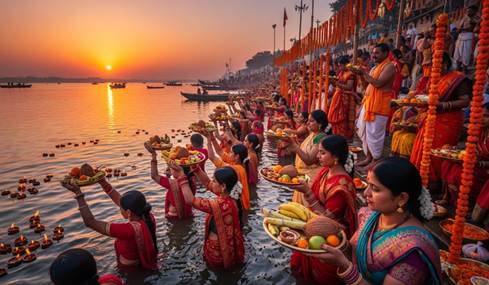
What is extraordinary is how these communities recreated the sacred landscape of the Ganga wherever they went. On the banks of foreign rivers, ponds, and even artificial water bodies, one could see the same devotion — women in bright saris standing knee-deep in water, holding bamboo baskets filled with fruits, sugarcane, and earthen lamps. The melodies of Bhojpuri and Maithili Chhath geet echoed even in lands thousands of miles away from India Gamow et al. (1940).
This transformation of Chhath Puja into a global festival illustrates not only the adaptability of Hindu rituals but also their universality. The Sun belongs to all — it shines equally upon every nation and every being. Thus, worshiping the Sun becomes a universal act of gratitude, transcending language, geography, and ethnicity.
Chhath Puja has, in many ways, become a spiritual identity marker for migrants — a reaffirmation of roots, culture, and belonging. It stands as a symbol of continuity amidst displacement, of faith amidst modern alienation.
6) Urban
Renaissance: Chhath in Modern India
In the last few decades, Chhath Puja has undergone a remarkable revival within India itself, transcending its regional boundaries. Once confined mainly to Bihar, Jharkhand, and parts of eastern Uttar Pradesh, today it is celebrated with grandeur in Delhi, Mumbai, Kolkata, Chandigarh, Ahmedabad, and even southern cities like Chennai and Bengaluru.
Urban ghats and artificial ponds are now specially constructed for the festival. Governments, recognizing its spiritual and cultural importance, organize public spaces for devotees to safely perform rituals. The once “regional” Chhath has now become a national festival of ecological purity, discipline, and unity Charak et al. (1999).
Its growing appeal lies in its austerity and spiritual authenticity — qualities that resonate deeply in a world growing weary of commercialized festivals. The sight of millions standing silently at dawn, their hands folded in prayer to the rising Sun, creates a moment of collective introspection. It transcends religion or class — it is humanity saluting its own source of existence.
7) Chhath
Puja as a Symbol of Indian Identity and Dharma
What makes Chhath Puja truly eternal is that it transcends ritual and enters the realm of Dharma — the universal law of harmony, gratitude, and balance. The Sun, as the visible god, symbolizes truth and justice; Shashthi Mata symbolizes compassion and continuity. Together, they remind us that civilization flourishes only when power is tempered by compassion and when human ambition is aligned with nature’s rhythm.
In this sense, Chhath Puja is a living manifestation of Sanatana Dharma — the eternal duty to preserve balance within and without. Every aspect of the ritual — fasting, purification, offering, and gratitude — is an act of alignment with Rta, the cosmic order.
It also reaffirms one of the most democratic truths of Indian spirituality — that the divine is accessible to all. There is no intermediary, no priesthood, no temple monopoly in Chhath. The river is the temple, the Sun is the deity, and the human heart is the altar. This direct communion between the devotee and the divine is perhaps why the festival continues to grow in resonance even among educated urban youth seeking spiritual authenticity.
8) The
Contemporary Message: Harmony with Nature and the Self
In our present age, when humanity grapples with environmental crises, mental unrest, and moral confusion, Chhath Puja offers a timeless remedy — return to balance. It teaches ecological responsibility through cleanliness, minimalism, and respect for natural resources. It teaches spiritual strength through discipline and fasting. And it teaches emotional harmony through gratitude and selflessness Verma et al. (2012).
The worship of the Sun at dusk and dawn is symbolic: it urges us to honor both decline and renewal, both loss and hope. It is a reminder that life, like the Sun, must set to rise again — a message of resilience and cyclical continuity that lies at the core of Dharma.
9. The Eternal Light of Faith and the Voice of Devotion
As the golden rays of the Sun kiss the river’s surface and the fragrance of thekua mingles with the evening air, Chhath Puja unfolds as more than a ritual — it becomes a living hymn of gratitude, discipline, and eternal faith. Through the ages, this festival has preserved the Vedic essence of Sanatana Dharma: the harmonious balance between human life and cosmic law, between action and devotion, between the masculine brilliance of Surya and the maternal grace of Shashthi Mata. It is a timeless reminder that spirituality in Indian tradition is not confined to temples or texts — it thrives in the open skies, in the flowing rivers, and in the sincere heart of the devotee.
Chhath Puja’s endurance across millennia stands as a testimony to the resilience of Indian civilization. Despite centuries of change — political upheavals, migrations, and modernization — its purity and simplicity remain untouched. In its unadorned rituals lies a deep philosophical message: that divinity does not demand grandeur, only sincerity; that the greatest prayer is gratitude, and the greatest offering is self-restraint.
This festival continues to bind families, communities, and generations together. It transcends caste, gender, and social divisions, uniting millions in collective reverence before the life-giving Sun. In an age of materialism and spiritual confusion, Chhath Puja shines as a reminder of the deeper truths — the power of discipline (tapas), the sanctity of nature, and the eternal connection between humankind and the cosmos.
Yet, beyond the rituals and the philosophy, there is another soul of Chhath — the voice that carries its devotion from village ghats to global cities: the voice of Padma Bhushan Sharda Sinha. Her songs — “Kaanch hi baans ke bahangiya,” “Uga Ho Suruj Dev,” “Hey Pahile Pahile Chhathi Maiya” — have become the very heartbeat of the festival. With her soft, earthy Maithili-Bhojpuri accent, she transformed folk devotion into immortal poetry.
For countless devotees, her voice is not just music, but prayer — it echoes through dawn and dusk as an offering of faith, nostalgia, and belonging. Sharda Sinha gave the festival an identity that transcends region; she turned the riverbanks of Bihar into the soundscape of India. In her songs, one hears both the ancient chants of the Vedas and the modern sighs of devotion — a bridge between past and present, sacred and human.
Thus, in the glow of the Sun and the echo of her melodies, Chhath Puja continues its eternal journey — a song of Dharma sung by generations, a dialogue between the human and the divine. It teaches that light is not only in the heavens but within us; that worship is not an act of fear but of gratitude; and that true spirituality lies in harmony — with the self, with society, and with the universe.
As long as the Sun rises and rivers flow, as long as mothers sing Sharda Sinha’s hymns and devotees stand before the light in silence, the spirit of Chhath Puja will endure — the eternal bond of Dharma, radiant as the morning Sun and tender as a mother’s song.
Jai Chhathi Maiya
CONFLICT OF INTERESTS
None.
ACKNOWLEDGMENTS
None.
REFERENCES
Aiyar, K. N. (2003). The Puranas in the Light of Modern Science. Cosmo Publications.
Bhaskar, M. G. (2012). Tradition of Worship of Sun in Sanskrit Literature: A Study. Kala
Prakashan.
Charak, K. S. (1999). The Sun God. Uma Publication.
Gamow, G. (1940). Birth and Death of the Sun. American Library.
Gupta, M. S. (2008). Surya: The Sun God—Its History, Iconography, Mythology, his Family and Surya Temples. Somaiya Publications.
Gupta, S. N. D. (n.d.). History of Indian philosophy (Vol. 1).
Kathopa, M. L. (1999). Surya chikitsa: Colour therapy for Common Diseases. Hind Pocket
Books.
Murthy, S. R. N. (n.d.). Vedic view of the Earth.
Nagar, S. (1992). Surya and Sun Cult. Aryan Book International.
Pandey, D. P. (1989). Surya: Iconographical Study of the Indian Sun God—A Monograph.
Parimal Publications.
Prasoon, S. (2004). Surya Upasana. D. P. B. Publications.
Roy, R. R. M. (1999). Vedic Physics: Scientific Origin of Hinduism. Golden Egg
Publications.
Saran, G., and Pandey, G. (1992). Sun Worship in India. Gyan Publications.
Trikha, J. K. (1981). Rig Veda: A Scientific and Intellectual Analysis of the Hymns. Somaiya Publications.
Tripathi, M. P. (1969). Development of Geographical Knowledge in Ancient India. Bhartiya
Vidya Prakashan.
|
|
 This work is licensed under a: Creative Commons Attribution 4.0 International License
© ShodhKosh 2026. All Rights Reserved.