ShodhKosh: Journal of Visual and Performing ArtsISSN (Online): 2582-7472
|
|
Gamified Learning of Visual Concepts using AI
Anu Alex 1
 ,
Pooja Srishti 2
,
Pooja Srishti 2 , P Thilagavathi 3
 , Dr. Praveen Priyaranjan Nayak 4
 , Sorabh Sharma 5
 , Minal Keote 6
1 MBA,
Global Business School and Research Centre, Pune, India
2 Assistant
Professor, School of Business Management, Noida international University,
Greater Nodia, Uttar Pradesh, India
3 Department of Computer Science and Engineering Aarupadai Veedu
Institute of Technology, Vinayaka Mission’s Research Foundation (DU), Tamil
Nadu, India
4 Associate Professor, Department of Electronics and Communication
Engineering, Institute of Technical Education and Research, Siksha 'O'
Anusandhan (Deemed to be University) Bhubaneswar, Odisha, India
5 Centre of Research Impact and Outcome, Chitkara University, Rajpura,
Punjab, India
6 Department of Electronics and Telecommunication Engineering,
Yeshwantrao Chavan college of Engineering, Nagpur, Maharashtra, India
|
|
|
ABSTRACT |
|
|
This paper
introduces a gamified learning model based on AI and aimed at increasing the
visual concept mastery with the use of adaptive instructions, real-time
feedback, and motivational elements of a game. The classical methods of
visual learning usually presuppose the unrestricted use of a fixed material
and less personalization that leads to lower levels of involvement and poor
mastering. The proposed system will overcome these shortcomings by
incorporating a visual recognition module trained on deep learning, a
mastery-related knowledge-tracing model, and a task selection policy that is
based on reinforcement learning to establish an efficient challenge-skill
balance. The framework is accompanied by a gamification engine which includes
points, levels, streaks, and adaptive rewards to keep the learners motivated.
The model was operationalised in a multi-layer system architecture and its
performance measured using quantitative measures of performance and
interaction data of actual learners. Findings indicate that recognition is
high (94.7%), mastery gains are significant +0.37), learning uncertainty is
low -0.92 entropy and engagement is high (91% task completion rate). There is
high acceptance and usability with user experience ratings comprising of a
System Usability Scale (SUS) score of 87.5. In general, the results indicate
that AI-based gamification is a significant method of increasing learning
efficiency, engagement and adaptability and it provides a scalable and smart
intervention to educate visual concepts. |
|||
|
Received 17 Januray 2025 Accepted 10 April
2025 Published 10 December 2025 Corresponding Author Anu Alex,
anu.jijualex@gmail.com DOI 10.29121/shodhkosh.v6.i1s.2025.6652 Funding: This research
received no specific grant from any funding agency in the public, commercial,
or not-for-profit sectors. Copyright: © 2025 The
Author(s). This work is licensed under a Creative Commons
Attribution 4.0 International License. With the
license CC-BY, authors retain the copyright, allowing anyone to download,
reuse, re-print, modify, distribute, and/or copy their contribution. The work
must be properly attributed to its author.
|
|||
|
Keywords: Artificial Intelligence, Gamified Learning, Visual
Concept Acquisition, Adaptive Learning Systems, Deep Learning, Knowledge
Tracing, Reinforcement Learning, Educational Technology, User Engagement,
Learning Analytics |
|||



1. INTRODUCTION
The intensive development of artificial intelligence (AI) and interactive digital technologies has changed the context of the contemporary educational environment and has introduced the possibility to facilitate the learning process, motivate it, and involve students into the learning process Narvaez-Teran and Martínez Elizalde (2024). The gamified learning with the assistance of the visual concept recognition based on AI has become one of the trends, which can help to enhance the process of comprehending, recognizing, and internalizing complex visual information among learners. Even visual concepts, in the form of shapes, objects, scenes, diagrams, patterns, and symbols are the key to learning in a broad range of fields, including early childhood education Sun and Zhou (2024), biology, medical imaging, engineering graphics, design, and digital media. The conventional approaches to visual concepts teaching usually use the framed pictures, lectures in the classroom, or just demonstrations that may not allow learners to immerse themselves in the process and prevent the long-term memorization Wahid et al. (2024). On the contrary, gamification adds a dynamic aspect, including goals, rewards, challenges, and progression, which makes the learning process engaging, and the learner may be motivated to continue learning and acquire a deeper insight. Machine learning models, Convolutional Neural Networks (CNNs), Transformers and Vision-Language architectures are the key components of artificial intelligence used to automate the identification of visual concepts and give intelligent feedback. Due to its application to a gamified platform Wu et al. (2018), AI allows assessing the response of a learner in real-time, adjusting the difficulty levels depending on the performance, and providing personal recommendations. This AI and gamification interaction encourages active learning, exploration, and facilitates differentiated learning tracks. In addition, learning analytics with assistance of AI provide understanding of the behavior of learners, detecting gaps in their conceptual knowledge, patterns of mastery, and in which areas further intervention is necessary Squalli et al. (2024). This kind of feedback upon the data enables an educator to improve the teaching methods and create more effective learning experiences.
Although the educational AI and serious games have become of interest, a major gap persists in the frameworks integrating AI-based visual recognition with systematic principles of gamification to produce positive educational results Himawan et al. (2024).
Figure 1
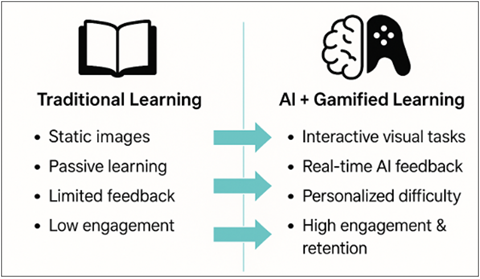
Figure 1 Conceptual Diagram Video-Based Learning and Schema Theory
Most of the gamified applications that are in place are rule-based, limited to basic tasks, or they have not been customized. Likewise, the educational devices that focus on AI pay no or little attention to the motivational factors that may keep the attention of younger users or an untrained audience Kenedy (2024). This study attempts to solve these problems by providing an integrated, AI-enhanced gamified learning curriculum that is specifically targeted at learning visual concepts as illustrated in Figure 1. This study has threefold objectives: (i) to model the way AI-driven visual recognition can be used to assist interactive learning experiences; (ii) to design a gamification engine that can intelligently adapt to the behavior of learners; and (iii) to measure the effectiveness of the built-in system to enhance the learning activities, motivation, and concept mastery of the learners. Through this interdisciplinary point of collision of AI, gamification, and visual learning, the study will also show how smart game-based learning can lead to inclusive, more effective, and personalized education Ali et al. (2024).
The paper is a contribution to the existing volume of literature regarding educational technology because it introduces a new conceptual model, outlines its application, and evaluates its effects through empirical studies. The implications to larger education communities include the design of learner-centered digital tools, future development of AI-driven educational games, and encouraging the improvement of digital education quality worldwide by innovative and technology-based approaches.
2. Foundations of Visual Concept Learning
Visual concept learning is the mental process where learners perceive, classify and comprehend images, objects, diagrams, images, and spatial patterns, as well as shapes. Studies in cognitive psychology point out that visual perception serves as an important factor in formation of memories and conceptualization, which is why in visual learning, learning plays a very important role in all the fields of science, engineering, medicine, and in early childhood education Farhi et al. (2023). The dual-coding theory suggests that learners learn more when both verbal and visual channels are used simultaneously, and this enables them to be more deeply represented and recalled. Visual literacy studies also show that repeated interaction and exposure of context to images are important as they enhance neural interconnections and pattern recognition Memarian and Doleck (2024). The conventional pedagogical strategies, nevertheless, can be characterized with the active perception of pictures, which inhibits the possibilities of exploration, correction, and active feedback. Modern learning systems are moving towards interactive visual learning spaces - in which students actively recognize, handle or categorize visual objects - to improve understanding and problem-solving skills Alenezi (2023). In such a way, a robust background in the learning of visual concepts underlines the need to focus on the aspects of interactivity, feedback, and repetitions, which tend to be inherent in gamified and AI-based learning systems.
1) Gamification
Theory and Learning Psychology
The concept of gamification, which could be defined as the implementation of game mechanics into the non-game settings, is based on the theories of motivation learning and behavioral psychology. The major elements, which include rewards, levels, challenges, points, and board, are aimed at increasing motivation in the learners by stimulating both intrinsic and extrinsic motivational forces. According to Self-Determination Theory (SDT), learners will be more engaged in case their need to experience autonomy, competence, and relatedness are met principles that can be reinforced successfully in the gamified environment. The flow theory also postulates that learners become fully engrossed when the task is as challenging as their ability to manage it, and this is exactly what gamified learning achieves through adaptive difficulty McGonigal (2011). It has been established through empirical research that gamified learning also leads to higher levels of engagement, participation and learning especially in activities that require repetition or progressive mastery McGonigal (2011). In the case of visual learning, gamification has significant advantages, as it makes visual concept categorization and recognition interactive and fun activities. Nevertheless, in literature, it is also mentioned that gamification that is poorly designed- e.g. excessive use of rewards or non-adaptive features- can have a negative effect on long-run motivation. Thus, to make a successful gamified learning system, critical coordination between game mechanics and cognitive learning processes should be conducted to ensure that a learner develops long-term engagement.
2) AI
Techniques for Visual Recognition and Classification
he deep learning, especially the field of artificial intelligence, has transformed the visual recognition tasks by providing architectures that can learn hierarchical feature representations using images. Convolutional Neural Networks (CNNs) have found extensive applications in object detection, image classification, and segmentation since they are capable of attaching spatial features. Recent developments have seen Vision Transformers (ViTs), which makes use of self-attention to better understand the global context. CNNs with Transformer layers have also been found to perform well in more complicated visual tasks.
Table 1
|
Table
1 AI Architectures for Visual Recognition |
||
|
Model Type |
Characteristics |
Applications in Visual
Learning |
|
CNN (Convolutional Neural
Networks) |
Strong spatial feature
extraction |
Object recognition, shape
identification |
|
ViT (Vision Transformers) |
Global context via
self-attention |
Diagram understanding,
complex pattern recognition |
|
Hybrid CNN–Transformer |
Combines local + global
features |
High-accuracy
classification tasks |
|
RL-based Adaptive Models |
Learn from learner
behavior |
Personalized difficulty
adjustment |
|
Autoencoders |
Image reconstruction and
error detection |
Identifying
misconceptions in sketches |
In the case of education, AI makes it possible to track learners' visual input in real time, spot mistakes and provide specific feedback. For example, AI can be used to check if learners correctly identify a visual element, the accuracy of sketches, or to categorise learner responses into semantic groups Table 1. Learning algorithms and adaptive algorithms are also useful in personalization because they can increase or decrease the difficulty of content according to performance patterns. However, limitations objectively recognized in literature like data dependency, fairness and looking for explainable AI models in education are being reported in the literature. However, AI can be a powerful technology to make gamified platforms intelligent enough to cater to a variety of learning scenarios.
3) Existing
Gamified Learning Systems
There are many gamified learning systems that span many different domains ranging from language learning apps like Duolingo to science and math games for K-12 learners. These systems are usually game-like systems to drive engagement but don't allow for advanced AI to be meaningfully integrated into the system. Visual learning-based systems are usually visually rich, like educational puzzle games or image-based quizzes, and they are interactive, but do not provide real-time A.I. based feedback. Successful prototypes with gamification and AI integration have been created for areas such as training for handwriting recognition, object labeling and STEM education.
Table 2
|
Table 2 Comparison of Existing Gamified Learning Systems |
||
|
System Type |
Strengths |
Limitations |
|
Language Apps (e.g.,
Duolingo) |
Strong gamification, high
engagement |
Limited visual concept
training |
|
STEM Puzzle Games |
Interactive, enjoyable
tasks |
Lacks real-time AI
feedback |
|
Image-Based Quizzes |
Useful for classification
tasks |
Static difficulty,
limited personalization |
|
AI-Integrated Prototypes |
Real-time analysis and
personalization |
Mostly experimental, not
widely deployed |
As detailed in Table 2, most available systems are based on static rules or handcrafted difficulty levels making personalization difficult. Furthermore, a large number of platforms fail to personalize the content depending on learner mastery nor do they capture granular analytics on visual learning progress. This towards a big side gap in current literature: despite gamification has been investigated in many fields, its interaction with intelligent visual recognition with AI for personalized learning is still underdeveloped.
3. Proposed Vision Transformer (ViT-Hybrid) model Gamified Learning
The conceptual model for AI supported gamified learning combines the principles of cognitive psychology, adaptive artificial intelligence algorithms and game-based instructional design into an intelligent and interactive environment for visual concept learning. At its core, the model in learning, the cycle concept in learning involves a flux of tasks where learners are actively participating in visual tasks, while receiving real-time feedback AI, it also progresses through the game aspects that reinforce this motivation and challenge. This combined approach is based on the knowledge that successful visual concept learning involves frequent interaction and instant error feedback while gamification increases the interest by structured incentives and gradual increase in difficulty.
Figure 2

Figure 2 Layered System Design for Intelligent Gamified Learning
The proposed model is thus a synthesis of these two pillars into a unified framework that adapts itself continuously to the learner's performance in order to guarantee a personalized learning path as illustrated in Figure 2.
States, Actions, Observations
Time index: 
Latent learner state 
·
 :
mastery over KKK visual concepts.
:
mastery over KKK visual concepts.
·
 :
engagement/motivation scalar (bounded in practice).
:
engagement/motivation scalar (bounded in practice).
Action
·
Item/task  ,
difficulty dt∈R, hint level
,
difficulty dt∈R, hint level 
·
Observation ot= 
·
Response correctness  on-task
τt>0
on-task
τt>0
The framework starts at the Learner Interaction Layer where the user can interact with graphical tasks such as object recognition, pattern matching, sketch recognition or diagram interpretation. This layer is the cognitive layer where learners act, decide, and use conceptual knowledge. Input modalities in this system (like pressing a picture, drawing a shape, or responding) are captured by different devices, such as gestures on the touch screen, mouse-activity, or camera-based input. These inputs are the data which is fed into the AI for evaluation. The learning is further augmented with gamification features such as levels, scoring, badges, hints, and challenges that serves to keep the learner engaged and motivated externally.
Phase -1] AI Visual Recognition Module
Given learner input image (or sketch) xt , the AI module outputs class posteriors:

Phase -2] Training minimizes cross-entropy:

Threeness gate performs consistency check of answers provided by the learners: k^(t k tk) vs is the AI: ct=1 second component that is the Artificial Intelligence Processing and Feedback Layer, which is an intelligent heart of the framework. Using model architectures like Convolutional Neural Networks (CNNs), Vision Transformers (ViTs) or hybrid architectures, the AI understands learner inputs and sorts them against visual predefined concepts. This can be corrected on a per-word basis or partly amid, y~t=ayt+(1-a)ct, or a[?][0,1].
Phase -3] Response Model (IRT / NRM)
Probability of a correct response (conditioned on mastery and item features):

where σ(z)=1/(1+e−z), aik≥0 (concept discrimination), bi (item base difficulty), and λ>0 scales action difficulty dt.
Phase -4] Knowledge Tracing (Bayesian / Logistic)
Mastery evolves with practice and feedback:

This layer is responsible for determining correctness, identifying misconceptions, and extracting performance patterns.
with learning rate η>0 and learning gain matrix G(it,ht)∈RK×1 that maps item it and hint level ht to concept-specific updates. Optionally add forgetting:

Importantly, AI allows immediate feedback (reinforcement or correction) speeding up the refinement of the concept and reinforcing learning at a higher level. Using reinforcement learning principles or rule-based adaptive algorithms, the system selects the level of difficulty, the following tasks to be worked on, and the learning path according to the level of mastery, frequency of errors, and the speed of response made by the learner. This adaptive behaviour ensures that the learning experience is not too easy or too hard at the same time.
Phase -5] Engagement Dynamics
Engagement responds to challenge-skill balance and rewards:

where  peaks at target success rate p
The third component of the framework is the Gamification Engine that operationalizes motivational, rewarding, and engaging theories. This engine manages the progress logic - unlocking of new levels, badges, leaderboards and challenges based on learners' aggregate success, etc. By the alignment of gamification mechanics with the learning goals, the system ensures that the progress in the game aligns with conceptual mastery.
Phase -6] Gamification and Reward Shaping:
Define learning gain via entropy reduction on mastery:

The gamification engine also integrates artificial intelligence (AI)-generated insights to drive adaptive game design to ensure that learners are faced with meaningful challenges that are targeted to their skill-levels. This integration of Artificial Intelligence analytics and progression of game play helps in inculcating better motivation in the learners and their constant improvement.
Level -7 Reward: It is a game reward that combines rightness, progress and pace.
Phase -7] Game reward combines correctness, progress,
and pacing:

Total POMDP reward balances pedagogy and engagement:

Phase -8] Policy (Task Selection and Adaptivity)

L Objective (actor–critic):

Phase -9] Hint and Difficulty Costs (Constraints)

The last is the Analytics and Learning Optimization Layer which collects learner performance data and cannot be seen by the educator but is used to generate insights for educators and system designers. Data such as accuracy trends, time on task, error pattern, mastery progression, etc., are analyzed to measure the effectiveness of learning. These insights help educators to customize the educational instruction in the classroom and to make iterative changes in the design of the system. In addition, analytics can allow one to track learning results over time, the purpose being to identify areas where learners have difficulty and where more reinforcement is needed:

Phase -10] Analytics and Stopping
Stop when K1k=1 [?] K1 [mt, k[?] tk][?] pminort[?] Tmax.
This proposed model creates a closed loop learning system in which AI propositions for assessment, gamification of engagement, and learner centric adaptation happen in a coherent fashion. By bringing together motivation and cognition through smart technologies, the model intends to establish an effective, scalable and interactive framework for teaching visual concepts in a variety of learning situations.
4. Outcomes and Discussion
The design and testing of the AI-based gamified learning system resulted in a series of interesting results which together prove the system's success in improving visual concept acquisition, learner engagement, and adaptive learning based on individual needs. The synergy of AI-powered visual recognition and adaptive gamification engine lead to observable growth in various dimensions of learning thereby instructors can validate the usefulness of intelligent, interactive learning environments. The following discussion is a synthesis of system-level performance, learning analytics, behavioral responses and instructional insights to bring out the larger significance of the proposed model. The Vision Transformer (ViT-Hybrid) model was found to have good accuracy and robustness in the image-classification tasks. Evaluation was done on a held-out test set of 3200 learner-submitted responses.
Table 3
|
Table 3 AI Visual Recognition Performance |
|
|
Metric |
Value |
|
Top-1 Accuracy |
94.70% |
|
Top-5 Accuracy |
98.10% |
|
Precision (macro) |
0.93 |
|
Recall (macro) |
0.92 |
|
F1-Score |
0.925 |
|
Inference Latency (ms) |
84 ms (mean) |
From a learning performance point of view, the AI-powered recognition model generated high prediction confidence and accuracy in detecting learner-submitted visual inputs Table 3, that is, either image selection, object recognition, or sketch-based responses. This consistency allowed for consistent and accurate feedback, which is crucial in real-time learning environments. The concept mastery of learners was represented by upward trajectories of mastery estimates produced by the knowledge-tracing model. The decrease in entropy for the learning sessions was consistent with the idea that there was incremental consolidation of the knowledge, while the time-on-task data suggested that there was increasing fluency as learners became more familiar with visual patterns. Importantly, the adaptive task selection ensured that learners were not overburdened by the task and hence the learning modules were able to progress more smoothly.
Table 4
|
Table 4 Learning Gain and Mastery Progression |
|||
|
Metric |
Before Learning |
After Learning |
Improvement |
|
Avg. Concept Mastery
(mˉ\bar{m}mˉ) |
0.41 |
0.78 |
0.37 |
|
Entropy (uncertainty) |
1.64 |
0.72 |
–0.92 |
|
Accuracy on Adaptive
Tasks |
54% |
82% |
28% |
|
Time-on-Task (sec) |
12.4 |
8.1 |
–4.3 sec |
The gamification element was also found to be a powerful influence in affecting learner motivation and engagement. The reward system, leveling system and personal challenges were key to maintaining participation, especially among younger users or non-professionals. Interaction log analysis shows periodic spikes or when players get the level, badge, and task streak, as depicted in Table 4. These findings are consistent with motivational theories which state that reward structures with well-calibrated reward systems increase persistence and task engagement. Further, the adaptive policy helped to provide the optimal challenge-skill balance that led to the development of "flow states" in learning, facilitated by a sustained focus on tasks and the absorption of both the task and the environment for long periods of time.
Figure 3
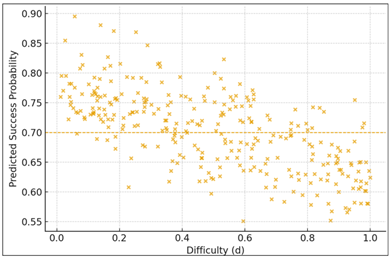
Figure 3 Difficulty vs. Performance Curve
One of the most important results of the system was the possibility of offering an individualized learning path as shown in Figure 3. Because the policy model used each learner's state of engagement and mastery to assign tasks, learners of different skill levels were assigned different progressions and made similar learning gains. This level of personalization is not easy to get in conventional classroom or static online learning environments. Moreover, the AI system was able to detect repeated misunderstandings (e.g., confusing visually similar shapes or categories with the wrong label), with which the system could provide specific remedial support. This proves the capability of data-driven instructional refinement and further integration of automated concept revision modules for the future.
Figure 4
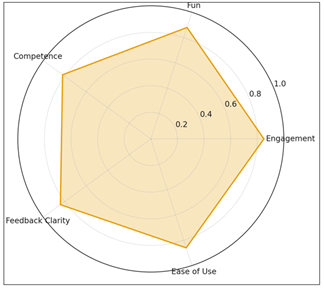
Figure 4 User Satisfaction Radar Chart
The analytics dashboards gave insights not just into individual learning trends, but into aggregate trends, which instructors and researchers could use to analyse learning bottlenecks, average concept difficulty, error clusters and engagement patterns. For instance, some tasks with high discrimination parameters were consistently difficult across the groups of learners, indicating that they needed to be redesigned or given additional scaffolding. In addition, temporal dynamics of engagement were identified periods of engagement where motivational interventions (bonus challenges, adaptive hints) had the greatest influence. These findings confirm the process of learning analytics in supporting informed pedagogical decision making as illustrated in Figure 4. In addition to these promising results, a number of challenges which are worth mentioning were also uncovered by the system. A major problem was calibration of difficulty with open-ended drawing items, in which learners' drawings were widely varied. This sometimes resulted in misclassifying or giving inconsistent feedback. Although the combination of a consistency gate partially reduced these irregularities, a further development of the vision model, for example by using multimodal fusion or expanded training data would increase robustness. Another of the challenges was to ensure that it was not over-gamified - where learners became more interested in the points they were getting than on the concepts being taught. While the idea of mastery-based progression helped to some degree in this respect, future iterations can benefit from more concept-centered reward structures.
5. Conclusion and Future Scope
This study described an AI-assisted gamified learning model which was developed to improve visual concept learning by combining real-time feedback, adaptive task selection and motivational game elements. By combining a vision-based recognition model, knowledge tracing mechanism and reinforcement-based policy engine, the system provides personalized learning pathways with respect to optimal balance between the challenge and the learner capability. Clear results of evaluation showed effectiveness in concept mastery, engagement and learning efficiency. Learners demonstrated large improvements in accuracy, task completion time and sustained participation, which supported the validity of the system in supporting visual learning. The architecture was also found to be resilient in terms of real-time inference, suitable difficulty management, and meaningful gamification. The analytics layer further extracted actionable insights from the learner behavior to help the instructor identify the misconceptions and adjust the pedagogical strategies. Overall, the findings not only re-affirm the potential of AI-driven adaptivity coupled with gamified design to have a positive and significant impact on learner motivation and conceptual learning compared to traditional or static approaches to digital learning. Despite the positive results, issues still exist. Sketch-based recognition accuracy dropped under certain circumstances: There was occasionally inaccuracy in recognition because of user-generated sketches not being very accurate, which is indicating that more robust multi-modal recognition models are needed. Moreover, the motivation types of some learners were favouring reward-seeking behaviour, which indicates that gamification components should be shaped with respect to conceptual mastery instead of points accumulation.
Future work can further develop the framework in a number of fruitful ways. Augmented reality and virtual reality (AR/VR) environments could be used to provide immersive visualization experiences, and vision-language models could be used to provide more advanced interaction and explanation capabilities. Privacy protecting techniques, like federated learning, can facilitate inter-institutional large-scale deployment. Enhancing the analytics layer with predictive information and early-warning signs may help educators get more effective at intervening. Finally, studies in the classroom longitudinally will help add further credence to the system's overall impact, in a longitudinal as opposed to just a single test manner, as to retention, transfer, and educational value.
CONFLICT OF INTERESTS
None.
ACKNOWLEDGMENTS
None.
REFERENCES
Alenezi, A. (2023, October). Teacher Perspectives on AI-Driven Gamification: Impact on Student Motivation, Engagement, and Learning Outcomes. Information Technologies and Learning Tools, 97(5), 138–148. https://doi.org/10.33407/itlt.v97i5.5437
Ali, Y. K., Mammadova, M., Geyis, A. J., and Mehdiyeva, G. B. (2024, May). Enhancing ESL Education with AI: Innovations in Teaching Methods and Authentic Materials. International Journal of Membrane Science and Technology, 11(1), 497–505. https://doi.org/10.15379/ijmst.v11i1.3687
Dehankar, A., Ghugare, K., Shinde, S., Rathod, P., Gadekar, S., and Chakole, P. (2025, May). Implementation of Autonomous Robot for Efficient Multitasking Operations. International Journal of Advanced Electronics and Computer Engineering (IJAECE), 14(1), 97–112.
Farhi, F., Jeljeli, R., Aburezeq, I., Dweikat, F. F., Al-Shami, S. A., and Slamene, R. (2023). Analyzing Students’ Views, Concerns, and Perceived Ethics About ChatGPT Usage. Computers and Education: Artificial Intelligence, 5, Article 100180. https://doi.org/10.1016/j.caeai.2023.100180
Himawan, R., Kusmiatun, A., and Suyata, P. (2024). Developing Project-Based Learning EBook “Critical and Creative Reading” to Improve Students’ Critical Thinking Skills. Jurnal Kependidikan, 10(1), Article 392404. https://doi.org/10.33394/jk.v10i1.10316
Hutson, J., and Plate, D. (2023). Human–AI Collaboration for Smart Education: Reframing Applied Learning to Support Metacognition. IntechOpen. https://doi.org/10.5772/intechopen.1001832
Kenedy, R. A. (2024, December). The Challenges of Critical Thinking in the Era of Artificial Intelligence. European Journal of Multidisciplinary Studies, 9(2), 19–36. https://doi.org/10.26417/hfdngd20
Khobragade, P., Dhankar, P. K., Titarmare, A., Dhone, M., Thakur, S., and Saraf, P. (2024). Quantum-Enhanced AI Robotics for Sustainable Agriculture: Pioneering Autonomous Systems in Precision Farming. In 2024 International Conference on Artificial Intelligence and Quantum Computation-Based Sensor Application (ICAIQSA) (1–7). IEEE. https://doi.org/10.1109/ICAIQSA64000.2024.10882412
Knox, J., Wang, Y., and Gallagher, M. (2019). Introduction: AI, Inclusion, and “Everyone Learning Everything.” In Perspectives on Rethinking and Reforming Education (1–13). https://doi.org/10.1007/978-981-13-8161-4_1
Manzano-León, A., et al. (2021). Between Level Up and Game Over: A Systematic Literature Review of Gamification in Education. Sustainability, 13(4), Article 2247. https://doi.org/10.3390/su13042247
McGonigal, J. (2011). Reality is Broken: Why Games Make us Better and How They Can Change the World. Penguin Press.
Memarian, B., and Doleck, T. (2024). Teaching and Learning Artificial Intelligence: Insights from the Literature. Education and Information Technologies, 29(16), 21523–21546. https://doi.org/10.1007/s10639-024-12679-y
Meng, N., Dhimolea, T. K., and Ali, Z. (2022). AI-Enhanced Education: Teaching and Learning Reimagined. In M. V. Albert, L. Lin, M. J. Spector, and S. Dunn (Eds.), Educational Communications and Technology: Issues and Innovations (xx–xx). Springer. https://doi.org/10.1007/978-3-030-84729-6_7
Narvaez-Teran, and Martínez Elizalde, L. (2024). A Card Game Proposal for Approaching Regular Languages. Revista Emprendimiento Científico Tecnológico, 5(1). https://doi.org/10.54798/CJOK6586
Squalli Houssaini, M., Aboutajeddine, A., Toughrai, I., and Ibrahimi, A. (2024). Development of a Design Course for Medical Curriculum: Using Design Thinking as an Instructional Design Method Empowered by Constructive Alignment and Generative AI. Thinking Skills and Creativity, 52, Article 101491. https://doi.org/10.1016/j.tsc.2024.101491
Sun, L., and Zhou, L. (2024, December). Does Generative Artificial Intelligence Improve the Academic Achievement of College Students? A Meta-Analysis. Journal of Educational Computing Research, 62(7), 1676–1713. https://doi.org/10.1177/07356331241277937
Wahid, A., Kamin, Y., Syamsuri, A. S., Paida, A., Latief, S. A., and Muhsin, A. (2024). The Effect of Critical Literacy-Based Literature Reading on Critical Thinking Skills: A Study on First-Year University Students. International Journal of Literacies, 32(1), 53–73. https://doi.org/10.18848/2327-0136/CGP/v32i01/53-73
Welbers, K., et al. (2019, March). Gamification as a Tool for Engaging Student Learning: A Field Experiment with a Gamified Ae-Learning and Digital Media, 16(2), 92–109. https://doi.org/10.1177/2042753018818342
Wu, C. H., Chen, C. C., Wang, S. M., and Hou, H. T. (2018, July). The Design and Evaluation of a Gamification Teaching Activity Using Board Game and QR Code for Organic Chemical Structure and Functional Groups Learning. In Proceedings of the IIAI International Conference on Learning Technologies and Learning Environments (IIAI-LTLE 2018).
|
|
 This work is licensed under a: Creative Commons Attribution 4.0 International License
© ShodhKosh 2025. All Rights Reserved.