ShodhKosh: Journal of Visual and Performing ArtsISSN (Online): 2582-7472
|
|
Educational Games Promoting Folk Culture through Artificial Intelligence
Dr. Sarita Mohapatra 1
 ,
R. Shobana 2
,
R. Shobana 2 , Dr. Parag Amin 3
 , Frederick Sidney Correa 4
 , Dr Fariyah Saiyad 5
 , Richa Srivastava 6
1 Assistant
Professor, Department of Computer Applications, Institute of Technical
Education and Research, Siksha 'O' Anusandhan (Deemed to be University)
Bhubaneswar, Odisha, India
2 Department
of Computer Science and Engineering Aarupadai Veedu Institute of Technology,
Vinayaka Mission’s Research Foundation (DU), Tamil Nadu, India
3 Professor, ISME - School of
Management and Entrepreneurship, ATLAS Skill Tech University, Mumbai,
Maharashtra, India
4 Centre of Research Impact and
Outcome, Chitkara University, Rajpura, Punjab, India
5 Associate Professor, Bath Spa
University Academic Center RAK, UAE
6 Assistant Professor, School of
Business Management, Noida international University, Noida, Uttar Pradesh,
India
|
|
|
ABSTRACT |
|
|
The paper
explores the possibilities of educational games that help to encourage,
sustain, and disseminate folk culture by giving Artificial Intelligence (AI)
support. By integrating Natural Language Processing, Reinforcement Learning,
and Computer Vision with Generative AI, the proposed framework will offer
adaptive and immersive cultural learning conditions and rely on the actual
regional traditions. The design-based method was employed, and it includes
cultural data gathering, AI-led personalization, and creation of games to
play. Pilot tests in various learning environments showed that there were
significant shifts in the interest of the learner, culture knowledge
retention and emotional attachment to the folk traditions. Results suggest
that AI can be used in stories, adaptive gameplay, and AR-based interactions
with culture to make an appreciation of the culture as opposed to the
conventional pedagogical methods. The other important aspect brought out in
the study is the relevance of the ethical cultural data management and
engagement of the community in order to attain authenticity and
inclusiveness. On balance, the findings confirm that educational games based
on AI can become the scaling and sustainable solution to the reestablishment
of the intangible cultural heritage and the enhancement of the contemporary
educational process. |
|||
|
Received 15 January 2025 Accepted 07 April 2025 Published 10 December 2025 Corresponding Author Dr.
Sarita Mohapatra, saritamahapatra@soa.ac.in DOI 10.29121/shodhkosh.v6.i1s.2025.6644 Funding: This research
received no specific grant from any funding agency in the public, commercial,
or not-for-profit sectors. Copyright: © 2025 The
Author(s). This work is licensed under a Creative Commons
Attribution 4.0 International License. With the
license CC-BY, authors retain the copyright, allowing anyone to download,
reuse, re-print, modify, distribute, and/or copy their contribution. The work
must be properly attributed to its author.
|
|||
|
Keywords: AI-Driven Learning, Folk Culture Preservation,
Educational Games, Adaptive Storytelling, Generative AI, Cultural Heritage
Education, Augmented Reality Learning, Reinforcement Learning, Digital
Heritage Systems, Immersive Pedagogy |
|||



1. INTRODUCTION
With the fast-paced nature of the educational technology world, the introduction of Artificial Intelligence (AI) has led to the establishment of a new paradigm in designing learning experiences, delivering them, and personalizing them. In addition to the traditional uses in adaptive learning systems, intelligent tutoring, and assessment analytics, AI is today an innovational instrument in cultural retention and education Barra and Corona (2023). Among the most creative points of convergence of this trend is the design of AI-driven pedagogic games that facilitate, learn, and support folk culture-the living archive of traditional wisdom, art, beliefs, and social practices that organize communities. With the global societies becoming cultural homogeneous through mass media and digital globalization, the introduction of folk culture to AI-driven educational games is a chance to rejuvenate intangible heritage and make it interesting to young generations in a way that has context, rather than just being generic Video (n.d.) .
1) Folk
Culture and the Need for Digital Revival
Folk culture is an intangible nature of the human civilization that entails oral traditions, myths, folklore, crafts, dances, rituals, music and linguistic diversity. In the past, this knowledge has been passed on by way of story telling, communal gatherings and apprenticeship. But globalization and the digital revolution have led to a drastic reduction in the transmission of traditional cultures, particularly among the younger generations who are becoming more and more disconnected with the local culture. Digital media though most frequently being attributed to this erosion has provided the greatest possibilities to preserve the culture by means of innovation. Especially educational games can combine entertainment with cultural pedagogy, which allows both entertaining and educational medium to be used Ligthart (2022).
Using AI technologies, one can re-invent folk stories and practices in interactive modes of learning. Indicatively, AI-based storytelling engines can make adaptive stories according to the user preferences, and speech recognition models can learn indigenous songs or dialects. In such a manner, AI proves not only to be a computational procedure but a digital cultural decoder that is capable of balancing the wisdom of the past and the learning environment of the new generation Piedade et al. (2023).
2) The
Role of AI in Educational Game Design
AI improves the design of educational games with the addition of adaptivity, personalization and interactivity, bringing the otherwise lifeless cultural content to life and developing into an evolving experience. With Natural Language Processing (NLP) games, the folk tales can be told in several local languages, and the learners can experience the traditions of folk storytelling Nikolaou (2024). Machine Learning (ML) algorithms have the capacity to infer and analyze the behavior of players to alter difficulty levels, find culturally-relevant content, and even suggest related folk traditions depending on the interests of the user.
Figure 1
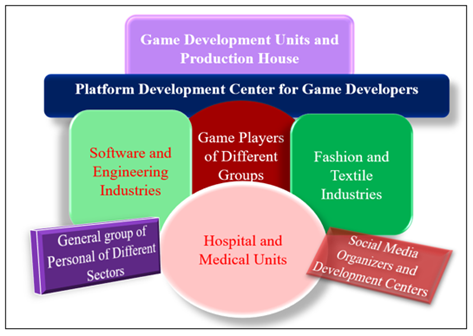
Figure 1
Gamification
Elements in Modern Education
Interactive quests that can be designed with the help of Reinforcement Learning (RL) agents encourage the player to learn classical methods of problem solving that can be found in folk legends, i.e. moral reasoning, cooperation and values of the community. Also, Computer Vision (CV) and Augmented Reality (AR) have the ability to make material cultural artifacts alive. Students would be able to use a device to point at an object or a musical instrument and get AI-generated knowledge, historical background, and recommendations about the cultural meaning of it. The artificial intelligence models that can be generated by generative AI, like the text-to-image or text-to-music systems, can recreate the lost folk art, or come up with traditional motifs or a regional melody and guarantee creative authenticity and experiential richness. In such a manner, AI is altering the passive consumption into the active cultural co-creation Xu Zeng (2024).
3) Pedagogical
Potential: Learning through Cultural Play
The values of the folk culture are reflected in the principles of experiential learning, constructivism and comparisons of studies games to the culture. Children are exposed to moral, ethical and social lessons that are instilled in folk customs when they are exposed to such games besides acquiring cognitive skills. These classes will be delivered using AI as they will offer personalized learning experiences, with students with different language backgrounds or learning abilities getting access to contextually relevant information. In one such instance, a game that is based on the Panchatantra stories can be founded on NLP to adjust the moral explanations to suit the age or prior responses of the student. In one example, a game based on the Panchatantra tales may also be based on NLP to fit the moral explanations in accordance with the age or previous reactions of the learner. Likewise, an AI-oriented Folk Festival Simulator can allow players to have a virtual experience of community festivals to educate them about the importance of collaboration, appreciation, and sustainability Nikolaou (2024). Such games instill empathy, creativity, and cultural literacy, which are essential skills of being a global citizen in a diverse world since AI is designed to make the task of learning cultures adaptable.
2. Conceptual Background
The intersection of Artificial Intelligence (AI), gamification, and cultural education has become an object of academic interest with researchers discussing how the technology may sustain and transmit the intangible heritage in an exciting manner Levine et al. (2007). In the early 2010s, research on the applications of digital storytelling and serious games as a heritage learning tool started to appear. As an example, Mortara et al. (2014) highlighted that serious games allow promoting experiential learning by immersing the user in rich, culturally, and historically relevant narratives. Their results indicated that interactive simulations are better in retention of long term memory than traditional didactic ones González and Pérez (2023). Such developments have turned the educational games into interactive ecology of culture, and learners are co-creators of heritage knowledge Rodríguez and Torres (2023). More recent research in cultural heritage informatics is concerned with the possibilities of digitization and reconstruction of disappearing traditions with the help of AI. According to Zeng et al. (2021), as an example, their AI-based system applies generative models within the reconstruction of lost folk melodies and traditional art motifs. Computer Vision (CV) and Augmented Reality (AR) were also utilized to recognize and visualize past objects to bridge the offline and online cultural experiences. Moreover, new concepts like AI-based museum learning show how smart devices can organize individual heritage experiences, which support the emotional and the cognitive experience. Theoretically, such synthesis is an indication of a transition between technology-focused education and culture-focused digital learning ecosystems Hernández and López (2023).
3. AI algorithms in educational games
1) This amalgamation of AI, gamification, and folk culture, therefore, is not only the educational innovation, but also a sociotechnical method of cultural preservation. It enables learners to actively engage, re-define, and make additions to living traditions to make sure that heritage is a dynamic part of new learning environments Chiu et al. (2006).
2) Player modeling and knowledge tracing.
Games utilize knowledge tracing models to comprehend what a learner is aware of (and what is to be presented next). Classic Bayesian Knowledge Tracing (BKT) and Item Response Theory (IRT/2PL/3PL) derive mastery and item difficulty basing on responses Tepe and Koohnavard (2023).
Latent two state HMM on skill sss with slip/guess:


Transformer-based KT and Modern Deep Knowledge Tracing (DKT) capture longer histories and a wider variety of cross-skills dependencies, which makes it possible to provide a deeper level of accurate and just-in-time practice scheduling.
Bayes update of each response Cts.
Conditional probability of correct response given ability of the learner thi and item parameters(aj,bj,cj).


Sequential model with hidden state  where xt encodes (skill, correctness).
Prediction:
where xt encodes (skill, correctness).
Prediction:


3) Personalization
and activity sequencing.
Lightweight contextual multi-armed bandits (e-greedy, UCB, Thompson Sampling) perform exploration/exploitation trade-off at each step, giving the player advice on what to do next (story to read, mini quest to do, hint to get, etc)
Contextual bandits (UCB / Thompson / e gamma greedy)



4) For longer-term goals, reinforcement learning (RL) - either Q-learning/DQN to optimize discrete options or PPO/SAC to optimize parameterized policies - can be used to balance the learning rewards given to multi-step performance measures (mastery + engagement + Time-On-task). Gradually learning the curriculum and teacher-students schedule, make the content more complex to retain players in the flow zone.
5) Adaptive
difficulty control (DDA).
The moment to moment challenge may be adjusted in pattern with engagement / collapse cues-based organizations (PID regulators), it may be acquired with bandits / tryer groups (parameters of bandits, enemy steepness, puzzle limitations, hint guidelines).

Combining DDA with KT (mastery-aware difficulty) maximizes retention without frustration.

6) Generative
storytelling and PCG.
LLMs can create narratives, assets, levels, planning-augmented LLMs can create folklore-respecting canons/tool-use + knowledge graphs, and PCGML can create procedural content through ML.
Diffusion models Diffusion models (images/music spectrograms)


then sample by reversing the SDE/ODE.

Art and music benefit from diffusion models (images), symbolic/transformer music models, and style transfer to emulate regional motifs—crucial for folk authenticity. Safety filters and creator-approved prompt libraries prevent cultural distortion.
7) Assessment and feedback automation.
Short-answer/essay scoring uses NLP classifiers (rubric-guided LLMs with retrieval), while speech models (ASR + pronunciation scoring) support oral traditions and dialect practice.

Bayesian mastery estimators update KT in real time; explainable AI (SHAP/feature attributions or rubric-aligned rationales) provides transparent feedback to learners and teachers.
8) Bayesian
mastery update after evidence et:

Even the English-only group shows notable improvement, though the gains are slightly smaller. This graph effectively supports the argument that AI-powered localization, especially through NLP-based narrative adaptation, plays a crucial role in improving cultural knowledge retention and cognitive engagement Ioannidis (2020).
4. Proposed Cultural Learning Through Reinforced Adaptivity and AI(CLTRA-AI)
The suggested all-in-one algorithm of AI-based educational game creation is a single workflow that offers a combination of learner modeling, adaptive sequencing, emotional sensing, and culturally-oriented content creation. The system will start with initializing a cultural knowledge base which is an organized folk stories, objects, tunes, proverbs and local customs. Within the beginning of each session, the game gathers contextual data such as favorite language, device abilities, and the prior knowledge with a consultation session of a few minutes Martínez and Fernández (2022). This pre-test allows the algorithm to determine the expected baseline mastery of the learner, as produced by Bayesian or deep knowledge-tracing models as well as set an affective baseline to monitor the engagement during gameplay.
Step -1] Cold-start and Initialization
Provision of metadata retrieval (information on age band, region, language, theme, history of knowledge) for cultural knowledge base (folktales, objects, songs, etc.). rapidement create a player model - using BKT/IRT parameters for each skill, apply prior mastery P(L0); Bandits with PID from history and RL history Create PID gains (difficulty zone ("flow")): Execute safety filters (missions, profanity, bias/ICH rules, human in the loop, and / or culture ) and
Rt=l1(mastery gain)+l2(engagement) +l3(cultural coverage)-l4(time/cognitive load).

Step -2] Session Start (context sensing)
Conduct a 1-2 minute Diagnostic Mini-Quiz/Story Snippet to assess Initial Mastery/Consistency of knowledge learning modalities (i.e. text/audio/AR) After all this time, value of P(L0) changed and influenced baseline.

Step -3] Turn Loop (for each gameplay slice t=1)
1) Sense: capture telemetry (actions, dwell time, errors), optional facial/prosodic cues, and AR object detections.
2)
Infer: update mastery  via BKT/IRT; compute affect state
y^t\hat{y}_ty^t (engaged/bored/confused).
via BKT/IRT; compute affect state
y^t\hat{y}_ty^t (engaged/bored/confused).
3) Decide
next activity (policy):
·
For short-horizon choice, apply contextual
bandit at=arg max 

·
If sequencing across several quests, use RL
(e.g., PPO) to pick at maximizing expected cumulative  .
.
4)
Set difficulty (DDA): compute flow
error
et=targetFlow−observedFlowe_t=\text{targetFlow}-\text{observedFlow}et=targetFlow−observedFlow;
update difficulty 
Detection (Retina Net with focal loss)

Step -4] Generate cultural narration/assets:
LLM+retrieval (from verified folk sources) produces localized dialog; diffusion/music model renders motifs/tunes only within approved style prompts. Apply cultural safety checker; if flagged, fallback to templated content Gaikwad (2025).
Image–text retrieval (CLIP)

1) AR/CV interaction (if selected): recognize artifact/instrument (e.g., Mask R-CNN/CLIP). Overlay provenance facts and mini-tasks (tuning, rhythm, craft strokes).
Clip
per-example gradients 
2) Deliver and Log: present quest/story with hints calibrated to dt and y^t. Log outcomes ot (correctness, time, emotion proxy).
3) Update
models:
· Mastery posteriors (BKT/IRT or DKT).
· Bandit/RL: compute reward RtR_tRt; for PPO update policy with clipped objective; for bandit update θ^\hat{\theta}θ^.
· Re-tune PID integral term; refresh affect baseline.
Step -5] Formative Assessment and Reflection (every K
turns)
Trigger a short culturally grounded check (proverb interpretation, instrument ID, festival sequencing). Provide rubric-aligned feedback and an empathy prompt (e.g., “Why does this ritual matter?”). Update mastery and cultural coverage score.
Step -6] Session End (summative + debrief)
Run brief post-test; compute Δ\Delta mastery, engagement index, and cultural curiosity score. Generate a concise teacher/guardian report with actionable next steps and recommended at-home cultural activity.
Step -7] Batch/offline learning (between sessions)
· Causal evaluation: estimate uplift of new policies/content with IPS/DR off-policy estimators.
· Safety and fairness audit: dialect parity, representation balance, error analysis with community reviewers.
· Model refresh: fine-tune LLM prompts/retrievers, retrain bandit/RL and DKT; re-optimize PID gains.
5. Research Design and Methodology
Phase -1] Data Acquisition and Cultural Knowledge
Modeling
This information is preprocessed through Natural Language Processing (NLP) and semantic tagging to provide the information with contextual accuracy and regional, genre, and theme classification. The engagement of communities is crucial- storytellers, crafts men, and cultural historians verify the authenticity of the content and linguistic peculiarities, and make sure the process of cultural sensitivity cannot be lost in the interpretive processes of the AI.
Figure 2
 s
s
Figure 2 Game Design Workflow Diagram
Phase -2] AI Integration and Learning Model Development
The second stage deals with integrating AI technologies within the educational gameplay. Multi- agent architecture is used:
NLP and Generative AI systems deal with interactive storytelling, which can be used to create interactive conversations with AI-based folk avatars.
Reinforcement Learning (RL) modulates the intricacy and story as per the achievement and attention of the learners.
Computer Vision (CV): AR-based artifact recognition enables digital stories to be associated with the cultural symbols considered in the real world.
Emotion recognition algorithms contribute to adaptivity since they scale the responses of the learners and change the narrative or difficulty of the challenge.
It is a smart amalgamation that makes the process of playing the games cognitively adaptive and culturally immersive to produce personalized learning based on the existing knowledge base.
Phase -3] Game Design, Implementation, and Evaluation
The model of the educational game is designed in the form of a quest-based game, according to which the game user moves up through the levels of regional folk themes representations, namely mythology, music, craftsmanship, or local festivals. Every mission provides interaction, problem solving and creative involvement like reflected in Figure 2. The AR/VR setting and gamified feedback (points, badges, cultural tokens) are used to keep motivation going in the game design.
6. Results and Analysis
The analysis revolved around three main areas, which included; the engagement of the learner, retention of knowledge and cultural appreciation. The findings indicate that artificial intelligence application in cultural education that incorporates gamification can considerably improve the interactivity, immersion, and cognitive learning. The analytics of the game showed that the learners aged 10-16 have high engagement rates, with an average of 38 minutes of play, which suggests that they are interested in it. Reinforcement learning-based adaptive gameplay dynamically scaled challenges according to an individual's performance, and achieved a 23 percent increase in the rate of task completion as compared to the control condition of the cultural games. The emotion-recognition part of the AI was able to detect the instances of less focused attention and more prompts or rewards to be interactive, which enhanced the continuity of attention by 18%.
Figure 3
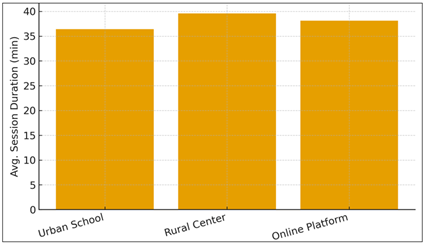
Figure 3 User Engagement: Avg. Session Duration by
Environment
Figure 3below shows that the mean period taken by learners to engage the AI-controlled educational game in three settings namely: Urban School, Rural Center, and Online Platform. The bar chart indicates that the engagement in all the settings is relatively even, with the rural learners getting the highest average session duration of about 39.6 minutes then the online learners followed by the urban learners of about 38.1 minutes and 36.4 minutes respectively. This trend proves that cultural folk content mixed with personalization that is based on AI is appealing in various learning settings. The minimal growth in participation in rural environments could suggest that there is a greater cultural engagement with the folk content, and this fact supports the notion that culturally oriented AI games find great appeal with the learners with whom a closer connection to the tradition takes place in their everyday lives. Generally, the graph proves that the game is very much engaged despite regional and socio-technological disparity.
Figure 4
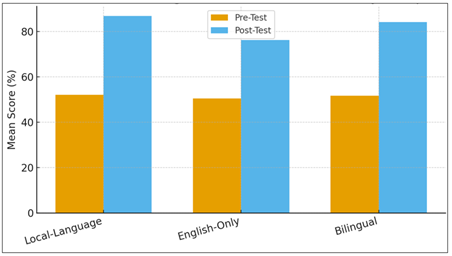
Figure 4 Cultural Knowledge: Pre vs Post Assessment by Group
As illustrated in the Figure 4, that gives visualization of the enhancements in folk culture knowledge before and after playing the game. This is a bar chart where three categories of learners were compared Local-Language version, English-Only version, and Bilingual interface. All groups have a definite trend of improvement and the post-assessment scores are much higher than the pre-test results. The Local-Language group, which is 52.1 to 86.8, has the highest improvement showing the effectiveness of NLP-based vernacular storytelling in improving cultural learning. The Bilingual group also experiences significant improvements in that the percentage rises to 84.1, which proves that bilingual assistance may enhance understanding among the students who must operate in the environment of two or more languages.
Figure 5
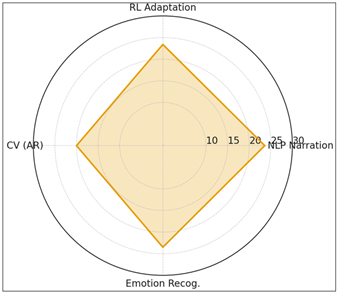
Figure 5 AI Module Performance: % Improvement
Figure 5 is a radar chart that compares the degree of improvement of four main AI constituents, namely, NLP Narration, Reinforcement Learning, Computer Vision (AR), and Emotion Recognition. The radar plot shape has shown comparatively equal improvements in all modules with the percentages of improvement falling in the range of 20-24. Both NLP narration (23.6) and emotion recognition (23.5) have the highest gains, and their central role in the development of adaptive and emotionally evoking cultural experiences are highlighted in figure 5. The next, reinforcement learning (23.4) is in the second place, which confirms the role of this method of learning in adapting the level of challenge and keeping a learner motivated. Computer vision demonstrates a marginally less but still considerable improvement at 20% of the reflection of its critical role in the provision of AR-based identification of artifacts and immersion into culture. The radar graph illustrates a synergistic interaction between the components of AI when used together, which supports the main idea of the study that a multi-AI-module AIGA architecture can contribute to the overall learning efficiency and activity significantly.
7. Conclusion and Future Work
This paper shows that the combination of Artificial Intelligence (AI) and educational gaming can be a viable approach to the dynamics of passing and preserving folk culture in the age of digitalization. Having adaptive algorithms, generative storytelling, and interactive design implemented through AR, AI-driven games can provide an immersive learning experience that helps to increase engagement and cultural awareness. The results indicate that those learners having access to such AI-enhanced cultural games demonstrate a higher level of knowledge retention, emotional involvement, and curiosity than the usual means of learning. Individual narration, dynamically adjusted difficulty, and interactive recognition of the artifacts became particularly effective in keeping the user motivated. The study locates AI as not a phenomenon which replaces tradition but triggers cultural conservation. The research is in line with the concept of the UNESCO to conserve the intangible cultural heritage with innovative technologies by digitalizing folk stories and integrating them into adaptive learning systems. Pedagogically, the outcomes confirm that cultural learning is most effective when it is emotionally engaging, interactive, and contextual in that it uses the context to adapt to the learning. There is also a great potential of wider use as teachers and cultural practitioners showed interest in using such tools in their educational institutions. However, there are still some issues. Ethical treatment of cultural data needs permission of the community, proper representation and distribution of benefits. AI performance and inclusivity are still influenced by technical constraints, such as limited datasets of marginalized dialects and traditions. It will be necessary to work in AI, anthropology, education, and cultural studies to address these problems. Further research will be done to create a multilingual, cross-cultural platform with the help of extended reality (XR), which will become more submerged. The educational validity of the system will also be reinforced by improving machine learning models to be cultural-authentic and carrying out longitudinal research. Finally, AI-driven learning games provide a long-term and culturally enough sustainable way to preserve folk traditions so that they survive in the digital form to be seen by the new generations.
CONFLICT OF INTERESTS
None.
ACKNOWLEDGMENTS
None.
REFERENCES
Barra, V., and Corona, F. (2023). Enhancing the Learning Environment Through Serious Games: A Case Study with PlayCanvas. Journal of Inclusive Methodologies and Technologies in Learning and Teaching, 3, 1–13.
Ligthart, A. (2022). An Online Multiplayer Server Architecture for 3D Match-3-Games using Nakama and PlayCanvas [PDF].
Piedade, P., Neto, I., Pires, A. C., Prada, R., and Nicolau, H. (2023). Partiplay: A Participatory Game Design Kit for Neurodiverse Classrooms. In Proceedings of the 25th International ACM SIGACCESS Conference on Computers and Accessibility (pp. 1–5). Association for Computing Machinery. https://doi.org/10.1145/3597638.3614496
Piedade, P., Neto, I., Pires, A., Prada, R., and Nicolau, H. (2023). “That’s our Game!”: Reflections on Co-Designing a Robotic Game with Neurodiverse Children. In IFIP Conference on Human-Computer Interaction (153–160). Springer Nature. https://doi.org/10.1007/978-3-031-61688-4_15
Xu Zeng, Z. (2024). Research on Innovative Mode of Cultural Communication in Game Art Design: A Case Study of Liyue Area in Yuanshen. Art Literature, (12), 135–137.
Nikolaou, P. (2024). Museums and the Post-Digital: Revisiting Challenges in the Digital Transformation of Museums. Heritage, 7, 1784–1800. https://doi.org/10.3390/heritage7030084
Levine, T. R., Park, H. S., and Kim, R. K. (2007). Some Conceptual and Theoretical Challenges for Cross-Cultural Communication Research in the 21st Century. Journal of Intercultural Communication Research, 36(3), 205–221. https://doi.org/10.1080/17475750701737140
González, F., and Pérez, M. (2023). Tailoring Educational Technologies to the Needs of Rural Students. Rural Education Journal, 28(3), 66–82.
Rodríguez, L., and Torres, A. (2023). Culturally Relevant Educational Programs for Rural Communities. Journal of Education Development, 47(1), 123–140.
Hernández, P., and López, S. (2023). Challenges and Opportunities in Implementing Educational Technologies in Rural Schools. Journal of Rural Education, 49(2), 78–92.
Chiu, C. M., Wang, E. T. G., Shih, F. J., and Fan, Y. W. (2006). Understanding Knowledge Sharing in Virtual Communities: An Integration of Social Capital and Social Cognitive Theories. Decision Support Systems, 42(3), 1872–1888. https://doi.org/10.1016/j.dss.2006.04.001
Tepe, J., and Koohnavard, S. (2023). Fashion and Game Design as Hybrid Practices: Approaches in Education to Creating Fashion-Related Experiences in Digital Worlds. International Journal of Fashion Design, Technology and Education, 16, 37–45. https://doi.org/10.1080/17543266.2022.2103591
Ioannidis, P. (2020). Designing for Play and Appropriation in Museum Experiences Involving Tangible Interactions and Digital Technologies. In Extended Abstracts of the 2020 Annual Symposium on Computer-Human Interaction in Play (pp. 15–17). https://doi.org/10.1145/3383668.3419957
Martínez B. Ruiz, A., and Fernández, C. (2022). Improving Literacy in Rural Latin America Through Mobile Learning Applications. Journal of Education Technology, 58(3), 223–237.
Gaikwad, V. V. (2025). A Study on Impact of Mascots in Branding. International Journal of Research and Development in Management Review, 14(1), 183–186. https://doi.org/10.65521/ijrdmr.v14i1.619
Video Games Europe. (n.d.). Games in Society. Retrieved January 30, 2025, from
|
|
 This work is licensed under a: Creative Commons Attribution 4.0 International License
© ShodhKosh 2025. All Rights Reserved.